
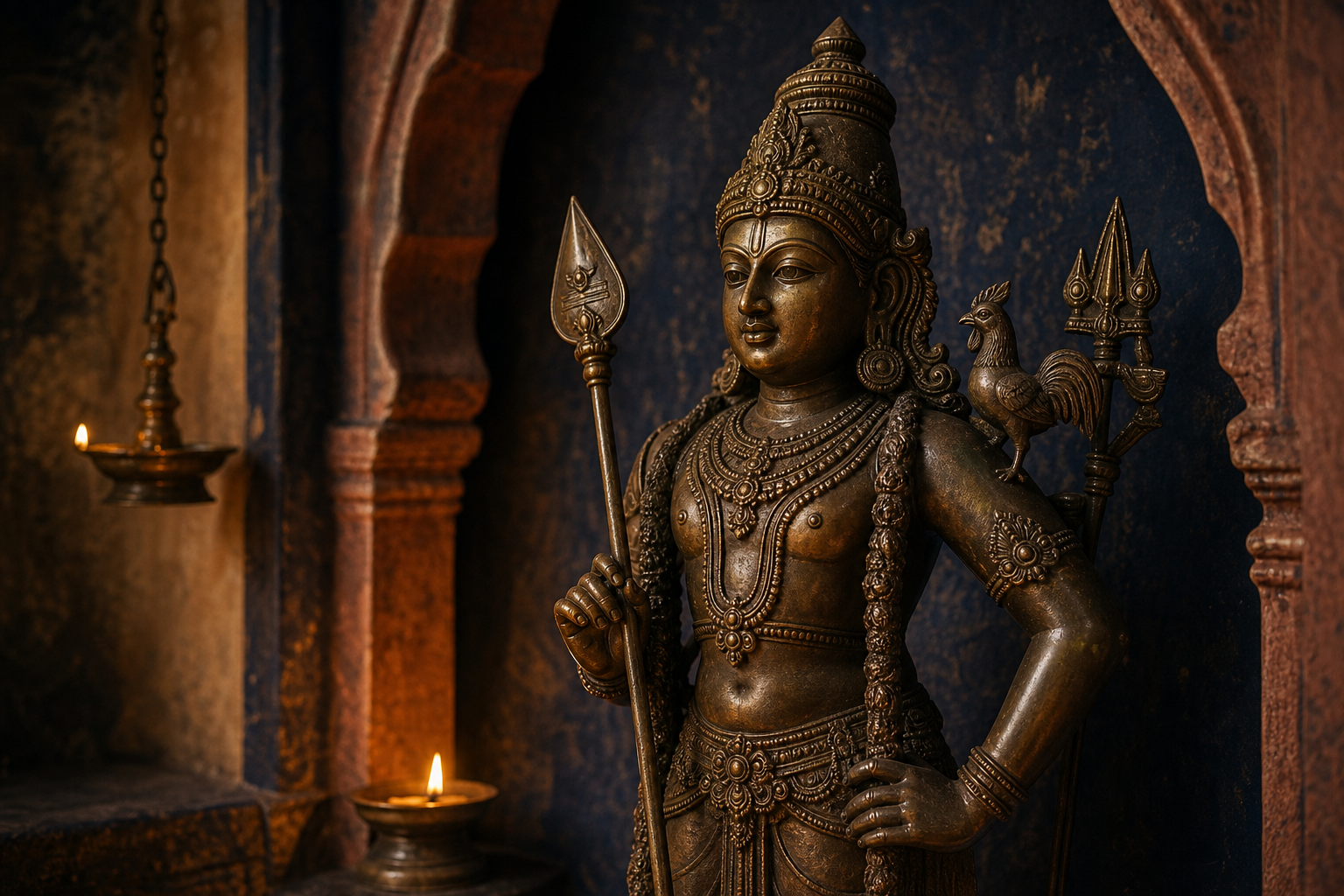
The Kukkuta, or rooster, is presented by Hindu Blog as a distinctive element in the sacred imagery of Murugan, whom the source also identifies as Kartikeya and Skanda. Although the surviving source text is only a short fragment, it raises a useful question: how should a viewer approach an animal symbol in Hindu sculpture without reducing it to decoration or assigning it an unsupported meaning?
This guide separates what the source actually reports from broader principles for reading Dharmic sacred art. That distinction matters because responsible interpretation protects both the richness of the tradition and the integrity of the evidence.
What the Source Establishes About the Kukkuta
According to Hindu Blog, Kukkuta means the rooster or cock and appears prominently in Murugan’s iconography. The source places it within the wider Hindu understanding that a deity’s attributes can connect visible forms with deeper spiritual truths.
The supplied fragment does not identify a particular sculpture, temple, scripture, historical period, or regional tradition. It also does not explain the rooster’s precise theological meaning. Those omissions should remain visible rather than being filled with an attractive but unverified legend.
Why a Small Attribute Can Carry Great Significance
Hindu iconography communicates through an interconnected visual language. Posture, gesture, vehicle, weapon, ornament, animal, and surrounding figures may help worshippers recognize a divine form and contemplate its qualities. An attribute therefore operates within a complete sacred composition rather than as an isolated emblem.
The Kukkuta is important here because an ordinary creature from the experienced world becomes part of a divine image. This movement from the familiar to the contemplative is central to much sacred art: physical form does not exhaust spiritual meaning but gives the mind a point from which to approach it.
How to Interpret the Rooster Without Overclaiming
A careful reading begins with observation. The viewer should note where the Kukkuta appears, how it relates to Murugan, and which other attributes accompany it. Interpretation can then be tested against temple tradition, textual commentary, inscriptions, or guidance from a knowledgeable teacher. A meaning drawn from one representation should not automatically be imposed on every Murugan image.
This method respects the diversity of Hindu sampradayas while preserving their civilizational coherence. Variation is not evidence of confusion; it can reflect the many regional, devotional, and philosophical ways through which Sanatana Dharma expresses shared sacred realities.
Key Takeaways
- The source identifies Kukkuta as the rooster associated prominently with Murugan’s iconography.
- It presents divine attributes as bridges between visible art and spiritual understanding.
- The available fragment does not provide a specific legend, text, date, place, or sculpture.
- Sound interpretation combines close observation with reliable textual or living-tradition context.
A Shared Dharmic Respect for Layered Meaning
The broader Dharmic family offers several ways of using form, narrative, memory, discipline, and ethical reflection to direct attention beyond surface appearances. Hindu, Buddhist, Jain, and Sikh traditions do not employ images in identical ways, and their differences should not be erased. Yet each asks practitioners to look beneath immediate perception and cultivate a more disciplined understanding of life.
Seen in that spirit, studying the Kukkuta becomes an exercise in cultural literacy as well as devotion. Preserving the ability to read such symbols strengthens Hindu continuity while encouraging a confident unity that honors the distinct paths within the wider Dharmic inheritance.
Inspired by this post on Hindu Blog.
