

ISKCON’s continuity does not rest on books, temples, teachers or ceremonies in isolation. The supplied sources collectively portray a transmission system in which remembered example, scriptural interpretation, regulated worship, devotional service and community participation continually reinforce one another.
This synthesis offers a practical way to understand that system. It distinguishes the preservation of a religious inheritance from its living transmission: teachings endure when people learn how to embody, interpret and share them under new conditions.
Transmission works as a devotional ecology

The reports on Srutakirti Das and ISKCON Dallas both locate ISKCON’s establishment in New York in 1966 under A.C. Bhaktivedanta Swami Prabhupada. Yet the sources measure his legacy by more than institutional growth. The Srutakirti profile presents Prabhupada’s larger contribution as the integration of philosophy, mantra meditation, congregational kirtan, sacred literature, worship, hospitality and service into a coherent culture of Krishna remembrance.
The presentation featuring Rukmini Walker and Anuttama Dasa describes the same inheritance from the perspective of attachment to the guru. Its account of longing for Prabhupada does not treat emotion as an alternative to practice. Longing becomes consequential when it leads to study, character, humility and service. The Dallas report then shows what such commitments look like after they acquire a local home: a recurring cycle of altar care, arati, kirtan, food preparation, teaching and community participation.
The Ekadashi article adds a further scale of transmission. A single verse from the Caitanya-caritamrita becomes a meeting point for textual study, sacred time, dietary discipline, household worship and the sharing of prasadam. Taken together, the sources suggest that ISKCON transmits bhakti through an ecology rather than a single channel. Scripture provides orientation, teachers model its application, ritual gives it bodily form, and communities make its repetition possible.
Devotional memory makes authority relational
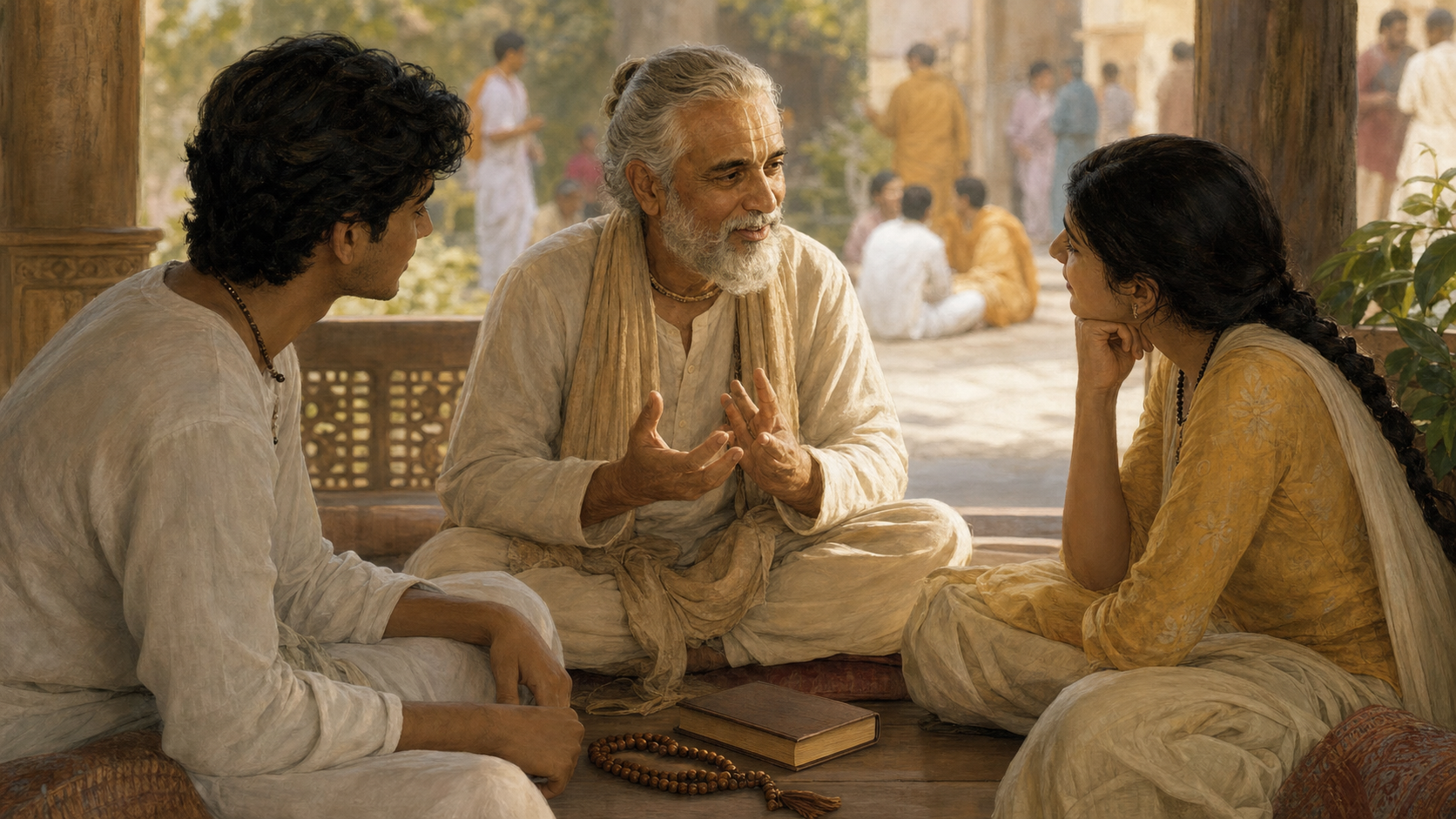
Personal recollection contributes something that institutional histories and doctrinal summaries cannot supply by themselves. The Srutakirti article emphasizes that a personal servant could observe how Prabhupada’s principles appeared in ordinary conduct: punctuality, requests, correction, travel, physical vulnerability and sustained work. Tasks such as reading aloud, responding to a bell or arranging practical care became part of a disciple’s education. In this account, seva was not merely assistance given after instruction; it was itself a way of learning.
The remembrance by Rukmini Walker and Anuttama Dasa presents a complementary form of transmission. Rather than focusing only on one servant’s proximity, it treats senior disciples’ shared memories as a communal inheritance for people who did not meet Prabhupada. Its setting at 26 Second Avenue also joins memory to place: the modest New York storefront associated with ISKCON’s early development becomes evidence that traditions grow through repeated listening, chanting and responsibility before they possess extensive infrastructure.
Both treatments also imply a necessary discipline of interpretation. Anecdotes transmit living texture, but they can become nostalgia if detached from the principles they illustrate. The Srutakirti article explicitly notes that its supplied record for the special class contained no transcript; it therefore avoided attributing unverified statements to that event and distinguished the recording from other documented recollections. The Rukmini Walker article similarly observes that oral testimony is selective and shaped by later experience.
Responsible transmission therefore reads personal testimony alongside books, recorded lectures, letters and archives. These forms of evidence do different work. Texts preserve formulated teaching, recordings preserve voice and emphasis, and memories disclose how instruction was received within relationships. Used together, they can keep reverence from becoming either uncritical idealization or detached historical analysis.
Ritual turns inherited teaching into lived knowledge
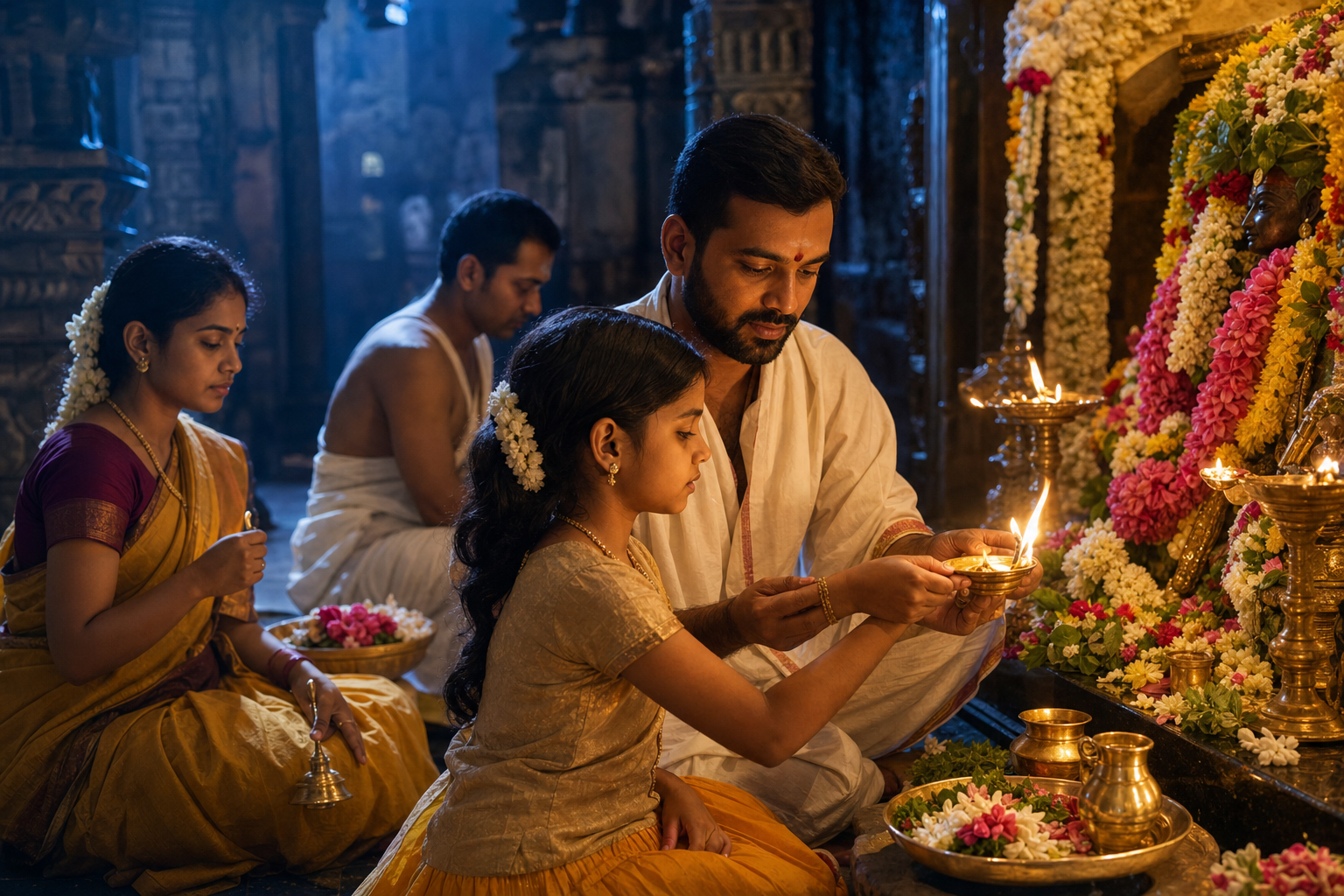
The ISKCON Dallas report makes the daily architecture of temple worship visible. It describes observances extending from early-morning Mangala Arati through daytime and evening services to the close of the deity’s day. This rhythm does more than allocate ceremonial times. It organizes waking, work, music, food, study and rest around recurring remembrance. Bhakti is learned partly by inhabiting that rhythm until theological commitments acquire practical form.
Much of the transmission occurs outside the camera’s view. The Dallas article identifies cooking, cleaning, garland preparation, altar decoration, maintenance, teaching and visitor coordination as work supporting the visible ceremony. This hidden infrastructure matters because it prevents worship from being reduced to spectacle. An arati can be seen in minutes, but its continuity depends on many people accepting disciplined responsibilities before and after the lamp appears.
The article on Caitanya-caritamrita Adi-lila 14.39 shows how a ritual vocabulary can carry theology into ordinary life. As reported there, the childhood narrative describes Nimai seeking food prepared for Lord Vishnu on Ekadashi in the home of Jagadisa and Hiranya. The article distinguishes naivedya, food presented to the deity, from prasadam, the offering received back as grace. The ingredients remain recognizable, but the relationship to them changes from possession and private enjoyment to offering and grateful reception.
The apparent tension between fasting and food further clarifies the point. According to that source’s explanation, a devotee may simplify personal consumption on Ekadashi while service to Vishnu continues. The narrative directs attention away from austerity as personal achievement and toward preparation, offering, cooperation and distribution. When Nimai shares the sanctified food with his companions, devotion moves through a network of householders, family members and children. The teaching is carried not only by an explanation of grace but by actions through which grace becomes shareable.
Digital access extends the chain without completing it

The Dallas live stream and the recorded remembrance represent two distinct uses of digital media. A live altar feed provides immediacy: worship appears according to the temple’s schedule rather than as a sequence edited for presentation. A recorded talk preserves testimony so that later audiences can hear a senior practitioner’s emphasis and devotional mood. Both formats can connect people who are geographically distant from the temple or historical site.
Neither medium explains itself. The Dallas source cautions that a stream is not a guided tour and may not identify the ritual, participants, decorations or relevant scriptural context. It transmits only part of an embodied environment: viewers cannot smell incense, receive prasadam through the screen or experience the social awareness of standing with a congregation. Likewise, a title, thumbnail or description of a recorded class is not equivalent to a transcript, as the Srutakirti article’s methodological note demonstrates.
Digital transmission is therefore strongest when it directs attention back into a fuller structure of learning. A stream can support darshan and prayer; a recording can awaken interest in a teacher; an archive can preserve material beyond the lifetime of its participants. Context, mentorship, textual study and embodied service are still needed to interpret what the screen provides. The technology expands access to the chain of transmission without replacing the relationships and disciplines that give the material meaning.
What a living transmission must protect
The sources point toward continuity with neither mechanical repetition nor unrestricted reinvention. The Srutakirti profile describes the technical challenge as distinguishing enduring principles from applications shaped by health, place, capacity and circumstance. That distinction allows a tradition to enter new settings without losing its organizing purpose.
Key takeaways
- ISKCON’s transmission is plural: scripture, guru memory, ritual, seva, sacred food and community association carry different but connected dimensions of bhakti.
- Fidelity requires both a stable devotional orientation and careful judgment about which practical applications may respond to changing circumstances.
- Devotional emotion becomes reliable when it matures into attention, ethical conduct, study, cooperation and responsibility.
- Digital media widen access to worship and testimony, but interpretation and embodied participation remain necessary for complete formation.
As ISKCON moves farther from its founding generation, its decisive work will be to connect archives with mentors, broadcasts with communities, and inherited practices with clearly understood purposes. Those connections can allow bhakti to remain recognizable while becoming genuinely inhabitable for people who receive it in new places and times.
References
- DharmaRenaissance Blog — Srila Prabhupada As He Is: Service, Memory and Living Wisdom with Srutakirti Das
- DharmaRenaissance Blog — ISKCON Dallas Temple Live: A Powerful Window into Bhakti, Darshan, and Community
- Dandavats — Unlocking Ekadashi: Devamrita Swami Explains Caitanya-caritamrita Adi-lila 14.39
- YouTube — Cry for Prabhupada: Rukmini Walker’s Powerful Lesson on Guru, Grace, and Krsna