

July 2026 brings a three-day observance at Tiruchanoor followed by two significant ritual dates at Tirumala. They belong to the same Vaishnava pilgrimage landscape, but they should not be treated as one extended festival: each has its own deity-centered purpose, ceremonial structure, and practical implications for visitors.
Read together, the supplied reports offer more than a calendar. They show how annual worship can renew divine presence, sacred space, institutional responsibility, and inherited memory through different but related forms.
Reading the July calendar as a sequence

The sequence begins at Tiruchanoor. The report on Sri Sundararaja Swamy Avatarotsavams schedules the annual observance for July 5-7, 2026, at the Sri Sundararaja Swamy Temple within the Sri Padmavathi Ammavari Temple complex. It reports a morning cycle of Suprabhatham, Sahasranamarchana, and Nityarchana, together with abhishekam for the processional deities of Sri Sundararaja Swamy, Sridevi, and Bhudevi.
Attention then shifts to Tirumala. The report on Aanivara Asthanam identifies July 14 for Koil Alwar Tirumanjanam and July 17 for Aanivara Asthanam at Srivari Temple. The first date is presented as a cleansing and sanctification of the temple interior; the second as a formal observance connecting worship with accounts, keys, and the renewal of administrative responsibility.
This order matters for pilgrims. July 5-7 centers on a manifestation festival and intensified worship at Tiruchanoor, while July 14 prepares the Tirumala temple for a major ceremonial assembly on July 17. The reports do not present these dates as interchangeable parts of a single program.
Two observances, two kinds of renewal

At Tiruchanoor, renewal is expressed through Avatarotsavam. The supplied article explains the term as an observance associated with the deity’s sacred appearance or manifestation. Its reported rhythm moves through awakening, invocation by a thousand names, daily worship, ceremonial bathing, decoration, darshan, and processional traditions. The emphasis is devotional and relational: the divine presence is honored through disciplined acts of attention and service.
At Tirumala, Aanivara Asthanam turns renewal toward stewardship. According to the supplied report, Asthanam denotes a formal court or assembly, while Aanivara is associated with the Tamil month of Ani. The ceremony preserves the understanding that temple resources and authority are held as sacred trusts under Lord Venkateswara rather than as possessions of their human custodians.
The Tirumala report places Sri Malayappa Swamy with Sridevi and Bhudevi near the Bangaru Vakili in the Ghanta Mandapam and also includes Sri Vishwaksena in the ceremonial arrangement. It further reports the offering of six silk garments by Sri Pedda Jeeyar Swamy: four for the presiding deity and the others associated with Sri Malayappa Swamy and Sri Vishwaksena. The temple keys, referred to in the report as Lachana, are ceremonially associated with Sri Pedda Jeeyar, Sri Chinna Jeeyar, and the TTD Executive Officer before being placed at the feet of Srivaru. Old accounts are presented and new books are opened for the succeeding cycle.
The contrast is instructive. Tiruchanoor foregrounds the renewal of encounter with the deity; Tirumala ritualizes the renewal of custodial duty. One makes sacred presence tangible through worship and abhishekam, while the other places records, authority, and future responsibility before the divine sovereign.
The common ritual language across both centers
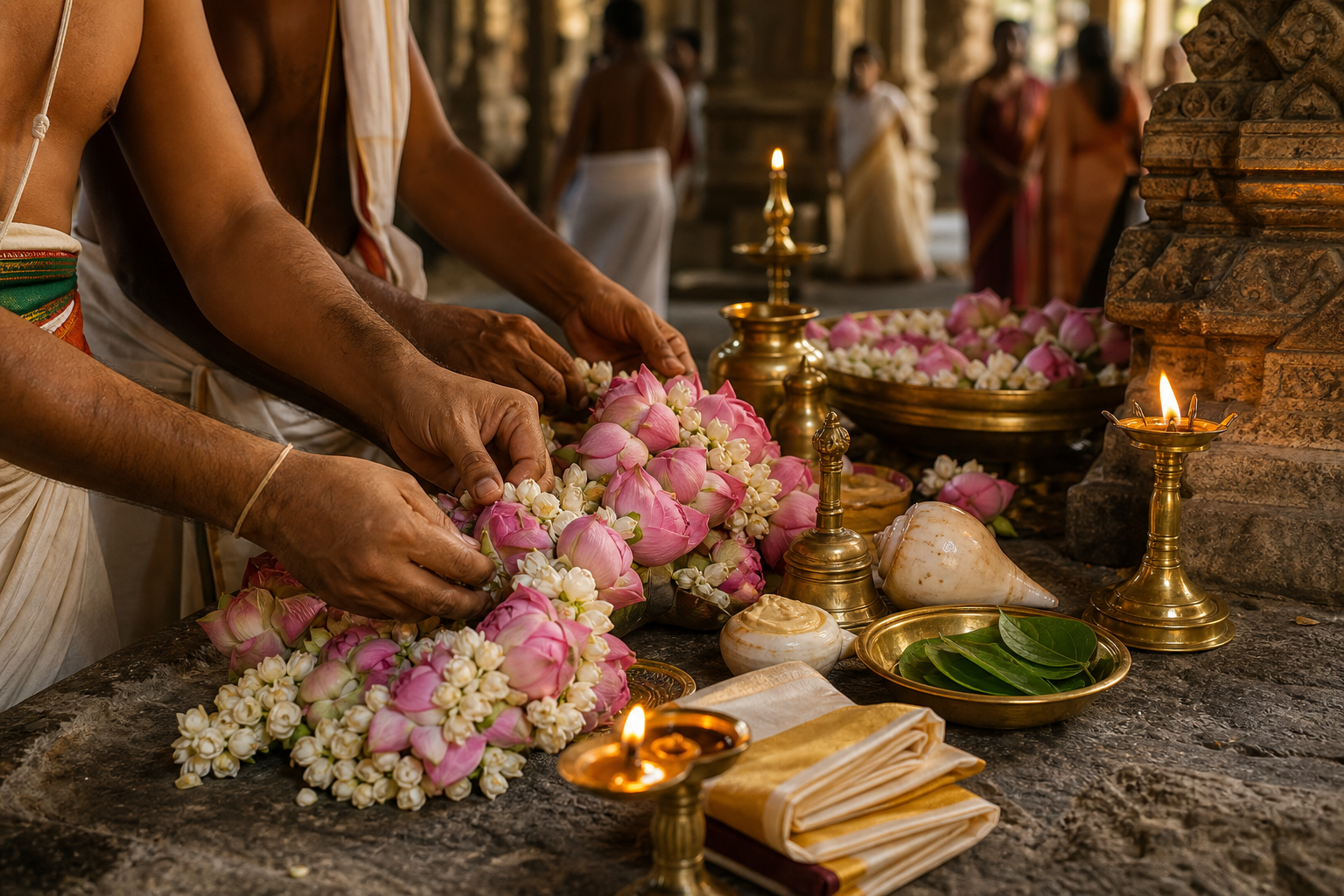
Despite their different purposes, the observances share a recognizable ritual vocabulary. Both supplied articles place Sridevi and Bhudevi beside the principal processional deity. Within the interpretive framework given by the Tiruchanoor report, their presence expresses grace, abundance, compassion, and the sustaining dimension of divine order. At Tirumala, the same accompanying deities appear within a ceremony focused on institutional order.
Purification is another connecting theme. At Tiruchanoor, abhishekam is described as ceremonial bathing and consecrated service to the utsava murtis. At Tirumala, Koil Alwar Tirumanjanam prepares the temple interior through careful cleansing and sanctification before Aanivara Asthanam. The objects differ – processional deities in one account and sacred space in the other – but both rites present readiness for worship as something cultivated through ordered action.
The two reports also relate aspects of these traditions to the historical period of Mahant administration. The Tiruchanoor article refers cautiously to earlier descriptions connecting the festival’s development with that period. The Tirumala article more specifically links the accounting observance to a former annual budgeting cycle near the close of Ani. These are not identical historical claims, but together they illustrate how ritual can preserve institutional memory after administrative systems change.
This continuity does not make the festivals static. Rather, inherited forms give contemporary temple life a framework in which daily devotion, public access, financial stewardship, and administrative order can remain connected to a sacred center.
Key takeaways
- The Tiruchanoor source schedules Sri Sundararaja Swamy Avatarotsavams for July 5-7, 2026, with core worship reported during the mornings.
- The Tirumala source schedules Koil Alwar Tirumanjanam for July 14 and Aanivara Asthanam for July 17, 2026.
- The Tiruchanoor observance emphasizes manifestation, abhishekam, and devotional encounter; the Tirumala observance joins temple purification with ceremonial accountability.
- The Tirumala report says VIP Break Darshans are cancelled on July 14 and July 17, apart from arrangements that may apply to protocol dignitaries, making advance verification important.
Planning around worship and access
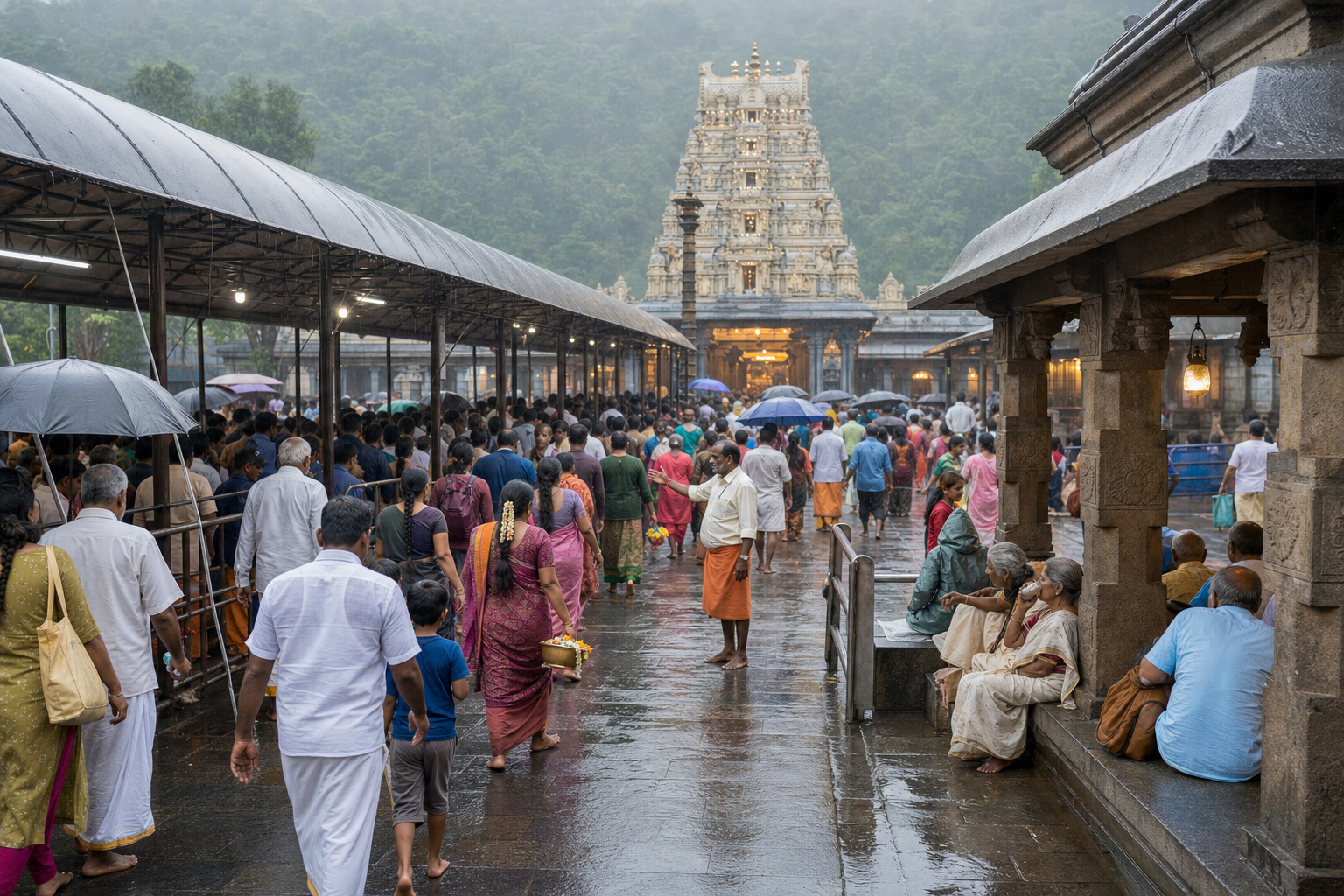
Visitors interested in the Tiruchanoor observance should give priority to the reported morning liturgy and allow for festival-related crowd movement. The source recommends modest dress, orderly darshan, patience, and quiet participation during worship. It also discusses Peddasesha, Hanumantha, and Garuda vahana processions as associations found in earlier festival patterns; it does not establish those processions as a confirmed 2026 timetable. Pilgrims should therefore avoid converting contextual history into a travel schedule without official confirmation.
For Tirumala, the most immediate planning issue is the reported cancellation of VIP Break Darshans on July 14 and July 17. The source advises checking darshan availability, seva status, accommodation, and transport through official TTD channels before travel. Additional flexibility may be especially useful for parties with elderly people, children, or fixed return arrangements.
As the observances approach, official temple notices should remain the basis for operational details. The enduring value of the July sequence lies in seeing each event on its own terms: Tiruchanoor renews devotional encounter, while Tirumala places sacred space and human stewardship under renewed discipline.
References
- DharmaRenaissance Blog – Sundararaja Swamy Avatarotsavams 2026: Sacred Tiruchanoor Rituals Explained
- DharmaRenaissance Blog – Aanivara Asthanam 2026: Sacred Accountability at Tirumala Venkateswara Temple