
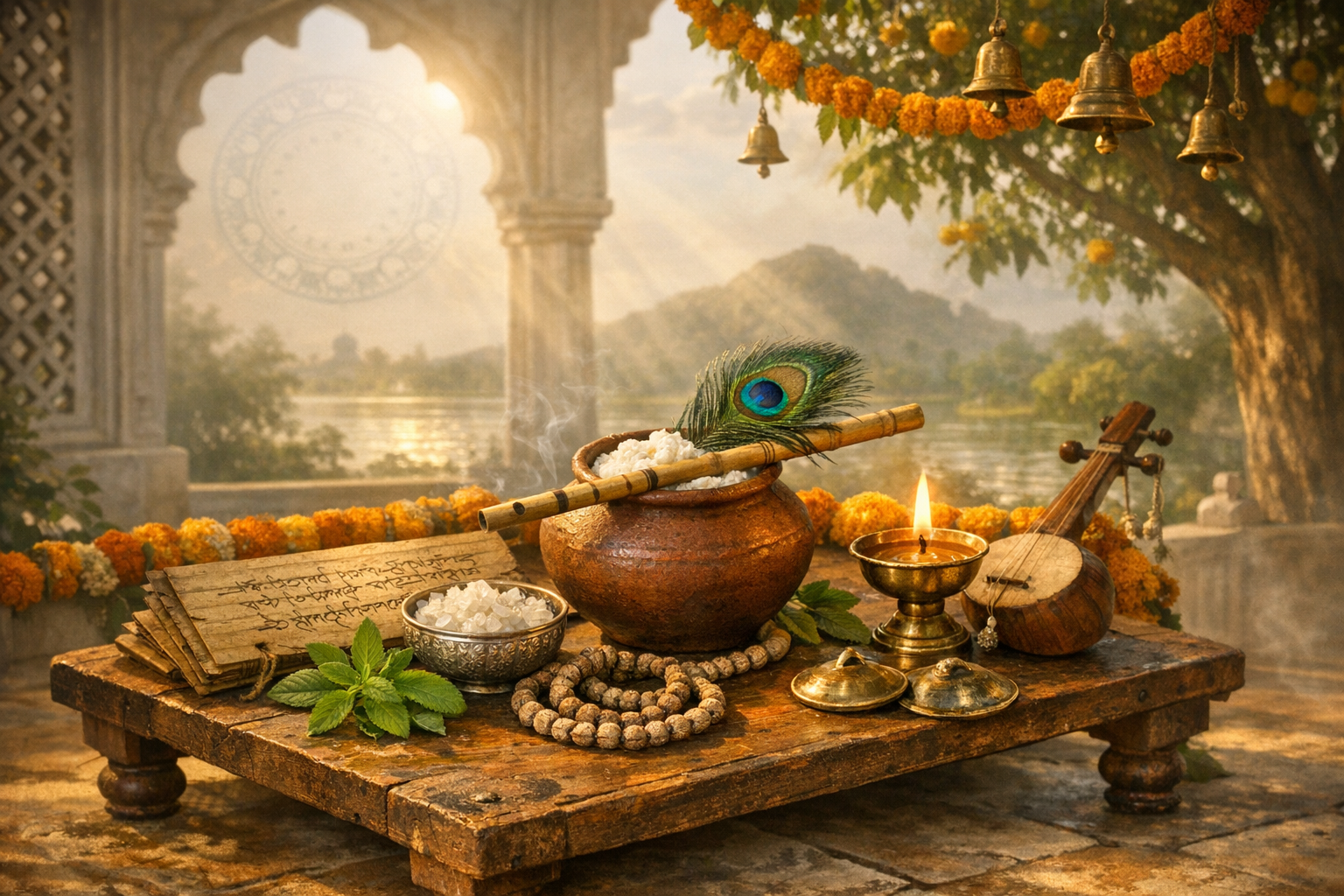
Surdas Jayanti in 2026 falls on 21 April, marking Vaishakh Shukla Paksha Panchami in the North Indian (Purnimanta) Hindu calendar. The observance honors Surdas, the celebrated Sri Krishna bhakta whose lyrical genius in Braj Bhasha helped define North Indian Bhakti poetry and devotional music. While local customs vary, devotees across India and the global diaspora commemorate the day with kirtan, scriptural recitation, and seva dedicated to Shri Krishna and to the inclusive ethos of the Bhakti tradition.
From a calendrical perspective, Surdas Jayanti is tied to the Panchami tithi (the fifth lunar day) of the bright fortnight (Shukla Paksha) in the month of Vaishakh. Because tithi observance is based on lunar day timing between successive sunrises, regional differences can occasionally shift public celebrations by a day. North India typically follows the Purnimanta reckoning of months, while several western and southern regions follow an Amanta convention; the 2026 consensual date aligns on 21 April for most standard panchangs. As with all tithi-based vratas and jayantis, checking a reliable local panchang ensures precise home or temple muhurta.
Surdas occupies a central place in the Braj-Vaishnava devotional landscape. Traditional accounts vary on chronology: some older narratives place him earlier, yet a substantial body of modern scholarship situates his life in the late 15th to early 16th century (often cited around 1478–1583 CE), broadly contemporary with the growth of Pushtimarg and the milieu of early modern North Indian courts. Hagiographies describe him as a Krishna bhakta immersed in the lila of the child and adolescent Krishna, composing padas that transformed intimate devotion into a public, participatory art. Associations with Vallabhacharya and Pushtimarg are strong in sectarian memory, even as historians note that specific biographical details (including the well-known motif of blindness) remain matters of tradition rather than securely dated records.
Three titles are predominantly linked with Surdas: Sursagar, Sursaravali, and Sahitya Lahari. The Sursagar, in particular, survives through multiple recensions, a hallmark of oral and manuscript transmission in the pre-modern period. The language is Braj Bhashamusical, supple, and rich in the aesthetics of rasamaking Surdas a foundational voice in the emergence of early Hindi literature. Versification often employs padas and dohas, interlaced with alankaras that heighten bhava. Thematically, the corpus privileges vatsalya (parental affection) and madhurya (sweet love) bhavas toward Krishna, while also gesturing to the philosophical core of prema-bhakti that the wider Bhakti movement shared across regions and sampradayas.
Performance practice is integral to understanding Surdas’s legacy. His padas live in kirtan traditions, temple music (notably Haveli Sangeet in Pushtimarg shrines such as Nathdwara), and the performative world of rasa-lila. Many compositions are aligned with specific ragas and daily temple services (seva) marking Krishna’s ritual dayfrom mangala to shayana. This coupling of text, melody, and ritual time sharpened a uniquely Vaishnava synthesis: poetry became daily worship, and worship became a lived aesthetic experience for the community.
Surdas’s theological canvas is both intimate and universal. Consider the famous line “मैया मोरी, मैं नहीं माखन खायो,” where the child Krishna’s playful denials open a window into divine lila and maternal love. Equally evocative is “अखियाँ हरि दर्शन की प्यासी,” in which the longing for darshan becomes an existential yearning for the Absolute. These versescompact, sensuous, and philosophically resonanttranslate Vedantic and Puranic insights into an accessible emotional grammar. They also reflect a Bhagavata Purana-inflected lens, where loving devotion is the consummate path to the Divine.
Observance of Surdas Jayanti in 2026 may be undertaken at home or in community settings. In the morning, devotees traditionally bathe and perform Krishna puja with simple offerings such as tulsi leaves, makhan-misri (butter and sugar), milk preparations, and seasonal flowers. Reading or listening to selections from the Sursagar and related padas brings the day’s focus into the home. Community satsangs often include samuhik kirtan, pravachan on the life and works of Surdas, and distribution of prasad. Acts of dana and sevafood donation (annadanam), support to students of music and literature, and contributions to accessible temple music programsextend the Jayanti’s spirit into public service.
In temples influenced by Pushtimarg, Surdas Jayanti often blends with the daily eight-fold seva (ashta-yam) of Shri Krishna. Devotional singing in the Haveli Sangeet styleguided by raga, tala, and the liturgical clockpunctuates the day. Midday raj-bhog darshan can feature padas celebrating Krishna’s bal-lila, while evening programs may foreground the soul’s longing expressed in madhurya-bhava poetry. Devotees frequently recount a heightened sense of shared intimacy with the deity on this day, as the aesthetics of lila and the energy of congregational singing foster collective uplift.
Beyond ritual practice, Surdas Jayanti invites reflection on the shared ethical and spiritual values of the broader dharmic family. The Bhakti emphasis on compassion (karuna), non-harm (ahimsa), truthful living (satya), remembrance (nama-smarana), and selfless service (seva) resonates with the lived ideals of Hinduism, Buddhism, Jainism, and Sikhism. Kirtan’s communal cadence finds kinship with Sikh shabad-kirtan; the Bhakti valorization of love and humility parallels Jain and Buddhist stress on inner purification and compassion for all beings. Marking this Jayanti as a day of inter-dharmic goodwill deepens cultural unity while preserving the authenticity of each path.
The Braj regionVrindavan, Gokul, Nandgaon, Barsana, and Govardhanprovides a living geography for Surdas’s devotional world. Local traditions connect Parsauli near Govardhan and Sur Sarovar (Keetham) near Agra with the poet’s memory, alongside sites in and around Vrindavan where rasa-lila performance continues to flourish. Pilgrims who undertake Govardhan Parikrama on or around Jayanti often incorporate Surdas padas into their circumambulation, allowing poetry and pilgrimage to converge in embodied remembrance.
Surdas’s cultural impact extends well beyond liturgy. His Braj Bhasha helped shape North Indian literary idioms, and his emotive poetics influenced generations of singers, kathavachaks (narrators), and poets. In educational contexts, Surdas’s work remains a gateway to understanding Bhakti aesthetics, the application of rasa theory to vernacular literature, and the symbiosis between text and performance. For students of Hindi literature and the history of ideas, Surdas offers a case study in how regional languages became vehicles for high philosophy without losing popular appeal.
Practically, households may mark 21 April 2026 by setting aside a quiet window for study and song: begin with a brief dhyana on Krishna, read a small selection of Surdas’s padas in Braj with a reliable translation, and conclude with kirtan or soft recitation (japa) of the divine name. Offering makhan-misri or simple sweets to a Krishna murti, followed by sharing prasad with neighbors and friends, reinforces the Jayanti’s ethos of sweetness (madhurya) and social warmth. Digital resourcesarchival recordings of Haveli Sangeet, scholarly lectures on the Sursagar, and annotated padascan further enrich the experience for families and community groups.
In essence, Surdas Jayanti 2026 is both remembrance and renewal. By honoring a poet whose songs made divine love audible in everyday life, the observance revitalizes a shared ethical imagination across dharmic traditions. Anchored in the Panchami tithi of Vaishakh Shukla Paksha and expressed through study, song, and service, the Jayanti invites communities to cultivate ananda through humility, harmony, and heartfelt devotion to Shri Krishna.
Inspired by this post on Hindu Pad.
