
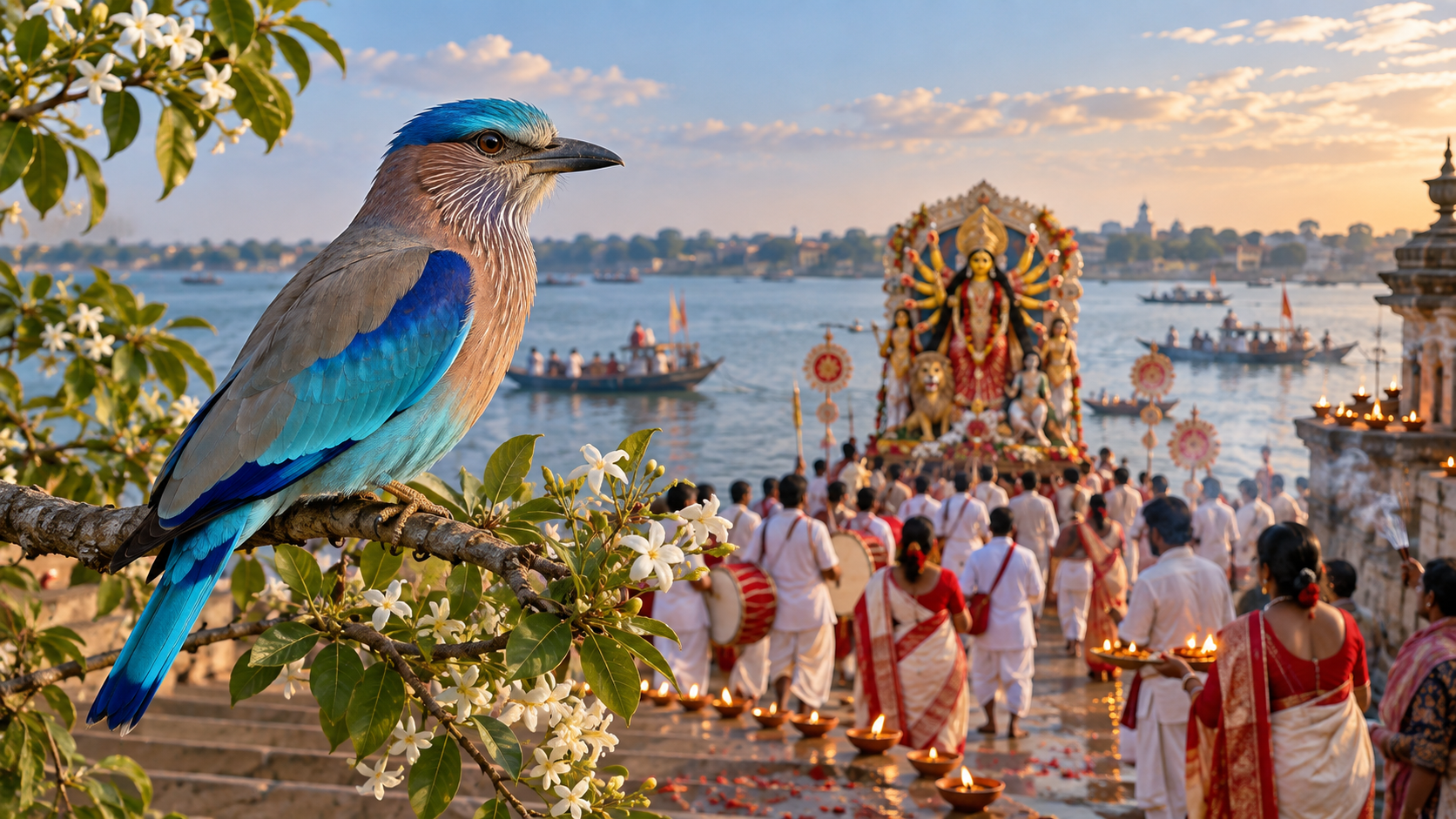
If you have seen a Neelkanth bird represented during Durga Puja, the moment probably raised a simple question: what does this bird have to do with the worship of the Devi? The answer lies in a particular Bengali Dashami custom, not in a rule followed by every Durga Puja.
That distinction matters. It lets you appreciate the tradition without turning a household practice into a universal command, and it shows how the symbolism can be preserved without obtaining or releasing a live bird.
What the Neelkanth custom looks like on Dashami
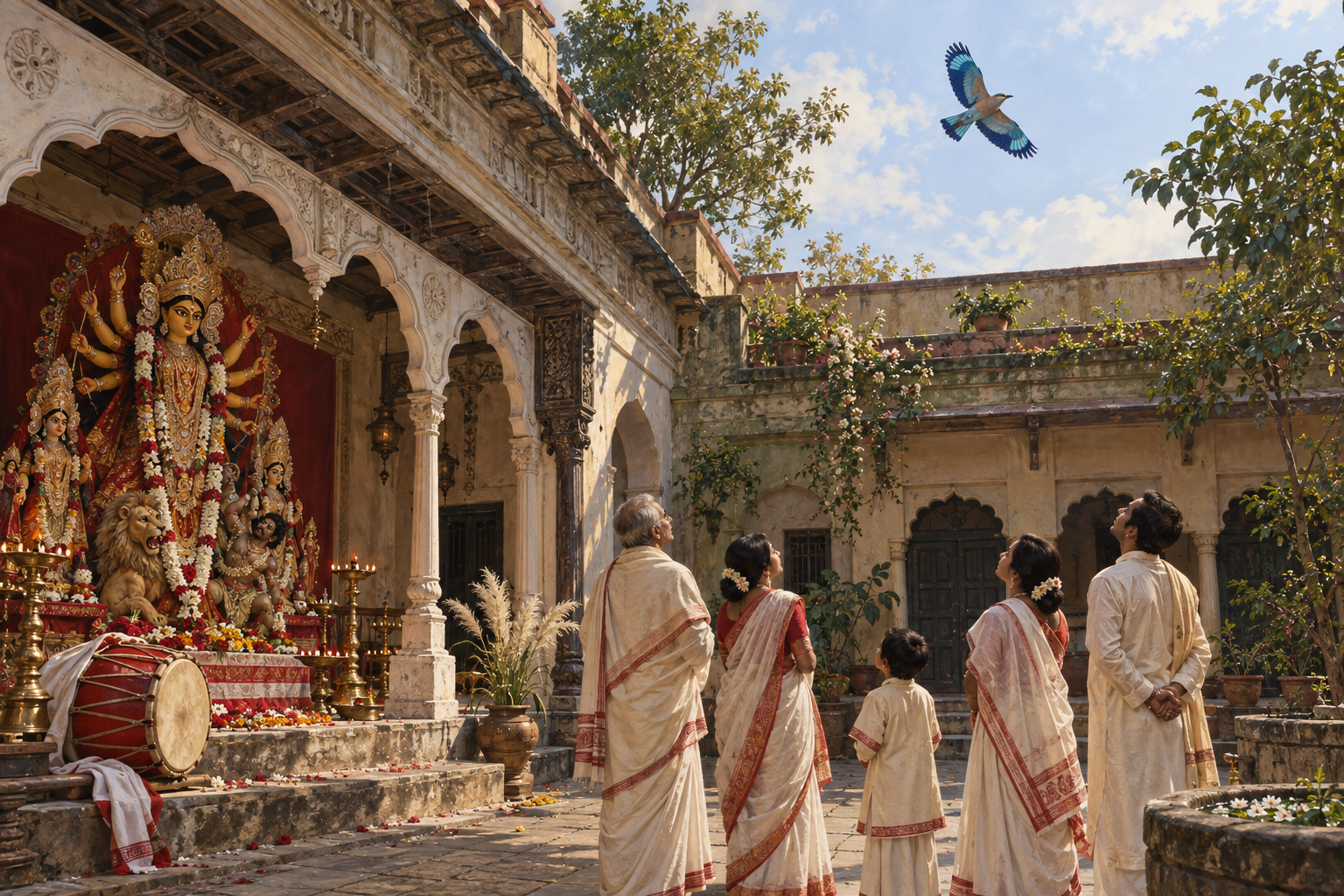
In Bengal, several traditional aristocratic households continue a Dashami custom associated with the release of the Neelkanth, or Indian Roller. Dashami is the final day of Durga Puja, so the bird appears at the point of farewell rather than at the beginning of the worship.
The custom no longer depends everywhere on a living bird. Clay representations of the Neelkanth may be immersed in the river, while another adaptation uses a sky lantern decorated with the bird’s image. The outward form has therefore changed in some observances, but three elements remain recognizable: the Neelkanth, Dashami and an act of sending forth.
You should resist one common overstatement. The survival of the custom in several aristocratic households does not establish that every Bengali family once practised it, or that every Durga Puja ought to adopt it. It is better understood as a distinctive inherited tradition within the larger culture of Bengal’s Durga worship.
Why the name Neelkanth carries a Shaiva resonance
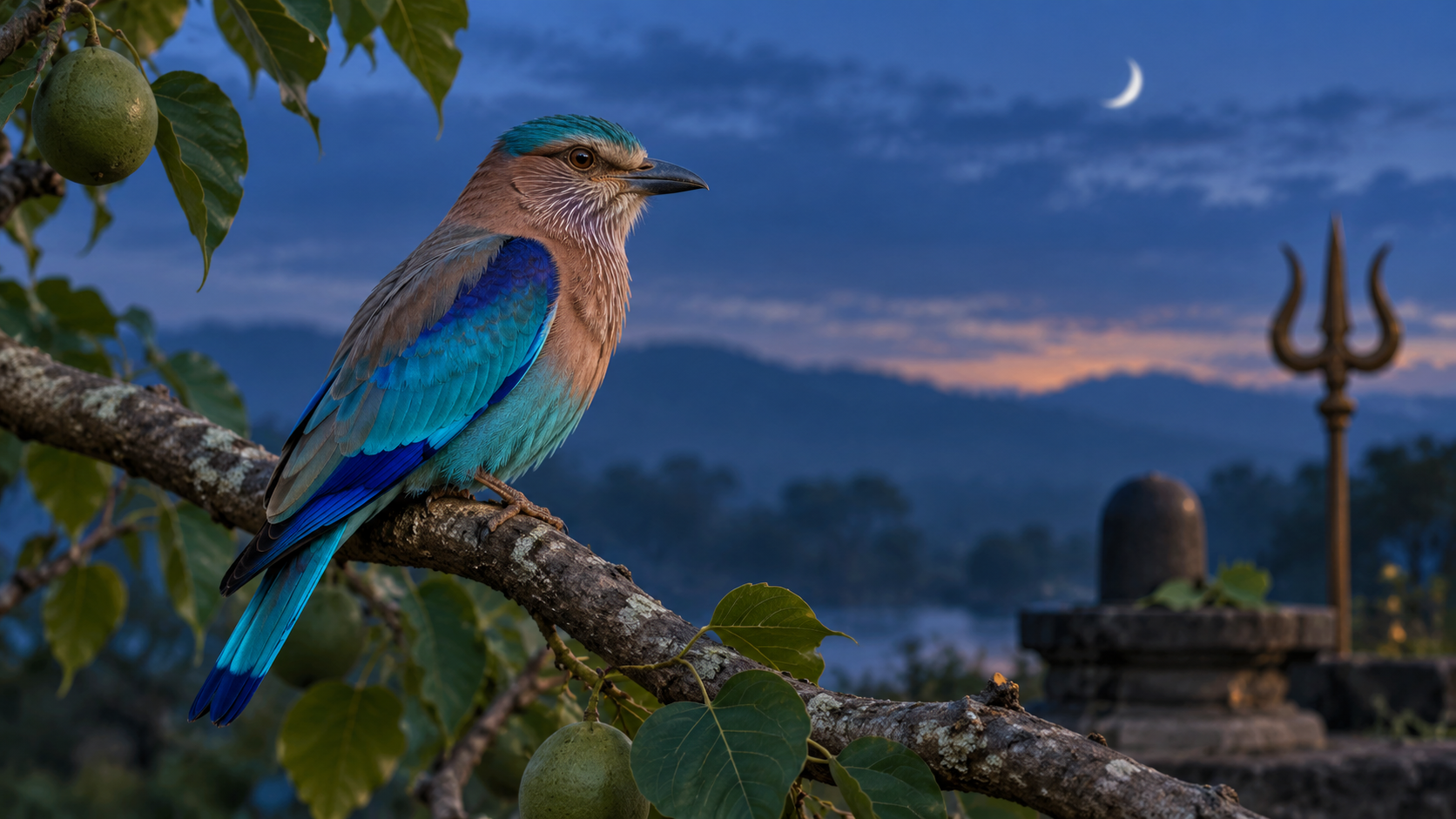
Neelkanth is also a familiar name of Shiva. That shared name gives the Indian Roller a natural place within a symbolic world in which Durga and Shiva are closely connected. For a worshipper, the bird can consequently carry more meaning than an ordinary creature appearing at a seasonal celebration.
This is where careful language helps. The Shaiva resonance of the name is clear, but a single, universally accepted origin story for the Dashami custom is not established by the surviving details presented here. Families may preserve their own explanations of whom the bird represents, where it is understood to go or what message it carries. Those accounts deserve to be heard as household traditions, with the family or community identified.
If you are documenting the practice, ask two questions before repeating a story as settled history: who taught this explanation, and how does the family actually perform the custom? Those answers tell you whether you are hearing inherited ritual memory, a later interpretation or a general explanation added for visitors.
Preserve the symbol without handling a live bird
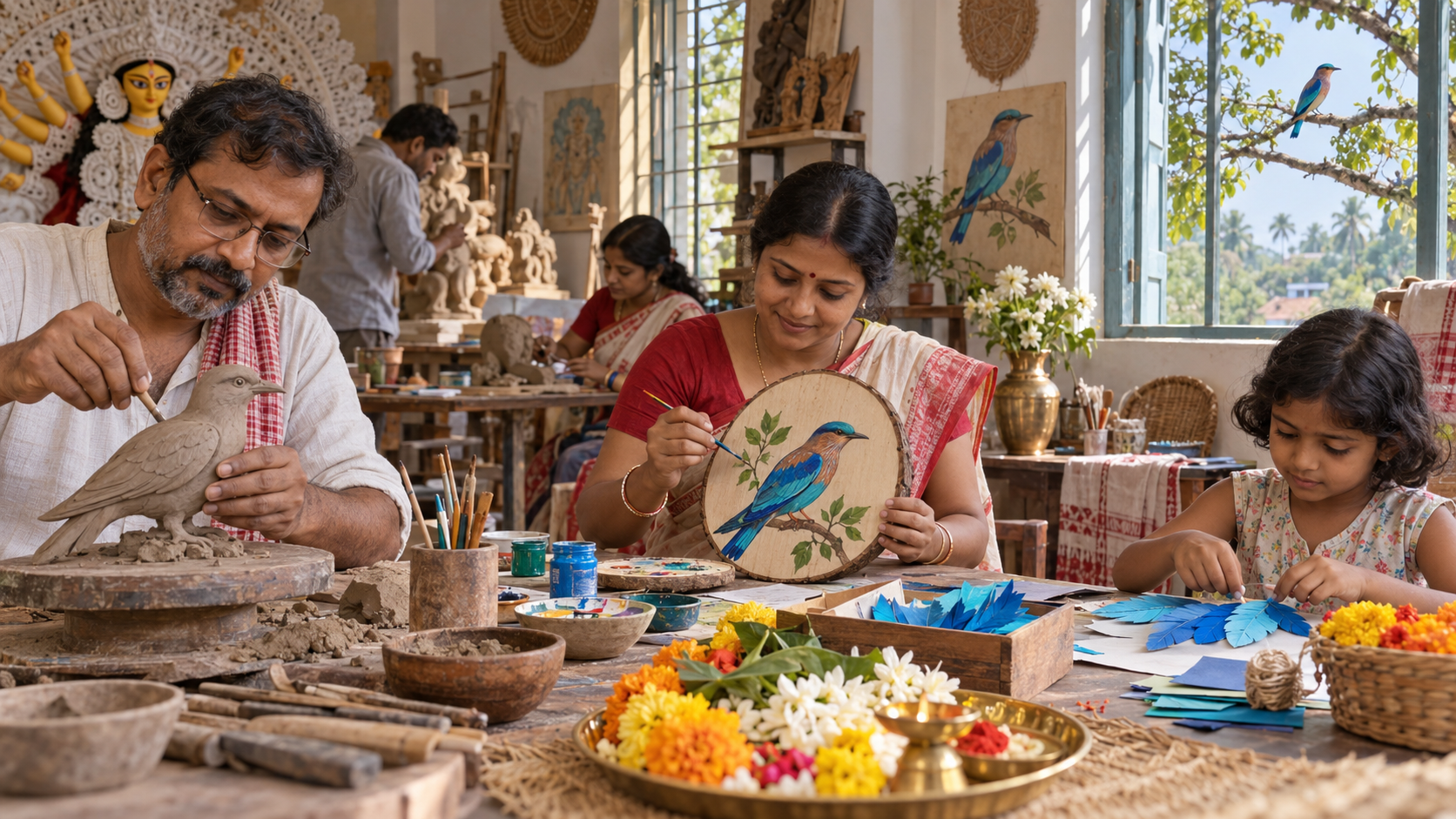
If you are helping to organise a Puja, do not begin by trying to obtain a Neelkanth. The tradition itself already provides a precedent for symbolic adaptation through clay models and bird images. A ritual does not become more authentic merely because a wild creature has been captured, confined or transported for it.
- First ask whether the custom belongs to your family, temple or Puja committee. If it does, record its existing sequence before changing anything.
- Identify what your observance is preserving: the bird’s image, the Dashami timing, the farewell gesture or a particular family explanation.
- Choose a non-living representation. A clay model follows one documented adaptation; an image can also be carried or displayed if you clearly describe that form as your community’s adaptation.
- If a clay figure is to be immersed, use the place or contained arrangement designated by the organisers and follow the site’s rules. Do not assume that a river immersion is appropriate at every location.
- If considering an image-bearing sky lantern, check local fire, aviation and waste restrictions first. A stationary lantern or a carried image can preserve the visual symbolism without sending a burning object into the air.
The important discipline is honesty. You can preserve a traditional symbol while openly saying that the material or method has changed. Calling a new adaptation ancient weakens the record; naming it accurately shows how a living culture responds to new circumstances.
How to explain the tradition at a family or public Puja
A useful explanation needs only three sentences: some traditional aristocratic households in Bengal associate the Neelkanth bird with Dashami; the older form involved releasing the bird; and some observances now use a clay model or a lantern bearing its image. That wording tells visitors what is established without claiming that the custom is compulsory or universal.
When a child or visitor asks what the bird means, separate the layers instead of compressing them into one dramatic story:
- Established practice: the Neelkanth is associated with Dashami in certain Bengali household traditions.
- Religious resonance: the name Neelkanth also evokes Shiva.
- Local inheritance: a family may preserve a more detailed account of the bird’s role.
- Modern adaptation: clay forms and image-bearing lanterns can replace the release of a live bird.
This layered explanation is more respectful than presenting one family’s account as the only Hindu understanding. It also gives younger participants a reliable framework: they can learn what was inherited, what is interpretive and what has been changed deliberately.
What to record before calling the custom ancient
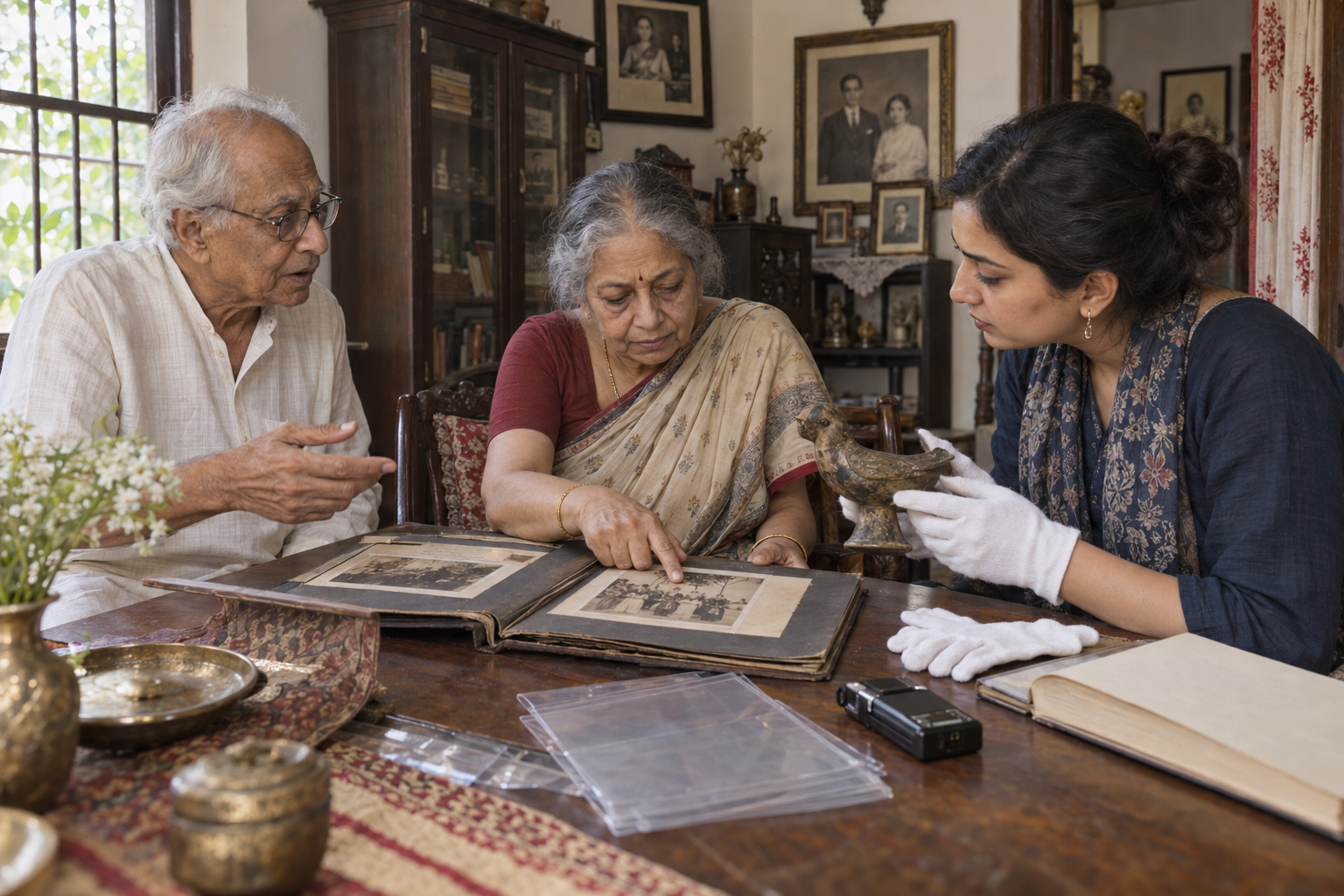
The word traditional does not by itself supply a date. Without a traceable chronology, avoid attaching a Vedic, Puranic, medieval or other historical label merely to make the practice sound older. A precise account of a family’s remembered observance is more valuable than an impressive date that cannot be supported.
If you encounter the custom at a household Puja, record the details that future readers will actually need:
- the name of the household, temple or Puja committee;
- the point on Dashami when the Neelkanth gesture occurs;
- whether the observance uses a bird, clay model, lantern or another representation;
- the prayer, words or explanation given by participants;
- who transmitted the custom to the present generation;
- which elements participants regard as inherited and which they identify as recent adaptations.
If you take a photograph, preserve the accompanying explanation as well. An image of a clay bird establishes that an object was present; it does not, by itself, explain what the family believed it was doing. The spoken memory and ritual sequence provide the missing context.
Key takeaways
- The Neelkanth custom belongs to particular Bengali Durga Puja traditions and is observed on Dashami, the final day.
- Several traditional aristocratic households retain the practice, but it should not be presented as a rule for every Durga Puja.
- Clay birds and lanterns bearing the bird’s image show that the custom can continue through symbolic forms.
- You do not need to capture or release a live Indian Roller to honour the symbolism.
- Keep household explanations, broader Shaiva associations and modern adaptations clearly labelled rather than blending them into one unsupported origin story.
If your family or Puja committee wants to include the Neelkanth this Dashami, start with the inherited purpose, not the old material. Write down what your community knows, choose a non-living representation and tell participants plainly which part is tradition and which part is your responsible adaptation.
References

Leave a Reply
You must be logged in to post a comment.