
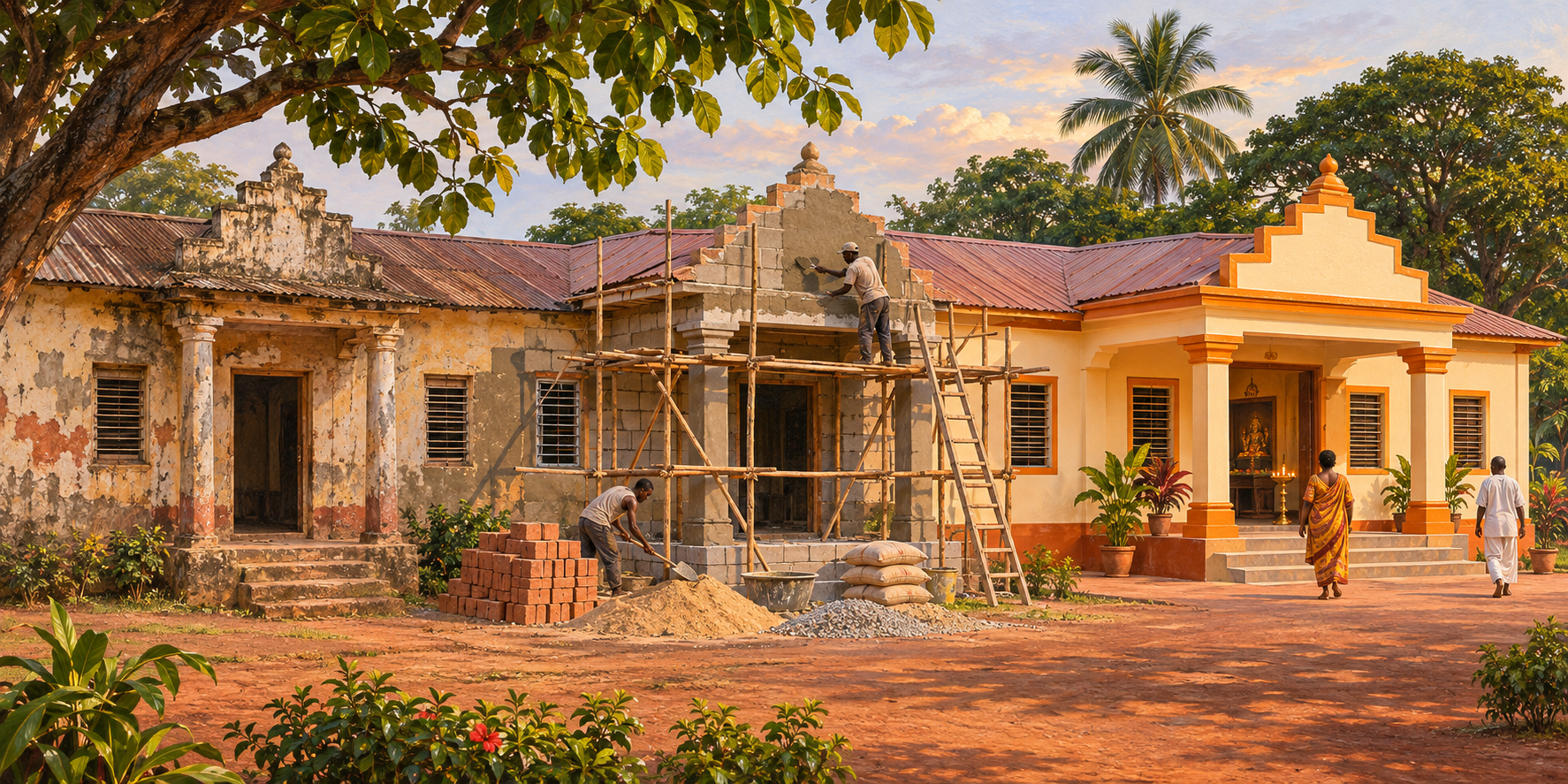
If you came looking for the status of ISKCON Sunyani, the firmest answer is straightforward: the temple in Ghana can be seen in before, during and after stages of renovation. That establishes a visible transformation without forcing details that have not been made public.
Your next questions are likely more practical. What can you conclude from the transformation? What does it mean for the devotional community? And if you want to help, how do you do so without relying on assumptions? The answers begin by separating what is visible from what still needs verification.
What the transformation establishes
The renovation has a condition before work, an active-work stage and an after state. Those three points matter because a finished image alone cannot tell you where a building started or whether the appearance resulted from a sustained intervention. The sequence gives you a baseline, evidence of work in progress and a result that can be compared with the earlier condition.
What it does not establish is equally important. A cost, contractor, formal completion date, structural assessment and itemised scope have not been identified. Do not fill those gaps with confident claims. The responsible description is narrower: ISKCON Sunyani underwent a visible renovation, and its later appearance can be assessed against its earlier state.
Keep visible improvement and technical performance separate. A renewed surface does not prove that concealed structural defects were repaired. A tidier exterior does not, by itself, establish the condition of drainage, wiring or the roof. Those questions require specifications, close inspection or confirmation from the people managing the temple.
How to examine a temple renovation intelligently
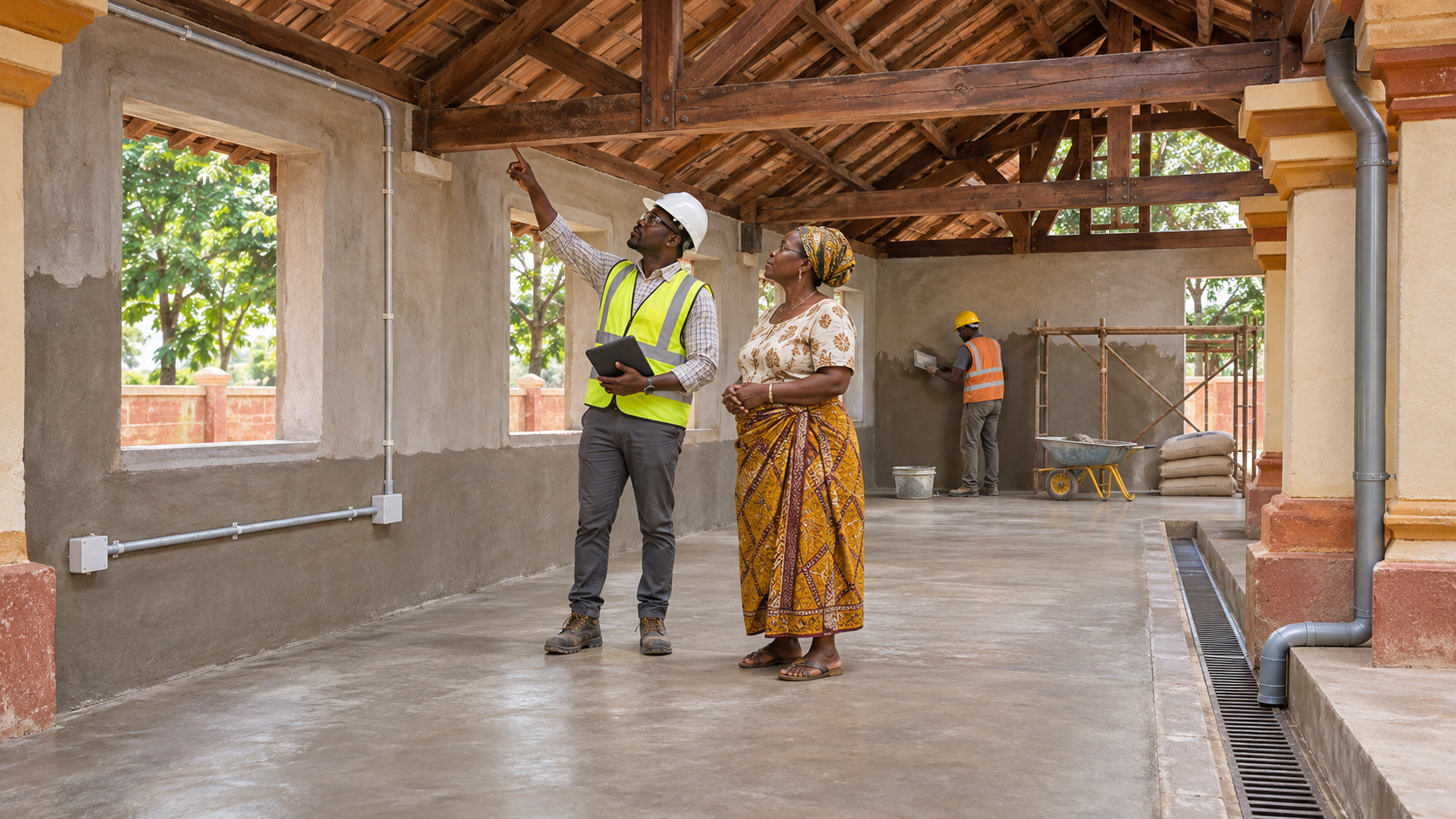
You do not need construction expertise to read a before-and-after record carefully. You do need a consistent method.
- Compare like with like. Match the same wall, entrance, corner or roofline across the stages. A different camera angle can make a space appear larger, brighter or more complete than it is.
- Separate finish from function. Paint, plaster and decorative treatment affect appearance. Doors, windows, lighting, flooring, drainage and circulation affect daily use. Identify only what can actually be seen.
- Read the building as a sacred space. Look at how devotees enter, move, gather and approach the worship area. A successful temple renovation should serve devotional practice, not merely produce a photogenic facade.
- Mark the limits of the evidence. Photographs may reveal workmanship at the surface, but they cannot settle questions about structural integrity, electrical safety, water management or long-term maintenance.
This method prevents two opposite mistakes. One is dismissing all visible work as merely cosmetic. The other is declaring complete technical success from appearance alone. Both conclusions go beyond what you can responsibly know.
Why a renovated temple in Sunyani matters
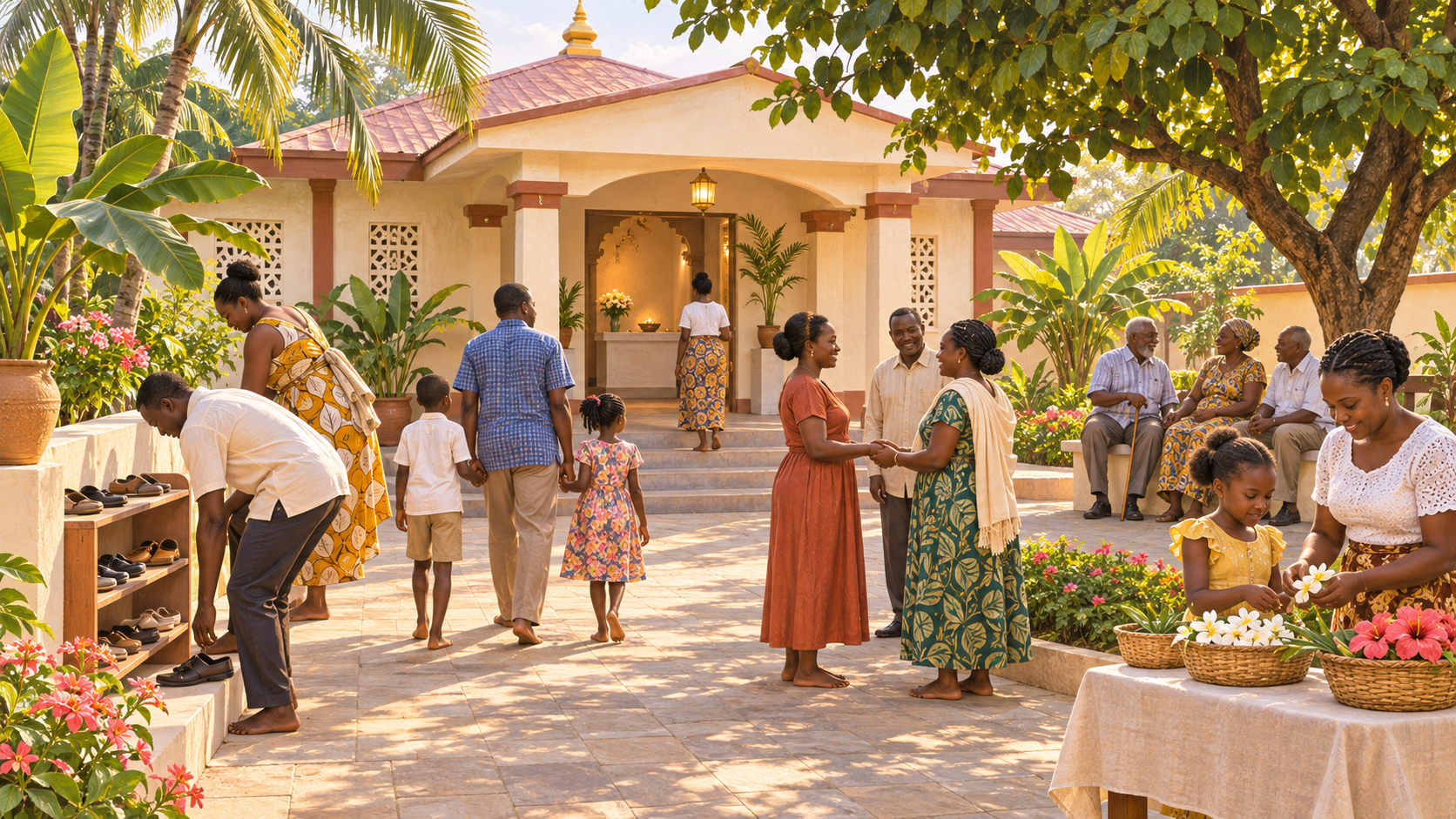
A temple in Ghana should first be understood as a local sacred home, not merely as an overseas symbol. Its daily meaning belongs to the devotees who worship, learn, gather and serve there. Renovation matters when it helps that community sustain its devotional life with dignity and continuity.
The work also carries a wider Dharmic significance. Traditions endure beyond Bharat when communities make them locally rooted. That requires more than exporting an architectural image. It requires people who care for a place, organise worship, welcome families and accept responsibility for the building after the renovation photographs have been taken.
This is why maintenance belongs in the same conversation as construction. A renewed building will eventually need cleaning, minor repairs, water control and periodic attention to finishes and services. The durable measure of success is not how striking the temple looks on one day. It is whether the community can use and care for it over time.
How to follow or support the work responsibly
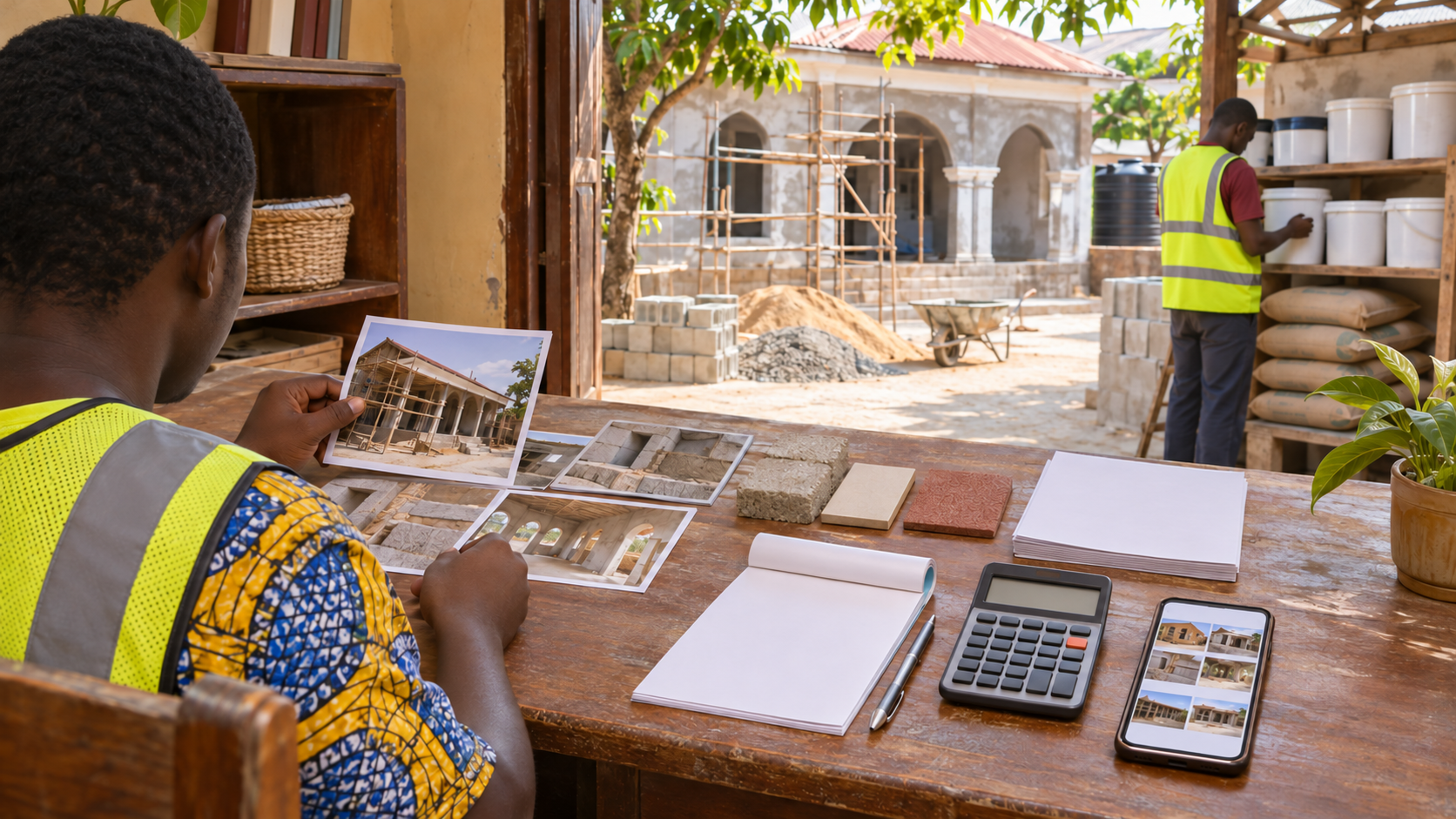
Renovation images can create an immediate desire to donate. Pause long enough to verify the present need. An after view may coexist with unfinished interior work, future maintenance needs or no active fundraising requirement at all.
- Find a current official contact. Confirm the temple’s own contact details or use a recognised ISKCON channel. Do not send money to an account number detached from a verifiable representative.
- Ask what remains. Request the specific present need rather than assuming that the visible construction stage is still current.
- Clarify the purpose of a donation. Ask whether funds are intended for building work, furnishings, worship facilities, maintenance or general temple use.
- Request acknowledgement. A receipt or written confirmation protects both the donor and the institution and creates a basic record of accountability.
- Offer only useful non-financial help. Share verified updates, visit when the temple confirms that visitors are welcome, or offer relevant skills through the local coordinator rather than arriving with an unsolicited plan.
Responsible support follows the temple’s current priorities. It does not turn an inspiring image into an assumed fundraising appeal.
Key questions about the renovation
Is the ISKCON Sunyani renovation complete?
An after stage is available, but a formal completion date and itemised close-out have not been established. It is accurate to say that the renovation reached a visible result. It is not yet safe to claim that every associated task has been closed.
What exactly was renovated?
Name only the changes you can clearly match across the before, during and after views. An itemised building scope has not been established, so avoid adding claims about structural, electrical or other concealed work without confirmation.
How can you contribute?
Begin with a verified temple or ISKCON contact and ask whether support is currently requested. Confirm the purpose and destination of any payment before sending it. If no current appeal can be verified, sharing the documented transformation accurately is better than circulating an unconfirmed payment request.
If you discuss the renovation, link to the original visual record and label unanswered details as unknown. That small discipline honours the Sunyani devotees, protects potential supporters and keeps attention on what the transformation genuinely demonstrates.
References

Leave a Reply
You must be logged in to post a comment.