
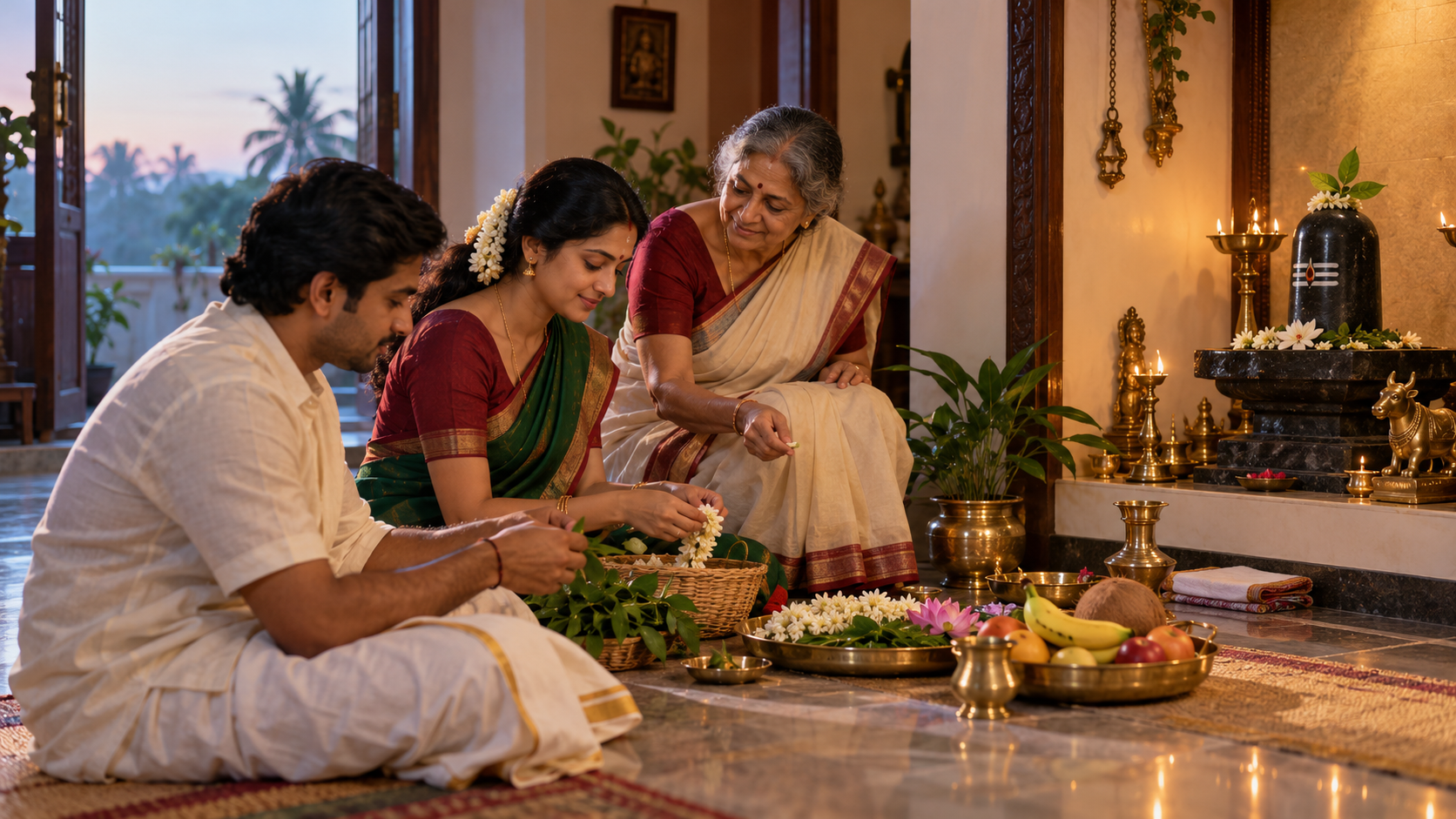
You want to reserve the right date, understand what Bhakteshwara Vratham is for, and prepare without replacing your family’s practice with a ritual assembled from unrelated internet checklists. The firm date to mark for 2026 is November 24.
The most useful next step is to confirm the actual procedure with the person who preserves it in your family or community. The vrata has a clear Shaiva and regional setting, but that doesn’t mean every household follows an identical sequence.
Mark November 24 for the 2026 observance
Bhakteshwara Vratham in 2026 falls on November 24. It is observed on Kartika Pournami, the full-moon observance in Karthika Masam.
Put that date in your personal and family calendars now, especially if preparation involves relatives, a temple visit, or obtaining instructions from a family priest. If your custom ties the sankalpa, puja, or completion of the vrata to a particular portion of the Pournami tithi, ask for the local timing where you will actually worship. A festival date tells you which civil day to reserve; it does not, by itself, settle every location-dependent ritual time.
Understand the vrata before choosing a procedure
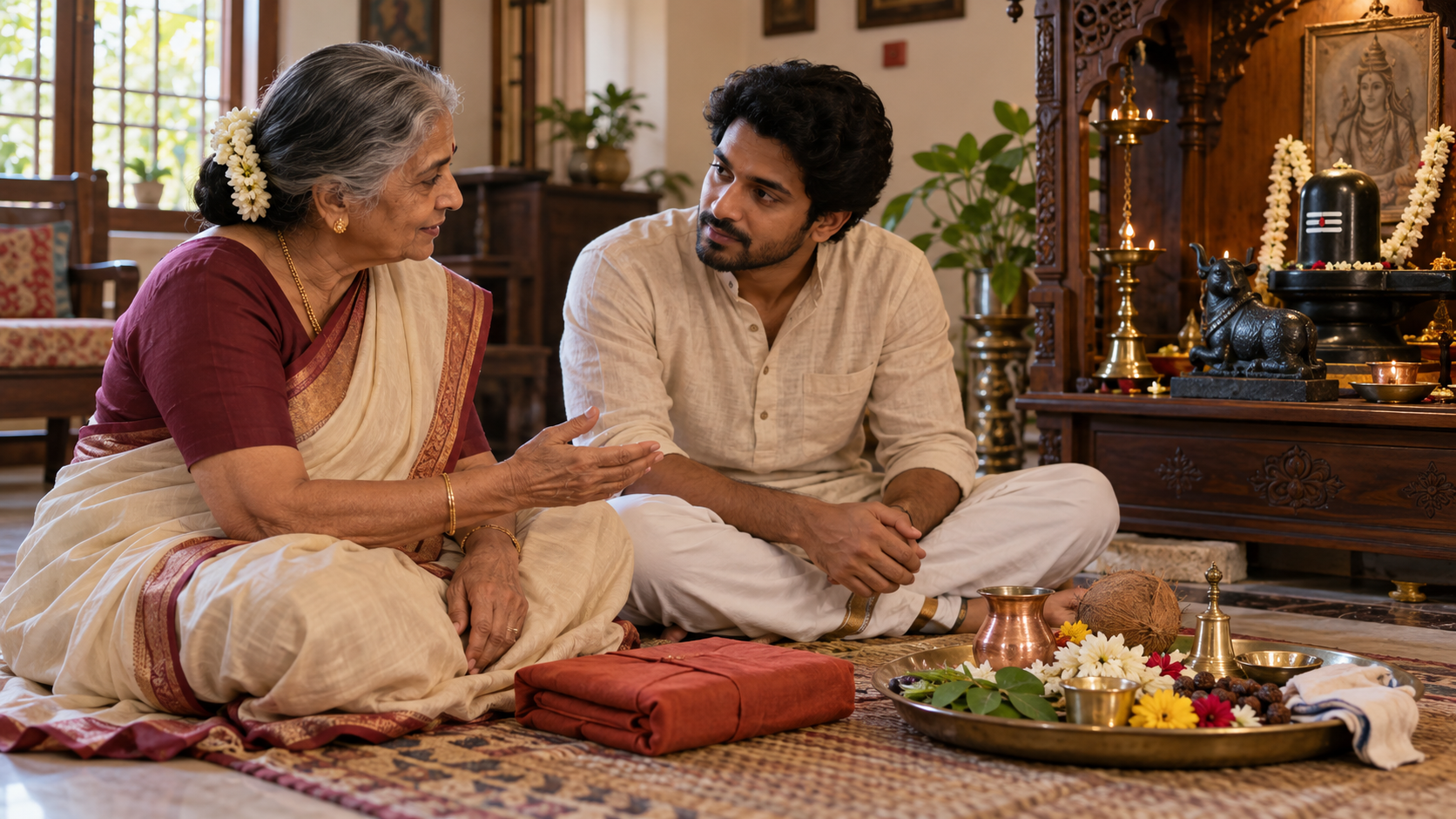
Bhakteshwara Vratham is dedicated to Lord Shiva. It is principally associated with Andhra Pradesh and Telangana and is also observed in parts of Karnataka. Married women commonly undertake it for sowbhagyam, the auspicious well-being and longevity connected with married life.
Those facts help you identify the vrata correctly, but they do not supply a universal ritual manual. Regional and household transmission matters here. A Telugu family in Andhra Pradesh, a family in Telangana, and a Kannada-speaking household may preserve different prayers, offerings, fasting expectations, or concluding customs while recognising the same vrata.
Pay attention to the word “mainly” when describing who observes it. A practice being especially associated with married women does not automatically establish a prohibition against everyone else. If you want to participate alongside the principal observer, or you are unsure whether the vrata applies to your circumstances, ask the elder or priest responsible for your tradition rather than turning a common pattern into an absolute rule.
Use five questions to recover your family’s method
Before buying puja materials or making a fasting commitment, speak with a parent, parent-in-law, knowledgeable elder, family priest, or temple connected with the region in which your practice developed. Ask these questions in one conversation:
- When does our observance begin and end according to the local Pournami timing?
- Is fasting part of our Bhakteshwara Vratham, and if so, what form does it take?
- Which Shiva puja items are essential in our custom, and which are optional?
- Is there a particular vrata-katha, prayer, mantra, or family-language text that we use?
- How is the vrata completed, including any concluding worship, meal, offering, or temple practice?
Write the answers as a single sequence. Keep required actions separate from family preferences and optional embellishments. This prevents two common planning problems: forgetting an essential step because it seemed ordinary to the person explaining it, and overloading the observance with additions borrowed from other Shiva vratas.
If two relatives give different instructions, don’t quietly combine both versions. Ask which practice belongs to the household in which the vrata will be performed. One internally coherent tradition is more useful than a longer hybrid checklist whose parts were never intended to operate together.
Plan carefully if you live away from the tradition’s home region
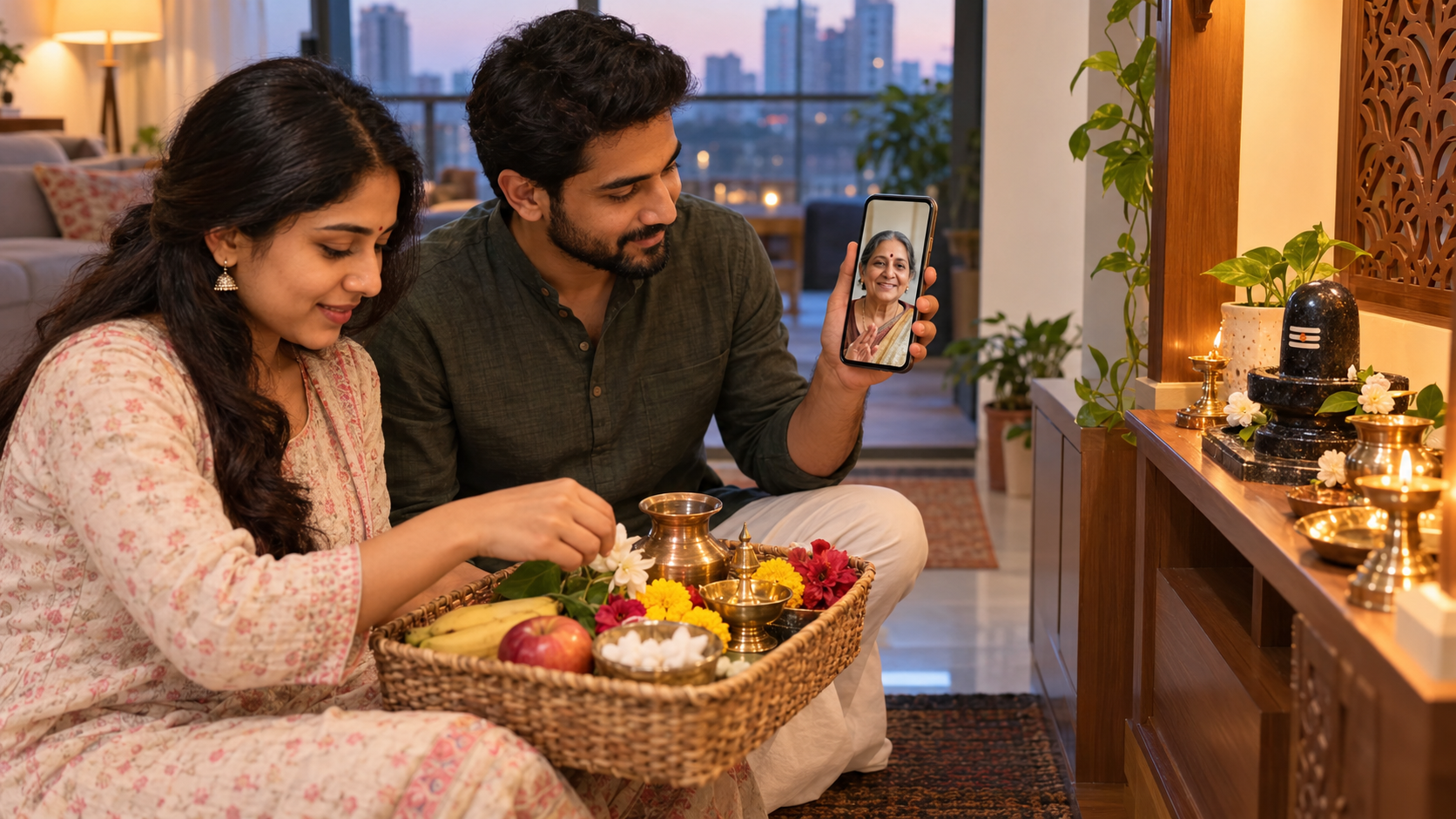
Distance often creates a practical gap: you know the festival name and date, but not the inherited order of worship. Close that gap before the day arrives. Ask a relative to send the procedure in the language actually used at home, including the pronunciation of any unfamiliar prayers. If a needed item is unavailable where you live, ask what your tradition permits as a substitute rather than choosing one because it appears in a generic puja list.
You should also decide whether you are observing at home, joining a temple programme, or combining family worship with a temple visit. A temple can help with local calendrical timing and Shaiva worship, but its public programme may not reproduce your household vrata. Confirm what the temple is offering and what you still need to do at home.
If this is your first observance, keep your commitment aligned with the instructions you have actually received. Don’t assume that a harsher fast or a larger collection of offerings makes the vrata more authentic. The governing intention is disciplined devotion to Lord Shiva within the vrata as your tradition understands it.
Key takeaways for Bhakteshwara Vratham 2026
- Reserve November 24, 2026, for Bhakteshwara Vratham.
- Recognise it as a Kartika Pournami vrata dedicated to Lord Shiva.
- Expect its strongest living context in Andhra Pradesh, Telangana, and parts of Karnataka.
- Understand its particular association with married women and sowbhagyam without inventing universal eligibility rules.
- Confirm local tithi timing, fasting discipline, required materials, prayers, and the method of completion with your family or temple tradition.
Start with one concrete action: place November 24 on the family calendar and send the five questions above to the elder, priest, or temple you trust. Once you have the answers, turn them into a one-page sequence and prepare from that—not from a mixture of unrelated ritual instructions.
References

Leave a Reply
You must be logged in to post a comment.