
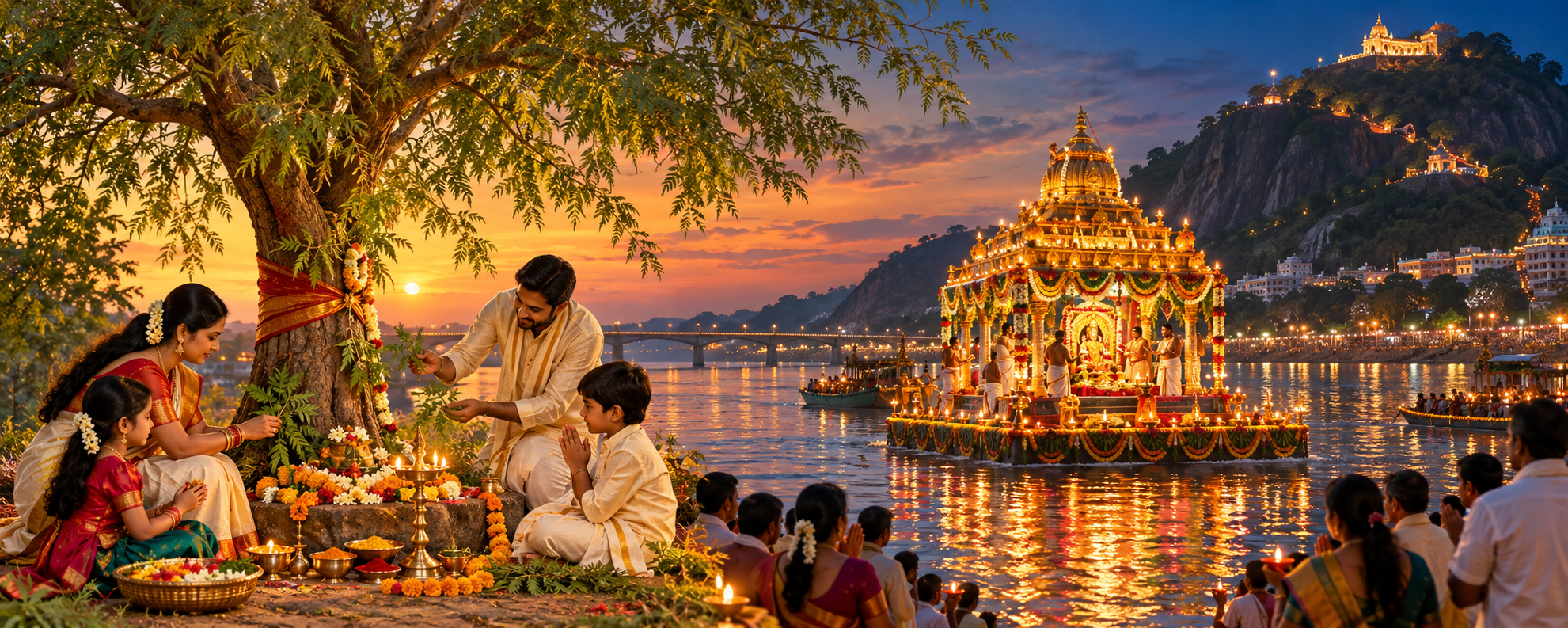
If you are deciding between a neighbourhood Vijayadashami observance and a visit to a major temple celebration, do not begin by asking which one is more authentic. Begin with a more useful question: which form does your family, region or chosen temple actually observe?
For 2026, mark 20 October for Shami Puja. Vijayawada’s Kanakadurga Temple also holds its Vijayadashami Theppotsavam on 20 October. The shared date does not require every community to perform the same ritual. Vijayadashami’s unity is expressed through distinct regional names, inherited customs and temple traditions.
Read the regional name before planning the ritual
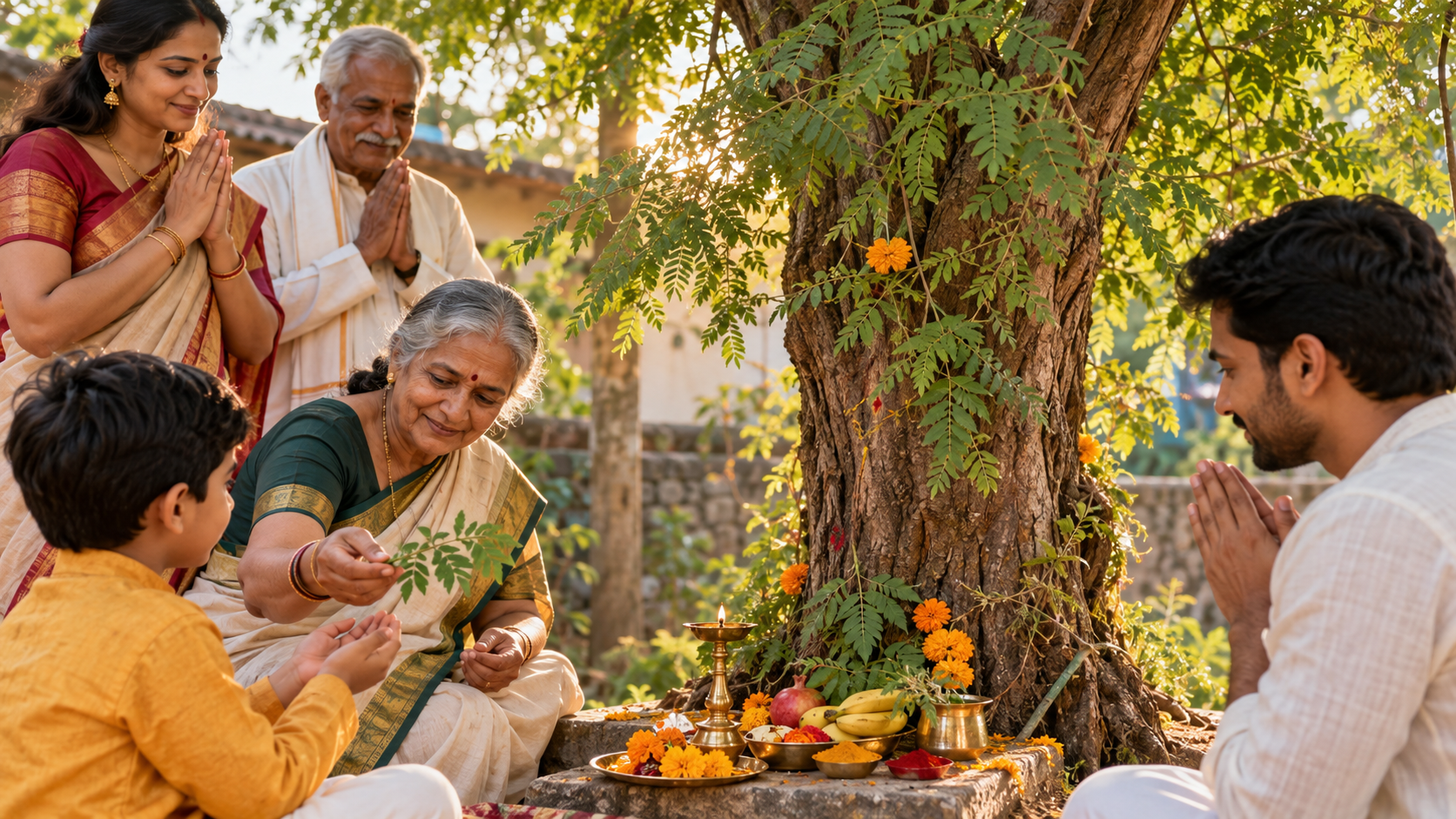
Shami Puja is observed on Vijayadashami across India, but the name you hear depends on where you are. This matters when you search a temple calendar, contact a community association or ask relatives about the family’s practice.
- Shami Puja: the broadly recognised name for the Vijayadashami worship associated with the Shami tree.
- Jammi Puja: the name commonly used in Telangana and Andhra Pradesh.
- Banni Puja: the name commonly used in Karnataka.
These are regional names for the same broad observance, not three unrelated festivals. That does not mean every locality follows an identical procedure. The name tells you where to begin; the local sampradaya tells you how the worship is conducted.
Use the local word when making enquiries. In Hyderabad or another part of Telangana, ask about Jammi Puja. In Karnataka, ask about Banni Puja. In Andhra Pradesh, distinguish between Jammi Puja and a temple’s larger Vijayadashami programme. A generic search for “Dussehra events” may find public celebrations while missing the ritual you intended to join.
Before buying materials or following an online sequence, ask the family elder, priest or organiser four concrete questions: which name is used locally, who leads the worship, what participants should bring, and when they should arrive. This preserves the living practice instead of replacing it with a standardised checklist assembled from another region.
Vijayawada’s Theppotsavam is the Navaratri conclusion
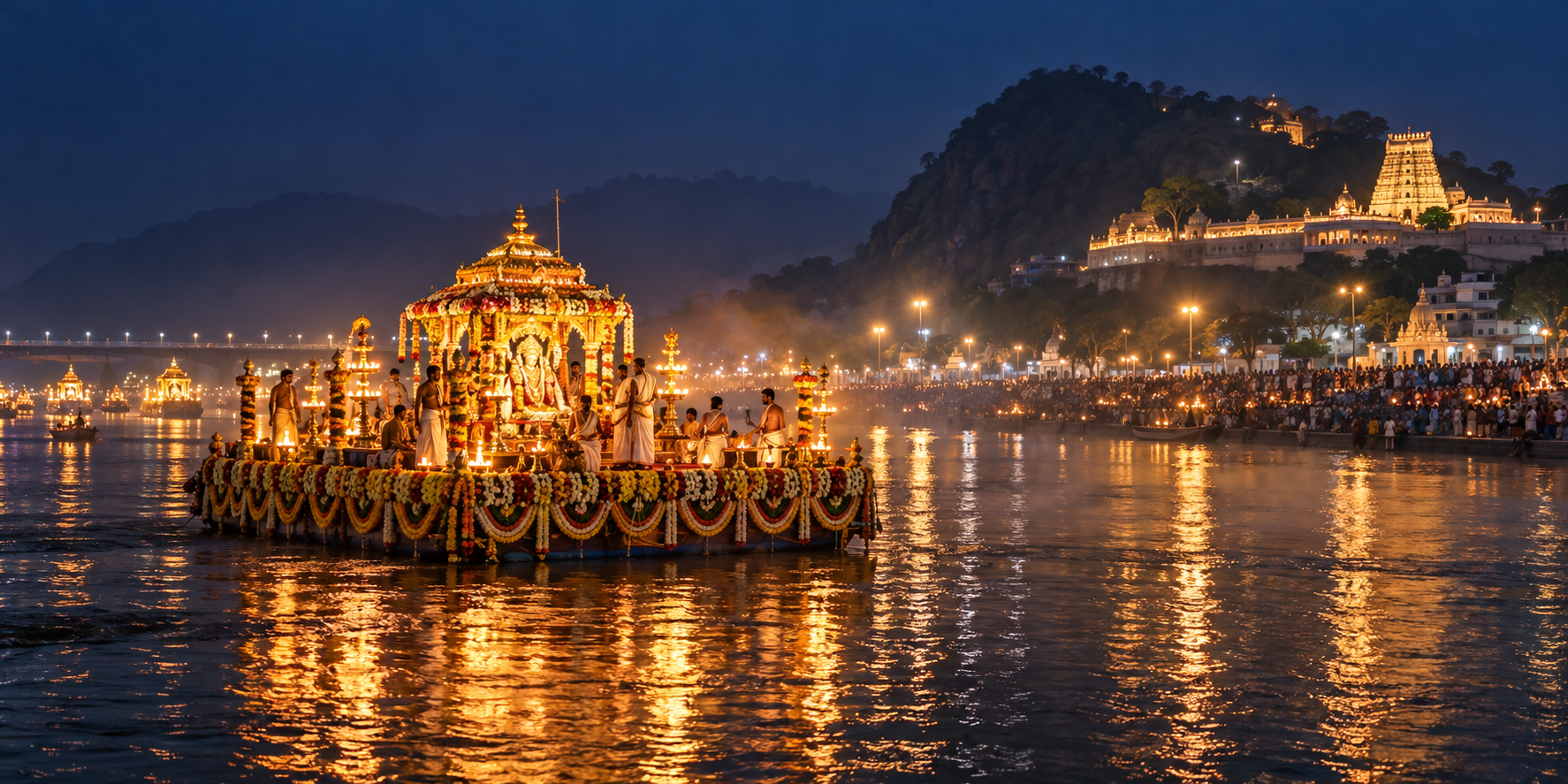
Vijayawada offers a different scale of participation. At the Durga Malleshwara Swamy Devasthanam, Theppotsavam is the principal Vijayadashami ritual and the concluding event of Durga Navaratri. It should therefore be understood as the culmination of the temple’s festival sequence, not as an incidental attraction added after the important worship is over.
Its defining action is processional and connected with water: Kanakadurga Ammavaru and Malleshwara Swamyvaru are taken for a sail. This distinguishes the celebration from an ordinary visit for darshan. The deities move beyond the usual stationary setting, and devotees witness Vijayadashami through the temple’s public ceremonial life.
If Theppotsavam is the reason for your journey, do not plan only around normal darshan hours. Ask specifically for the festival schedule, the permitted entry or viewing area, and any instructions governing movement during the event. A general opening time for the temple does not tell you when or where a moving ritual can be witnessed.
Shami or Jammi Puja and Theppotsavam need not be treated as competitors. One directs your attention to a regionally rooted Vijayadashami observance; the other reveals how a major temple brings Durga Navaratri to its ceremonial close. If your circumstances permit only one, choose according to your dharmic responsibility and purpose, not according to which celebration looks grander.
Plan 20 October without confusing date, muhurat and schedule
A festival date, a puja muhurat and a temple event schedule answer three different questions. The date tells you the day of observance. The muhurat identifies the appropriate ritual window used by a particular community or location. The event schedule tells visitors when an organised celebration will operate. Treating them as interchangeable is the easiest way to arrive at the wrong time.
- Reserve the correct date. Place Tuesday, 20 October 2026, on your calendar before making travel or family commitments.
- Choose the form of participation. Decide whether your priority is your family’s or community’s Shami, Jammi or Banni Puja, or the concluding Theppotsavam at Vijayawada.
- Use the local vocabulary. Search and enquire under Jammi in Telangana and Andhra Pradesh, Banni in Karnataka, and Shami where that is the familiar term. For the water celebration in Vijayawada, ask specifically for Theppotsavam.
- Confirm the clock time locally. Do not assume that a time obtained for one city or one kind of ritual governs another. Confirm a puja muhurat through the relevant local temple or panchanga, and confirm the Theppotsavam programme with the organising temple.
- Ask about participation, not merely attendance. For a local puja, ask what devotees are expected to bring or do. For the temple celebration, ask where devotees may enter, stand and move during the procession.
- Follow the local sequence once you arrive. Allow the priest, temple staff or designated volunteers to direct the gathering. Keep ceremonial routes clear and avoid interrupting the movement of the deities to obtain a closer view.
If you hope to combine a local puja with the Vijayawada celebration, verify both schedules before committing to the plan. Sharing the same festival date does not guarantee that the timing, travel and access arrangements will fit together.
Key takeaways
- Vijayadashami falls on 20 October in 2026 for the observances discussed here.
- Shami Puja is called Jammi Puja in Telangana and Andhra Pradesh and Banni Puja in Karnataka.
- The regional names belong to one broad Vijayadashami observance, but local ritual procedures should still be confirmed rather than assumed.
- Theppotsavam at Kanakadurga Temple in Vijayawada concludes Durga Navaratri and takes Kanakadurga Ammavaru with Malleshwara Swamyvaru on a ceremonial sail.
- A puja muhurat and a temple festival schedule are not the same thing; obtain each from the relevant local organiser.
Your next step is simple: contact the family, temple or community with whom you intend to observe Vijayadashami. Ask which regional name they use, whether the gathering is a puja or a procession, and what exact time and access instructions apply. That one enquiry turns a date on the calendar into informed participation in a living Dharmic tradition.
References
- Hindu Pad — Shami Puja Muhurat, 20 October 2026 | Banni Puja Timings, Jammi Puja
- Hindu Pad — Theppotsavam | Vijayadashami Utsavam during Navaratras in Kanakadurga Temple Vijayawada

Leave a Reply
You must be logged in to post a comment.