
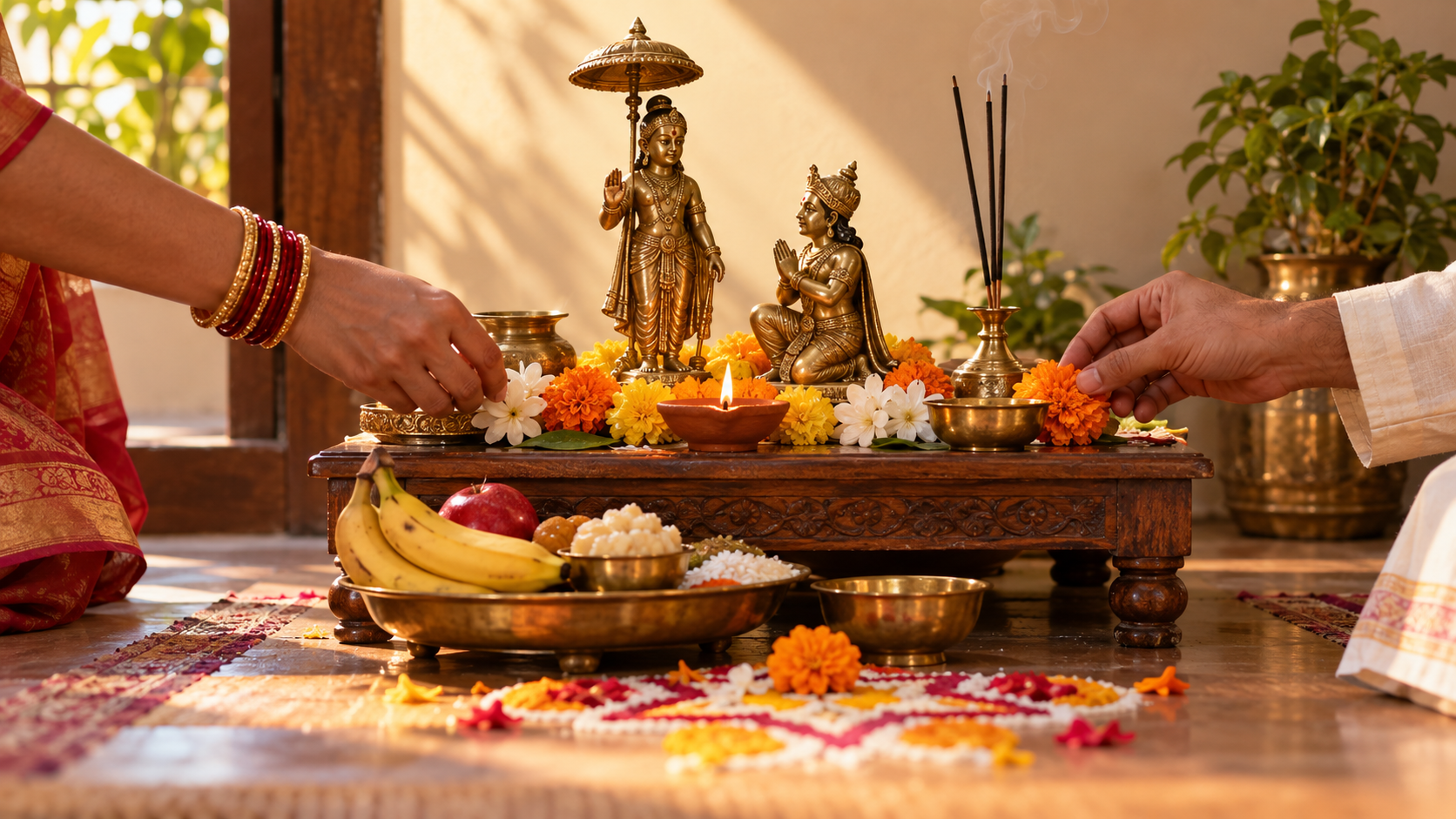
If you are arranging your family’s Diwali observances for 2026, reserve 10 November for Bali Pratipada. It belongs to the day after Diwali rather than to the main Diwali night, so giving it its own place in the family calendar prevents it from being lost in the larger celebration.
You do not need an elaborate new collection of puja items. What matters is knowing which local timing and household tradition you follow, preparing a simple offering with care, and understanding why Raja Bali and Vamana are remembered.
The 2026 date and calendar context
Bali Pratipada in 2026 falls on 10 November and follows Diwali. Put that civil date in your calendar first, then obtain any puja-time guidance from a panchang calculated for your location.
A festival date and a local tithi window are related, but they are not interchangeable. A tithi can begin or end between two civil midnights, and the relevant observance rule may depend on where that boundary falls in your city. Do not copy a muhurat from a distant city merely because its date is the same. If your family observes a prescribed time, use a location-specific panchang or the announcement of the mandir you actually attend.
In the Amavasyant calendars followed in Maharashtra, Gujarat, Telangana, Andhra Pradesh and Karnataka, Bali Pratipada also marks the beginning of Kartik month. This calendar detail explains why relatives in different regions may describe the surrounding month differently without disagreeing about the festival itself.
You may also encounter the names Bali Padyami and, in some local usage, Vamana Jayanti. Treat these as regional signals rather than proof that one household has named the observance incorrectly. When searching a temple schedule, check all the locally familiar names and confirm that the listing refers to the day after Diwali.
Remember Bali and Vamana without flattening the story
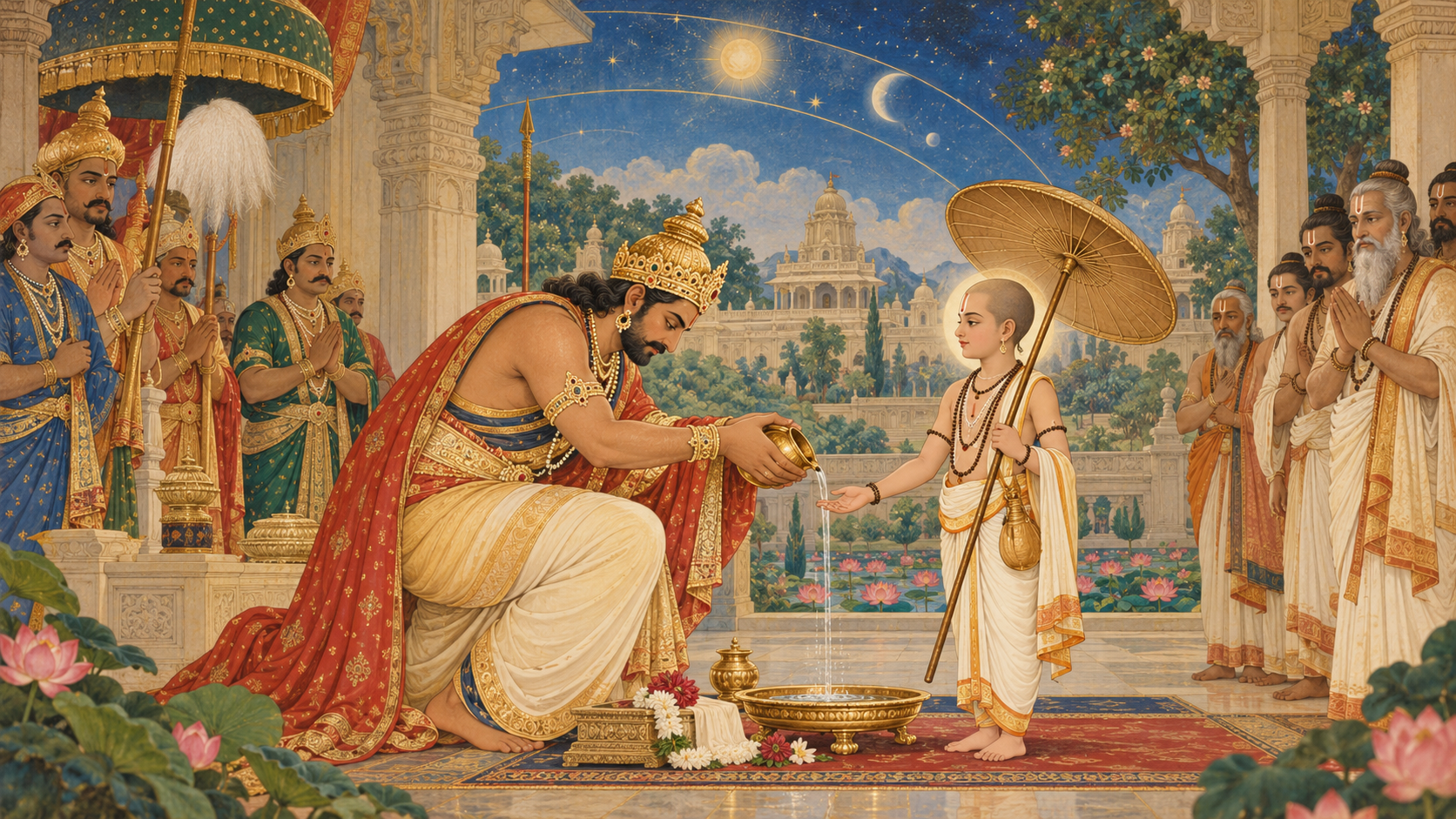
The remembrance centres on Mahabali, the generous asura king, and Vamana, the dwarf brahmachari form of Vishnu. In the familiar telling, Vamana requests as much land as he can cover in three steps. His cosmic reach reveals that the request is far greater than it first appeared, yet Bali honours his word and finally offers himself. Regional narrations differ in emphasis and in the account of Bali’s continuing relationship with his people, so your family’s sampradaya should guide the fuller retelling.
The story should not be reduced to a simple contest between a good deity and a bad king. Bali is remembered with respect precisely because generosity, steadfastness and surrender remain visible even when his power is checked. Vamana places sovereignty under a larger dharmic order; Bali demonstrates what it costs to keep a promise after its true weight becomes clear.
That gives you three useful questions to bring into the puja: What prosperity has entered this household? Where has possession turned into pride? Which promise should we keep even when keeping it has become inconvenient? These questions turn the katha from a performance about the distant past into an examination of how the family uses wealth, authority and trust now.
If children are present, tell the events in sequence and then ask them which action showed dana, humility or fidelity to a vow. Let them notice the moral tension before supplying a conclusion. Also tell them plainly that another region or lineage may narrate some parts differently. Respect for parampara includes knowing that Dharma can preserve shared meaning through more than one local form.
A simple Bali Puja sequence for the home
Prepare what your household will actually use
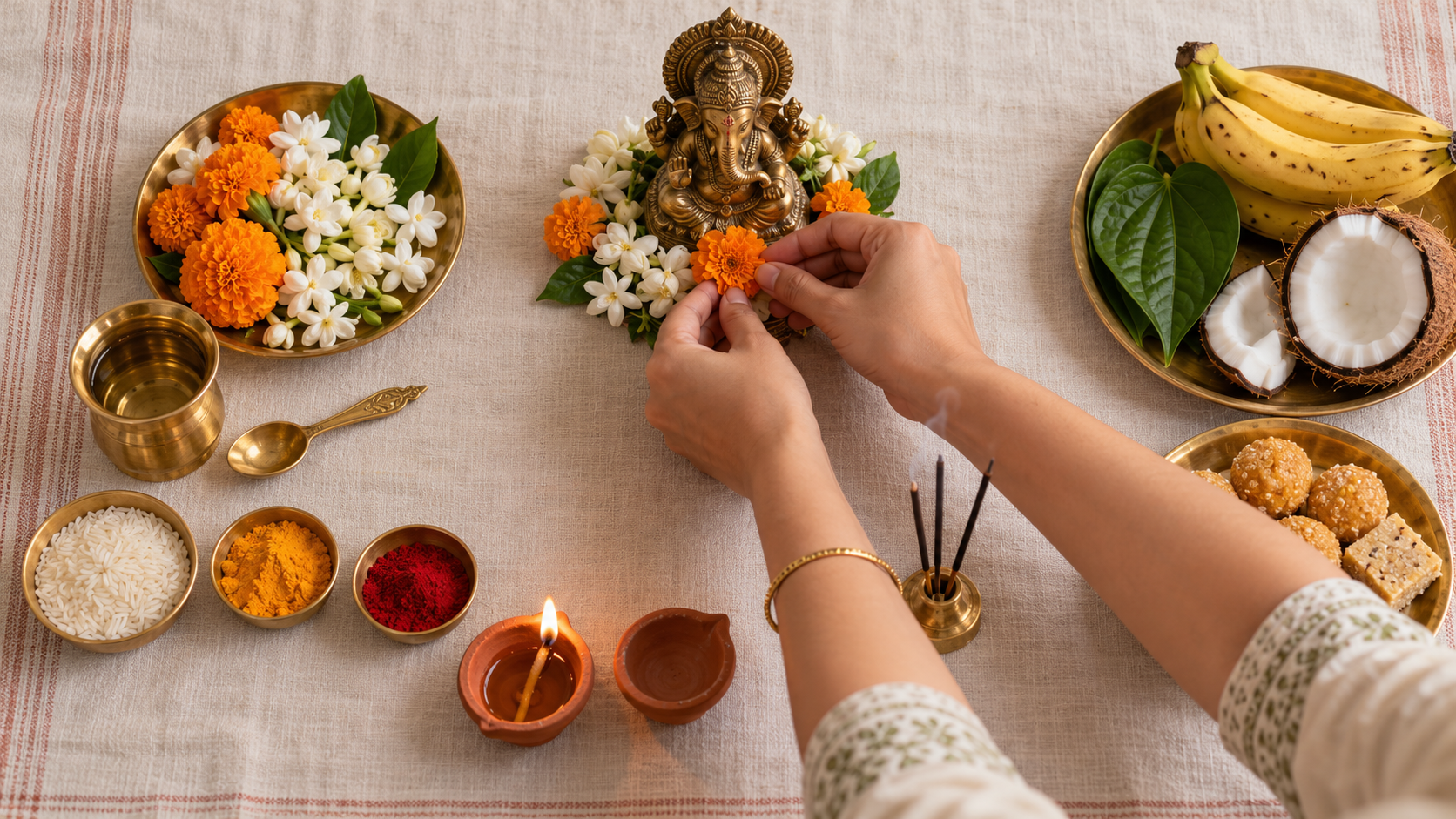
Begin with a clean puja surface, a lamp, clean water, flowers or leaves accepted in your tradition, and fruit or a homemade sweet for offering. Use your household’s established image of Vishnu or Vamana, or the customary representation associated with Raja Bali, if your family has one. A prayer book used regularly in the home is more appropriate than an unfamiliar liturgy assembled from unrelated online fragments.
Place a burning lamp on a stable, heat-resistant surface and keep cloth, paper, children and pets away from the flame. If your residence prohibits open flames, use a safe electric lamp rather than ignoring the building’s fire rules. Whether that substitution has a particular ritual status is a question for your tradition, but observing basic safety is not optional.
Follow a clear order
- Clean the puja place, wash, wear clean clothes and allow the household to settle. Silence phones and finish practical interruptions before beginning.
- Arrange the image or symbol used in your family. If your parampara does not prescribe one, do not buy an unfamiliar object merely to imitate a photograph of somebody else’s puja.
- Make a sankalpa in the form taught by your family. If you do not know a formal Sanskrit sankalpa, state the intention plainly: you are observing Bali Pratipada with gratitude, remembering Raja Bali and Vamana, and asking that the household’s prosperity remain governed by Dharma. This plain-language statement is an intention, not a replacement for a lineage-specific mantra.
- Light the lamp and make the customary offerings one at a time. Offer water, flowers and food calmly rather than hurrying through a long collection of objects.
- Recite the Vishnu prayer, stotra or divine names already familiar to your household. If you have not learned a prescribed recitation, a short, attentive prayer is better than pronouncing a long mantra carelessly.
- Retell the encounter between Bali and Vamana. Pause over Bali’s gift, the three-step request and his decision to honour his word when the consequence becomes apparent.
- Offer a concluding namaskar. Perform aarti if it belongs to your household practice, then share the offered food as prasada.
You may add an act of dana after the puja, especially if you want the observance to shape conduct beyond the altar. Choose something genuinely useful to the recipient and give without turning the gift into a display. The point is not to attach a price to devotion; it is to keep generosity connected to responsibility.
If you are travelling or living in a shared space, retain the essential movement of the observance: make the place clean, establish a safe light, offer what is practical, remember the katha, pray and share prasada. A short observance performed attentively is more coherent than a complicated procedure that you cannot complete or explain.
Let regional tradition settle the details
The most reliable order of guidance is your family’s living parampara, your sampradaya or mandir, and then a local panchang for the calendar calculation. A general online procedure can help you organise what you already know, but it cannot decide which regional form belongs in your home.
The first common mistake is importing a muhurat from another location. The second is assuming that Bali Pratipada, Bali Padyami and Vamana Jayanti must carry precisely the same ritual details everywhere. The third is combining isolated gestures from several traditions until the result no longer belongs to any of them. When two instructions conflict, ask an elder, priest or teacher connected to the tradition you practise instead of trying to perform both.
Another mistake is allowing preparation to become a shopping exercise. Freshness, cleanliness and attention matter more than the size of the offering. Use ordinary, suitable items already available to you unless your family paddhati calls for something particular.
Finally, do not leave the ethical centre at the altar. Before the day ends, identify one promise to keep, one excess to reduce or one act of generosity to complete. That is how the remembrance of Bali’s steadfastness and Vamana’s ordering of power enters household life.
Key takeaways for Bali Pratipada 2026
- Bali Pratipada falls on 10 November 2026, on the day following Diwali.
- It begins Kartik month in Amavasyant calendars used in Maharashtra, Gujarat, Telangana, Andhra Pradesh and Karnataka.
- Bali Padyami and, in some places, Vamana Jayanti are alternative names you may see on local calendars.
- Use a panchang calculated for your city if your household follows a specific tithi or muhurat window.
- A coherent home observance can be simple: a clean place, safe lamp, suitable offerings, familiar prayer, the Bali-Vamana katha, namaskar and prasada.
- Let family parampara determine the ritual details, and carry the teaching into a concrete act of humility, promise-keeping or dana.
Put 10 November in the family calendar now. Before Diwali week becomes busy, ask one knowledgeable elder or your mandir which name, local timing and puja form your community follows. Then gather only the ordinary items you need and decide who will tell the katha.
References

Leave a Reply
You must be logged in to post a comment.