

You may be drawn to Tara because you need courage through a difficult passage, clarity for study, or a disciplined form of Devi-upasana. Your first decision is not which secret mantra promises the fastest result. It is whether you are seeking open devotional worship or entering a lineage-based tantric practice.
That distinction protects both you and the tradition. Tara is revered as the second of the ten Mahavidyas and associated with knowledge, protection, and transformation. Those broad truths can orient your worship, but they do not make every form, mantra, image, or ritual sequence interchangeable.
Begin with the tradition, not merely the name Tara
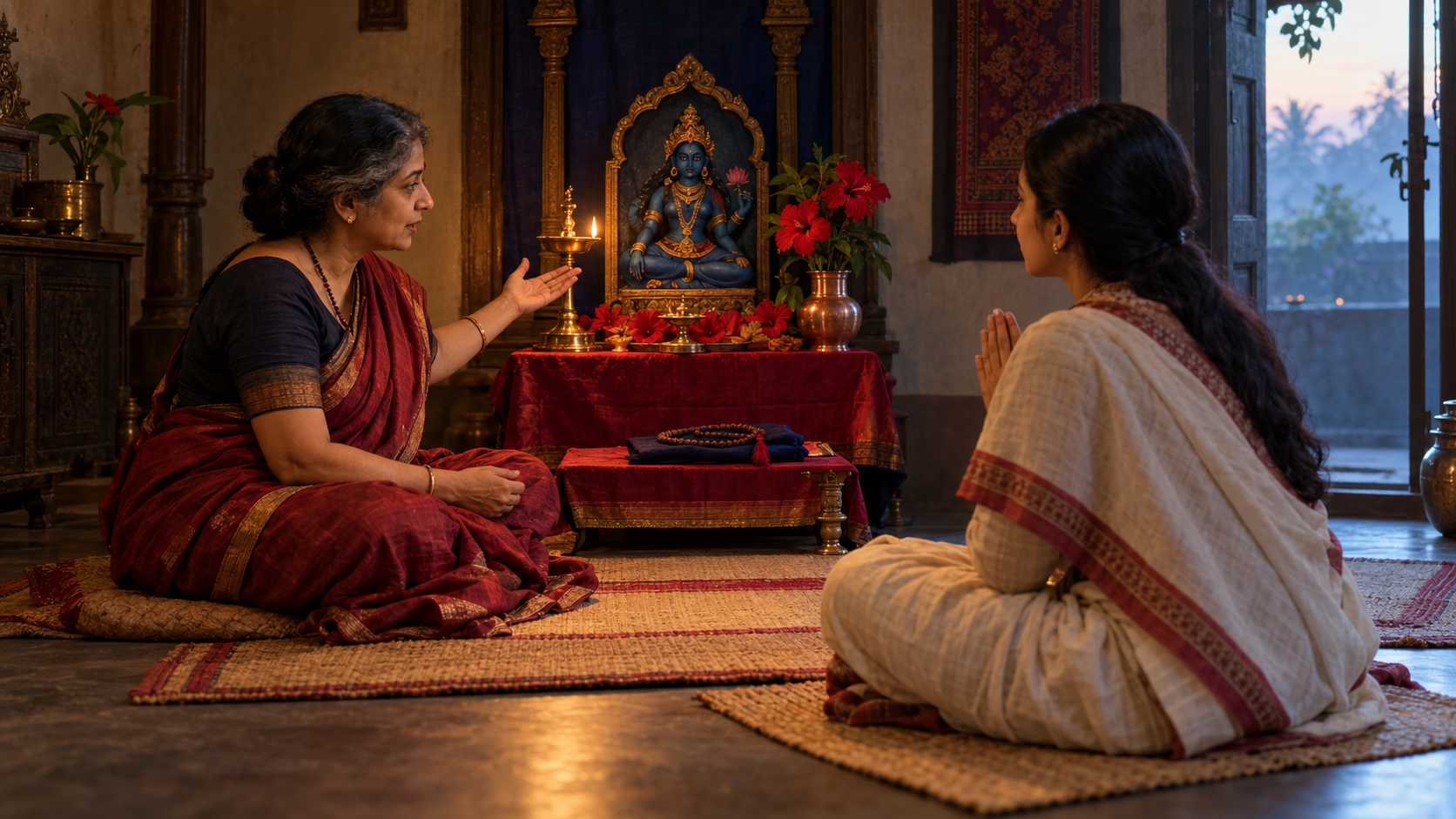
Tara appears in more than one Dharmic setting. Hindu Mahavidya worship, a temple or family form of Devi-upasana, and Buddhist Tara practice may share a divine name and certain resonances, but they belong to distinct theological and ritual settings. Combining them casually can produce a practice that is faithful to none of them.
The same care applies within Hindu traditions. A serene image, a fierce image, a mantra copied from a book, and a ritual taught by a guru are not four interchangeable ways of decorating the same idea. Form, sound, visualization, offering, and sequence often belong together. If you detach one element and transplant it elsewhere, you may lose the very meaning the practice was designed to preserve.
Before adopting a Tara practice, ask these questions:
- Is this instruction specifically from a Hindu Mahavidya tradition, a Buddhist lineage, a temple custom, or a modern devotional adaptation?
- Is it presented as public worship, or does it require initiation and direct instruction?
- Does the mantra belong to the same form of Tara shown in the image and described in the meditation?
- Can the teacher identify the lineage, ritual setting, or inherited basis of the practice?
- Are you permitted to alter the pronunciation, sequence, offerings, or visualization?
If you cannot answer the first two questions, do not intensify the practice. Stay with respectful prayer while you establish where the instruction comes from. This is not empty caution. In mantra traditions, a small-looking difference can carry a real difference in meaning and method.
Separate open devotion from initiated tantric sadhana
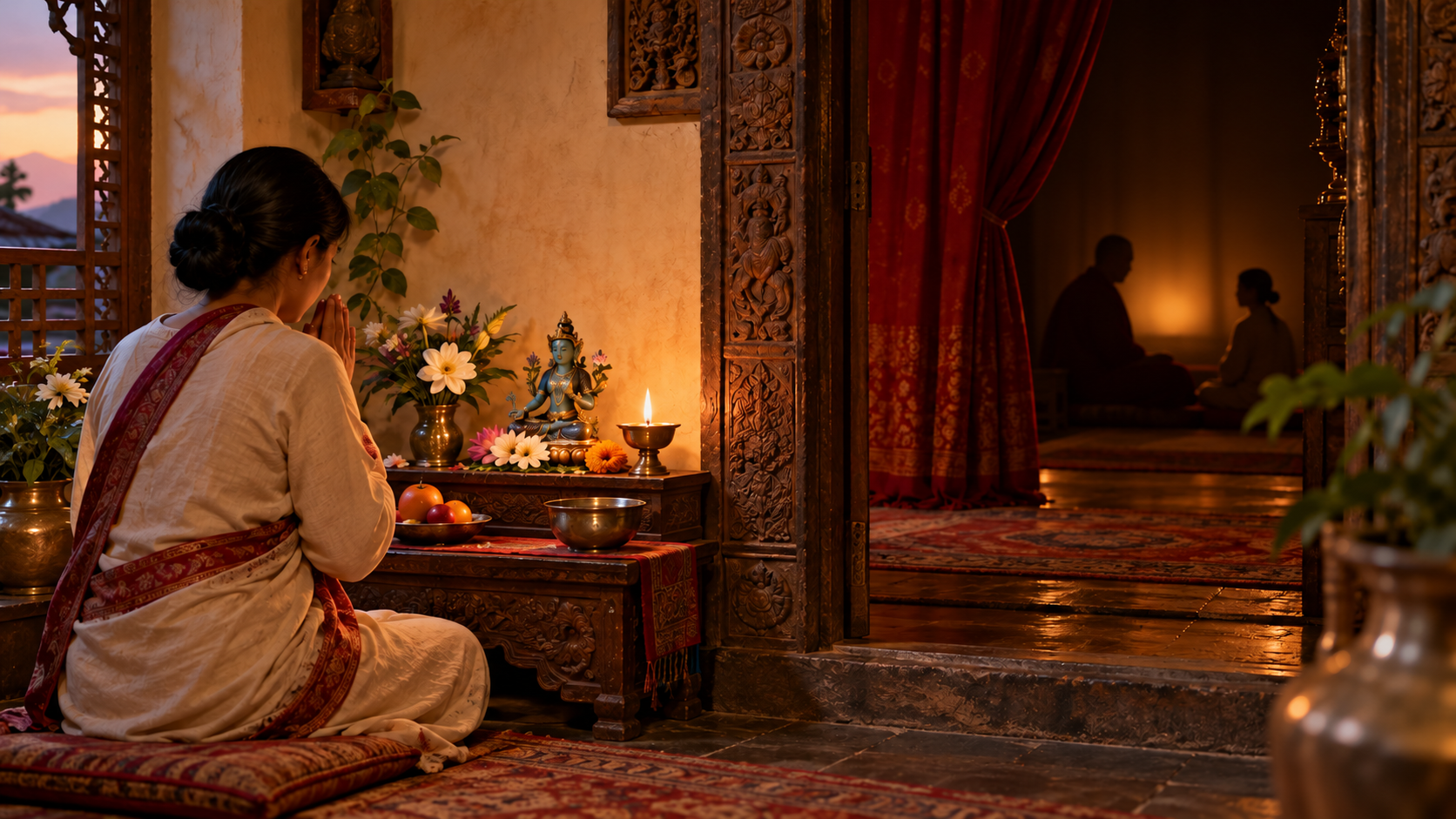
Sadhana means disciplined spiritual practice. It is broader than mantra repetition, and it is not automatically secret. Confusion begins when introductory devotion and specialized tantric instruction are treated as if they require the same preparation.
You can think in terms of three practical levels:
- Open remembrance: respectful namaskara, prayer in your own language, contemplation of Tara’s protective wisdom, and study of teachings made openly available within your tradition.
- Established household worship: a clean place of worship, simple offerings, a familiar hymn or divine name, and a sequence received through family, temple, or a trusted teacher.
- Initiated tantric practice: a specific mantra and its pronunciation, prescribed visualization, ritual gestures or placements, vows, specialized offerings, and other details taught as one coherent discipline.
The third level should not be assembled from fragments found in unrelated books, videos, and social posts. Initiation is not a badge of spiritual rank. Its practical purpose is to transmit the method accurately, establish the commitments attached to it, and give you someone qualified to correct mistakes.
A trustworthy teacher should be able to explain what is public, what is restricted, and why. The teacher should not guarantee supernatural powers, use fear to demand obedience, conceal financial expectations, violate personal boundaries, or isolate you from family and ordinary duties. Secrecy may protect a sacred method; it must never be used to protect exploitation.
Before accepting initiation, ask what daily commitment will be expected, how missed practice is handled, which conduct is required, what expenses are involved, and how you should pause if health or family circumstances change. If direct questions are treated as disloyalty, you have learned something important before making a vow.
A simple Tara practice you can begin without pretending initiation

You do not need to imitate an advanced ritual to begin sincerely. A modest practice can train regularity, attention, gratitude, and truthful self-observation. Keep it recognizably devotional and avoid claiming that it reproduces a lineage-specific tantric procedure.
- Choose a repeatable setting. Use a clean, quiet place and a time you can keep without neglecting work, health, or family responsibilities.
- Settle the space. Put away the phone and sit in a stable posture. If you use a lamp, incense, or another physical offering, do so only where it is safe.
- State your intention plainly. You might pray for protection from fear and confusion, growth in wisdom, and the courage to perform the right action.
- Offer what you understand. Water, flowers, light, or a respectful bow can express devotion without pretending knowledge you do not possess.
- Use only an authorized or openly devotional recitation. If you have not received a mantra, pray in ordinary language or use a hymn or divine name accepted for open use in your own setting. Do not guess the pronunciation of an unfamiliar seed syllable.
- Sit quietly after the prayer. Notice the fear, attachment, or avoidance that brought you to Tara. Then identify one dharmic action you can take in ordinary life.
- Close deliberately. Offer gratitude, return to your duties, and record what you actually practised rather than what you hoped to experience.
The final step matters. A Tara practice devoted to wisdom and protection should change how you meet a real difficulty. If you pray for courage and then continue avoiding a necessary apology, decision, boundary, or duty, the gap between ritual and conduct deserves your attention.
Avoid collecting multiple mantras simply because each promises a different benefit. Constantly changing methods prevents you from seeing whether any discipline is making your attention steadier. It can also mix instructions that were never meant to operate together.
Judge mantra siddhi by integration, not spectacle

The language of mantra siddhi attracts understandable curiosity. It can also turn sadhana into a hunt for dramatic signs. Traditions do not always define attainment in identical ways, so a universal checklist of visions, dreams, sensations, or powers is unreliable.
For a beginning practitioner, the sounder questions concern integration:
- Are you becoming more regular without becoming rigid or proud?
- Can you notice fear before it controls your speech or decisions?
- Is your study clearer and your conduct more truthful?
- Are you more capable of protecting the vulnerable without feeding anger?
- Does devotion strengthen your duties, or has it become an excuse to escape them?
- Can you receive correction without treating every unusual experience as proof of attainment?
Keep a plain practice record. Note whether you practised, your state of mind before and after, the obstacle you were avoiding, and the action you took. Review the pattern at a regular interval instead of judging the entire sadhana after every session. This shifts attention from spiritual theatre to observable discipline.
Dreams, strong emotions, bodily sensations, or vivid imagery may feel significant, but they do not authorize you to teach, initiate others, abandon ethical restraints, or declare yourself accomplished. Discuss persistent experiences with a qualified teacher who is willing to interpret them conservatively.
Pause any intensified practice if it produces continuing panic, loss of sleep, impaired judgement, contempt for others, or inability to meet ordinary responsibilities. Return to simple prayer and seek appropriate help. Spiritual practice is not a substitute for medical or psychological care, and a responsible teacher will not ask you to treat it as one.
Key takeaways for choosing your next step
- Tara Mahavidya worship is not a single generic method; identify the tradition and the specific form before combining practices.
- Open devotion can begin simply. Specialized mantra, visualization, vows, and ritual procedures require competent transmission when a tradition designates them as initiated practices.
- A good teacher explains commitments and boundaries clearly, accepts reasonable questions, and never uses secrecy to hide coercion or exploitation.
- Do not measure progress by novelty. Look for steadier attention, wiser action, ethical restraint, courage, and faithful performance of duty.
- If the provenance or permission of a practice is unclear, remain with simple prayer while you seek guidance. Restraint is part of discernment, not a failure of devotion.
Your next step is concrete: write down the tradition you are approaching, the status of the instruction you have received, and the one devotional practice you can sustain honestly. If the first two remain unclear, keep the third simple and find a qualified teacher. Tara is approached through discernment as well as intensity.
References

Leave a Reply
You must be logged in to post a comment.