-
Saka Chamkaur: Honoring the Vadde Sahibzaade’s Courage, Sacrifice, and Dharmic Unity

Saka Chamkaur illuminates the exemplary courage and martyrdom of the Vadde Sahibzaade—Baba Ajit Singh and Baba Jujhar Singh—within the living heritage of Sikh history. Set against the evacuation from Anandpur Sahib, the episode reveals disciplined leadership, ethical clarity, and spiritual conviction under overwhelming odds. The narrative resonates across dharmic traditions by highlighting shared values of…
-
Sahibzadas’ Supreme Sacrifice: A Moving Testament to Faith, Freedom, and Dharmic Unity

The saga of the Sahibzadas—Guru Gobind Singh’s four sons—represents a timeless testament to faith, freedom, and dharmic unity. Their martyrdom at Chamkaur and Sirhind in 1705 exemplifies moral courage under profound adversity, offering insights into Sikh history and broader Indian heritage. By foregrounding the shared values of dharma, satya, and compassion found across Hinduism, Buddhism,…
-
Honoring Guru Tegh Bahadur’s 350th Shaheedi: Courage, Gurbani in Action, and Religious Freedom

The 350th Shaheedi of Guru Tegh Bahadur Sahib Ji invites communities to honor a historic stand for freedom of conscience by living Gurbani through collective reflection and compassionate action. This piece outlines how remembrance can move beyond ceremony into seva—through sangat-led dialogues, interfaith collaboration, and ethical education. It highlights shared dharmic values across Sikhism, Hinduism,…
-
The Legendary Blue-Turbaned Lion: Sardar Sant Singh Tegh’s Timeless Legacy of Unity

The epithet “Blue-Turbaned Lion of the Mountains” captures the moral courage and protective spirit associated with Sardar Sant Singh Tegh. Remembered through the sant-sipahi ideal, his legacy blends spiritual depth with disciplined service to community. The blue turban, resonant with Sikh history, symbolizes readiness anchored in compassion rather than conquest. This narrative situates his reputation…
-
Srila Bhaktisiddhanta Sarasvati Thakura’s Disappearance Day: Visionary Ray of Visnu, A Legacy

Srila Bhaktisiddhanta Sarasvati Thakura’s Disappearance Day is an occasion to contemplate a teacher described by Srila Prabhupada as a ray of Visnu, a liberated soul sent by Krsna. The Ratha-yatra episode, where a garland from Lord Jagannatha fell upon the infant, is received as an early sign of divine sanction. His life aligned with Srila…
-
Honoring Srila Bhaktisiddhanta Sarasvati Thakur: Disappearance Day Reflections from Mayapur

This article reflects on the Disappearance Day of Srila Bhaktisiddhanta Sarasvati Thakur, presenting the day’s significance within the Gaudiya Vaishnava tradition and its wider relevance to contemporary spiritual life. It situates a lecture at ISKCON Mayapur by HH Bhakti Charu Swami as a thoughtful lens for understanding the Thakur’s disciplined sadhana, shastra-centered devotion, and compassionate…
-
Baghbazar to Mayapur: Disappearance Day Tribute to Bhaktisiddhanta Sarasvati Goswami

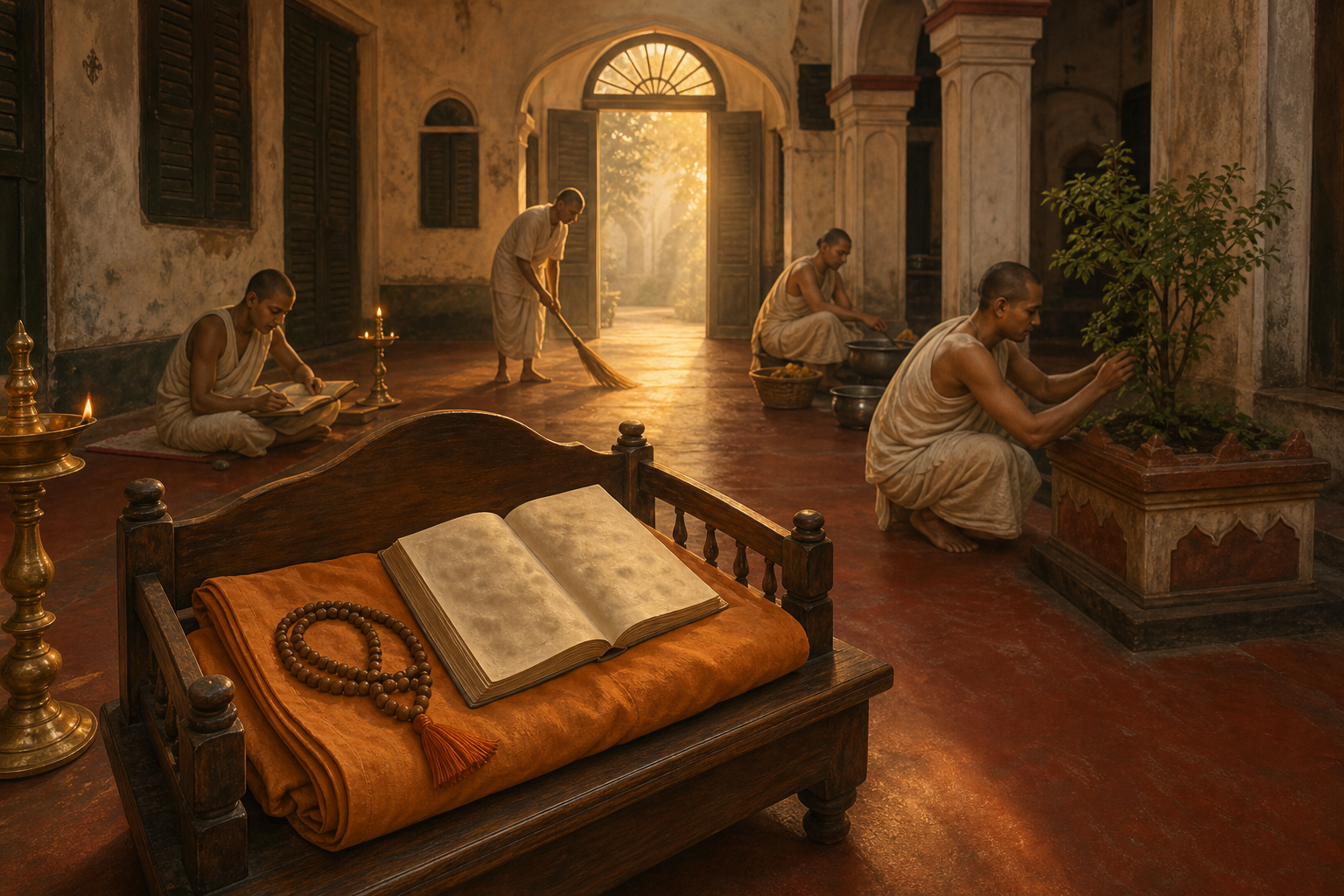
This Disappearance Day reflection honors Srila Bhaktisiddhanta Sarasvati Goswami Prabhupada, who departed in 1937 at Sri Gaudiya Math, Baghbazar, Kolkata, with his samadhi mandir in Sri Mayapur Dham at Sri Chaitanya Math. A rare visit to his private room—ordinarily restricted—enabled documentation of personal belongings and the bed of his final moments, captured in a thoughtful…
-
Honouring Prof. Puran Singh: An Inspiring UC Davis Symposium and Webinar of Dharmic Unity

The Sikh Student Association of UC Davis hosted a symposium and webinar honouring Prof. Puran Singh, integrating scholarly rigor with community reflection. Sessions explored how his fusion of science and spirituality supports ethical inquiry and lived seva. Participants shared formative experiences of reading Puran Singh, noting how his insights shaped academic purpose and personal growth.…
-
Grace on the Temple Floor: A Sweetball, Surrender, and Srila Prabhupada’s Blessing

A crowded darshan in New Dwaraka revealed how surrender in service can invite unexpected grace. As Srila Prabhupada tossed sweetballs, one rolled through the packed temple to reach Omkara devi dasi at the very moment she bowed in departure. This seemingly impossible detail became a vivid emblem of Guru’s Blessings and the sanctity of prasadam…
-
Honoring Guru Tegh Bahadur Ji: 350 Years of Courage, Conscience, and Religious Freedom

The 350th anniversary of Guru Tegh Bahadur Ji’s martyrdom offers a moment to recall a defining act of moral courage in Indian history and the Sikh tradition. His sacrifice in 1675 affirmed Religious Freedom and protected the spiritual autonomy of people across communities. The tribute highlights how his example advances Interfaith Dialogue, the Harmony of…
-
Gallant Final Stand in Malaya: 5/11 Sikh Regiment’s World War II Bravery and Resolve

The 5th Battalion, 11th Sikh Regiment distinguished itself in the Malaya Campaign of 1941–42 through disciplined rear-guard actions and principled courage. Operating under intense pressure, the battalion protected withdrawing formations and civilians, illustrating how tactical patience can shape strategic outcomes. Their conduct reflects a dharmic ethic—duty, compassion, and kshatra—that unites Hindu, Buddhist, Jain, and Sikh…
-
Hind Di Chadar: Guru Tegh Bahadur Ji’s Courage, Sacred Travels, and Supreme Martyrdom
Hind Di Chadar—“Shield of India”—honors Guru Tegh Bahadur Ji’s steadfast defense of freedom of conscience and his inclusive dharmic vision. This post traces his early formation under Guru Hargobind, his recognition as the ninth Sikh Guru, and his establishment of Chak Nanaki (later Anandpur Sahib). It maps key travels across North and East India, showing…
-
From Worry to Wisdom: Reflecting on Guru Nanak Dev Ji’s Timeless Guidance Today

Marking the 556th Birth Anniversary of Guru Nanak Dev Ji, this reflection explores how Naam Japna, Kirat Karni, and Vand Chakna guide a practical journey from worry to wisdom. It explains how hukam offers a stable orientation amid uncertainty and why seva and sharing transform private anxiety into communal resilience. The piece highlights Ik Onkar…
-
Honoring His Grace Gokulendra Das: Lessons in Devotion from Rhodes University to ISKCON

This tribute reflects on His Grace Gokulendra Das (Greg), a Rhodes University student in early 1970s South Africa whose disciplined devotion and study converged meaningfully. Recollections note that he met Ksudhi Prabhu in 1972 or 1973 and often hitchhiked after Friday lectures, a choice that signaled uncommon commitment. His example shows how scholarship and spirituality…
-
Remembering Gopichand Hinduja, 85: ISKCON Friend and Devotee of London’s Radha-Krishna Temple

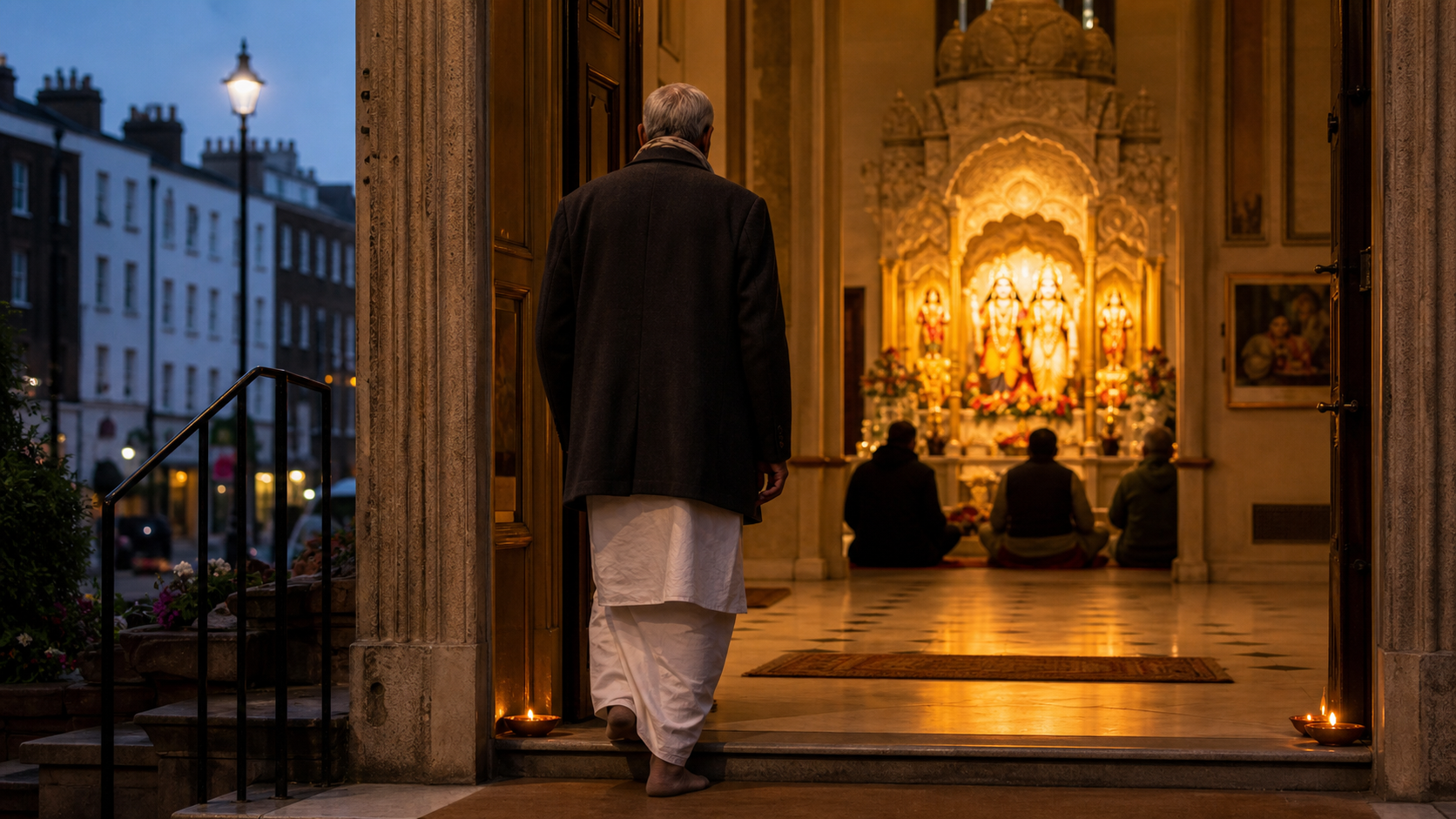
Gopichand Hinduja has passed at 85, remembered not only as a business leader but as a devoted friend of ISKCON in London. As shared by Kripamoya Prabhu, he visited London’s Radha-Krishna temple each morning before breakfast for kirtan and darshan. This steady discipline reflects core dharmic values—seva, humility, and steadfast devotion—that resonate across Hinduism, Buddhism,…
-
Essential Tribute to Srila Prabhupada: Transformative Legacy at Bhaktivedanta Manor, Oct 25, 2025

Bhaktivedanta Manor will host a live virtual observance on 25 October 2025 marking the Disappearance Day of Srila Prabhupada. The program centers on contemplative kirtan, scriptural readings, and reflections on seva as lived dharma. By highlighting shared values like compassion, truthfulness, and service, the event advances unity across Hinduism, Buddhism, Jainism, and Sikhism. Participants benefit…
-
Discover the Complete, Heartfelt Account of Srila Prabhupada’s Final Wish in Vrindavan

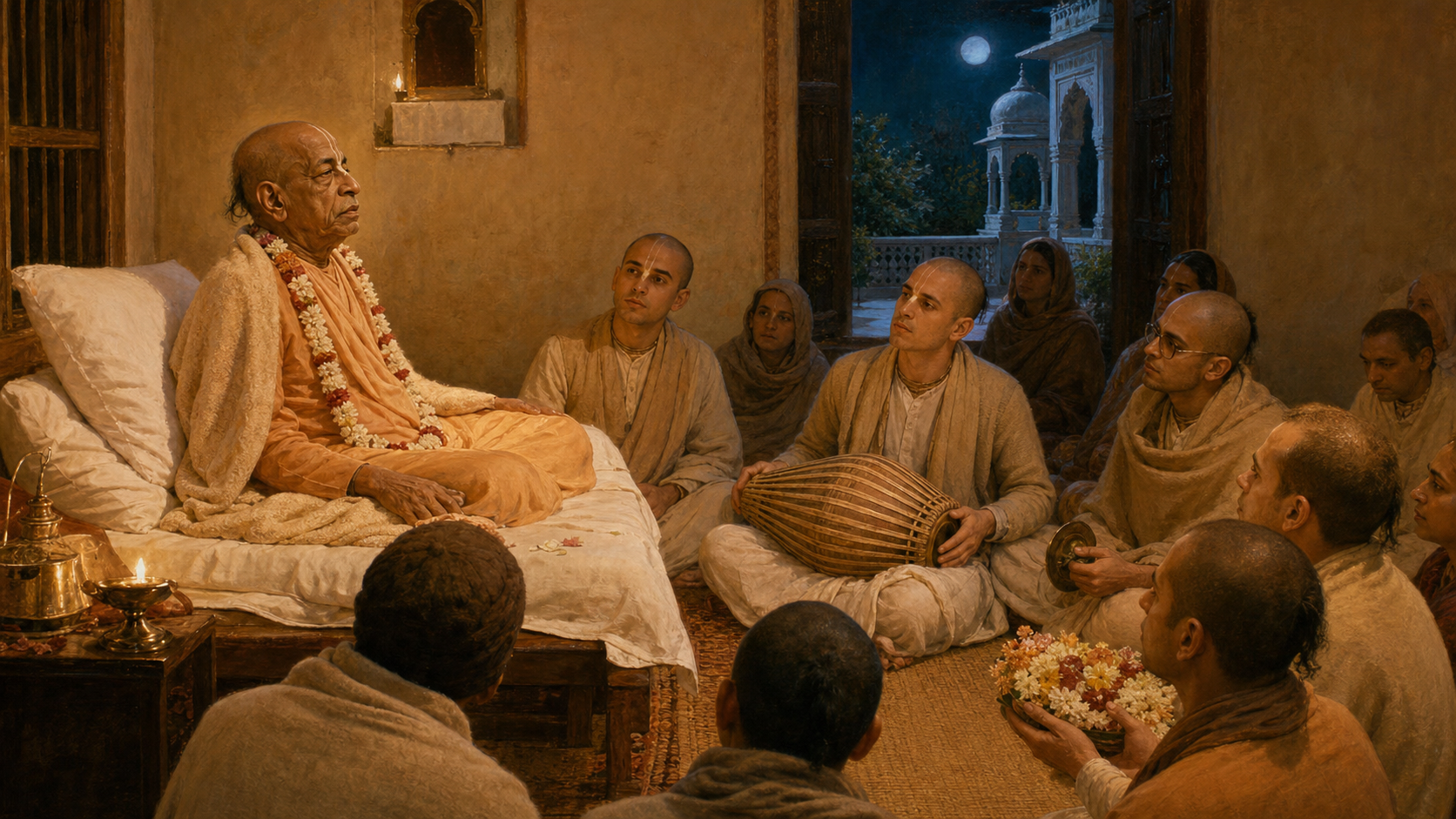
In a quiet hour of bedside seva, Bhakti Caru Swami was called to Srila Prabhupada, who stated with calm finality his wish to leave this world in Vrindavan. The immediate, respectful response—alerting Tamal Krishna Maharaj and preparing to fulfill the instruction—models the essence of the Guru-Shishya Relationship. Readers gain insight into the spiritual significance of…
-
Discover the Essential Meaning of Disappearance Day: A Devotional Tribute to Srila Prabhupada

Srila Prabhupada’s disappearance on 14 November 1977 in Vrindavan dham is observed in the Bhakti Tradition as a dignified celebration of spiritual attainment rather than a loss. Within Sanatana Dharma, a disappearance day marks the return of a pure Vaishnava to eternal service, inspiring gratitude, devotion, and seva. This perspective harmonizes with broader Dharmic Traditions—Buddhist…
-
Complete Dharmic Reflection on 9/11: Proven Lessons to Transform Grief into Unity

This reflection examines 9/11 through a Dharmic lens, honoring victims, Flight 93 heroes, and first responders with a sober, ethical clarity. It explains how concepts such as dharma and shraadh transform remembrance into responsibility and service. Readers discover proven, humane principles for confronting terrorism without surrendering to hatred. The piece emphasizes interfaith solidarity and unity…
-
S.L. Bhyrappa’s Epic Genius: The Complete, Proven Legacy That Transformed Indian Literature

S.L. Bhyrappa’s passing closes a monumental chapter in Indian literature and Kannada letters. His novels, rooted in Sanatana Dharma, the epics, and Hindustani classical music, fused philosophical depth with lived experience to create an unmistakable epic sensibility. Signature moments in Tantu and Mandra demonstrate how Puranic metaphor and Rasa aesthetics can still transform contemporary moral…