
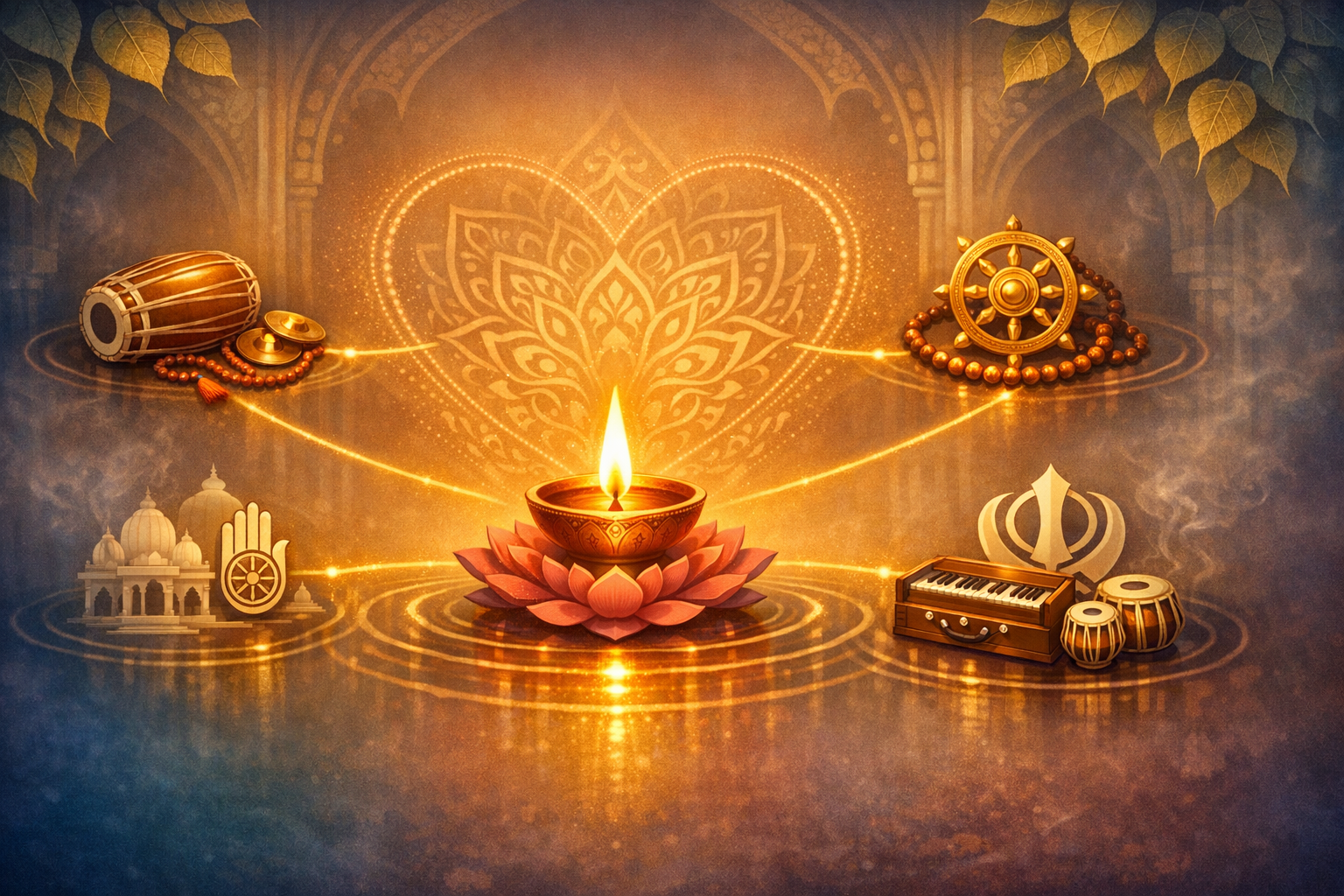
In the wake of Kratu’s departure, a concise and deeply felt farewell composed by Bhaktimarga Swami offers three enduring insights: identity is not reducible to the body, empirical senses are limited, and the heart can communicate meaning beyond words. These themes, poetic yet precise, align closely with the philosophical architecture of the bhakti tradition within Hindu Dharma and resonate across the broader dharmic familyBuddhism, Jainism, and Sikhismwhere remembrance, compassion, and ethical continuity guide how communities grieve, honor, and learn from a life well lived.
Such tributes function as śraddhāñjaliacts of mindful remembrance and gratitude that bind a community to its exemplars. In Vaishnava practice, especially within Hare Krishna (ISKCON) communities, remembrance (smaraṇa) and kīrtana are not merely consolations; they are sādhanas that refine attention and orient consciousness toward the sacred. This is similarly mirrored in Sikh Antam Sanskār, where Gurbani kirtan and Ardas console the living and affirm the soul’s journey under Ik Onkar; in Theravāda Buddhism, paritta chanting and merit transfer (pattidāna) sustain compassionate continuity; and in Jain traditions, reflection on jīva, pratikraman, and ahiṁsā-centered vows stabilize the mind amidst impermanence. Across these pathways, remembrance becomes an ethical discipline.
The assertion “we are not the body” maps onto classical Hindu metaphysics that distinguish ātman (the enduring self) from deha (the body). While Buddhism articulates anattā (non-self) and emphasizes dependent origination, it retains a functional continuity of mind-stream that underpins ethical accountability. Jainism affirms jīvaconsciousness entwined with karmawhose liberation requires disciplined restraint. Sikh teachings speak of the soul’s journey in the radiance of the Divine Name. Despite doctrinal differences, the ethical horizon converges: embodiment is precious yet provisional, and the deepest truths of personhood exceed the material frame.
The poem’s second motif“the senses are quite limited”aligns with Indian epistemology. Dharmic traditions classify knowledge sources (pramāṇa) beyond bare perception (pratyakṣa): inference (anumāna), reliable testimony (śabda), and contemplative insight cultivated by disciplined practice. In Jain thought, perspectives (nayavāda) and many-sidedness (anekāntavāda) caution humility in claims; in Buddhism, careful analysis and meditative verification balance scriptural testimony; in Vedānta, śruti and realized guidance (guru-upadeśa) refine understanding. The shared conclusion is epistemic modesty: empirical senses are indispensable yet not exhaustive in accessing meaning.
The third claim“heart vibrations are for the privileged”can be read not as elitism, but as a statement about cultivated receptivity. Bhakti literature often describes the hṛdaya (heart) as an organ of spiritual discernment, awakened through nāma-japa, kīrtana, and compassionate service (seva). Yogic discourse speaks of anāhata-nāda (the subtle ‘unstruck’ sound), while Sikh tradition centers on Śabad as living revelation that tunes consciousness. In these contexts, “privilege” signifies the grace and discipline that make interior listening possible, not social status.
For mourners, the intuition that a departed guide can “possibly hear” encapsulates both philosophy and practice. Psychologically, grief research describes “continuing bonds” as a healthy ongoing relationship with those who have passed, maintained through values, memories, and service. Dharmically, this continuity is enacted through prayer, chanting, and offeringsacts that shape the living while honoring the departed. Whether articulated as ātman’s persistence, karmic continuity, or abiding grace, the ethical imperative is clear: let remembrance inspire virtue.
Within the Hare Krishna movement, exemplars are remembered not only for personal charisma but for fidelity to paramparā (disciplic succession). This frames a Guru–Śiṣya Relationship as a living conduit of knowledge, responsibility, and shared practice. A farewell from a senior teacher such as Bhaktimarga Swami is therefore more than sentiment; it is pedagogy by example, instructing communities to respond to loss with gratitude, unity, and rededication to sādhana.
The very name “Kratu,” known from Vedic literature, signifies will, resolve, and sacrificial intent. Etymologically connected to purposeful action (often linked to yajña), kratu denotes the faculty by which an intention becomes consecrated deed. In that light, remembering Kratu becomes synonymous with remembering disciplined intentionaction aligned to dharma, undertaken consistently and offered without attachment to outcome. Names, in this sense, become teachings.
Across dharmic traditions, honoring such a life follows intelligible forms. In Hindu Dharma, devotees may gather for kīrtana and recitation, distribute prasāda, support temples or educational seva, and study śāstra in the person’s memory. In Buddhism, generosity (dāna) dedicated to the departed, compassionate service, and meditation intensives become living memorials. In Jainism, vows of restraint, charity aligned with ahiṁsā, and scriptural study honor the jīva’s onward journey. In Sikhism, Saadh Sangat convenes in kirtan and performs Ardas, reaffirming hukam through service to the community. In each, remembrance catalyzes ethical action.
Sound-centered practice gives this remembrance a technical dimension. Chanting regulates breath and posture, influences autonomic balance, and fosters attentional steadiness. Peer-reviewed studies have associated group chanting and contemplative singing with improved heart-rate variability and prosocial affect. Dharmic practice anticipated these findings: nāma-japa, paritta, Namokar mantra, and Gurbani kirtan were recognized as modalities that entrain body, speech, and mind toward steadiness and compassion. What the poem calls “heart vibrations” thus describes a measurable psycho-physiological harmony as well as a theological attunement.
Communal memory also has a governance of its own. In ISKCON (International Society For Krishna Consciousness), for example, public remembrances reinforce shared standardssat-saṅga, śravaṇa-kīrtana, regulated practice, and service leadershipensuring that grief does not fragment a sangha but matures it. Comparable dynamics manifest in Sikh panthic observances, Buddhist saṅgha councils, and Jain sampradāyas: tribute becomes a rehearsal of first principles, preserving both continuity and adaptability.
Readers familiar with spiritual communities often recognize the moment when news of a mentor’s passing arrests attention and slows speech. There may be a spontaneous return to a remembered instruction, a line of song, or a moment of silent presence that once seemed ordinary but now feels definitive. These are not romantic embellishments; they are indexes of learning, evidence that ideas traveled from text to practice to character. The farewell distilled by Bhaktimarga Swami points back to this interior curriculum: identity beyond body, humility about sense data, and the heart’s capacity to carry meaning forward.
Unity across dharmic traditions is not achieved by erasing differences but by recognizing how distinct doctrinal grammars yield convergent virtues. Hindu affirmations of ātman, Buddhist analyses of impermanence and compassion, Jain commitments to ahiṁsā and vigilance, and Sikh insistence on remembrance and seva together articulate a civilizational ethic: hold life sacred, honor teachers, cultivate discipline, and translate reverence into service. A tribute to Kratu can therefore also be a tribute to this shared dharmic grammar.
Practically, three commitments sustain that unity in the present moment. First, deepen daily sādhanaskīrtana, japa, simran, meditation, scriptural studyso that remembrance shapes conduct. Second, align grief with seva: feed a meal, teach a verse, plant a tree, or support a temple or community clinic. Third, keep fellowship alive: gather, sing, study, and speak gently. These are simple acts with durable consequences, and they are accessible across the Hindu, Buddhist, Jain, and Sikh spectrum.
Ultimately, a farewell of this kind is a lesson in proportion. Bodies change, institutions evolve, and even memories soften, yet the work of intentionkratu in its oldest senseremains available in every breath and step. To honor Kratu is thus to honor resolve: to live Sanātana Dharma’s values with steadiness, to affirm the bhakti tradition by practice, and to strengthen inter-dharmic friendship by acts of patient, practical compassion.
Inspired by this post on Dandavats.
