
-
Discover the Complete Sacred Symbolism of Vishnu’s Kirita Mukuta and Kaustubha Gem
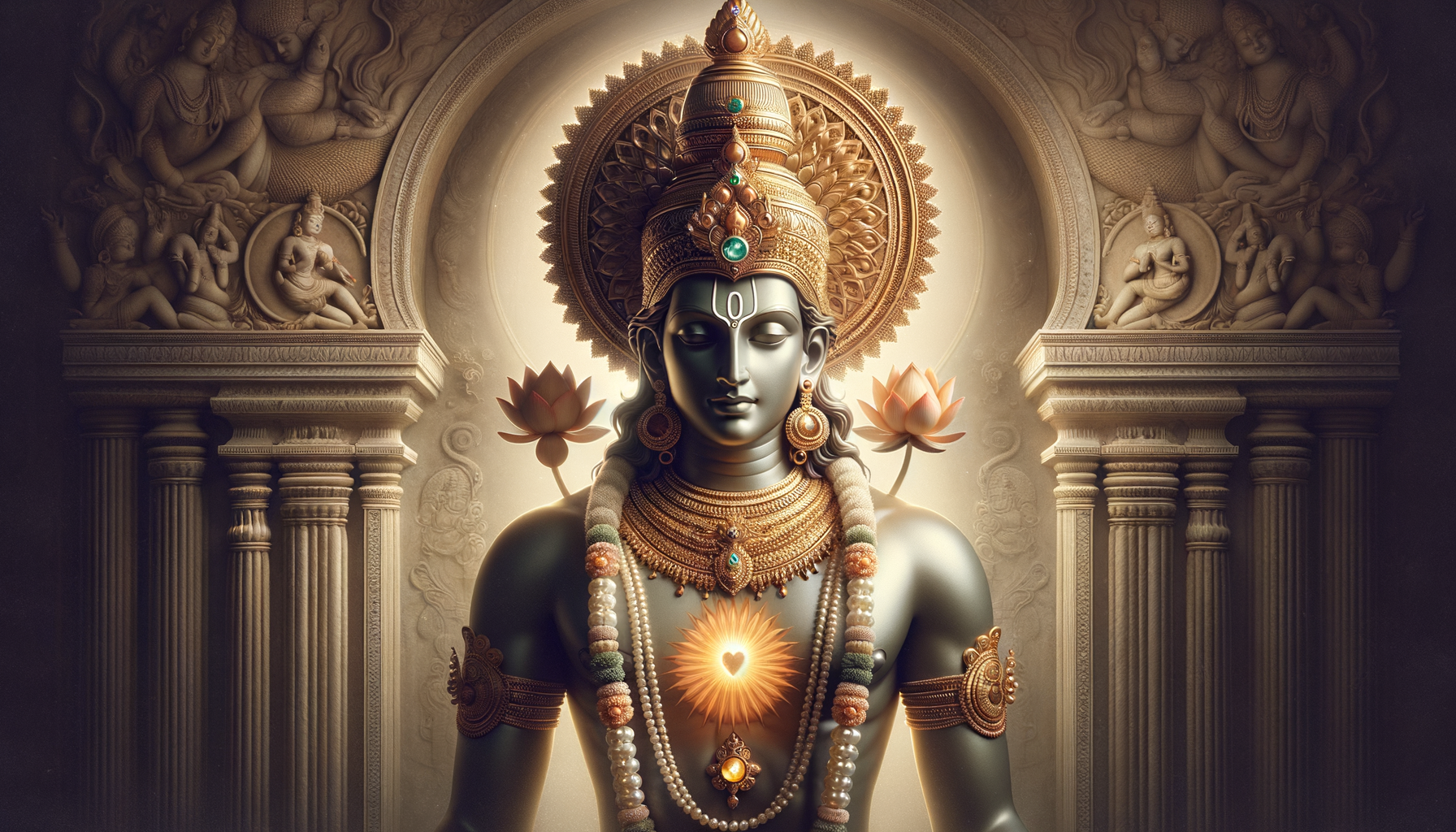
This exploration clarifies the complete symbolism of Vishnu’s Kirita Mukuta (crown) and Kaustubha gem, showing how they embody the union of discernment and compassion. Readers discover art-historical context from cave temples and shilpa traditions alongside Purānic references to the Samudra Manthana. Practical reflections reveal how these symbols guide ethical leadership and inner clarity in everyday…
-
Complete Guide to Divine Friendship: Arjuna–Krishna Insights to Transform Dharmic Unity

This article explores the Bhagavad Gita’s portrayal of Arjuna’s sakha-bhava and Krishna’s role as Partha-sarathi to reveal a relational, reciprocal vision of devotion. It decodes how divine friendship functions as guidance, protection, and shared joy rather than distant authority. Readers gain practical insight into applying the charioteer metaphor to ethical decisions during modern “Kurukshetra” moments.…
-
Complete Guide to Chandra Darshan Mantras: Master Japa with Proven Moola and Beeja

Chandra Darshan, the first sighting of the moon after Amavasya, is supported by two precise Sanskrit mantras preserved here in clean Devanagari for accurate japa and arghya. The moola mantra ॐ सोम सोमाय नमः aids calm clarity during darshan, while the beeja-mantra ॐ श्रां श्रीं श्रौं सः चन्द्राय नमः is commonly used for Chandra shanti…
-
Complete Guide to Angalamma Potri: Discover the 108 Praises of Ma Angalamman
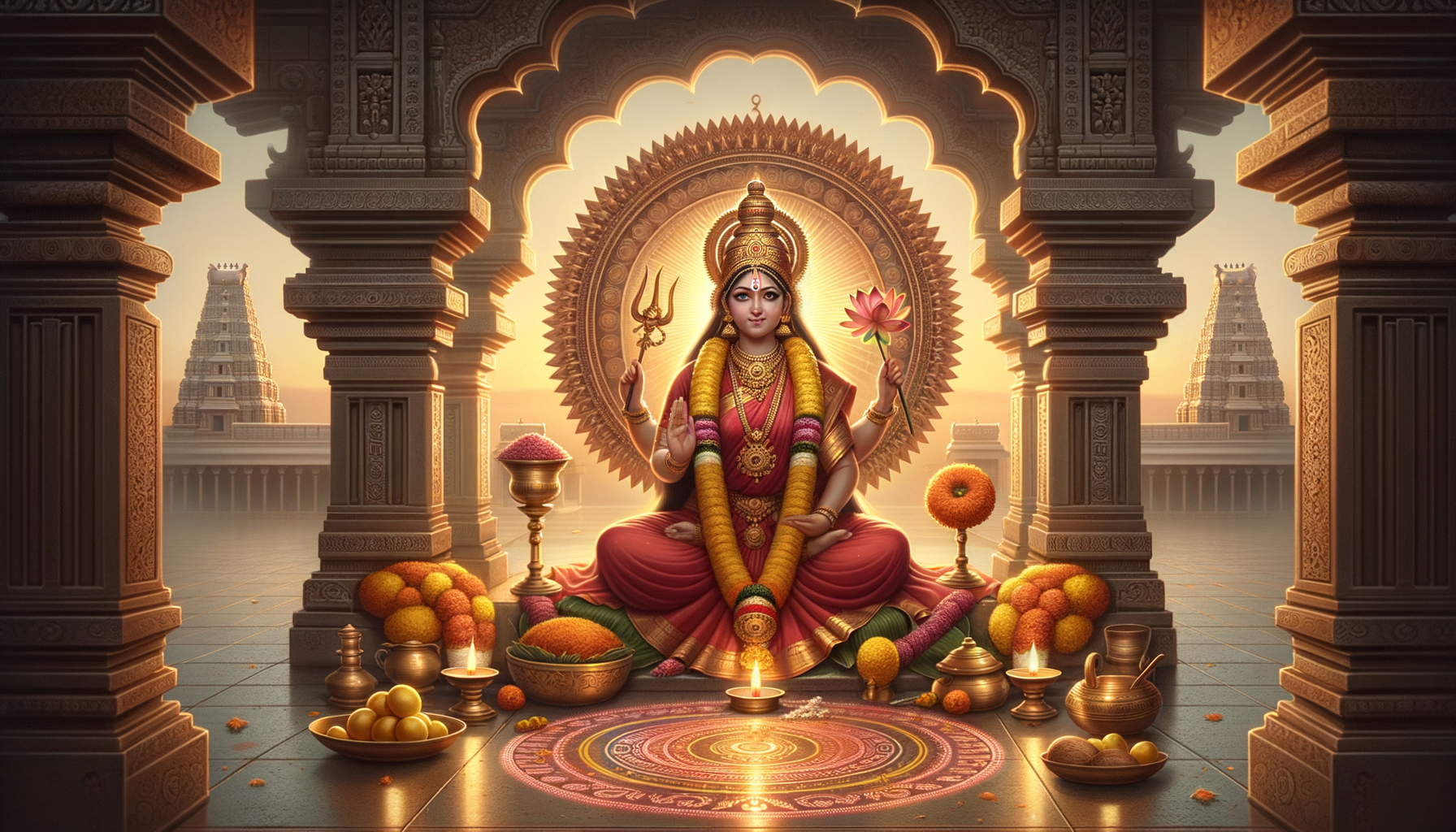
Angalamma Potri, Potri comprises 108 praises devoted to Ma Angalamman, a manifestation of Ma Adhiparashakthi revered across South India and especially in Tamil Nadu. As a Kula Devata for many families, her worship fosters ethical living, social harmony, and intergenerational continuity. The number 108 signifies spiritual completeness, turning recitation into a focused sadhana that cultivates…
-
Master the Complete Symbolism of Panchamukhi Gayatri: Five-Colored Faces Explained

Goddess Gayatri, revered as Veda Mata and Brahma Shakti, is traditionally depicted with five faces in five colours, a visual pedagogy that unites Vedic knowledge, contemplative practice, and ethical living. Classical commentaries link these faces to the four Vedas and the transcendent Om, while the colours symbolize guṇas, elements, and the ascent from the gross…
-
Karthika Somavaram Vratham 2025: Essential Dates, Significance, and Koti Somavaram

Karthika Somavaram Vratham 2025, guided by the Telugu panchangam and Kannada calendar, falls on 27 October, 3 November, 10 November, and 17 November, with Koti Somavaram noted on 8 November (Friday) in certain traditions. This vrata emphasizes fasting, temple worship, lamp-lighting, and charity, fostering inner discipline and community harmony. Regional variations—such as observances when Saptami…
-
Kartik Maas Mahatmya Chapter 1: Essential, Proven Insights to Transform Your Devotion

This academically oriented overview of Kartik Maas Mahatmya, Chapter 1, introduces Suta’s discourse at Naimisharanya and highlights the month’s proven purificatory merit. The passage emphasizes the power of sacred listening (shravan), dissolution of sins, and aspiration for Vaikuntha. Readers gain context for Karthika Masam observances while receiving clear, practical suggestions for modern devotional practice. The…
-
Proven Insights on Kartik Maas Mahatmya Chapter 2: Discover the Katha’s Transformative Power

Kartik Maas Mahatmya Chapter 2, voiced through Sri Krishna, portrays grief as a pivotal point for ethical and devotional renewal. The lament of Gunavati is presented not as despair’s endpoint but as a call to reorient life through dharma and bhakti. This chapter situates personal sorrow within Kartik observances such as lamp offerings, remembrance, and…
-
Proven Insights on Kartik Maas Mahatmya Chapter 2: Discover the Katha’s Transformative Power

Kartik Maas Mahatmya Chapter 2, voiced through Sri Krishna, portrays grief as a pivotal point for ethical and devotional renewal. The lament of Gunavati is presented not as despair’s endpoint but as a call to reorient life through dharma and bhakti. This chapter situates personal sorrow within Kartik observances such as lamp offerings, remembrance, and…
-
Kartik Maas Mahatmya Chapter 1: Essential, Proven Insights to Transform Your Devotion

This academically oriented overview of Kartik Maas Mahatmya, Chapter 1, introduces Suta’s discourse at Naimisharanya and highlights the month’s proven purificatory merit. The passage emphasizes the power of sacred listening (shravan), dissolution of sins, and aspiration for Vaikuntha. Readers gain context for Karthika Masam observances while receiving clear, practical suggestions for modern devotional practice. The…
-
Proven Dharmic Wisdom: Master the Art of Using Wealth and Power to Transform Character

This article explains a core dharmic principle with modern relevance: wealth (artha), status, and authority are instruments for character formation, service to society, and spiritual progress. Framed within the puruṣārthas, it shows how artha gains meaning when guided by dharma and ethical leadership. Drawing parallels across Hinduism, Buddhism, Jainism, and Sikhism—through practices like dāna, aparigraha,…
-
Essential Breakthrough in Spiritual Evolution: Discover the Courage to Transcend the Herd

Spiritual growth begins when seekers turn from herd mentality toward authentic self-understanding rooted in dharma. Hindu scriptures, especially the Bhagavad Gita (3.35), affirm the primacy of one’s own path, even when imperfect. This independence is not isolation; it fuels compassion, service (seva), and social harmony through the ethic of lokasangraha. Dharmic traditions—Hinduism, Buddhism, Jainism, and…
-
Essential sakshi bhava Mastery: Discover When to Witness and When to Act

This article explains sakshi bhava—the disciplined stance of the inner witness—and shows how it refines, rather than replaces, ethical action. Readers learn a practical four-step framework (pause, perceive, discern, choose) to decide when to witness and when to act. Clear indicators and real-world examples demonstrate how to reduce harm, uphold dharma, and remain composed under…
-
Complete Guide to Sri Nimishamba and the Sri Chakra: Discover Proven Symbolism and Worship

Sri Nimishamba Temple near Ganjam in Mandya stands as a vital center of devotion to the Universal Mother, uniting sacred form and Sri Chakra worship. The idol’s balanced symbolism—combining fierce protection and compassionate grace—offers a visual theology of courage and refuge. The Sri Chakra’s interlocking triangles and central bindu map the journey from multiplicity to…
-
Essential Guide to Karthika Deepotsava: Discover the Transformative Power of Deeparadhana

Karthika Deepotsava highlights the spiritual power of Deeparadhana in Kartik Month, where lighting a ghee or oil lamp symbolizes the victory of knowledge over ignorance. Puranic literature praises this observance, emphasizing accelerated purification through disciplined practice. Performed at twilight in homes and temples, it nurtures calm, clarity, and family cohesion while culminating in major observances…
-
Kuja Pradosham Explained: The Complete Tuesday Vrat to Transform Challenges with Shiva’s Grace

Kuja Pradosham is the Tuesday observance of the Pradosh Vrat, a sacred Hindu ritual devoted to Lord Shiva and Goddess Parvati during the auspicious twilight period around sunset. Occurring on Trayodashi, it aligns with Mars (Kuja) in Jyotisha and is traditionally observed to temper conflict, resolve disputes, and cultivate disciplined courage. The vrata integrates fasting,…
-
The Proven Art of Simple Living: Discover Inner Peace Through Dharmic Wisdom and Practice

This article presents an academically grounded approach to inner peace through the dharmic ethos of simple living. It explains how santosha (contentment), aparigraha (non-hoarding), and nishkama karma reframe happiness as an inner competency rather than a product of accumulation. The discussion integrates practical methods—Meditation, Mindfulness, Breath awareness (pranayama), and japa—showing how small daily practices reduce…
-
Essential Guide to Vyasa-puja Offerings: Discover ISKCON’s Global Network of Service

Every year, ISKCON centers worldwide contribute offerings to the Vyasa-puja book to honor Srila Prabhupada, documenting gratitude, realizations, and renewed vows of seva. Situated within Gaudiya Vaishnavism and aligned with Guru Purnima, this practice strengthens the Guru-Shishya Tradition and the broader Vedic Tradition. The compiled offerings provide a rare, panoramic view of ISKCON’s global service…
-
Essential Breakthrough: Discover the Secret of Unexpected Mercy at Edgware—A Complete Spiritual Insight

A reflective encounter in Edgware—where Pramila and Kastur met devotees at the Broadwalk shopping mall—illustrates how everyday moments can hold profound spiritual significance. Pramila’s realisation, arriving a day after receiving the Bhaktivedanta Manor 2026 calendar, points to the meaningful timing that often guides a sincere Spiritual Journey. Read as part of the Bhakti Tradition and…
-
Essential Humility: The Complete, Proven Path to Transform Ego into Respect and Appreciation

This article presents an academic exploration of humility as non-resistance, drawing on Lord Caitanya’s teaching and Bhaktivinoda Thakura’s grass metaphor to illustrate humility as adaptive strength. It explains how shifting from the need to be appreciated toward appreciating others transforms comparison into compassion. Cross-dharmic perspectives—from the Bhagavad Gita, Buddhist equanimity, Jain non-attachment, and Sikh seva—converge…