-
Kalachakra in Pancaratra: Decoding Vishnu’s Six-Spoked Wheel of Time and Cosmic Order

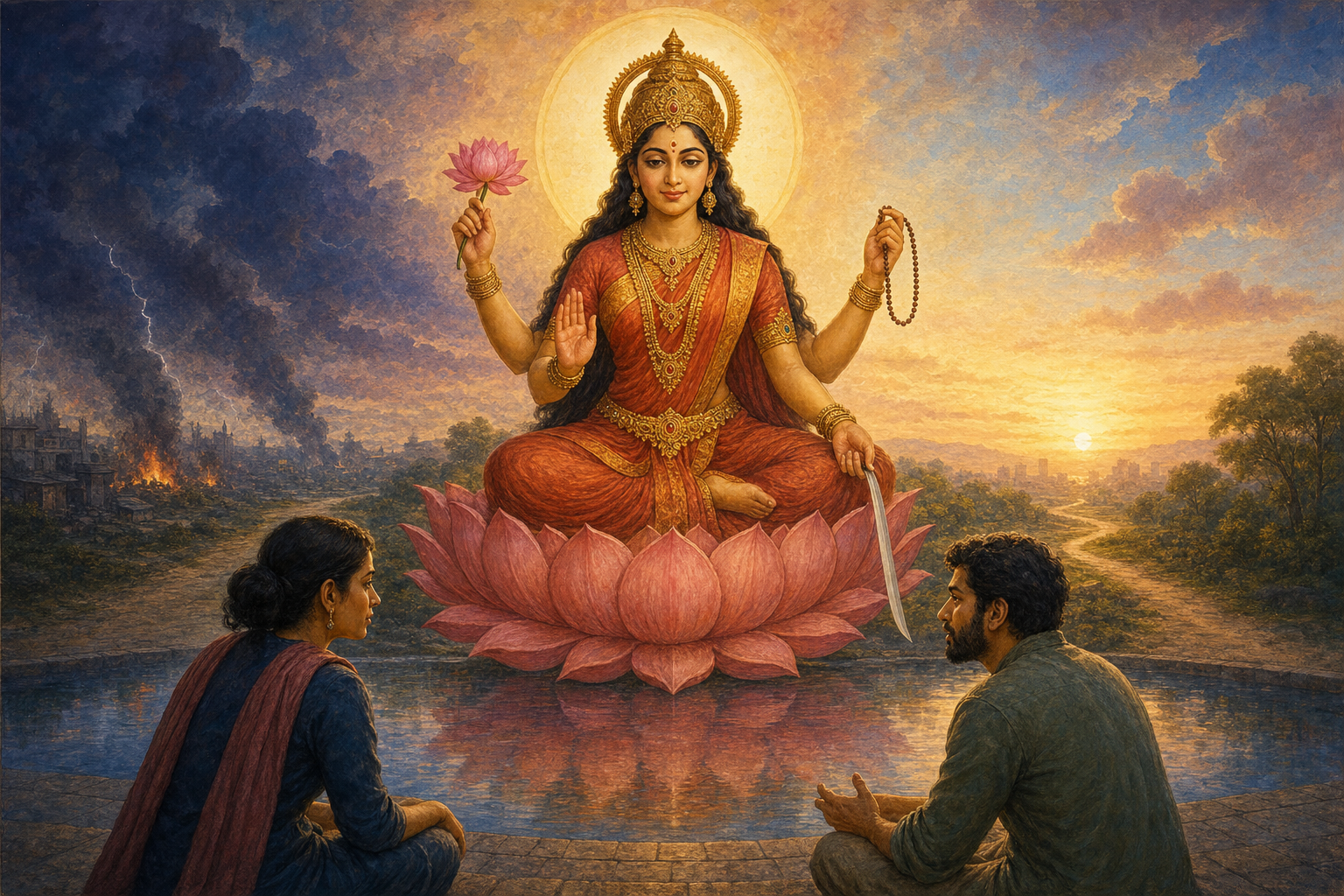
This article explores Kalachakrathe six-spoked wheel of timein the Pancaratra teachings of Vaishnavism, showing how it frames time as a sacred, ordered reality upheld by Bhagavan Vishnu. It explains how the spokes are read through six seasons, six transformations, or six existential waves, each illuminating the rhythm of change and renewal. The piece outlines Pancaratra’s…
-
Chaitanya Mahaprabhu’s Bold Science of Consciousness: Ending Ego’s Grip and Social Strife

This essay presents Sri Chaitanya Mahaprabhu’s rigorous analysis of consciousness as a practical science aimed at social harmony. It identifies ahankaramisidentification of self with matteras the root cause of unrest, not a mere symptom. Drawing on Sri Brahma Samhita and the Bhagavatam, it situates the problem and solution within Vedic philosophy. It then shows how…
-
Leave Work at Work: Dharma, Vairagya, and Peaceful, Sustainable Work‑Life Balance in Hindu Thought

Leaving work at work reflects the Hindu synthesis of dharma and vairagya: act with full integrity, then release attachment to results. Grounded in Bhagavad Gita 2.47 and Karma Yoga, it cultivates mental clarity, prevents burnout, and improves ethical decision-making. Simple ritualsend-of-day summaries, mindful commutes, brief pranayama, and digital sunsetsreduce rumination and restore balance. The insight…
-
Reclaim Consciousness with Timeless Hindu Wisdom: Upanishadic Insights for a Unified Dharma

Hindu philosophy presents consciousness as the essence of existence, summarized by the Mandukya Upanishad’s “Ayam atma brahma.” This post clarifies how witnessing awareness (sakshi) and the four states culminating in turiya offer a practical framework for modern life. It outlines accessible methodspranayama, mantra japa, and meditationto improve focus, emotional balance, and resilience. Ethical foundations (yama…
-
Guard Your Mind: ‘Wicked Company’ Beyond People and the Power of Satsanga

Hinduism teaches that “wicked company” is not limited to immoral people; it includes any influencemedia, habits, spaces, and routinesthat disturbs clarity and weakens ethical resolve. This piece clarifies the concepts of satsanga and asatsanga and shows how association functions as a practical psychology of liberation across Hinduism, Buddhism, Jainism, and Sikhism. Readers gain a clear…
-
Mahabharata’s Hidden Heroes: Shadow Diplomats, Espionage, and Dharma in Ancient Bharata

This exploration of the Mahabharata uncovers a disciplined intelligence culturespies, envoys, and shadow diplomatsoperating within a clear ethical framework. It highlights how Vidura-niti and Udyoga Parva illustrate protocols for reconnaissance, negotiation, and moral restraint. Readers gain insights into how Sri Krishna’s Diplomacy prioritized peace through precise knowledge and timing. The narrative shows intelligence as a…
-
Panchapreta Unveiled: Tantric Symbolism of Five Corpses and the Living Power of Shakti

Panchapreta“the Five Corpses”is a Tantric teaching that uses paradox to convey a clear metaphysical insight: without Shakti, even exalted divine functions are inert. Framing the Pancha Brahma of creation, preservation, dissolution, concealment, and grace, the image portrays the Goddess as the living Power that animates all forms. Rather than morbid, the “corpse” metaphor is a…
-
Nothing to Lose or Gain: Advaita’s Liberating Insight and Unity of Dharmic Paths

This post explores the Advaita insight that there is nothing to lose or gain because a single, supreme truth pervades all. It shows how this view aligns with the Upanishads and the Bhagavad Gita’s ideal of equanimity. It highlights convergences across Buddhism, Jainism, and Sikhism, emphasizing unity in spiritual diversity. Readers gain practical ways to…
-
Feathers of Wisdom: Timeless Dharmic Lessons on Fierce Love and Graceful Detachment

A parent bird teaching its young to fly offers a vivid lesson in loving deeply while letting go with grace. Viewed through dharmic ethics, the scene reflects Aparigraha, Ahimsa, and Dharma, showing how care and freedom can coexist. Hindu, Buddhist, Jain, and Sikh perspectives converge on this principle through Bhakti and Vairagya, Metta and Upekkha,…
-
When Nature Seems Cruel: Dharmic Insights on Karma, Order, and Compassionate Living

Nature can feel harshearthquakes, storms, and predation challenge the heart and mind. Dharmic traditions explain these realities through r̥ta, karma, pratityasamutpada, Anekantavada, and hukam, framing the world as an interdependent order rather than random cruelty. This perspective affirms compassion and service: reduce suffering, strengthen disaster resilience, and care for ecosystems. It also cautions against romanticizing…
-
Jati in Nyaya Philosophy: Exposing False Analogies to Elevate Dharmic Dialogue and Truth

Jati in Nyaya philosophy identifies fallacious rebuttals that rely on superficial comparisons rather than addressing the core claim. By naming these errors, Nyaya helps readers detect false analogies, category mistakes, and shifting grounds in everyday debate. The approach supports rigorous, fair, and focused discussion. Practical examples show how irrelevant similarities can mislead, while simple tests…
-
Society, Friendship, and Love: Unmasking Maya and Embracing Dharmic Unity

This reflection clarifies why Srila Prabhupada described “Society, Friendship and Love” as a gift of maya when driven by clinging, not by dharma. It explains maya as misidentification with roles and relationships, then shows how Hinduism, Buddhism, Jainism, and Sikhism converge on transforming attachment into compassionate engagement. Readers gain a practical frameworkseva, satsang, japa or…
-
Ego and the Vast Cosmos: A Dharmic Reflection on Humility, Unity, and Inner Freedom

This reflection explores how Hindu philosophy situates ahankara (ego) within the vast Brahmanda, revealing the fragility of pride and the wisdom of non-attachment. It connects Vedantic insights with parallel teachings in Buddhism, Jainism, and Sikhism, emphasizing a shared dharmic commitment to humility, compassion, and Aparigraha. Readers gain practical pathwaysjapa, pranayama, dāna, mettā, Naam Simran, and…
-
The Divine Paradox of Ganesha on a Mouse: Transformative Symbolism to Conquer Ego

The iconic image of Lord Ganesha seated on a small mouse conveys a profound lesson: wisdom governs and transforms ego rather than destroying it. In Hindu symbolism, Ganesha embodies discernment while the mouse represents restless impulses, illustrating mastery of mind through knowledge. This insight harmonizes with Buddhist mindfulness, Jain aparigraha, and Sikh teachings on overcoming…
-
Ashtavakra’s Quiet Revolt Against Hustle Culture: Timeless Dharmic Wisdom for Inner Freedom

This essay explores how Ashtavakra’s Advaita teaching offers a precise, compassionate alternative to hustle culture. Rather than glorifying strain, the Ashtavakra Gita centers the unchanging witness (atman), enabling action without anxiety and excellence without exhaustion. The discussion connects this orientation to shared principles across Buddhism, Jainism, and Sikhismmindful awareness, aparigraha, anekāntavāda, Naam Simran, and sevahighlighting…
-
True Progress Means Harmony with Nature: A Dharmic Vision of Compassionate Living

This reflection presents a dharmic view of progress that honors nature as sacred and interconnected with human flourishing. It explains how Hinduism’s insight into Brahman, alongside Buddhism, Jainism, and Sikhism, fosters environmental harmony, Ahimsa, and dharmic responsibility. It reframes success beyond material wealth, emphasizing balanced living guided by the puruṣārthas and spiritual ecology. Practical examplescommunity…
-
Breaking the Chains of Maya: Hindu Wisdom on Attachment, Ego, and Inner Freedom

Hindu philosophy explains attachment as a product of avidyaignorance of the true Selfprojected through maya and consolidated by habit patterns and the gunas. The Bhagavad Gita and the Upanishads show how identification with body-mind-ego fosters craving and suffering, while disciplines like viveka-vairagya, karma yoga, and dhyana dissolve clinging. Advaita Vedanta, Sankhya-Yoga, and Bhakti offer complementary…
-
Ardhanareeswara’s Radiant Unity: Manickavasagar’s Vision of Shiva–Shakti Harmony

Ardhanareesvara“the Lord Who Is Half Woman”presents the inseparable union of Shiva and Shakti as a living doctrine of balance. Drawing on Manickavasagar’s Tiruvācakam, the vision reveals divinity as both motherly and fatherly, integrating tenderness with strength. Temple iconography reinforces this unity by joining ascetic steadiness and auspicious grace in a single body. Philosophically, the form…
-
When Silence Speaks: Hindu, Buddhist, Jain, and Sikh Wisdom for Social Media Calm

Social media rewards speed and outrage, yet dharmic traditions teach that silence is disciplined strength. Hindu philosophy frames silence (mauna), meditation (dhyana), and sensory restraint (pratyahara) as ethical practices that refine speech and preserve clarity. Parallel insights in Buddhism, Jainism, and Sikhism elevate non-reactivity, compassionate truth, and inner equipoise. Applied today, choosing “no response” can…
-
From Restraint to Revenge: Dharmic Psychology of Violence and Paths to Compassionate Action

Retaliatory violence feels intuitive, yet Dharmic wisdom reveals why it often harms more than it heals. Hindu, Buddhist, Jain, and Sikh traditions converge on Ahimsa, disciplined intention, and compassionate restraint. Hindu Dharma distinguishes protective duty from vengeful harm through Dharma-Yuddha principles. Buddhism interrupts anger’s cycle with mindfulness, right intention, and skillful means. Jainism extends non-violence…