-
Eternal Truth in Time: How Hindu Avatars Restore Dharma and Inspire Inner Freedom

This article explores the Hindu concept of avatars as the eternal manifesting within time to restore dharma and guide beings toward moksha. It grounds the discussion in the Bhagavad Gita and Puranic narratives, while noting philosophical nuances across Advaita, Viśiṣṭādvaita, and Dvaita. Readers discover how avatars function as ethical exemplars whose presence educates through action…
-
Why Hinduism Has No Satan: A Powerful Dharmic Lens on Evil, Responsibility, and Liberation

Many ask why Hinduism has no Satan. The answer reveals a deliberate dharmic framework: evil is understood as ignorance, imbalance in the guṇas, and misalignment with dharma—not the work of an eternal adversary. Karma and the possibility of purification make an all-evil figure unnecessary, while epics like the Mahābhārata and the Bhagavad Gita emphasize inner…
-
Prakriti, Jiva, and Ishvara: Unlocking the Awe-Inspiring Blueprint of Creation in Dharmic Wisdom
This article clarifies the Hindu philosophical triad of Prakriti, Jivas, and Ishvara as a coherent blueprint for creation, ethics, and spiritual growth. It explains Prakriti through the dynamics of sattva, rajas, and tamas, showing how these forces shape everyday choices. It presents Jivas as conscious agents governed by karma, highlighting practical pathways for compassion and…
-
See Through Conditioning: A Dharmic Guide to Compassionate Counsel without Attachment

The term “conditioned soul” conceals a vital insight: the self is distinct from matter even as conditioning shapes experience. This piece clarifies the paradox across Hinduism, Buddhism, Jainism, and Sikhism, showing how to consider conditioning without identifying with it. Readers gain practical tools—sakshi-bhava, mindfulness, japa, seva, and graduated sadhana—to offer compassionate guidance while staying anchored…
-
Quiet the Mind, Tame Cravings: Timeless Dharmic Practices for Clarity and Balance

Hindu teachings present curbing cravings and quieting the mind as foundational disciplines for inner peace, spiritual growth, and balanced living. Practices like Aparigraha, Pratyahara, breath awareness, meditation, and mantra japa reduce reactivity and enhance focus. Ethical principles such as Ahimsa, Satya, and Seva support mental steadiness by aligning conduct with compassion and responsibility. These insights…
-
Who Are the ‘Good People’? A Dharmic Guide to Recognizing Virtue and Choosing Satsang

Spiritual traditions often advise keeping the company of the wise, yet the criteria can seem unclear. A dharmic lens makes the measure practical: consistent alignment with dharma, non-violence (ahimsa), truthfulness (satya), compassion (karuna), and self-restraint offers reliable evidence of goodness. The Bhagavad Gita’s daivi sampad and the Yoga Sutra’s yamas and niyamas provide observable markers.…
-
Para Prakriti in the Bhagavad Gita: Unveiling Higher Consciousness and Inner Freedom
This article clarifies the Bhagavad Gita’s teaching on para and apara prakriti, showing how the eightfold apara field relates to body, mind, and ego, while para prakriti points to the living awareness that enlivens experience. It references key verses (7.4–7.5, 15.7) and explains their practical relevance for yoga, meditation, and ethical life. Readers gain a…
-
Jivanmukta Unveiled: The Silent Dance of Living Liberation in Hindu Philosophy

This article explores the jivanmukta—living liberation in Hindu philosophy—as an inner “silence” paired with an outer “dance” of unattached, compassionate action. It clarifies key traits such as equanimity, non-attachment, and dharma-guided service through the lens of the Upanishads, the Bhagavad Gita, and Advaita Vedanta. Readers gain practical markers of maturity: fewer reactive habits, steadier decision-making,…
-
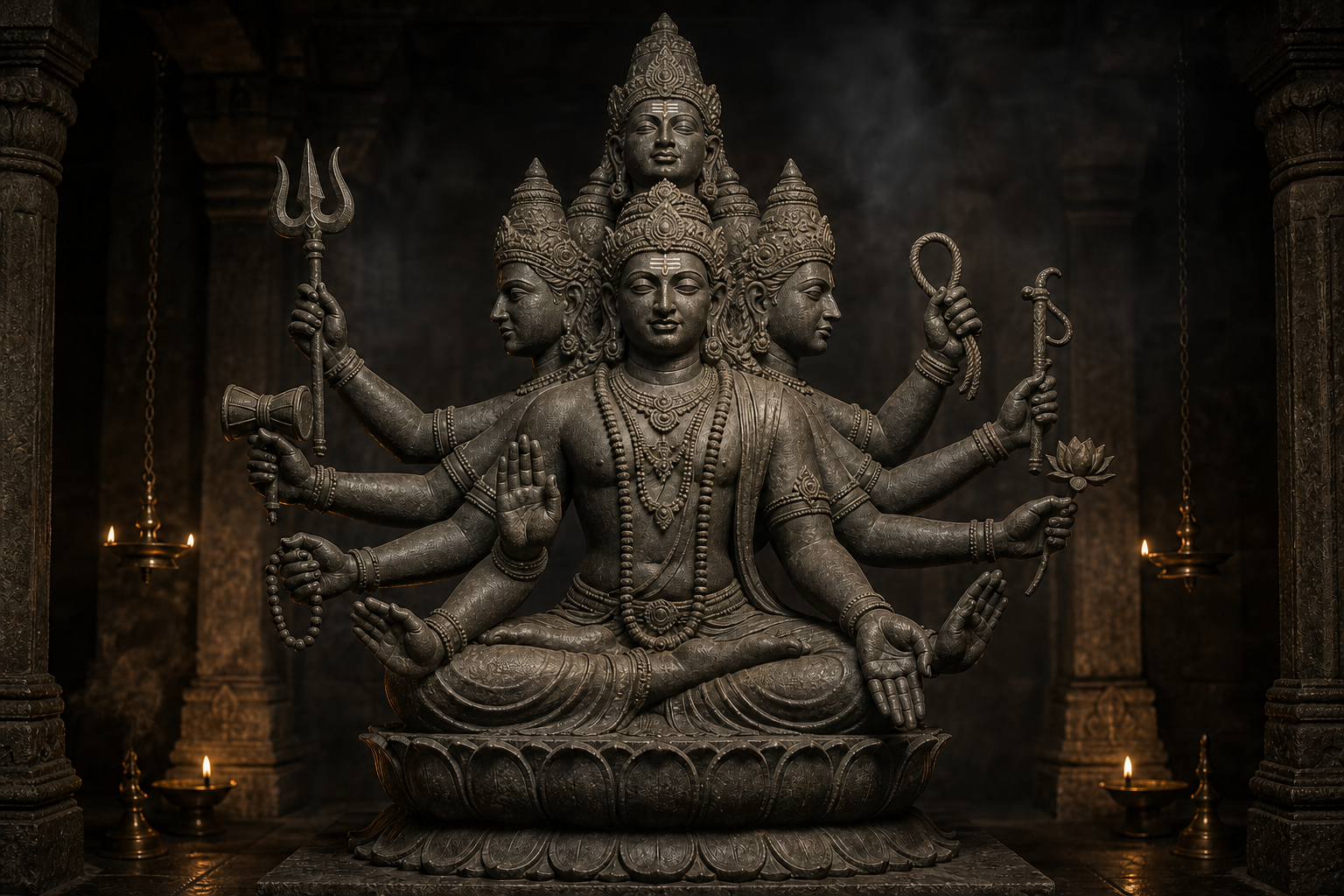
Decoding Four-Handed Hindu Deities: Powerful Insights into the Purusharthas

Four-handed Hindu deities embody a precise visual philosophy: the divine guides all four aims of life—dharma, artha, kama, and moksha—within a single, integrated vision. This academic overview clarifies each Purushartha and shows how four arms symbolize balance rather than excess. Readers learn how common attributes and mudras can suggest the four aims while remaining flexible…
-
Master Life’s Demands with Inner Stillness: A Dharmic Guide to Watching the Mind

This reflection explores a precise Hindu teaching that unites everyday responsibility with continuous Self-awareness. It explains how mindfulness in action is affirmed across Hinduism, Buddhism, Jainism, and Sikhism, promoting unity among dharmic traditions. Readers gain practical steps—breath anchoring, periodic check-ins, and post-event reflection—to steady attention throughout the day. The approach enhances mental clarity, emotional balance,…
-
Right Thinking, Real Change: Hindu Dharma’s Timeless Tools to Transform Self and Society

Ancient Hindu wisdom teaches that the quality of thoughts shapes reality—an insight echoed across the Bhagavad Gita, the Upanishads, and yogic psychology. This post outlines practical tools such as mindfulness, breath awareness, and values-aligned intention to cultivate clarity and compassion. It highlights how right thinking extends beyond personal wellness to strengthen social trust and community…
-
Why Brahma Refuses Immortality Boons: Timeless Dharma, Cosmology, and the Path to Moksha

Why does Brahma never grant immortality? In Hindu cosmology, even the creator functions within time and cannot override the laws of dharma and karma. Puranic narratives, such as the story of Hiranyakashipu and Narasimha, illustrate that boons are conditional to preserve cosmic balance. This view shifts focus from bodily permanence to moksha, aligning with the…
-
Rise to Spiritual Heroism: Cultivating Compassion and Dharmic Unity in a Material Age

Contemporary culture often prizes material success over meaning, leaving many feeling restless and disconnected. This article presents spiritual heroism as a steady, practical path back to dharma through daily meditation, truthful speech, mindful consumption, and seva. Drawing on shared virtues across Hinduism, Buddhism, Jainism, and Sikhism—ahimsa, karuna, seva, and satya—it reframes spirituality as an inner…
-
Harnessing Positive Thought: Dharmic Wisdom to Consciously Shape Life, Karma, and Destiny

Hindu philosophy teaches that consciously choosing positive thoughts is a disciplined way to shape life, karma, and destiny. This insight aligns with Yoga’s pratipaksha-bhavana, the Bhagavad Gita’s call to self-mastery, Buddhist mindfulness, Jain bhavana, and Sikh simran. Together, these traditions present a unifying dharmic framework for mental cultivation and ethical clarity. Practical steps—sankalpa, pranayama, japa,…
-
Bound or Beyond? Hinduism’s View of Belief, Free Will, and Compassionate Spiritual Unity

Do beliefs bind or set one free? Through Hindu philosophy and its Dharmic cousins—Buddhism, Jainism, and Sikhism—this piece explains how belief can guide without imprisoning. It shows how dharma and sadhana (practice) transform conviction into compassionate action. Readers gain a clear framework from the Upanishads and Bhagavad Gita on agency, karma, and svadharma. The article…
-
Joshmani Sect and Nirguna Devotion: Timeless Wisdom Uniting Hinduism’s Dharmic Family

The Joshmani sect in Hinduism centers on Nirguna devotion—realizing the formless Divine through contemplation, sincerity, and ethical living. Its approach complements Saguna bhakti, affirming Hinduism’s many valid paths rather than elevating one over another. Grounded in Vedanta and the Upanishads, it favors substance over ritual excess while respecting Vedic heritage. The tradition aligns with Ishta,…
-
When the Guru Calls: Recognizing the Inner Voice and Answering with Courage and Clarity

The call of “Guru Ji’s voice” is explored as a unifying Guru Principle across Hinduism, Buddhism, Jainism, and Sikhism. It is framed academically as an alignment with dharma that promotes ahimsa, satya, and seva. Practical guidance shows how pranayama, dhyana, japa or simran, study of texts, and community (satsang or sangat) strengthen discernment. Three tests—clarity,…
-
Brahmavada in the Srimad Bhagavata Purana: Unveiling Non-Dual Wisdom that Unites Dharmic Paths
This essay explores Brahmavada in the Srimad Bhagavata Purana as a non-dual (Advaita) teaching that recognizes Brahman as the Absolute while seeing the world as Brahman’s expression. It clarifies how the Purana harmonizes devotion (bhakti) and knowledge (jnāna), showing them as complementary paths to the same Truth. Readers gain an accessible understanding of Advaita Vedanta…
-
Why Materialism Fuels Endless Anxiety: Hindu Wisdom on Desire, Aparigraha, and Peace

Hindu wisdom explains why unchecked materialism intensifies anxiety by fueling attachment and craving. It reframes prosperity within dharma so possessions serve purpose rather than define identity. Aparigraha, shared across Hinduism, Buddhism, Jainism, and Sikhism through allied principles like santokh and dana, offers a practical antidote to compulsive desire. Readers gain a clear model for balancing…
-
Prapatti and the Power of Surrender: Ramanujacharya’s Clear Path to Divine Realization

Sri Ramanujacharya presents prapatti (śaraṇāgati), or wholehearted surrender, as a universally accessible path to God-realization grounded in the Bhagavad Gita. This approach complements disciplined bhakti-yoga while removing barriers of scholarship or asceticism, making spiritual progress available to all. Rooted in verses such as Gita 9.34 and 18.66, prapatti unites devotion, humility, and trust in divine…