
-
Surpanakha Unveiled: The Powerful Etymology, Symbolism, and Dharma Lessons in the Ramayana

Names in the Ramayana carry layered meanings that guide ethical understanding, and Surpanakha is a vivid example. This piece explains the Sanskrit etymology of Surpanakha (śūrpa + nakha) and shows how the name functions as narrative symbol and moral cue. It places the episode within the Valmiki tradition while acknowledging later retellings that frame the…
-
Rise to Spiritual Heroism: Cultivating Compassion and Dharmic Unity in a Material Age

Contemporary culture often prizes material success over meaning, leaving many feeling restless and disconnected. This article presents spiritual heroism as a steady, practical path back to dharma through daily meditation, truthful speech, mindful consumption, and seva. Drawing on shared virtues across Hinduism, Buddhism, Jainism, and Sikhismahimsa, karuna, seva, and satyait reframes spirituality as an inner…
-
Jagannath’s Tantric Trinity: Unveiling Adi Shakti at Puri and the Harmony of Dharmic Paths

The Jagannath Temple at Puri unites Vaishnav devotion with Tantric philosophy, revealing the hidden Shakti principle within the triad of Jagannath, Balabhadra, and Subhadra. Interpreted through yogic nadis, the three gunas, and Purusha–Prakriti dynamics, the trinity becomes a practical contemplative map for balanced living. The presence of Bimala Devi and the sanctification of Mahaprasad highlight…
-
Do Not Panic: Bhagavad Gita’s Timeless Counsel for Clarity, Courage, and Inner Calm
Unnecessary panic rarely solves problems; it narrows focus and amplifies stress. The Bhagavad Gita’s counsel emphasizes equanimity“samatvam yoga ucyate”as the ground for clear, courageous action. Practical steps such as pausing, breathing, observing facts, and acting with intention transform reactivity into composure. This approach improves decision-making, communication, and outcomes in everyday challenges like missed deadlines or…
-
Pallikonda Shiva of Surutapalli: The Divine Reclining Lord and Vishapaharanam’s Lesson for Seekers

Pallikonda Shiva at Surutapalli presents a uniquely rare sayana (reclining) form of Lord Shivahis head resting upon Parvati’s lapmemorializing the Vishapaharanam, when Shiva absorbed the Halahala poison to protect creation. The temple’s iconography embodies power guided by compassion and rest as a sacred phase of responsible action. Pradosham and Mahashivaratri observances here highlight gratitude, resilience,…
-
Discover Parashurama’s Proven Revolution: How Dharma Transformed Kingship and Society

Sri Parashurama’s narrative illustrates how Dharma disciplines power and protects society in Ancient India. Readers gain a clear, academic understanding of why sages traditionally guided rulers and how that counsel maintained justice and public welfare. The account highlights a Righteous War framed by restraint and responsibility, not conquest. Its ethical core aligns with shared values…
-
Essential Guide to Yantras in Hindu Tantra: Discover Sacred Geometry for Transformative Worship
This article presents an essential, academically grounded guide to yantras in Hindu Tantric puja and worship. It explains the Sanskrit roots of the term, clarifies how sacred geometry structures attention, and shows how yantra, mantra, and mudra function together in ritual. Readers discover why the Sri Yantra is considered archetypal and how its inward journey…
-
Proven Community Dialogue in Kolhapur: A Labeling Awareness Breakthrough Over Imported Mentos

A community interaction in Kolhapur led to the removal of an imported Mentos batch bearing a Halal certification mark, emphasizing labeling transparency and consumer awareness. The incident shows how constructive dialogue between residents and a cooperative shopkeeper can resolve concerns swiftly and respectfully. It underscores the importance of clear labeling, importer verification, and adherence to…
-
Jalandhara Katha: The Complete Saga of Shiva’s Battle and Vishnu’s Secret Boon

The Jalandhara Katha recounts the ascent of the asura Jalandhara, the cosmic battle with Lord Shiva, and Lord Vishnu’s subtle yet decisive intervention. Drawn from Puranic sources such as the Padma Purana, the tale situates power, devotion, and strategy within a broader conversation on Dharma and Adharma. Jalandhara’s strength, bound to Vrinda’s unwavering fidelity, created…
-
Essential Clarification to Transform Anti‑Hate Laws: Coalition Urges ‘Hakenkreuz’ Accuracy in Canada
A multi-faith coalition representing more than 70 organizations has called on Canadian lawmakers to correct terminology in Bill C-9 (Combatting Hate Act) and Petition e-6625 by prohibiting the Nazi Hakenkreuz rather than the sacred Swastika. This clarification aligns with historical records showing that Nazis used the term Hakenkreuz, not Swastika, and with police and legislative…
-
Essential Insights into the Sacred Amla Tree: A Complete Guide to Its Role in Dharmic Life

The Amla tree (Phyllanthus emblica/Emblica officinalis) occupies a revered place in Hinduism as “Aamla” from the Sanskrit “Amalika.” The Vishnu Purana links its origin to the tears of Vishnu, framing the tree as a sign of divine grace. Rituals such as Amalaki Ekadashi honor the Amla with offerings and lamps, while Ayurveda recognizes it as…
-
Discover the Complete Breakthrough: State-Level Navchetna Award 2025 Honours Kranti Petkar

The State Level Navchetna Puraskar 2025 ceremony in Pune honored Ms. Kranti Petkar of Hindu Janajagruti Samiti for impactful community service. The event, held on the third anniversary of the Aarambh Parv daily, emphasized unity in diversity and dharmic values. It highlighted how civic engagement and cultural stewardship strengthen social harmony across Hindu, Buddhist, Jain,…
-
Essential Vedantic Insight: Discover the Shift from ‘I am’ to ‘God is’ for Inner Freedom
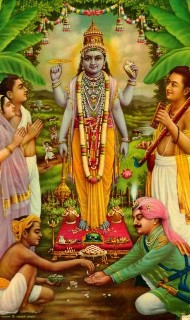
This reflection explores a core dharmic insight: the practical and philosophical shift from ‘I am’ to ‘God is’or, more broadly, from ego-centered assertion to alignment with a higher truth. Drawing on Vedanta and SB 2.2.35, it highlights intelligence as a directing principle beyond ordinary control, sustained by a super self, a portion of God. The…
-
Discover Panini’s Ashtadhyayi: The Complete Guide to Maheshwara Sutras and Algorithmic Grammar

Panini’s Ashtadhyayi is a compact, rule-based system that generates correct Sanskrit forms from a finite set of definitions and operations. Rooted in the Maheshwara Sutras, it introduces powerful tools such as प्रत्याहारः (sound-class compression), संज्ञा (technical naming), उत्सर्ग–अपवादः (general rule and exception), and अनुवृत्तिः (carry-over of essential terms). The result is an algorithmic grammar that…
-
Master the Politics of ‘Official’ History: A Complete Indic Guide to Transform Collective Memory

This essay examines how centralized, “official” historywhether colonial, Marxist, or nationalistcan erode India’s decentralized, living memory. It contrasts Western, top‑down historiography with Indic ethos, where society, not institutions, traditionally safeguarded memory across Hindu, Buddhist, Jain, and Sikh traditions. Citing the 1857 War of Independence and the Azamgarh Proclamation, it shows how living memory enabled coordinated…
-
Bali Pratipada 2025: Complete Guide to Bali Pujan after DiwaliDate, Meaning, Rituals
Bali Pratipada (Bali Pujan) in 2025 falls on October 22, the day after Diwali, and marks the start of Kartik Month in Amavasyant calendars used in Maharashtra, Gujarat, Telangana, Andhra Pradesh, and Karnataka. Known regionally as Bali Padyami and Vamana Jayanti, the festival honors King Mahabali’s devotion and Vamana’s wisdom. Households observe the day with…
-
Discover Deepavali Asthanam 2025 in TTD Temples: A Complete Guide to Rituals and Unity

On 20 October 2025, TTD temples in Tirupati will observe the traditional Deepavali Asthanam, featuring disciplined rituals such as alankaram, archana, and mangala harati. The occasion emphasizes Diwali’s central theme of light overcoming darkness while preserving liturgical order and inclusive darshan. The observance at Sri Govindaraja Swamy Temple and Sri Kodanda Rama Swamy Temple reflects…
-
Ultimate Devotional Experience: Discover Karnal’s 2025 Sri Krishna Balaram Shobha Yatra
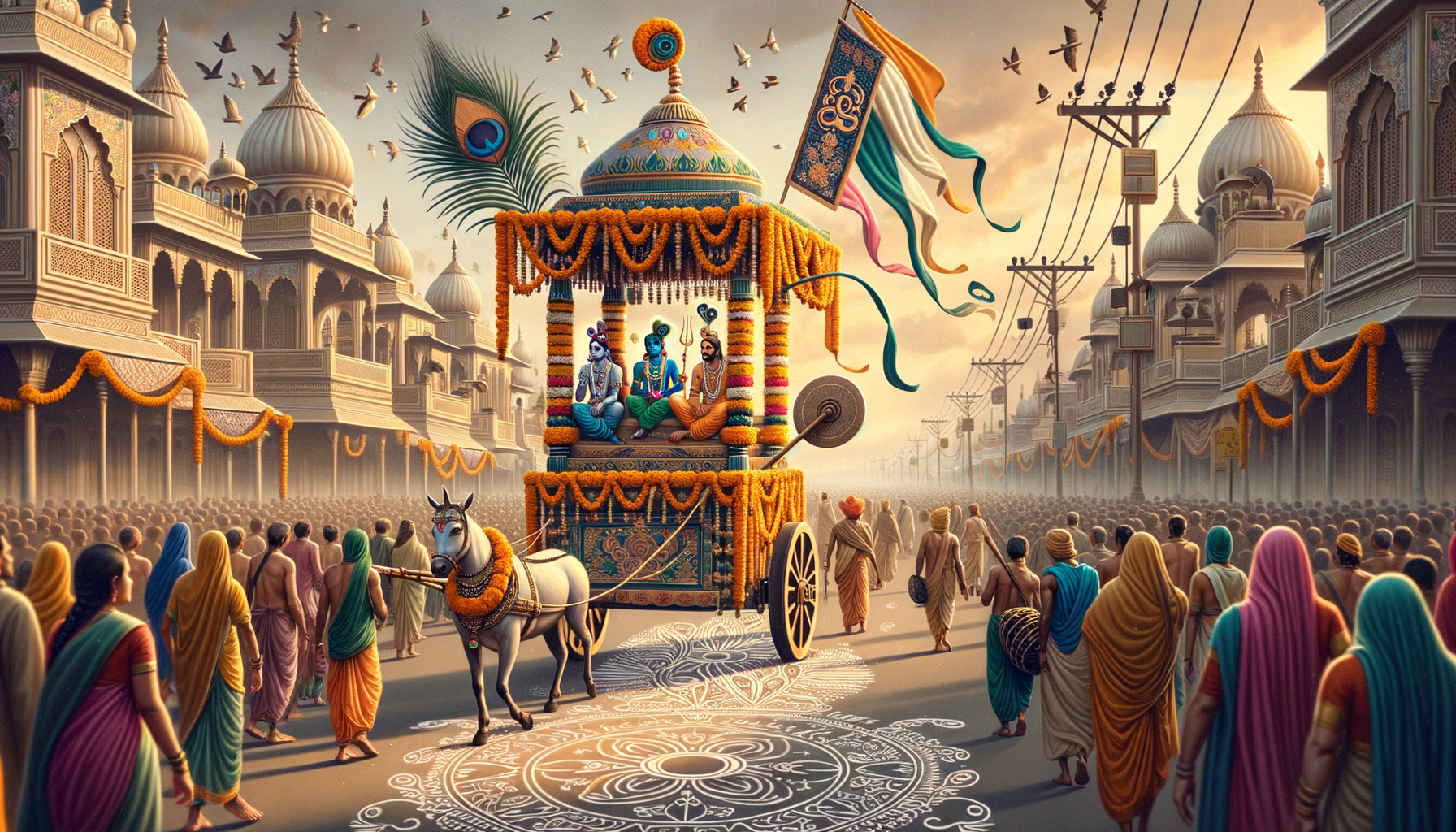
The month-long Sri Sri Krishna Balaram Shobha Yatra (10 September–5 October 2025) enlivened Karnal, Haryana, with a sustained atmosphere of devotion and civic harmony. Held at three locations, the festival enabled broad, steady participation across neighborhoods and generations. The event underscored shared dharmic valuescompassion, seva, and truthsupporting unity among Hindu, Buddhist, Jain, and Sikh communities.…
-
Discover the Ultimate Sri Mayapur Pañca-krośa Parikrama: A Complete Virtual Pilgrimage Experience

This virtual Sri Mayapur Pañca-krośa Parikrama makes a 16-kilometer sacred route accessible to seekers worldwide through an interactive Google-integrated map and a guided YouTube tour. Scripturally grounded and informed by the vision of previous Acharyas, it preserves the reflective core of Tirtha-Yatra in a multilingual, device-friendly format. Participants can cultivate a meditative pace at home,…
-
Bilva Patra’s Essential Significance: Discover Proven Rituals, Symbolism, and Ayurvedic Benefits

Bilva Patra (Bel Patra; Aegle marmelos) is central to Shiva worship, uniting ritual symbolism with lived experience. The trifoliate leaf represents sacred triadssuch as Shiva’s three eyes and the three gunasencouraging purity in thought, speech, and action. Classical sources and household practice affirm simple, consistent offeringsfresh, intact leaves, steady intention, and observance on Mondays, Pradosha,…