
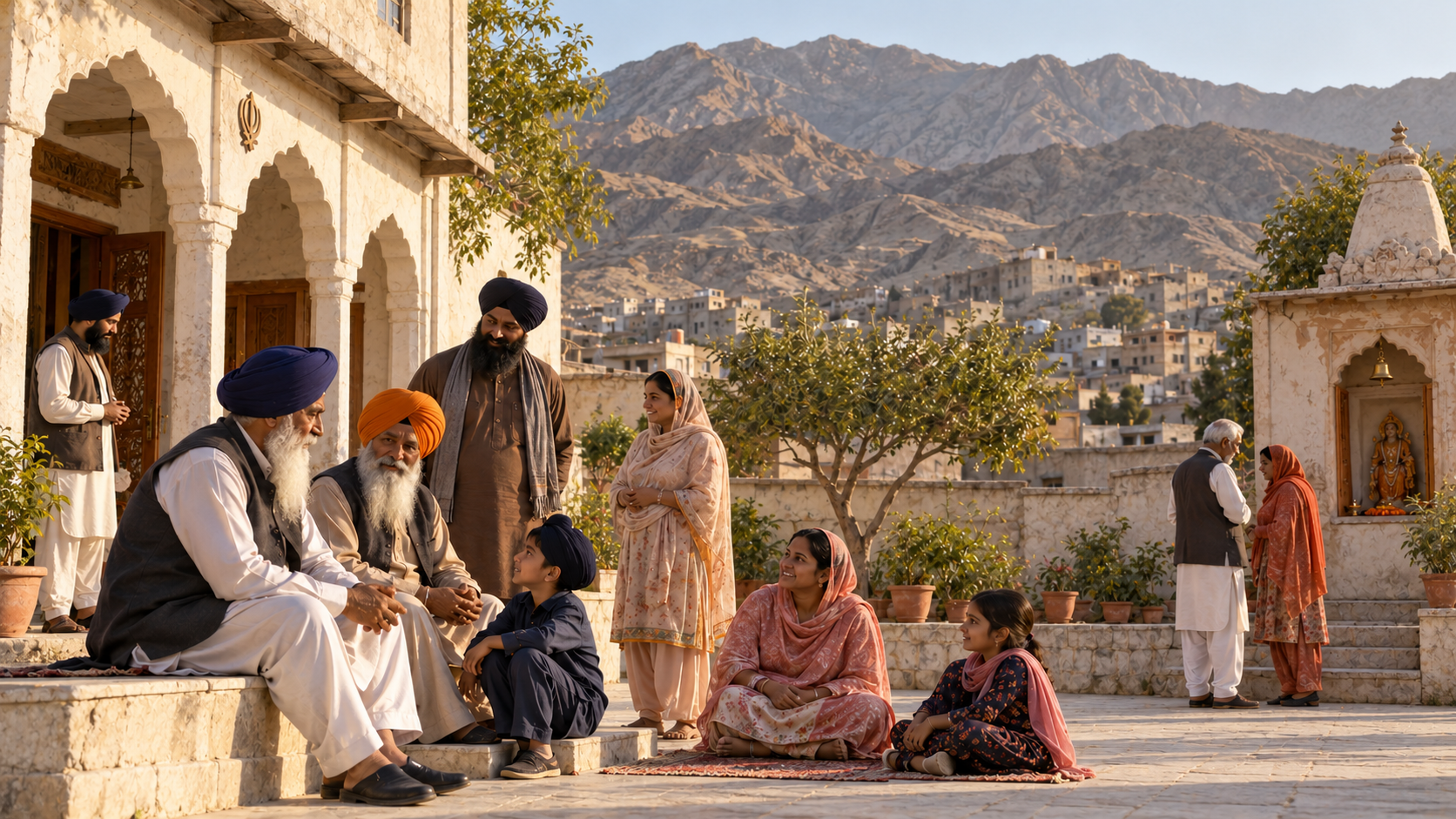
If you encountered the term Hindu Nanakpanthi while reading about Quetta, you may be wondering whether it is a contradiction. It is not. The confusion begins when devotional allegiance, community identity and formal religious discipline are treated as three names for the same thing.
Understanding the distinction helps you recognize a real Dharmic relationship without erasing either Hindu or Sikh identity. It also protects a small community from being forced into categories that may be tidier on paper than they are in lived religious life.
Read Nanakpanthi identity on three different levels

Nanakpanthi literally identifies a person or community through devotion to the path associated with Guru Nanak. In practice, the word can describe an orientation of reverence rather than an exclusive institutional identity. That is why it can appear beside Hindu as well as Sikh.
- Nanakpanthi describes a devotional relationship to Guru Nanak and his teachings.
- Hindu or Sikh may describe a person’s broader religious and communal self-identification.
- Khalsa names a formally initiated order and discipline within the Sikh tradition. It is not a synonym for every Sikh, and its visible discipline should not be used as the sole test of Sikh identity.
These levels can overlap without becoming interchangeable. A person may belong to a Hindu family, retain Hindu customs and understand Guru Nanak as a central spiritual authority. Another person may identify simply and fully as Sikh. The presence of Sikhs and Hindu Nanakpanthis in Quetta should therefore be read as evidence of related communities, not as proof that the two labels mean exactly the same thing.
The decisive question is not which category an outsider thinks fits best. It is how people describe themselves, their households and their congregational life. If a community uses more than one term, preserve those terms before trying to classify them.
What Quetta makes visible about Dharmic boundaries
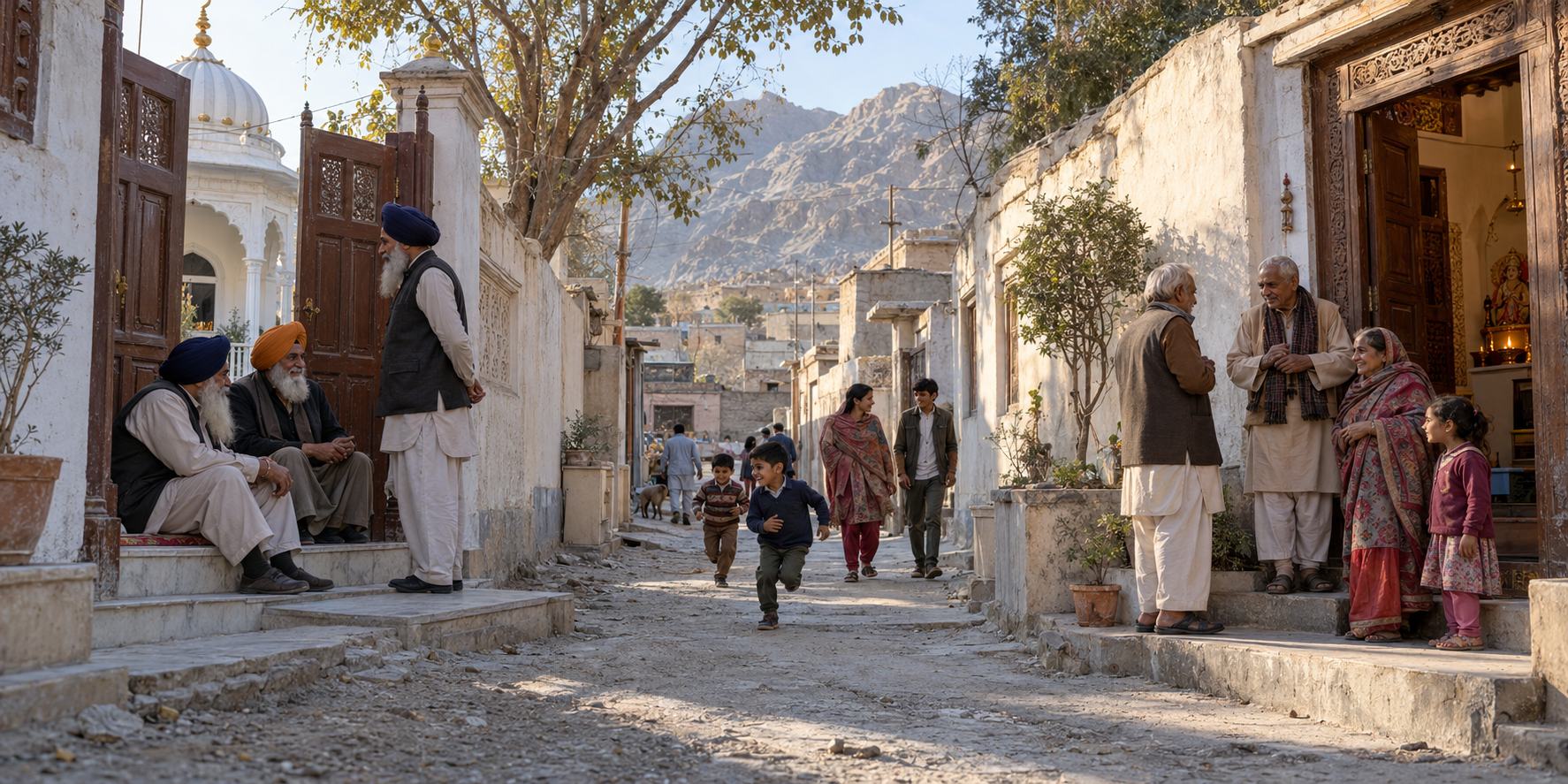
Quetta, the capital of Balochistan in present-day Pakistan, lies outside the political borders of Bharat. Yet political geography does not neatly contain civilizational memory. The existence of Guru Nanak-centred communities there shows why the religious history of the subcontinent cannot be reconstructed from a modern map alone.
A useful way to understand such a community is to examine three kinds of belonging separately:
- Household belonging: How does the family name its inherited community, and which customs does it regard as its own?
- Devotional belonging: Which guru, sacred teaching or form of worship organizes religious life?
- Institutional belonging: What name does the congregation use for itself and for its place of worship?
Those answers may align in a simple way, but you should not assume that they must. A household identity can remain Hindu while its devotional centre is Guru Nanak. A Sikh family may share local observances or social ties with Hindus without treating its Sikh identity as partial. The relationship becomes clearer when each layer is recorded on its own terms.
This is also why words such as temple, gurdwara, sangat and community should not be substituted for one another casually. If you are documenting a place or congregation, use the name its members use. Translation should clarify local speech, not silently replace it.
Four errors that distort the Quetta community

- Turning relationship into sameness. Shared reverence for Guru Nanak does not make Hinduism and Sikhism identical. The Sikh Panth has its own communal memory, institutions and disciplines. A respectful account acknowledges connection without dissolving distinction.
- Turning distinction into hostility. Separate identities do not automatically imply social or spiritual opposition. Hindu devotion to Guru Nanak need not be recast as conversion, confusion or an attempt to appropriate Sikh identity. Begin with the community’s own explanation rather than a ready-made political argument.
- Using visible appearance as a complete census. Dress, hair and other outward signs can be significant, but they cannot tell you everything about family history, initiation, belief or self-identification. Do not decide that someone is really Hindu or really Sikh from a photograph.
- Repeating a number without its definition. A headcount is meaningful only when you know its date, geographic boundary and classification method. Did it count self-identified Sikhs, Hindu Nanakpanthis, households, worshippers or everyone associated with one institution? If those details are missing, describe the community without supplying a precise population figure.
The same discipline applies to historical labels. A term used by one generation may be rejected, narrowed or expanded by another. Always attach a time and a speaker to identity claims instead of projecting a present category backwards.
Key takeaways
- Nanakpanthi identifies devotion to Guru Nanak; it does not by itself settle whether a person identifies as Hindu or Sikh.
- Hindu Nanakpanthi is therefore not an inherently contradictory description.
- Shared devotion should neither erase the distinct Sikh Panth nor be rewritten as evidence of inevitable Hindu-Sikh conflict.
- For any population claim, require a date, a place, a definition and a counting method.
- When documenting the community, preserve its own names for people, institutions and practices.
How to document and support the community responsibly
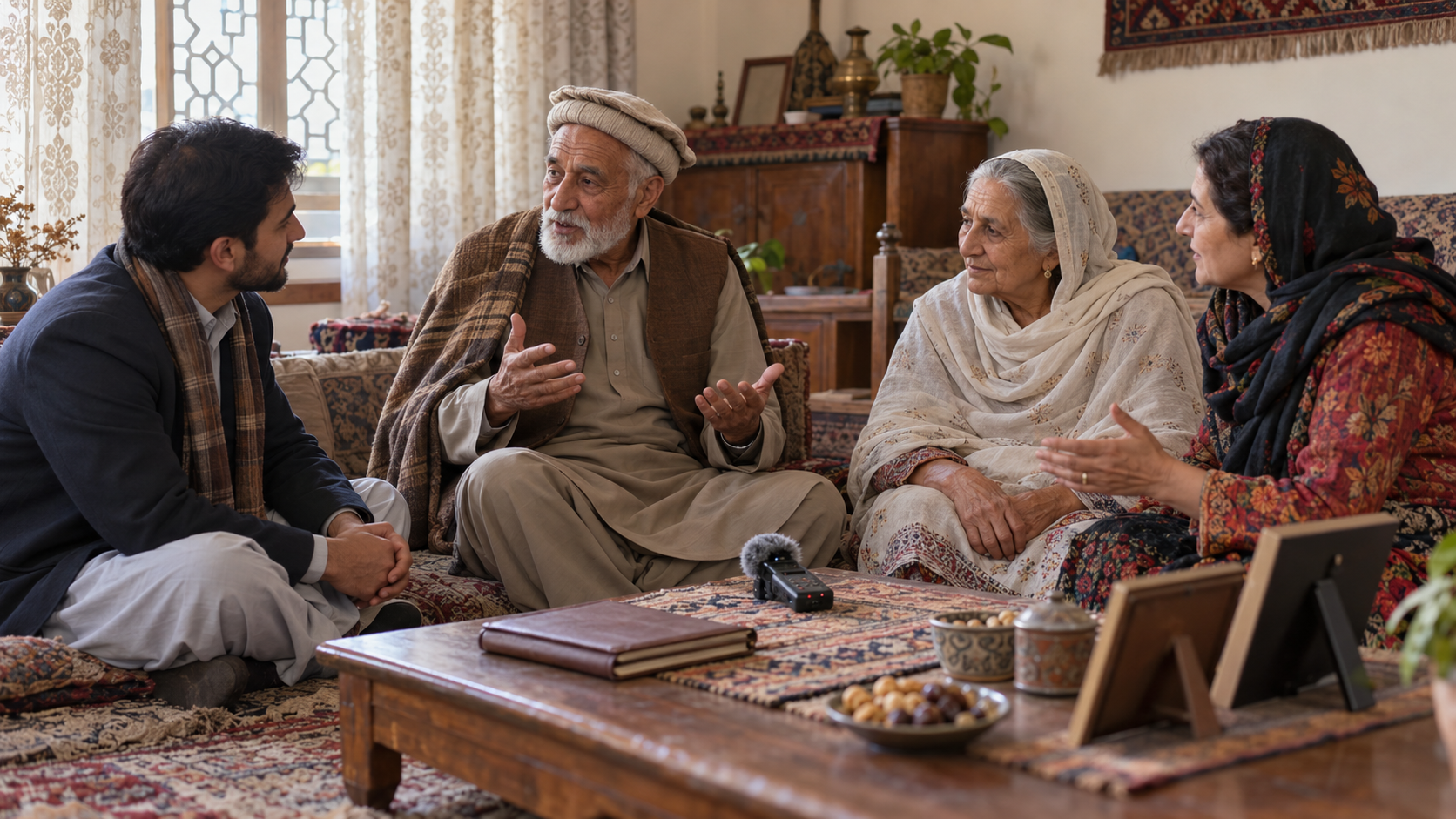
If you are a writer, teacher, family historian or member of the diaspora, your first responsibility is precision. Small communities are especially vulnerable to being represented by the most convenient outside label. Use a process that keeps interpretation separate from what people actually tell you.
- Ask for self-description first. Invite people to name their family and religious tradition in their own words. Do not begin with a demand that they choose one side of a Hindu-Sikh binary.
- Record identity and practice separately. Note how a person identifies, which teachings or figures they revere, which observances they follow and which institution they attend. Do not infer one field from another.
- Keep exact local terminology. Preserve the community’s name for a congregation, sacred place or inherited group. Add an explanation if readers need one, but retain the original term.
- Add provenance to every concrete claim. For a name, number, photograph or family history, record who supplied it, when it was recorded and what area or group it covers. This makes later correction possible without discarding the whole record.
- Obtain permission before publishing personal details. A person’s name, face, address, migration history or religious affiliation can create unwanted exposure. If public identification is unnecessary, anonymize it and keep private records private.
- Preserve evidence in more than one place. With permission, keep labelled copies of photographs, inscriptions, family papers and recorded memories. A file called Quetta community is less useful than one labelled with the person, place, approximate date and explanation of what it shows.
If your question is whether this community proves that Sikhism is simply a branch of Hinduism, the answer is no. Its existence does not settle that theological or historical argument. If your question is whether Hindus and Sikhs have inhabited shared devotional worlds centred on Guru Nanak, the term Hindu Nanakpanthi gives you a concrete reason to take that relationship seriously.
A pro-Dharma account is strongest when it does not need to flatten anyone. It can recognize the civilizational bonds that cross the India-Pakistan border, honour Hindu reverence for Guru Nanak and still speak of Sikh identity in the terms Sikhs use for themselves. Kinship becomes more credible, not less, when difference is stated honestly.
The next time you encounter a label such as Hindu Nanakpanthi, pause before translating it into a familiar political category. Ask who uses the name, what devotional practice it identifies and when the description was recorded. That small discipline is the first practical step toward preserving Quetta’s Dharmic inheritance without rewriting it.
References

Leave a Reply
You must be logged in to post a comment.