

You may have encountered the name “Yakshi Yagam” in a family account, a local story, or an online claim and wondered what kind of practice it describes. Is it temple worship, a local custom, Tantra, sorcery, or something invented to frighten the curious? The first mistake is forcing it into one of those boxes before asking what can actually be established.
At minimum, Yakshi Yagam refers to a secretive Tantric fire ceremony associated with yakshi traditions in Kerala. That gives you a useful boundary, but not a ritual manual. It does not authenticate a practitioner, disclose the ceremony’s purpose, or prove any promised result. A careful approach lets you respect Kerala’s Dharmic inheritance without filling its guarded spaces with fantasy.
What the name establishes, and what it leaves open
A yakshi is a feminine non-human being found across South Asian religious, literary, and artistic traditions. The word does not identify one universally defined personality. A yakshi may be understood differently according to the place, lineage, narrative, shrine, or ritual in which she appears. You should therefore resist conclusions such as “all yakshis are benevolent” or “all yakshis are dangerous.” The local context has to supply the identity.
Yagam tells you more about ritual form than about the being involved. It indicates an organized offering centred on fire. Tantra, in this setting, refers to direct and disciplined ritual engagement with unseen forces. It is not simply a synonym for sinister magic, and its use in a title does not by itself establish authenticity.
The name supports only a restrained minimum:
- The practice belongs to the ritual culture of Kerala.
- Consecrated fire is central to the ceremony.
- The rite is associated with a Tantric current rather than being an ordinary household puja.
- Its guarded or secretive character limits what an outsider can responsibly reconstruct.
The name alone does not reveal the mantras, offerings, sequence, eligibility rules, intended result, historical age, or institutional standing of a particular performance. Nor does the word “yagam” make every ceremony bearing it identical to a classical Vedic yajna. If someone supplies all those missing details without naming a lineage or ritual context, you are hearing an interpretation, not merely the meaning of the term.
Why Kerala’s layered ritual setting matters
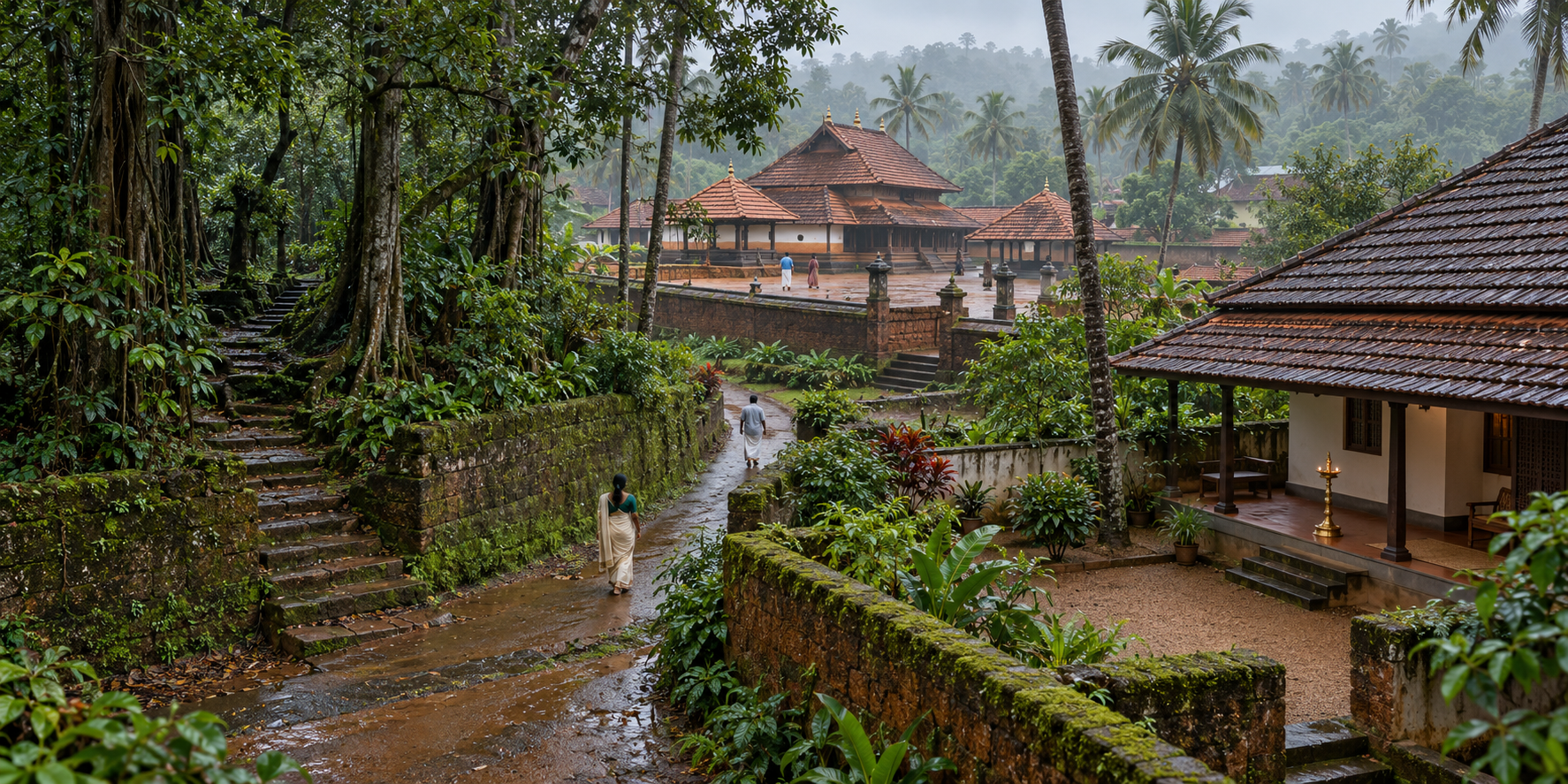
Kerala’s spiritual inheritance holds Vedic worship, temple traditions, and Tantric practice in the same cultural landscape. These currents can meet, borrow forms from one another, and remain distinct at the same time. That layered setting makes two popular shortcuts unreliable.
- “It uses fire, so it must be a standard Vedic sacrifice.” Fire appears in more than one ritual system. You still need to know the rite’s authority, procedure, and purpose.
- “It concerns a yakshi, so it must stand outside Hindu tradition.” Local beings and localized forms of worship have long existed within the varied religious life of Bharat. Their place cannot be decided by an English label alone.
The same caution applies in the other direction. Calling something Tantric does not certify it as ancient, orthodox, effective, or safe. A modern performance can borrow old vocabulary. A private family practice can be historically rooted without being part of public temple worship. A rite can also be religiously meaningful to its custodians without being available for outsiders to copy.
When you encounter a description of Yakshi Yagam, map three layers separately:
- Form: What role does the fire play, and what actions are actually performed around it?
- Authority: Is the rite maintained by a family, a ritual lineage, a shrine community, a temple institution, or an individual practitioner?
- Setting: Is it a private observance, a community custom, a shrine rite, or an event presented to the public?
This method prevents a visible feature, such as fire or a yakshi image, from being mistaken for the whole identity of the ceremony.
Five questions that test a claim about Yakshi Yagam
You do not need access to secret mantras to judge whether a description is careful. You need clear answers about provenance, scope, and conduct. If you are studying a claimed rite, considering an invitation, or being asked to fund one, start with these questions.
- What is the exact local name? Ask for the form used by the custodians, preferably in the original script as well as in transliteration. A broad English label can flatten distinctions between related but non-identical practices.
- Who maintains the rite? Ask for the family, lineage, shrine, temple, or community connection being claimed. Costume, confidence, and an impressive title are not substitutes for identifiable custodianship.
- What kind of claim is being made? Separate a historical claim, such as “this was performed in this region,” from a religious claim, such as “this lineage recognizes the rite,” and from a result claim, such as “this ceremony will guarantee a desired outcome.” Each requires different support.
- What will a participant actually be asked to do? You can respect restricted teachings while still asking where the fire will be lit, what materials participants handle, whether anything must be consumed, whether touch is involved, who may enter, whether recording is prohibited, and whether you may leave at any time.
- Who can corroborate the relevant part? A temple claim should be checked with the temple’s recognized administration or custodians. A family-lineage claim should be checked with identifiable members of that lineage. A historical claim needs historical evidence. Do not ask one kind of authority to prove an unrelated kind of claim.
Secrecy and accountability are not the same thing. A custodian may reasonably withhold a mantra, diagram, initiation, or ritual sequence. That person should still be able to explain the practical boundaries of your participation, the costs, the physical setting, and the authority under which the ceremony is conducted.
Three warning signs deserve particular attention: guaranteed supernatural outcomes, pressure to decide immediately, and threats that refusal will bring a curse or disaster. None of these becomes credible merely because an old ritual name is attached to it. If fear is being used to prevent ordinary questions, step away.
If you are invited to witness, join, or fund a rite
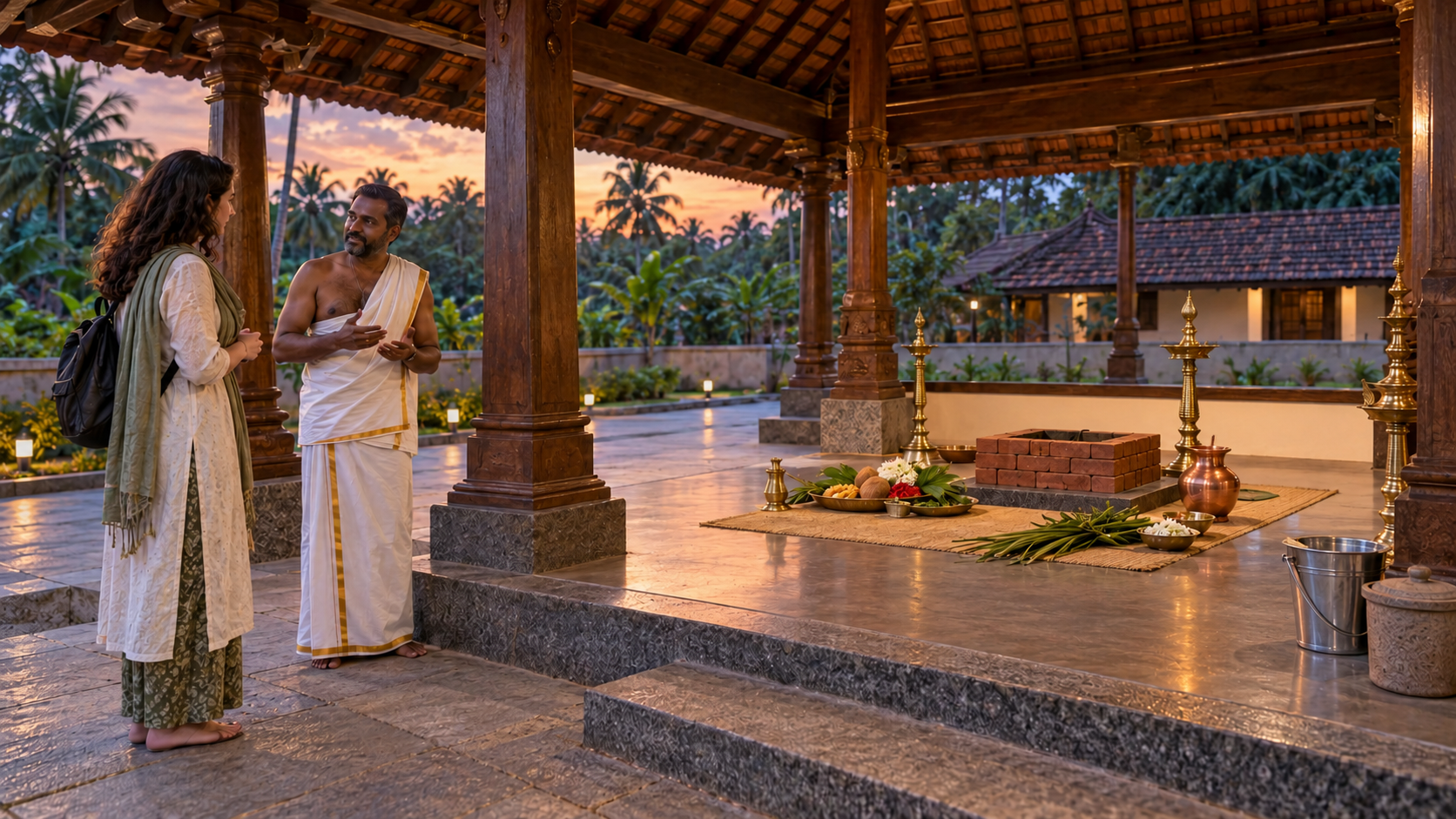
A guarded tradition deserves respect, but respect does not require surrendering judgment. Protect both the practice and yourself by keeping a few boundaries clear.
- Do not reconstruct the rite from fragments. A mantra clip, a photograph of a fire altar, and a list of offerings do not amount to ritual competence. Combining fragments from different traditions can misrepresent the practice and create physical hazards.
- Treat the fire as a real safety issue. Do not join a ceremony in an enclosed or poorly ventilated setting without visible fire control. Do not handle, burn, inhale, or ingest an unidentified substance. If basic safety questions are dismissed as a lack of faith, leave.
- Keep consent explicit. Secrecy never cancels your right to refuse touch, ingestion, isolation, recording, financial pressure, or any act you do not understand. You may withdraw from participation even after a ceremony has begun.
- Ask permission before documenting. Do not photograph participants, publish ritual material, or circulate a mantra simply because you were allowed to witness it. Clarify what may be recorded and what must remain private.
- Separate payment from proof. If money is requested, establish the amount, purpose, and refund expectations before agreeing. Payment cannot guarantee a spiritual result, and a demand for repeated payments under threat is a reason to stop.
- Do not substitute ritual for necessary professional help. If you are considering the ceremony because of illness, acute distress, abuse, harassment, or a legal problem, seek the relevant medical, mental-health, emergency, or legal assistance. Religious observance may accompany care, but it should not be used to delay it.
These boundaries are not hostile to Tantra. They distinguish responsible religious participation from coercion, improvisation, and spectacle. You can honour a tradition’s restricted knowledge while insisting on clarity about anything that affects your body, safety, money, or freedom.
Key takeaways
- Yakshi Yagam is best approached as a secretive Kerala Tantric fire ceremony associated with yakshi traditions.
- The name does not provide a universal procedure or prove the age, lineage, purpose, or authenticity of a particular performance.
- Kerala’s Vedic, temple, local, and Tantric currents can coexist without being interchangeable.
- Verify the exact local name, custodial lineage, setting, stated purpose, participant expectations, safety arrangements, and costs.
- Do not attempt the rite from online fragments or accept fear, urgency, and secrecy as substitutes for accountability.
Your next step is simple: write down the exact term you encountered, who used it, where it was used, and what was claimed. Match each claim to the person or institution capable of verifying it. If the answers remain vague, leave the rite unclassified. We do not preserve a tradition by turning every gap in our knowledge into a legend; careful uncertainty serves it better.
References

Leave a Reply
You must be logged in to post a comment.