
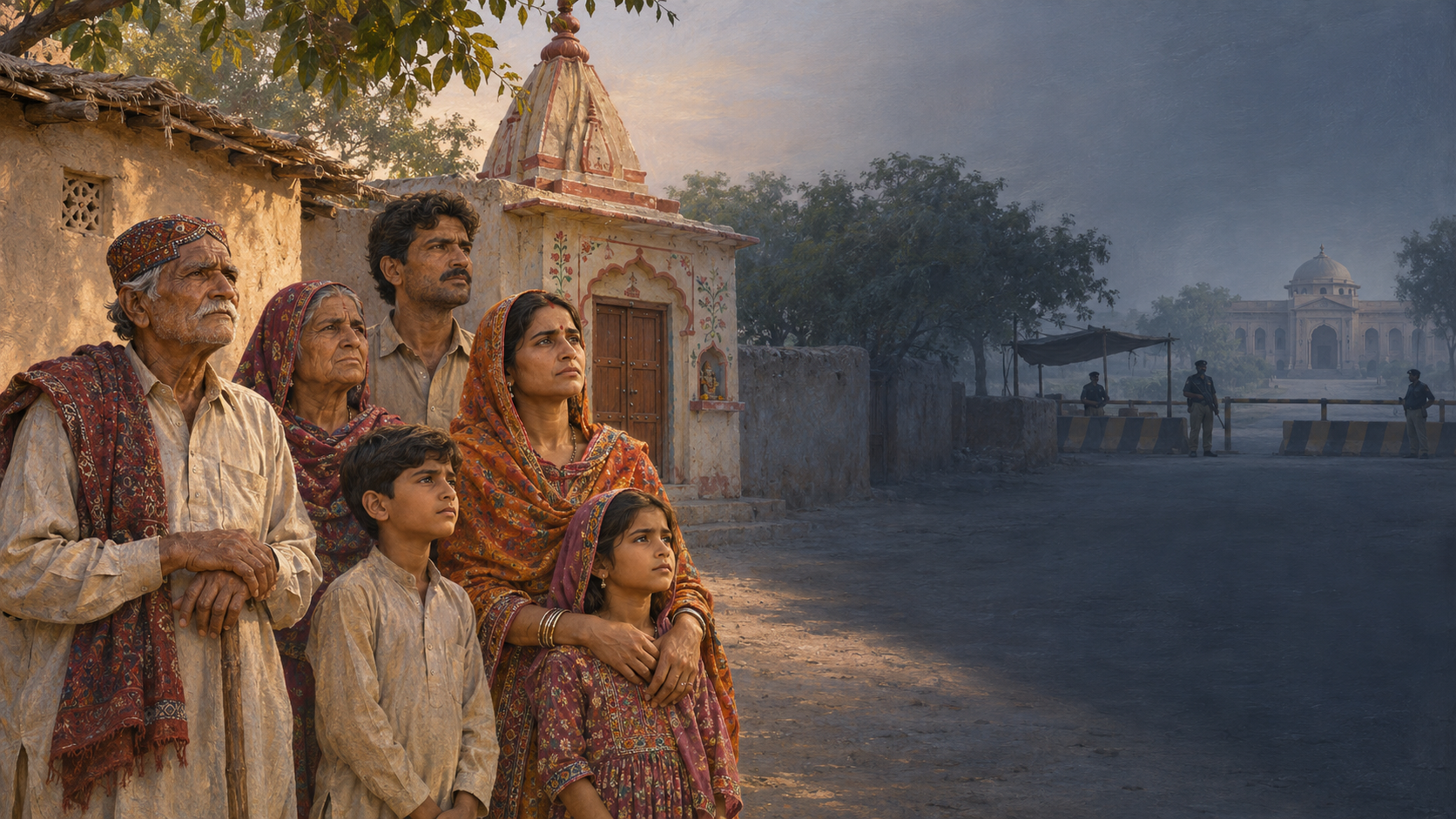
If you are trying to understand violence against Hindus in Pakistan, the hardest question is often not whether something terrible happened. It is how to describe what happened without minimizing a persecuted community’s vulnerability or claiming more than the known facts can prove.
You do not have to choose between moral clarity and factual precision. The useful approach is to separate the immediate crime, the vulnerability that made the victims easier to attack, and the state’s response after the attack. That framework helps you recognize persecution, challenge impunity and advocate for justice without turning allegations into verdicts.
Key takeaways
- The Chelhar case concerns the killing of Suresh Kumar Meghwar and his 20-year-old son, Love Kumar Meghwar, during an armed attack reportedly connected to a dispute over land and trees. Six other people, including women, were wounded.
- The known facts do not establish an explicitly anti-Hindu motive for the shooting. They do show how a poor Hindu family could face lethal violence in a dispute involving land and allegedly influential interests.
- Persecution is not confined to crimes accompanied by religious slogans. It can also operate through land insecurity, social exclusion, gendered coercion and unequal access to protection or justice.
- Forced conversions and coerced marriages are a distinct concern in Sindh, especially for economically vulnerable Scheduled Caste Hindu families. They should not be blurred into an undifferentiated count of communal incidents.
- An arrest is a procedural milestone, not the end of accountability. Track bail, protection for the affected family, court progress and the eventual disposition of the case.
- Genocide is a specific legal allegation requiring evidence of an intent to destroy a protected group, in whole or in part. The facts available here establish grave violence and a broader persecution concern, but they do not by themselves prove that legal threshold.
Read the Chelhar killings at two levels
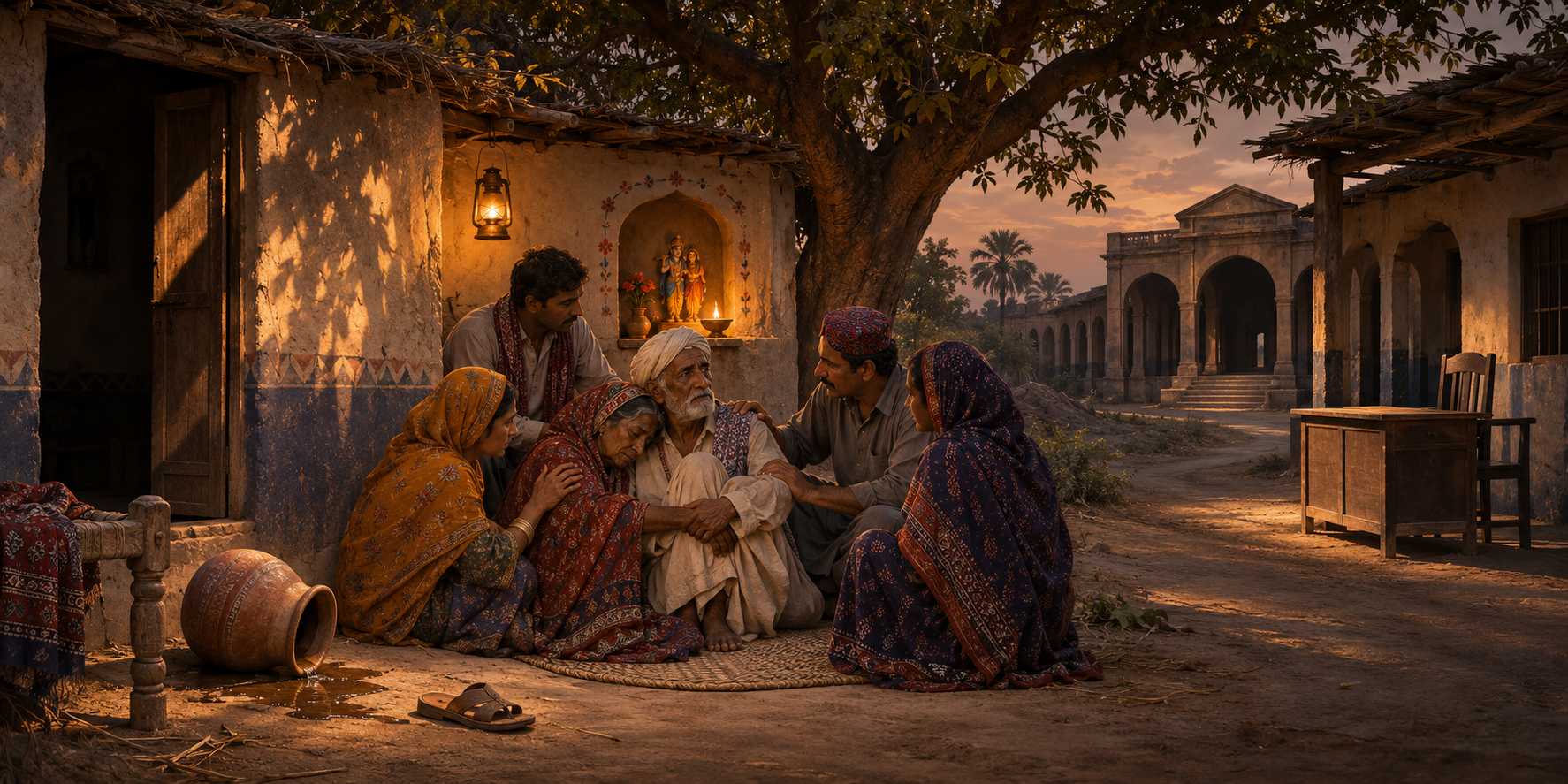
The first level is the crime itself. Armed men allegedly attacked the home and family of Suresh Kumar near Ramapir Temple in Chelhar, Sindh, following a dispute concerning a plot of land and the cutting of trees. Gunfire fatally wounded Suresh Kumar and his son Love Kumar. Six other people, including women, were injured.
Police registered FIR No. 27/2026 at Chelhar police station. Eight accused were named under provisions covering murder, attempted murder and rioting. These are accusations recorded in a criminal case, not findings of guilt. That distinction must remain visible whenever you write or speak about the people named.
The second level is the struggle required to obtain a state response. Relatives and members of the Meghwar community placed the bodies at Phangario intersection near Mithi and refused to perform the last rites until arrests were made. The sit-in disrupted a highway and commercial activity, drew thousands of participants and continued for nearly 50 hours before seven of the eight accused were arrested. The remaining accused obtained ten days of pre-arrest bail.
That sequence matters. Police did register a case, and most of the named suspects were arrested. It would therefore be inaccurate to say that the state did nothing. It is equally important to notice that a bereaved minority family had to withhold the last rites, sustain a highway protest and mobilize a broad coalition before the initial arrest demand was substantially met.
| Question | What the documented facts support |
|---|---|
| What happened? | A father and son were killed and six other people were wounded in an armed attack. |
| What was the reported immediate trigger? | A dispute involving a plot of land and the cutting of trees. |
| Has a religious motive been established? | No explicit anti-Hindu motive is established by the available case details. |
| What has the justice system done? | An FIR named eight accused; seven were arrested after the protest, while the eighth received temporary pre-arrest bail. |
| What remains unresolved? | Individual guilt, the final legal outcomes, continuing protection for the affected family and whether influence will distort the process. |
This two-level reading prevents two common errors. Treating the killings only as a private land dispute ignores the social conditions surrounding the victims and the extraordinary pressure needed to secure arrests. Declaring the shooting religiously motivated without evidence substitutes inference for proof. A strong Hindu human-rights case should do neither.
Persecution can shape a crime without being its stated motive
Pakistan’s 2023 census recorded approximately 3.9 million Hindus, about 1.61 percent of the population, with most living in rural Sindh. That tells you where vulnerability is concentrated. It does not, by itself, prove a demographic decline: demonstrating change would require comparable census figures, consistent definitions and evidence accounting for migration, births, deaths and enumeration problems.
The more useful question is how minority status interacts with land, caste, poverty, gender and political influence. A dispute need not begin with a theological declaration for discriminatory conditions to affect who can defend property, reach officials, withstand intimidation or sustain a legal case.
Land and livelihood pressure
A land dispute becomes a minority-rights concern when the parties do not possess comparable power. If influential actors can use violence while a poor Hindu family must mobilize an entire district to obtain arrests, the institutional imbalance is part of the story even when the immediate disagreement concerns property or trees.
When you assess another case, do not stop at the label “land dispute.” Ask who occupied or claimed the land, whether threats preceded the violence, whether officials responded before the situation escalated, whether the victims could safely file a complaint and whether political connections affected enforcement. Those facts distinguish an ordinary civil conflict from coercive dispossession enabled by unequal power.
Coercion involving girls and marriage
The Human Rights Commission of Pakistan has recorded forced conversions and coerced marriages as a persistent problem in Sindh, with a particularly heavy burden on Scheduled Caste Hindus facing poverty, exclusion and limited access to justice. United Nations experts have warned about Hindu girls being abducted and coerced into religious conversion, treating the problem as an intersection of religious persecution, trafficking, violence against women and violence against children.
Each dimension requires separate documentation. Record the girl’s age if it is verified, whether her family reported an abduction, whether she had independent access to counsel, what was alleged about conversion or marriage, and what a court actually decided. Do not publish a child’s identifying information merely to make a campaign more emotionally forceful. Protection must come before publicity.
The cost of obtaining justice
The Chelhar protest was joined by relatives, community members, political activists, lawyers, traders and civil-society participants. That breadth helped produce a response. It also reveals the cost imposed on victims when routine enforcement depends on exceptional mobilization.
Notice the difference between formal access and effective access. A police station may accept an FIR, yet a family can still remain vulnerable if suspects evade arrest, witnesses face pressure, hearings stall or protection disappears after public attention moves elsewhere. The meaningful test is not whether a file exists. It is whether the process can reach a fair conclusion without the complainants being silenced, exhausted or endangered.
Use the strongest term the evidence can carry

Language shapes whether other people can trust your advocacy. “A Hindu was harmed,” “a Hindu was targeted because of Hindu identity,” and “Hindus face a pattern of persecution” are three different claims. They require different evidence.
Use “anti-Hindu violence” for an individual incident when evidence connects the selection of the victim, the conduct of the attacker or the intended message to Hindu identity or Dharma. Relevant evidence could include threats, demands concerning religion, attacks on temples or murtis, discriminatory statements, forced religious acts, or a demonstrated pattern in victim selection. The victim’s identity alone is not enough to prove motive.
Use “persecution” to describe a broader condition when repeated harms and discriminatory barriers place a community under sustained pressure. The component events can have different immediate triggers: a property conflict, an abduction, a coerced conversion, a marriage dispute or an attack on worship. The pattern lies in who remains vulnerable, which methods recur and whether institutions provide equal protection.
Use “impunity” carefully as well. It is more than the fact that a crime occurred. Look for non-enforcement, protection by powerful patrons, intimidation, unexplained delay or the repeated failure to carry a case through. The seven arrests in the Chelhar case are relevant progress. They do not settle whether impunity has been defeated; that depends on what happens next.
Genocide is not simply a stronger synonym for persecution. It is a specific legal allegation centered on an intent to destroy a national, ethnic, racial or religious group, in whole or in part. A murder, a series of severe abuses or even systematic discrimination may be evidence considered in such an inquiry, but horror alone does not establish the required intent. On the facts presented here, “grave violence,” “minority vulnerability,” “alleged pattern of persecution” and “risk of impunity” are defensible formulations. A conclusive legal finding of genocide would require a much larger evidentiary record.
This precision does not weaken the Hindu case. It protects it. One exaggerated claim can allow officials or commentators to avoid the documented facts: two people were killed, six were wounded, a minority family faced an allegedly influential armed group, and sustained public pressure was required before most of the named accused were arrested.
Turn concern into disciplined, sustained advocacy

If you are documenting these cases from Bharat, the diaspora or elsewhere, your most useful contribution is a record that can survive scrutiny. A viral headline creates attention for a day. A dated case file makes delay, reversal and impunity harder to hide.
- Record the verified core: victim, location, harm, reported trigger and date when one is available. If a detail is absent, leave it absent.
- Separate procedural status from guilt. Write “named in the FIR,” “arrested,” “released on bail” or “convicted” only when that exact status is established.
- Separate motive from context. State whether an anti-Hindu motive is explicit, alleged, inferred or not established. Then document any surrounding minority vulnerability as a separate issue.
- Track the next milestone: custody or bail status, court appearance, protection for the family, trial progress and final outcome. Do not treat the first arrest announcement as closure.
- Classify the type of harm. A useful tracker should distinguish murder, attempted murder, land seizure, abduction, forced conversion, coerced marriage, temple desecration and institutional discrimination rather than collapsing unlike events into one unexplained total.
- Correct the record when facts change. An acquittal, retracted allegation, new arrest or revised casualty count belongs in the same file as the original claim.
A concise Chelhar case card, for example, would state that Suresh Kumar Meghwar and Love Kumar Meghwar were killed and six others were wounded; the reported trigger involved land and trees; FIR No. 27/2026 named eight accused; seven were arrested after a nearly 50-hour protest; the eighth received temporary pre-arrest bail; and an explicitly religious motive has not been established in the available details. The next entries should concern protection for the family and progress through the courts.
Direct public demands toward verifiable outcomes. In this case, community representatives appealed to the Government of Sindh, the Chief Minister, senior police officials and relevant law-enforcement agencies for arrests, legal proceedings and protection for the bereaved family. A useful representation to those institutions should name the FIR, ask for the current procedural status and request protection without threatening officials, suspects or any religious community.
Keep collective blame out of the campaign. Pakistan Darawar Ittehad, the minority-rights organization involved in the protest, expressly framed its demand as a call for justice and the rule of law rather than action against a caste or community. That discipline is strategically important. It keeps attention on alleged perpetrators, political protection and institutional responsibility instead of inviting retaliation against uninvolved people.
When the next alert reaches you, do not forward the headline alone. Build the six-line case record, preserve the distinction between allegation and proof, and set a reminder to check the next legal milestone. Sustained, accurate attention is more difficult to dismiss than either silence or an overstatement.
References
- Hindu Post – Meghwar Father and Son Murdered in Chelhar, Sindh: Another Chapter in Pakistan’s Genocide of Hindus
- Hindu Post – Hindus under attack: a weekly roundup of hate crimes, persecution, and discrimination against Hindus

Leave a Reply
You must be logged in to post a comment.