
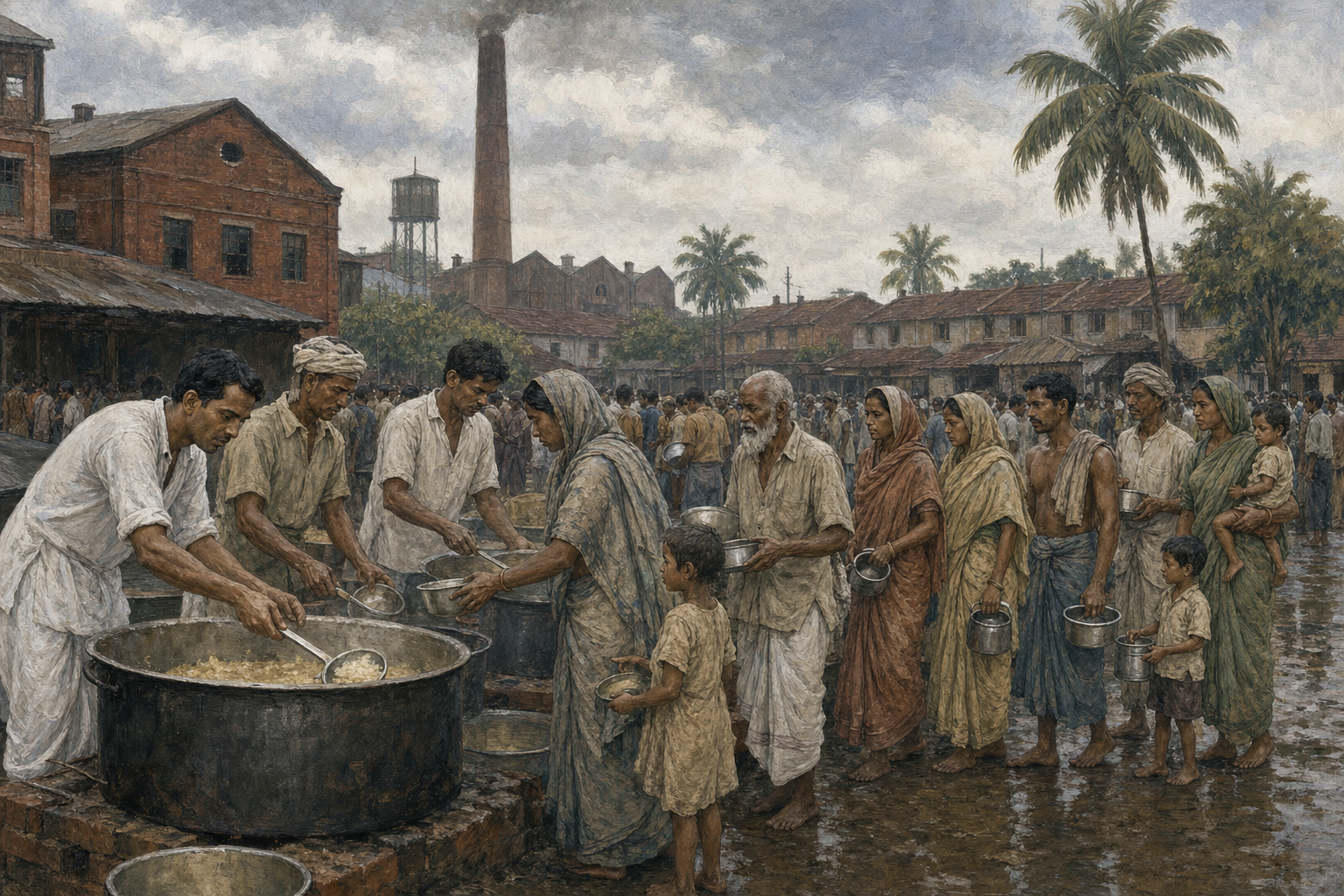
If you came looking for what Batanagar did during the Bengal famine, two errors can distort the answer. One erases the imperial decisions that deepened the emergency. The other turns a significant local response into a heroic legend bigger than the evidence can carry.
The responsible starting point is firm and restrained: in 1943, while Bengal was starving, Batanagar fed hungry people. That fact deserves a place in India’s public memory. It also deserves precision about what is known, what remains uncertain, and why local relief could never substitute for responsible government.
The relief story begins with the kind of place Batanagar was
Batanagar was not simply the location of a shoe factory. It was a company town on the outskirts of Kolkata, created as the Bata enterprise expanded from Tomáš Baťa’s beginnings in the Czech town of Zlín into a global footwear business. Bata eventually became so familiar in Indian households that many people experienced it less as an imported label than as part of everyday Indian life.
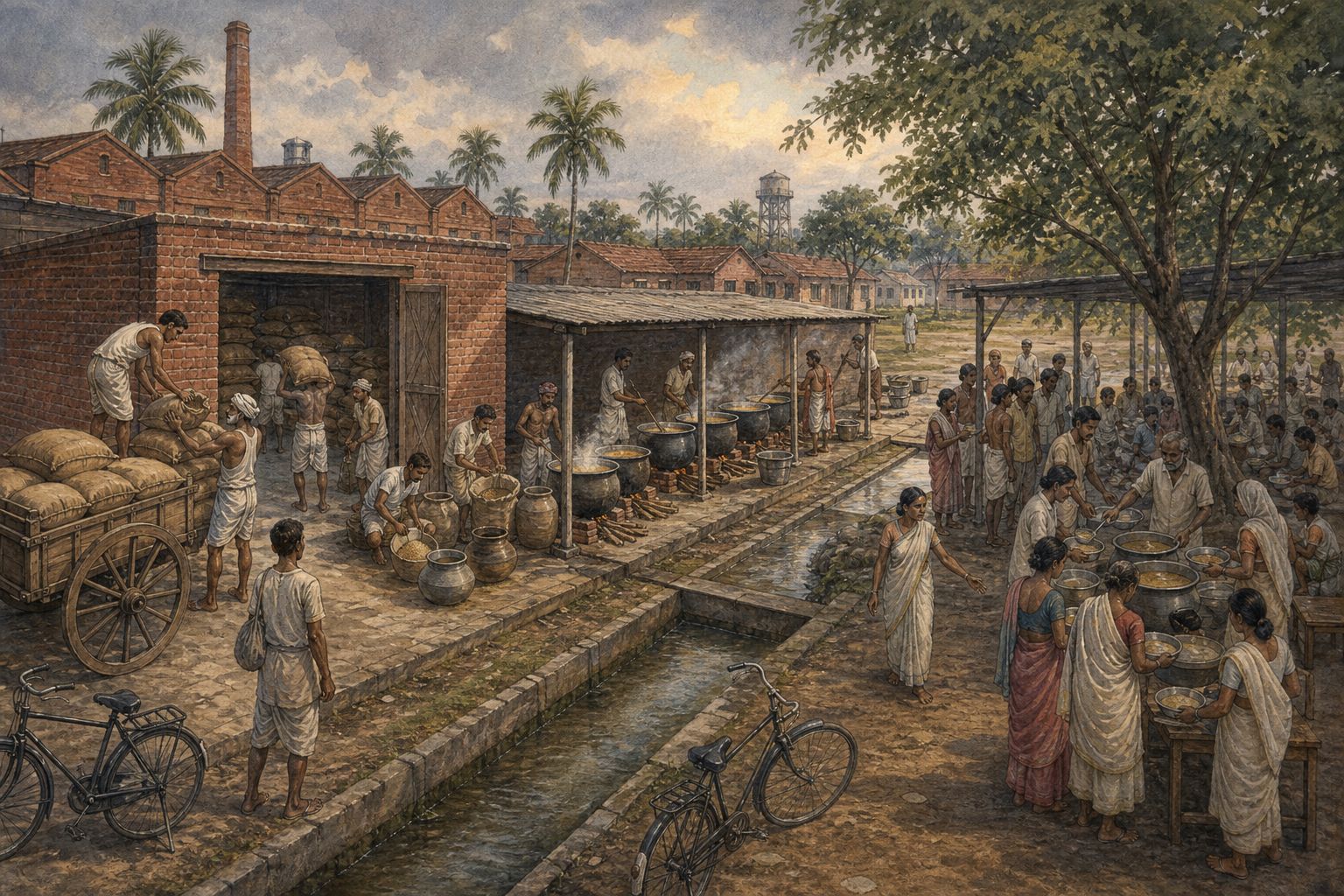
That setting helps you understand how an industrial settlement could respond when the surrounding society was in distress. A company town brings management, workers and facilities into an organised community. Such concentration can make collective action easier than it would be among unrelated individuals acting separately.
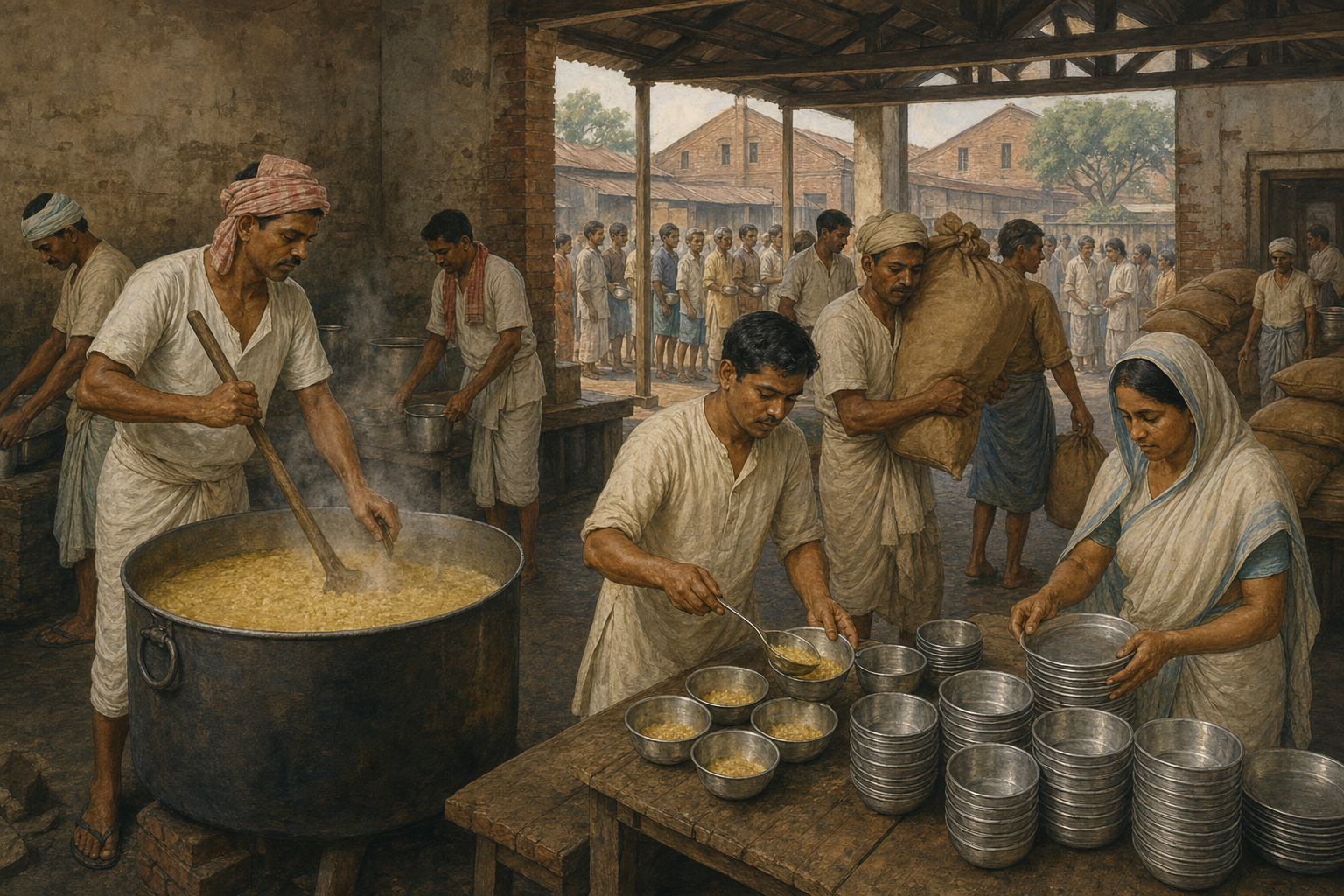
But organisational capacity is context, not proof of a particular relief mechanism. Do not claim that Batanagar operated a specific kind of kitchen, served a certain number of meals, spent a particular sum, or sustained the work for a defined period unless a primary record establishes it. The defensible statement is narrower: Batanagar provided food to the hungry during the famine.
This distinction matters whenever you write a museum caption, school lesson, social-media thread or family history. A modest fact stated accurately is stronger than a dramatic claim that collapses when someone asks for a ledger, circular or dated testimony.
Local hunger cannot be separated from imperial wartime policy
The Bengal famine was not merely an unfortunate shortage occurring in wartime. It was a catastrophic crisis greatly aggravated by British wartime policies and the Churchill government’s response. That political setting is essential. Without it, Batanagar’s relief can be misremembered as ordinary charity rather than action taken amid a profound failure of governance and allocation.
Madhusree Mukerjee assigns direct causal responsibility to decisions made under Churchill and places the resulting Indian death toll at roughly three million. That formulation should remain attached to her argument. It should not be repeated as an unattributed figure or presented as though every aspect of causation had been reduced to one universally accepted calculation.
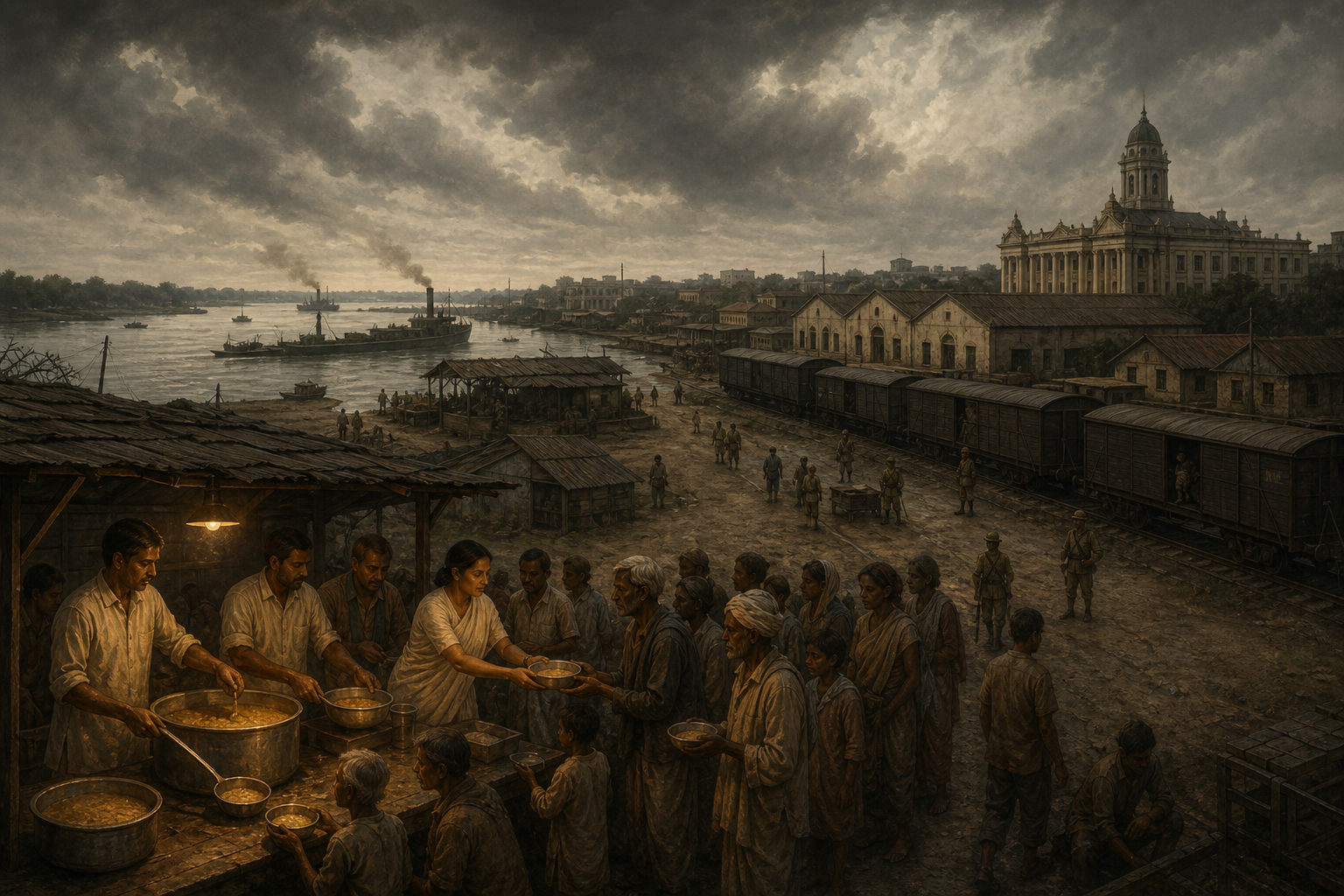
The moral charge does not depend on stripping away that attribution. Her account describes corpses along the streets of eastern Indian cities while wheat and available shipping were directed toward stocks intended for post-war Britain and Europe instead of emergency food shipments. The central issue is therefore allocation as well as scarcity: who controlled food and transport, which lives received priority, and what happened when imperial objectives displaced the urgent needs of Indians.
When you encounter a famine narrative framed mainly through weather, abstract wartime pressure or anonymous administrative difficulty, look for the missing decisions. Ask who possessed grain, ships and authority; what alternatives were available; and whose future consumption was protected while others faced immediate hunger. Those questions turn an apparently impersonal disaster back into a history of responsibility.
Give Batanagar credit without turning relief into mythology
Batanagar matters because it shows an institution responding at the point where policy failure became bodily suffering. Food relief is immediate. It cannot repair imperial distribution, reverse wartime priorities or restore those already lost. It can, however, meet the person in front of it at the most urgent threshold.
That is enough to honour. There is no need to claim that Batanagar solved the famine, fed all affected communities, or represented the conduct of every business in Bengal. Nor should the event be casually relabelled with the modern language of corporate social responsibility. Such language can obscure the historical setting and import present-day assumptions about formal programmes, reporting and institutional policy.
A clear retelling keeps four layers separate:
- Established event: Batanagar fed hungry people during the Bengal famine in 1943.
- Physical setting: Batanagar was a company town associated with Bata on the outskirts of Kolkata.
- Political context: British wartime policies and the Churchill government’s response greatly worsened the catastrophe.
- Attributed interpretation: Mukerjee argues that Churchill-era decisions caused roughly three million Indian deaths.
- Questions still requiring primary evidence: the relief’s duration, scale, beneficiaries, food quantities, funding and administrative arrangements.
This separation prevents two kinds of historical laundering. Colonial responsibility cannot disappear behind an uplifting story of local benevolence. At the same time, admiration for Batanagar cannot be allowed to generate unsupported details. The sharper contrast is already powerful: authority at the imperial level failed the hungry, while an organised community at Batanagar chose to feed them.
Turn the memory into disciplined Dharmic public history
For a Dharmic reader, feeding the hungry naturally recalls anna-dana, the giving of food, and seva, service performed for others. That ethical resonance is legitimate. A claim about historical motivation is different. Unless evidence identifies a religious purpose, do not declare that Batanagar’s organisers acted because of a particular Dharmic teaching.
You can say that the relief embodies a value Dharmic communities recognise: food offered in a time of hunger is not an ornamental gesture but a direct response to suffering. You cannot move from that present-day interpretation to an assertion about what every organiser believed. Keeping those statements separate makes both the history and the Dharmic reflection more credible.
If you want to carry the episode beyond a passing mention, use a simple documentation process:
- Write the minimum verified statement first. Record the place, the year and the act of feeding without adding an unsupported headcount or programme name.
- Label interpretation as interpretation. Attribute the estimate of roughly three million deaths and its causal argument to Mukerjee whenever you use it.
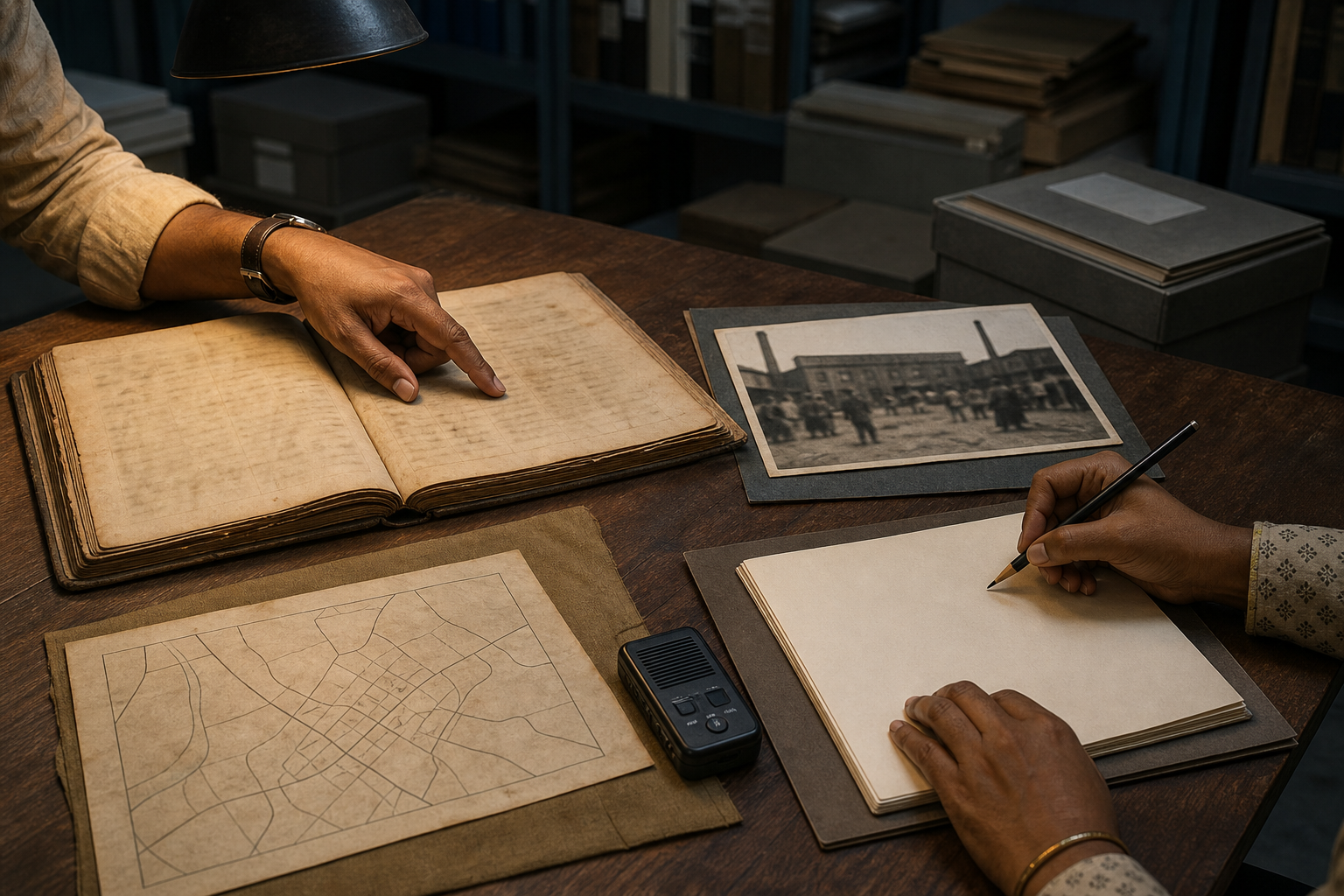
- Search for operational evidence. Look for company circulars, welfare or expense ledgers, ration records, municipal correspondence, contemporary local newspapers, photographs with provenance, and dated personal papers.
- Interview without leading the witness. Ask what food was distributed, where it was given, who administered it, who could receive it, and which document or event fixes the date. Do not begin by supplying the answer you hope to hear.
- Preserve provenance. When scanning a letter, photograph or ration document, record the owner, approximate date, physical location and chain of custody. A detached image with no identifying information is much harder to verify later.
- Keep unknowns visible. If the number of recipients or duration remains uncertain, say so. An unanswered question is an invitation to further work, not permission to invent a satisfying detail.
Oral testimony deserves preservation, especially when institutional records are incomplete. But memory should remain identified as testimony until other evidence corroborates its dates and quantities. A useful community exhibit can therefore have three clearly marked parts: what is documented, how the event is interpreted, and what researchers still need to establish.
Key takeaways
- Batanagar’s defensible place in the history of 1943 is specific: the company town fed hungry people during the Bengal famine.
- The relief must be read within a catastrophe greatly exacerbated by British wartime policy and the Churchill government’s response.
- The roughly three-million death figure and direct causal formulation should be attributed to Madhusree Mukerjee rather than presented as an ownerless statistic.
- Exact claims about meals, recipients, expenditure, duration or relief machinery require primary records.
- Anna-dana and seva offer a meaningful Dharmic lens, but ethical resonance should not be confused with evidence of the organisers’ historical motives.
If you teach, commemorate or write about Batanagar, begin with the verified sentence and then pursue one unanswered operational question. Locating even one dated circular, ledger entry, photograph or carefully documented testimony would do more for this history than another embellished retelling. Remembering Batanagar well means honouring the food that was given while continuing the patient work of finding out exactly how it reached the hungry.
References
