
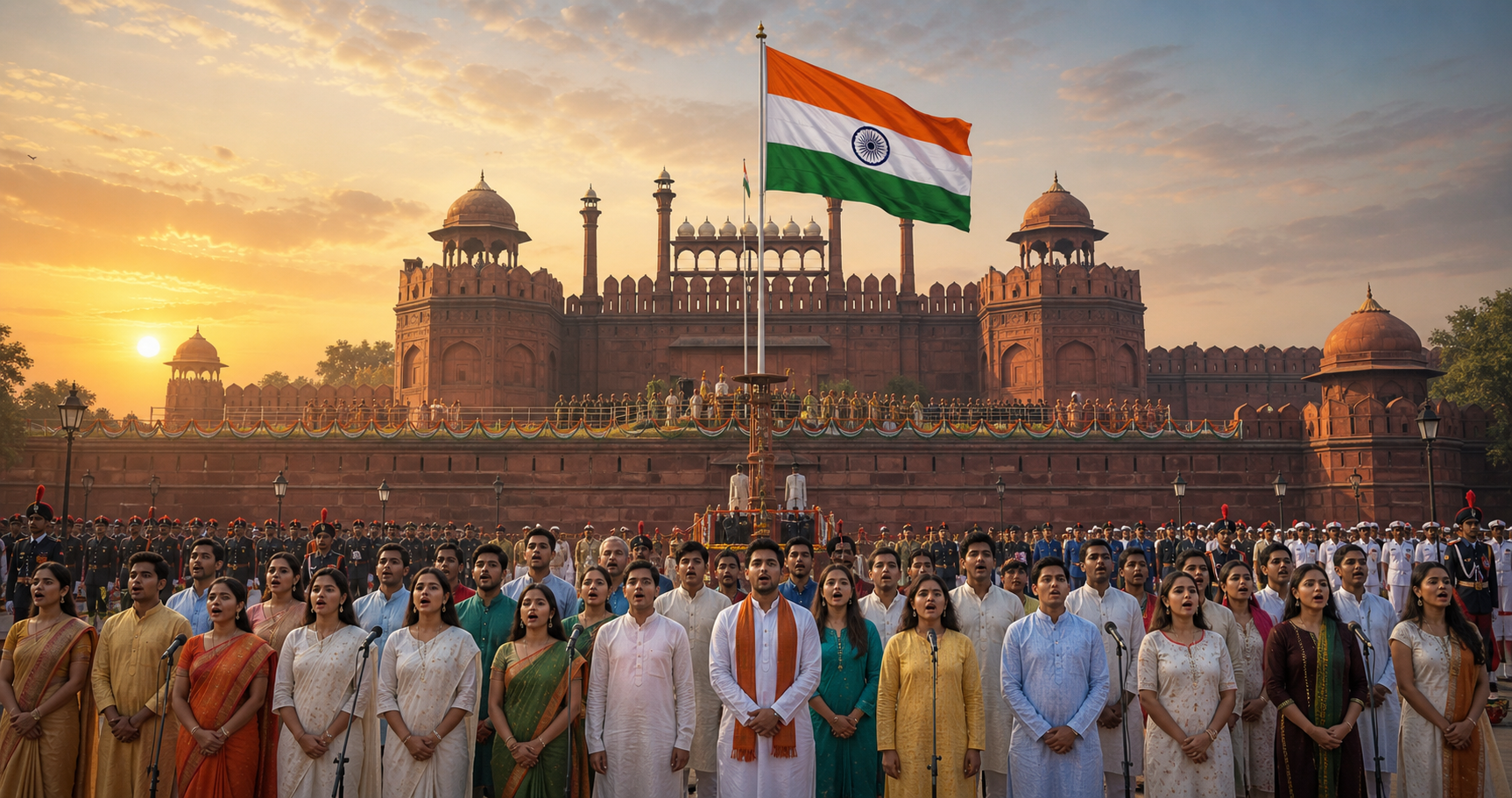
If you plan to watch India’s Independence Day ceremony or share clips from it, do not treat Vande Mataram as incidental music before the main address. At the Red Fort on 15 August 2026, its announced inclusion is itself a significant part of the ceremony.
The moment deserves precision as well as reverence. You should know what has actually been scheduled, why the first-time claim has a narrow meaning, and how the song’s 150-year commemorative frame is being connected to youth and the national goal of a developed Bharat by 2047.
What is scheduled at the Red Fort
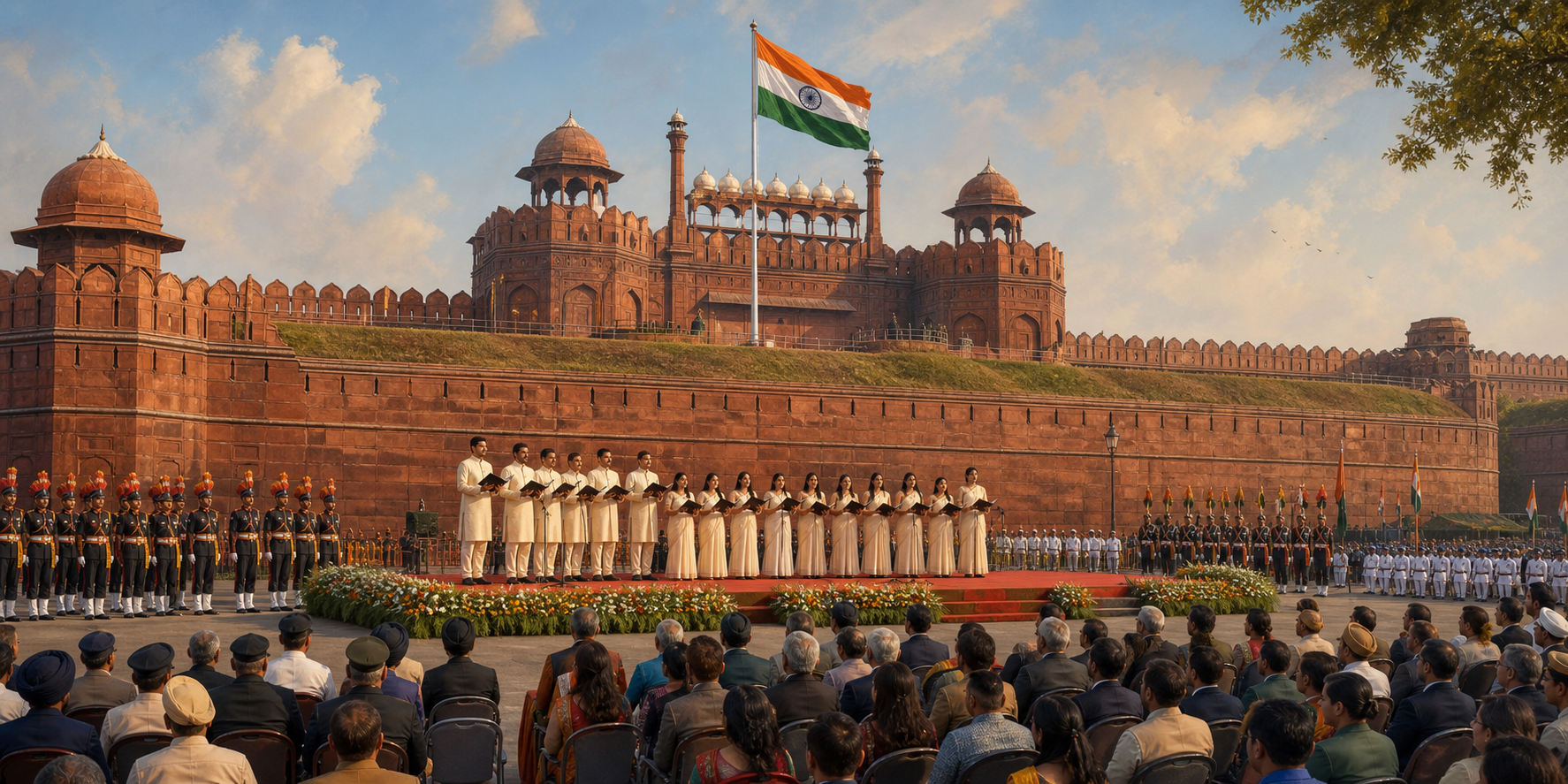
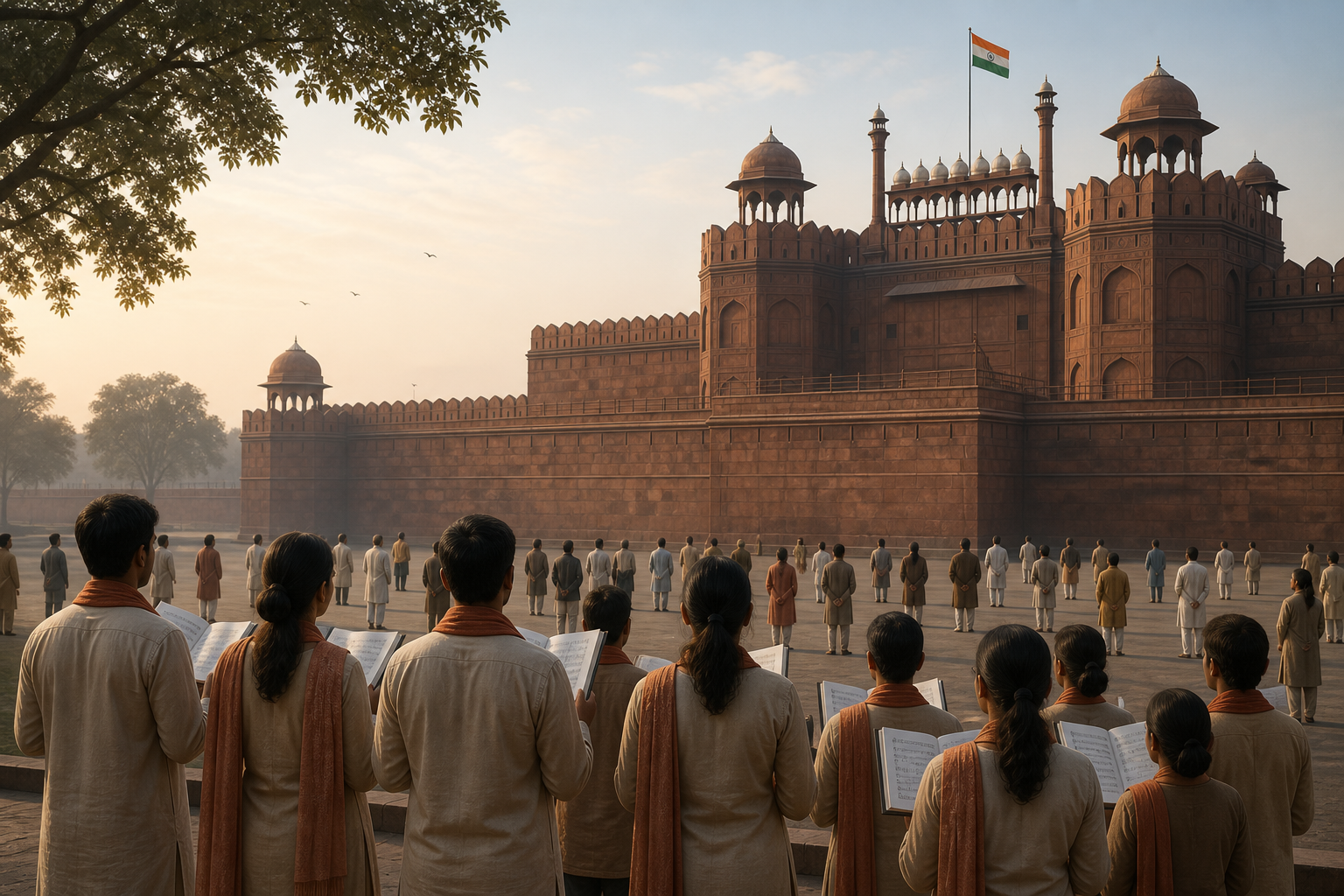
Prime Minister Narendra Modi is scheduled to lead the 80th Independence Day celebration at Delhi’s Red Fort on 15 August 2026. The programme will commemorate 150 years of Vande Mataram’s legacy while celebrating Yuva Shakti – the energy, aspirations and contribution of young people – in the journey towards Viksit Bharat by 2047.
The Prime Minister’s arrival will begin a formal sequence. Defence Minister Rajnath Singh, Minister of State for Defence Sanjay Seth and Defence Secretary Rajesh Kumar Singh are to receive him. The Defence Secretary will introduce Lieutenant General Rajesh Sethi, the General Officer Commanding of the Delhi Area. A combined contingent of the Army, Navy, Air Force and Delhi Police will then present a general salute before the Prime Minister inspects the Guard of Honour.
This sequence tells you where to place the song in your understanding of the day. Vande Mataram is entering a carefully ordered national ceremony built from civilian leadership, military honours and public remembrance. It is not merely being added to an entertainment programme.
The most important qualifier is exact: this is announced as the first singing of Vande Mataram during a Red Fort Independence Day celebration. Do not shorten that into a broader claim such as the first performance at the Red Fort in any context, the first use at a government event, or the first official recognition of the song. Those are different claims.
The information concerns a scheduled ceremony. Before verified footage is available, write that Vande Mataram is scheduled to be sung, not that the historic rendition has already occurred. After the ceremony, change the tense only after confirming what actually happened in the official proceedings or a complete recording.
Why the first-time claim needs careful language
Vande Mataram is India’s national song. It is not the national anthem, and you should not use those titles interchangeably. Calling it an anthem may seem like a small verbal shortcut, but it obscures the distinct place the song already holds and distracts from the real development: its ceremonial inclusion at this particular Independence Day observance.
The number attached to the occasion also causes avoidable confusion. The 80th Independence Day is the 80th observance, not a claim that 80 full years have passed since 15 August 1947. Counting the first Independence Day in 1947 as number one makes the 2026 observance number 80. If someone calls it the 79th anniversary of independence, that is a different way of counting elapsed years rather than a contradiction.
A first ceremonial inclusion can be historically meaningful without becoming a legal or constitutional change. Keep those categories separate. The Red Fort ceremony can elevate the song’s public visibility and reaffirm its place in national memory, but the scheduled performance does not by itself establish a new legal status.
Do not guess at details that the broadcast must still reveal. The first-time announcement does not tell you which portion will be sung, what musical arrangement will be used, who will lead it, how long it will last or how the audience will participate. Those details may shape how the moment is remembered, but they should be observed rather than invented in advance.
A 150-year inheritance directed towards 2047
The ceremony places three periods of national time beside one another. The 150-year legacy of Vande Mataram supplies inherited memory. The 80th Independence Day marks the present constitutional nation. The Viksit Bharat goal looks towards 2047, with Yuva Shakti identified as a vital force in that journey.
This arrangement matters because remembrance can become sterile when it asks only for admiration. A song addressed to the motherland carries a stronger demand: gratitude should become responsibility. The natural response is not merely to repeat the words more loudly, but to ask what service to Bharat requires from you now.
For a Dharmic reader, the motherland is more than territory viewed as property. The language of the mother establishes a relationship of inheritance, gratitude and duty. That relationship should deepen care for the country’s people, knowledge traditions, institutions and physical places. Reverence without such care risks becoming performance.
The youth theme prevents the 150-year commemoration from remaining trapped in nostalgia. Young Indians are not being presented simply as spectators to an inheritance handed down by older generations. Their energy, aspirations and contributions are being placed inside the country’s movement towards 2047.
If you discuss the ceremony with a student or a younger family member, move beyond asking whether the rendition was stirring. Ask what a developed Bharat will require from their generation: competence in their chosen work, integrity in public life, care for cultural memory and the discipline to improve the institutions they inherit. Viksit Bharat is a stated destination, not a guaranteed forecast. The distance between those two is filled by conduct.
The 150-year description should also be used with care. It establishes the commemorative frame for the ceremony, but it does not supply a complete history of the song’s composition, publication or political reception. If you teach that history, use a verified historical reference rather than converting anniversary language into unsupported detail.
How to watch, discuss and share the moment responsibly
- Use the complete description. Call it the first announced singing of Vande Mataram at a Red Fort Independence Day ceremony. Include the date, venue and ceremonial scope whenever the context is not already obvious.
- Watch the full segment. A short social-media clip may omit the introduction, performers, audience response or transition into the next part of the programme. Those details will show how the song was situated within the national ceremony.
- Separate plans from observations. Before the event, describe what is scheduled. Afterwards, distinguish the announced plan from what the recording confirms. This prevents patriotic enthusiasm from turning a correct claim into misinformation.
- Preserve the whole commemorative frame. When you share the moment, mention both the 150-year legacy and the emphasis on Yuva Shakti and Viksit Bharat 2047. Leaving out either side turns a bridge between inheritance and future duty into a fragment.
- Prepare community observances carefully. If you help organise a school, temple or community programme, confirm the text and running order chosen for your event. Do not rely on an unattributed lyric image or claim that your local format duplicates the Red Fort ceremony unless you have verified the actual broadcast.
You can also listen for decisions that will only become clear during the ceremony: where Vande Mataram appears in the sequence, who performs it, whether the audience joins, and how the transition connects it to the Independence Day message. Those are not minor production details. They determine whether the song functions as a formal observance, a collective act or a thematic bridge.
Key takeaways
- Vande Mataram is scheduled to be sung for the first time at a Red Fort Independence Day celebration on 15 August 2026.
- The occasion is India’s 80th Independence Day observance; 80th observance and 79 years completed are compatible ways of counting.
- Vande Mataram is the national song, not the national anthem, and its ceremonial inclusion should not be misrepresented as a legal change.
- The ceremony connects the song’s 150-year legacy with Yuva Shakti and the goal of Viksit Bharat by 2047.
- Use future tense until the ceremony occurs, then rely on complete footage before making claims about the rendition or its participants.
On 15 August, give the Vande Mataram segment your full attention before you comment on it. Record what actually occurs, preserve the precise first-time claim, and then carry the discussion one step further: decide what your own salutation to the motherland asks you to build, protect or improve before 2047.

References
