
If you are trying to decide whether a Hindu sacred-site claim is a demand for justice or an invitation to permanent conflict, do not begin with a slogan. Ask what is being claimed, what evidence could prove it, which legal right is said to survive, and what remedy is actually sought.
Those questions matter because the Places of Worship (Special Provisions) Act, 1991 does more than make old disputes difficult to litigate. It generally treats the religious character existing on 15 August 1947 as the legally protected settlement. The central controversy is whether peace requires that categorical closure, or whether exceptional civilizational claims should receive a strictly controlled judicial hearing.
The 1947 freeze is a rule of closure, not a historical verdict
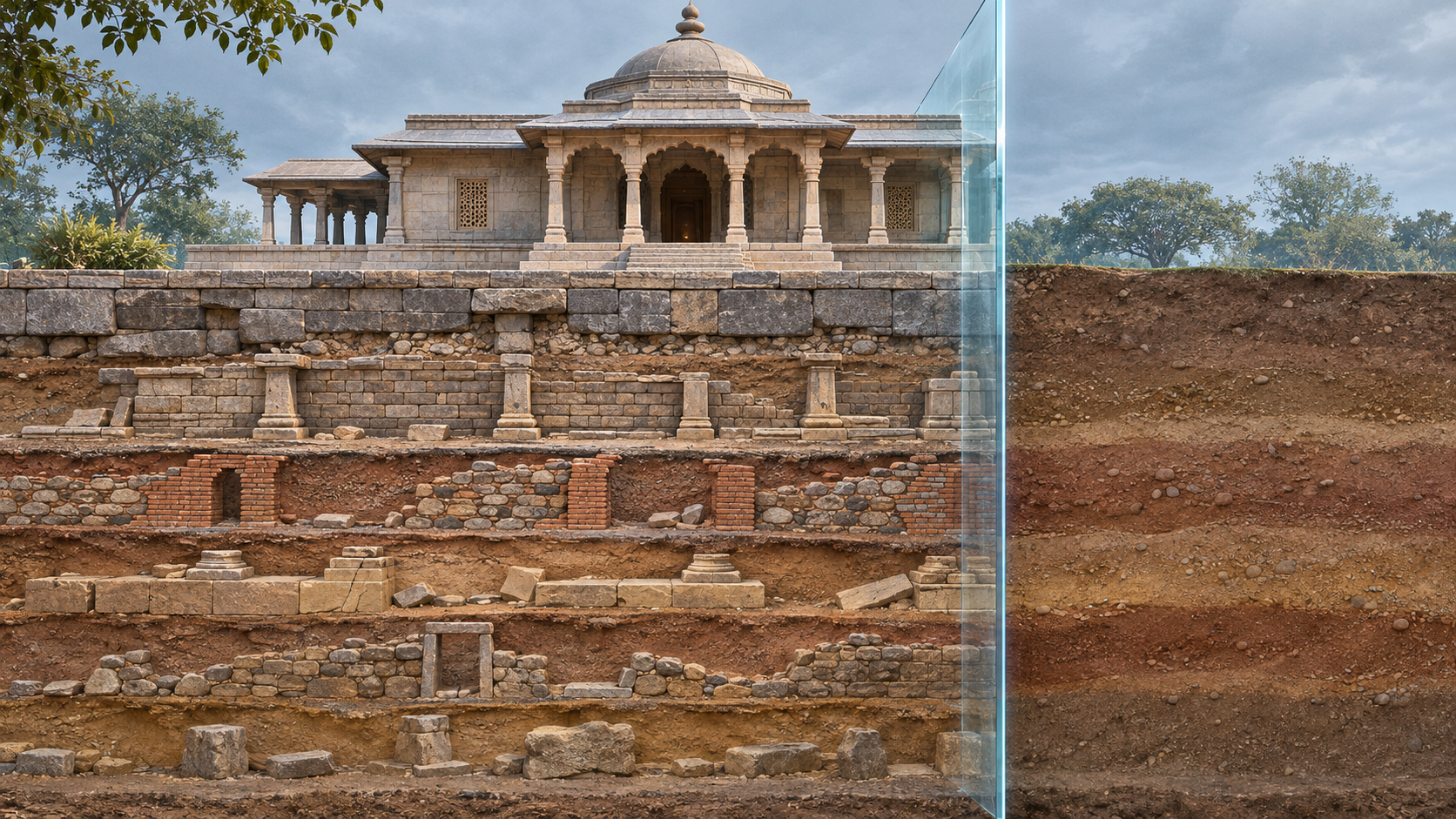
The first discipline is to read the statute accurately. It neither orders the excavation of every disputed site nor creates a general process for restoring temples. Its principal provisions prevent changes in religious character and close the courts to many proceedings that would seek such a change.
| Provision | What it does | Why it matters |
|---|---|---|
| Section 3 | Prohibits the conversion of a place of worship, including conversion from one religious denomination to another. | The prohibition reaches denominational changes as well as changes between religions. |
| Section 4(1) | Declares that the religious character existing on 15 August 1947 must continue. | The condition found at independence becomes the statutory baseline. |
| Section 4(2) | Provides for the abatement of pending proceedings aimed at changing that character and bars new proceedings of that kind. | The provision restricts adjudication itself; it is not merely an unusually short filing deadline. |
| Section 5 | Excludes the Ram Janmabhumi-Babri Masjid site at Ayodhya from the Act. | Ayodhya could be adjudicated even though other pre-1947 sacred-site claims were generally closed. |
The Act also contains important exceptions. They include certain ancient monuments and archaeological sites governed by the Ancient Monuments and Archaeological Sites and Remains Act, 1958; matters finally decided before the Act commenced; disputes already settled by the parties; and certain conversions accepted through acquiescence before commencement.
This structure corrects two common misreadings. The Act is not an all-purpose ban on studying the past. Historians, communities and archaeologists may still investigate history within the law. But historical knowledge and a judicial remedy are different things. Section 4 matters because it can prevent a court from considering whether an established historical fact should alter the legally protected religious character of a site.
The 1947 condition should therefore not be confused with a finding that everything existing on that date arose lawfully. Independence marked a sovereign transition. It did not, merely by occurring, prove the validity of every earlier transfer, extinguish every religious endowment or turn every material result of conquest into a moral settlement. The Act chooses a baseline for legal closure; it does not independently establish the history that produced that baseline.
Civilizational memory must be translated into a legal claim
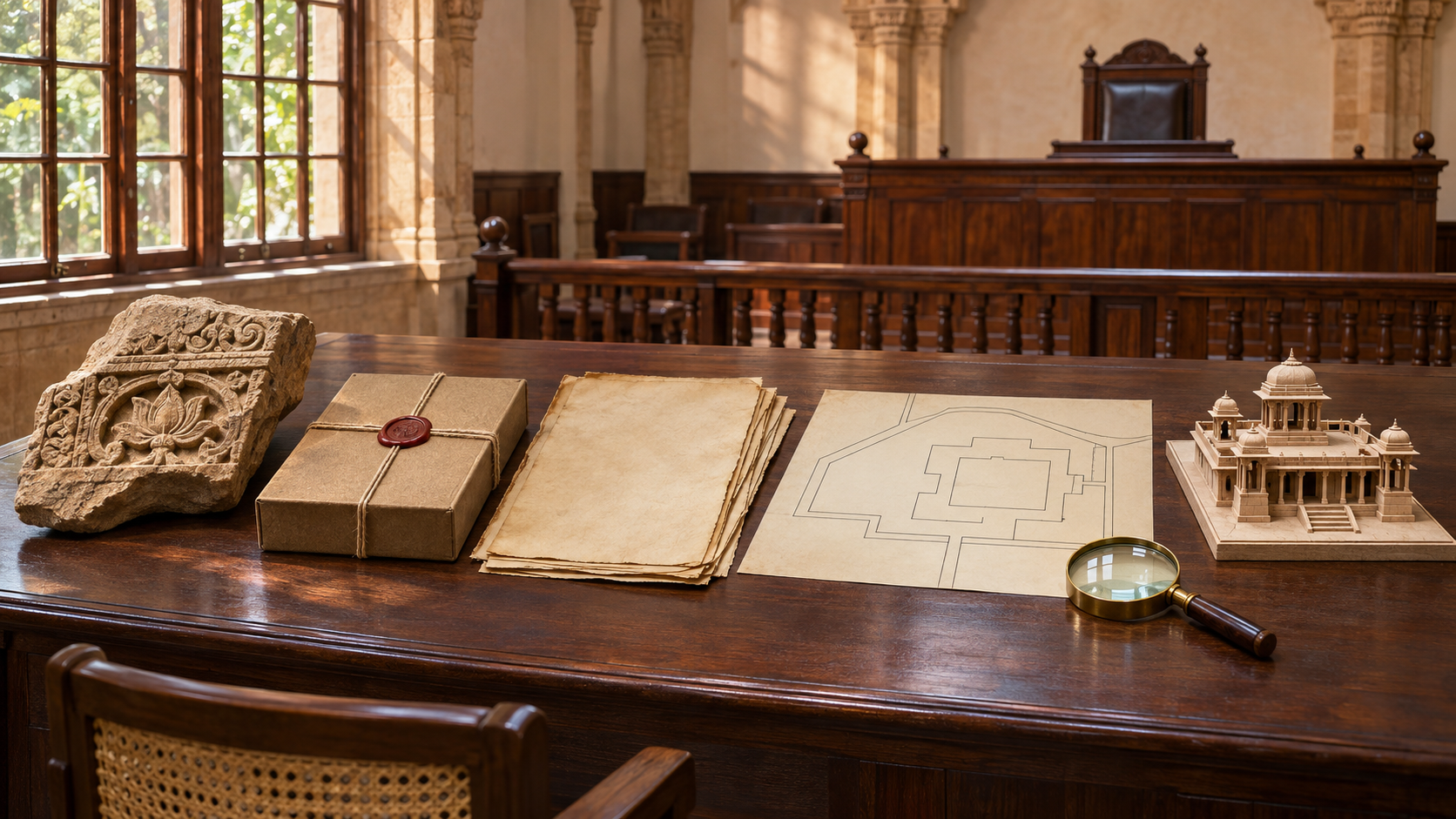
A civilizational claim is larger than an ordinary disagreement over a boundary or deed. A sacred site may carry collective memory, inherited worship, theological meaning and evidence of an earlier structure. But those elements do not automatically produce the same legal result. If you want to assess a claim seriously, separate four questions that public debate often collapses into one:
- Historical question: What happened at the site, and how strong is the documentary, archaeological and historical evidence?
- Religious question: Which community regards the site as sacred, what is the basis of that belief, and has worship or ritual memory continued?
- Legal-interest question: Is there an endowment, title, juristic personality, denominational right or other legally recognizable interest that could have survived dispossession?
- Remedial question: Is the claimant asking for acknowledgment, access, worship, possession, restoration of religious character or some combination of these?
A persuasive answer to one question does not settle the others. Proof that a temple once stood at a location is not, by itself, proof of present title. Present devotion is not, by itself, proof of a historical event. A strong property claim may not establish every theological assertion made about the site. And even when a legal right is shown, the form of relief must still be justified.
Hindu endowment law adds a feature that cannot be reduced to contemporary possession. A consecrated deity may be recognized as a juristic person capable of holding endowed property. The property dedicated to the deity is commonly described as debutter property, while the shebait serves as its human manager and representative. This means that, in an appropriate case, the physical interruption of worship may not answer whether the underlying sacred endowment was legally extinguished.
That doctrine is significant, but it is not a shortcut. Juristic personality does not prove the history of a particular site. It does not eliminate the need for admissible evidence, establish an unbroken endowment in every case or dictate a remedy. It supplies a legal reason to ask whether dispossession and extinction were actually the same event. A responsible claimant uses the doctrine to request adjudication, not to declare victory before adjudication begins.
The same care is required when discussing other Dharmic institutions. The civilizational concern may be shared across Hindu, Buddhist, Jain and Sikh experience, but the governing institutions and property relationships are not interchangeable. A Hindu deity’s juristic personality should not be mechanically projected onto every vihara, derasar, gurdwara, maṭha or other sacred institution. The relevant legal tradition and institutional form must be established for the particular claim.
Peace and constitutional justice cannot be reduced to one another
The strongest defence of the 1991 settlement is not that history is irrelevant. It is that the Republic needed a rule preventing inherited religious disputes from becoming an endless series of modern confrontations. In the Ayodhya judgment, M. Siddiq (D) through LRs v. Mahant Suresh Das, the Supreme Court connected the Act with secularism, religious equality and a principle of non-retrogression: independent India would not use its courts to keep revisiting the religious character inherited at independence.
That is a serious constitutional position. Current worshippers are not personal stand-ins for medieval rulers, and no living community should be subjected to collective punishment. Public order, fraternity and the security of worship are real constitutional goods. Anyone arguing for change has to explain how claims will be filtered, how weak or opportunistic suits will be stopped, and how a legal process will avoid turning every old structure into a flashpoint.
But closure is not self-justifying merely because it promises peace. Equality before law, freedom of religion, denominational autonomy, judicial review and access to remedies are constitutional goods too. A law that excludes an entire class of claims before examining their evidence must be defended as a proportionate restriction, not treated as immune from scrutiny because its announced purpose is social harmony.
Article 14 raises a particularly sharp question. Parliament expressly removed Ayodhya from the statutory bar. That does not automatically make the remaining classification unconstitutional; Ayodhya plainly had exceptional public significance. It does, however, require a principled answer to a difficult question: if one pre-1947 sacred-site claim could be heard, why must every other claim be rejected without regard to its evidence, continuity of worship or comparable civilizational importance?
Political prominence is not necessarily an adequate constitutional test for access to justice. A site with less national agitation could possess stronger legal evidence. A quieter community should not have a weaker right merely because it did not create a mass political movement. The relevant classification should be tied to the nature and proof of the claim, not simply to its ability to dominate public life.
Articles 25 and 26 bring another dimension. Freedom of conscience and religious practice exists alongside the rights of religious denominations to manage religious affairs and to own, acquire and administer property in accordance with law. These protections are not absolute; public order, morality, health and other constitutional rights matter. Yet the existence of lawful restrictions does not answer whether a total jurisdictional bar is necessary in every case.
The Ayodhya judgment’s endorsement of the Act’s purpose also needs to be read precisely. Ayodhya was expressly outside the Act, and the constitutional validity of the Act was not the issue finally decided in that litigation. The observations carry institutional weight, but they do not replace a full adjudication of challenges involving equality, religious freedom, continuing legal interests and access to courts.
A rigorous constitutional assessment should therefore ask four concrete questions. Does the 1947 freeze pursue a legitimate aim? Is the general restriction rationally connected to that aim? Could carefully screened exceptional claims be heard through a less restrictive mechanism? And does the benefit of categorical closure justify denying a remedy even where evidence and a continuing legal interest are exceptionally strong? Those questions do not predetermine the answer. They identify the work that slogans about either peace or reclamation leave undone.
How to evaluate a sacred-site claim without being swept into rhetoric
Key takeaways
- The condition on 15 August 1947 is a statutory baseline, not a conclusive account of how that condition arose.
- Civilizational importance can justify serious attention, but it cannot substitute for site-specific evidence and a recognizable legal interest.
- The Act generally bars proceedings seeking to alter protected religious character, while defined exceptions make exact legal classification essential.
- The case for reform is strongest when it demands a narrow judicial gateway rather than automatic restoration or unrestricted litigation.
- Lawful adjudication, evidence preservation and the safety of present worshippers are non-negotiable.
When a speech, petition or campaign asks for your support, run it through the following test before accepting either its historical narrative or its proposed remedy.
- Require an exact description of the claim. Does it concern historical recognition, the right to worship, management of an endowment, title to property, possession or a change in religious character? A campaign that moves between these demands without acknowledging the differences is concealing its hardest legal questions.
- Ask for a site-specific chain of evidence. Look for material relevant to the actual proposition being advanced: the earlier religious character, the alleged act of dispossession, continuity of sacred memory or worship, and the survival of an endowment or legal interest. The age or emotional force of a tradition does not make corroboration unnecessary.
- Locate the statutory obstacle precisely. Ask whether the requested relief would change the religious character protected by Sections 3 and 4, whether a proceeding was pending when the Act commenced, and whether any stated exception could apply. Do not assume that every historical inquiry is barred, or that describing a dispute as civilizational automatically removes it from the Act.
- Separate the right to be heard from the right to win. The most defensible criticism of categorical closure is that strong claims cannot receive judicial examination. Opening a narrow courthouse door would not prove any claimant’s case. Evidence, standing, limitation questions outside the special bar and the appropriate remedy would still require adjudication.
- Demand a remedy proportionate to what has been proved. Historical acknowledgment, protected access, regulated worship, negotiated settlement, property relief and alteration of religious character are not equivalent outcomes. The greater the disruption to existing worship and public order, the stronger the proof and safeguards must be.
Do not treat physical occupation, unauthorized entry, damage, excavation or disruption of worship as substitutes for a court process. Such conduct can endanger people, destroy or contaminate evidence and create serious legal exposure. A live claim should be handled by qualified counsel familiar with constitutional, property, endowment and heritage law; archaeological work must proceed only through competent, lawfully authorized institutions. This analysis is a framework for public judgment, not legal advice for an individual dispute.
Apply the same discipline to rhetoric from defenders of absolute closure. The phrase "settled in 1947" describes the rule Parliament chose. It does not prove that the underlying history, title or endowment was factually and legally settled on that date. If a defender cannot distinguish peacekeeping policy from historical truth, that position also deserves scrutiny.
What a narrow and lawful reform could look like
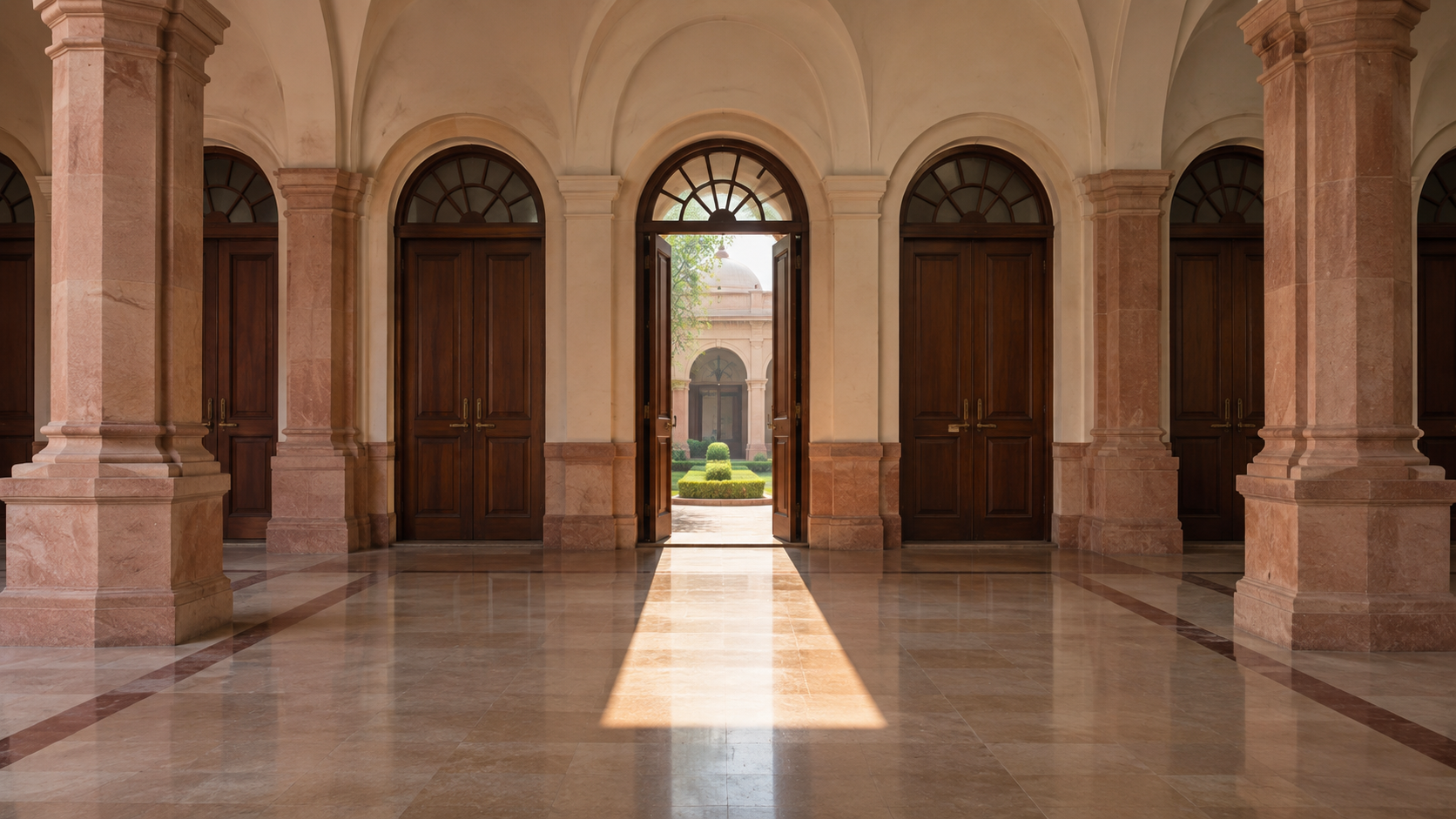
The choice need not be between an absolute freeze and thousands of uncontrolled lawsuits. A defensible reform could retain a general presumption against reopening religious character while establishing a demanding gateway for exceptional cases. That would recognize both the danger of indiscriminate litigation and the injustice of refusing to hear every claim in advance.
A workable gateway should require all of the following:
- A precise pleading: The claimant must identify the site, legal interest, historical wrong and requested relief rather than relying on a generalized account of conquest.
- Exceptional significance: The claim must concern a site of demonstrable religious and civilizational importance, not merely a local disagreement dressed in national language.
- A substantial preliminary showing: Courts should require credible documentary, archaeological, religious-continuity or endowment evidence before permitting full litigation.
- A surviving legal connection: Where the claim relies on a deity, trust, denomination or other institution, the claimant must show why that legal interest continues and who is entitled to represent it.
- Independent judicial screening: No political organization, government department or religious body should be able to alter a site’s status by unilateral declaration.
- Protection for existing worship and public order: Proceedings should begin without interruption of present worship, unauthorized alteration of the property or harassment of current worshippers.
- Graduated remedies: A court should distinguish a finding about history from rulings on worship, possession and religious character, granting no more relief than the proved right requires.
- Consequences for bad-faith claims: A controlled process needs meaningful costs or sanctions against fabricated evidence, repetitive litigation and attempts to use proceedings as instruments of intimidation.
This model would not guarantee reclamation. It would guarantee something more constitutionally basic: the possibility that an exceptional claim can be examined rather than silenced solely because the alleged wrong predates independence. It would also place the burden where it belongs. Claimants would have to prove their case under law, while opponents could challenge the evidence, legal continuity and proposed remedy in the same forum.
For a Dharmic public, the method matters as much as the objective. The Muṇḍaka Upaniṣad 3.1.6 gives the moral orientation: "Truth alone triumphs, not falsehood." That principle is not a licence for anger to decide history. Satya must be pursued through dharma: accurate claims, preserved evidence, fair hearing, restraint toward living communities and remedies ordered by lawful authority.
When the next sacred-site controversy reaches you, ask five things before lending it your voice: What exact right is claimed? What proves it? Does a continuing endowment or religious interest exist? How does the 1991 Act affect the requested relief? What lawful remedy would respect both truth and present human dignity? Support the claims that can answer those questions. Insist that the others do the necessary work first.
References

Leave a Reply
You must be logged in to post a comment.