
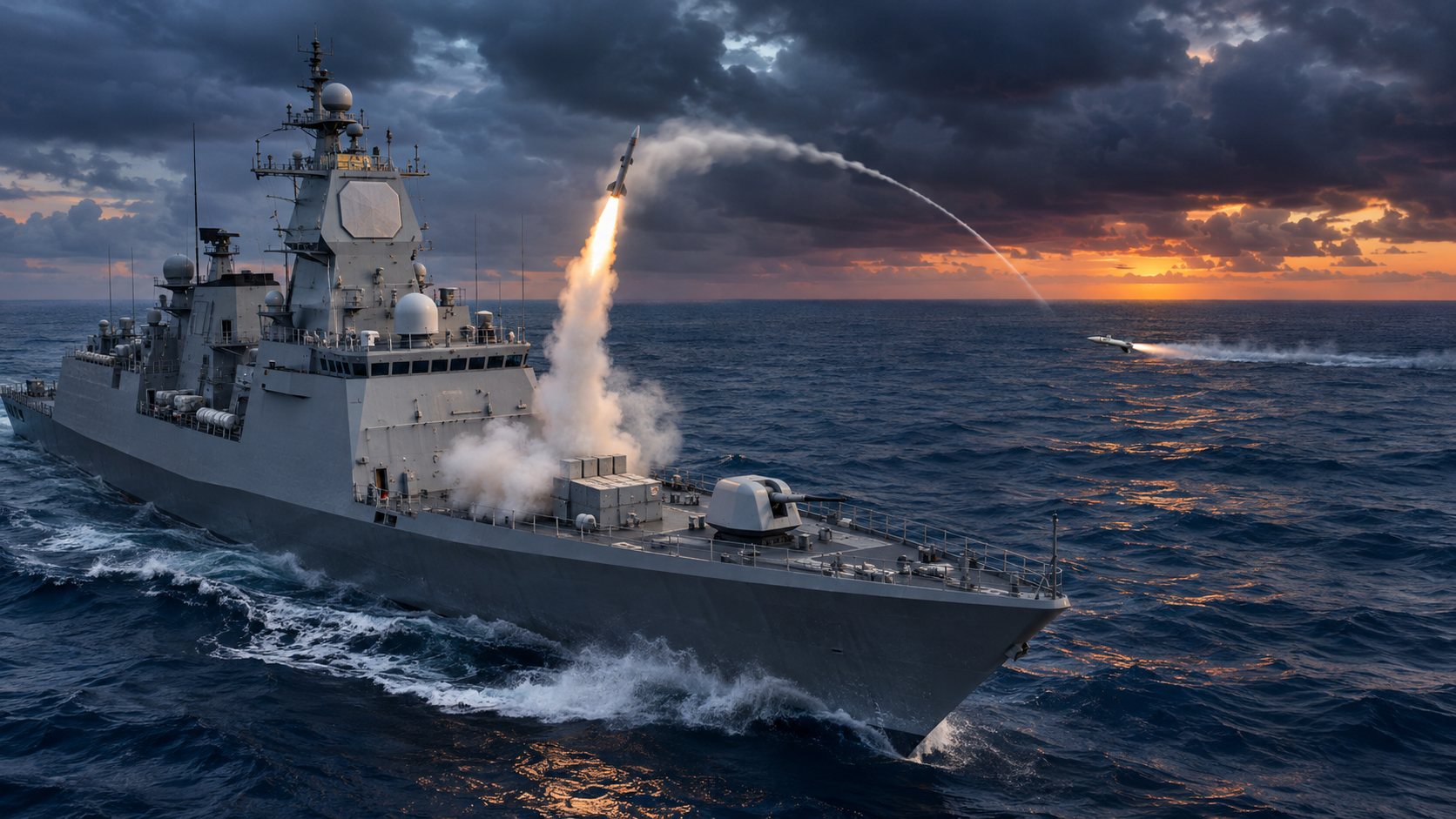
If you are wondering why Bharat is spending nearly Rs 2,000 crore on an Israeli missile system while an indigenous replacement is under development, the short answer is operational continuity. A warship at sea cannot put its last defensive layer on hold while the next system completes development.
The Barak-1 contract is therefore best understood as a readiness decision. It modernises an existing shield against aircraft and incoming anti-ship missiles while the Defence Research and Development Organisation’s VL-SRSAM moves towards operational service. That distinction is essential when judging whether the expenditure supports or contradicts Aatmanirbhar Bharat.
What the Rs 1,976.40-crore contract actually covers

On 18 November 2026, the Ministry of Defence signed a Rs 1,976.40-crore contract with Israel Aerospace Industries for the upgradation and obsolescence management of Barak point-defence systems aboard Indian Navy ships. The agreement was concluded under the Other Capital Procurement procedure after the Defence Acquisition Council had cleared the Navy’s proposal more than a year earlier.
This is not merely an order for more missiles. The disclosed scope covers a wider modernisation of system hardware and software, along with the management of components that are becoming obsolete. On a serving warship, that work can be as important as a new missile: a weapon remains credible only if its sensors, computers, launch equipment, interfaces, spares and support arrangements continue to function as one system.
Do not read the contract value as the price of a single capability or divide it by an assumed number of missiles. No ship count, missile quantity or unit cost has been disclosed in the available details. The defensible conclusion is narrower: Bharat is paying to keep installed Barak systems supportable and to improve their anti-air-defence capability.
Why a reported 12-km weapon still matters
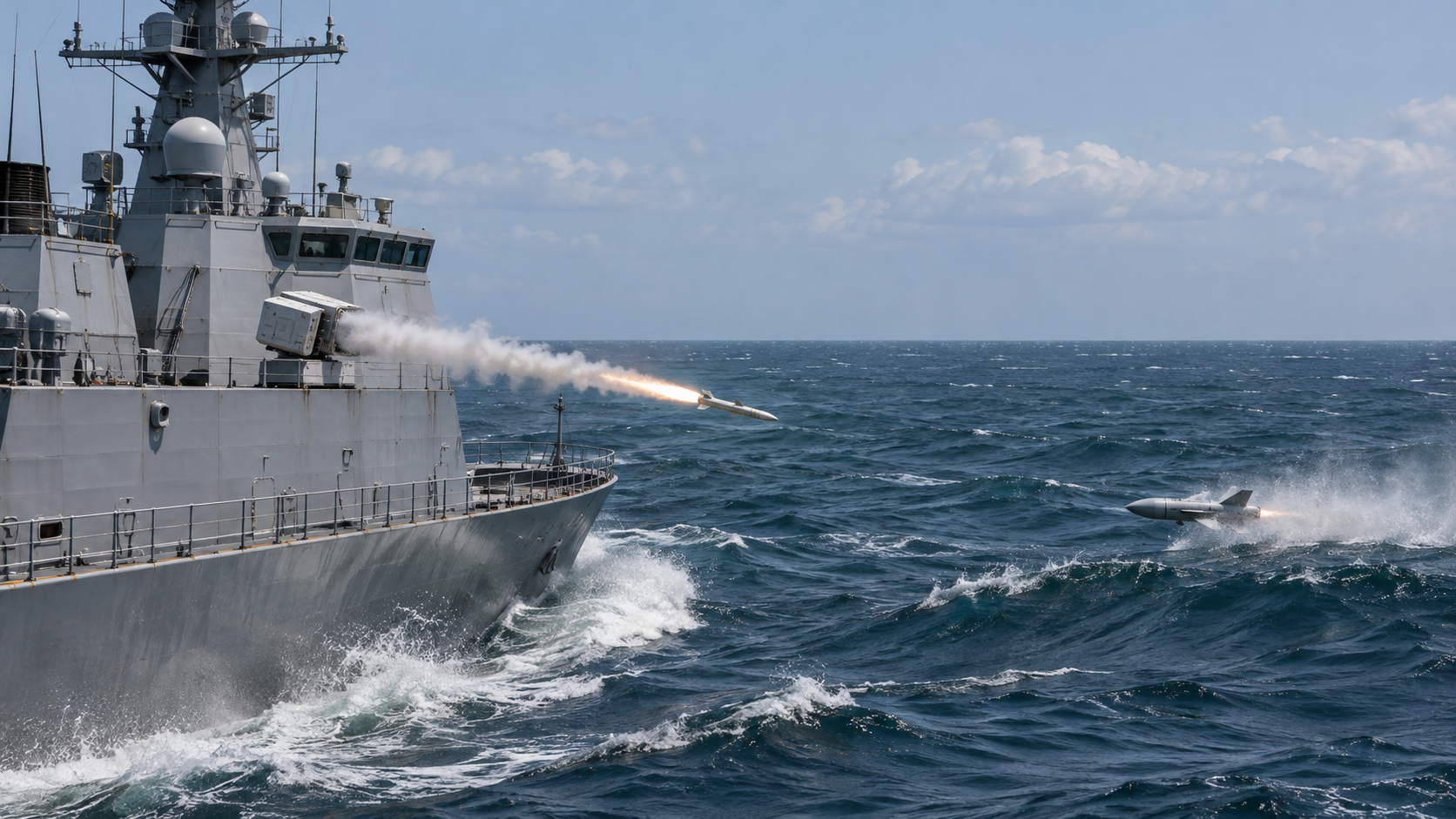
Barak-1 is a vertically launched, short-range system with a reported reach of about 12 kilometres. That figure can look modest if you compare it with a long-range naval missile. It makes more sense when you compare roles rather than headline ranges.
Naval air defence is layered. Longer-range weapons are intended to engage threats farther from the ship. Point defence protects the immediate area around the vessel when a threat has penetrated the outer layers or appears too close for them to handle. Barak-1 belongs to that innermost layer.
That role is unforgiving. A low-flying anti-ship missile can leave little time between reliable detection and impact. At point-defence distance, the ship must detect the threat, establish a firing solution, launch and complete the interception within a compressed window. A short nominal range therefore does not make the system unimportant; it identifies the stage of the engagement at which it must work.
When you assess this upgrade, keep three distinctions clear:
- Point defence is not a substitute for wider fleet air defence. It is the final layer within it.
- A missile’s quoted range does not by itself reveal reaction time, engagement reliability, coverage or resistance to a complex attack.
- Modernising launch and control equipment can preserve combat usefulness even when the basic missile family is not new.
The meaningful test is consequently not whether 12 kilometres sounds impressive. It is whether the upgraded system can deliver dependable protection in the close-range threat environment for which it is assigned.
Why the Navy cannot simply wait for VL-SRSAM
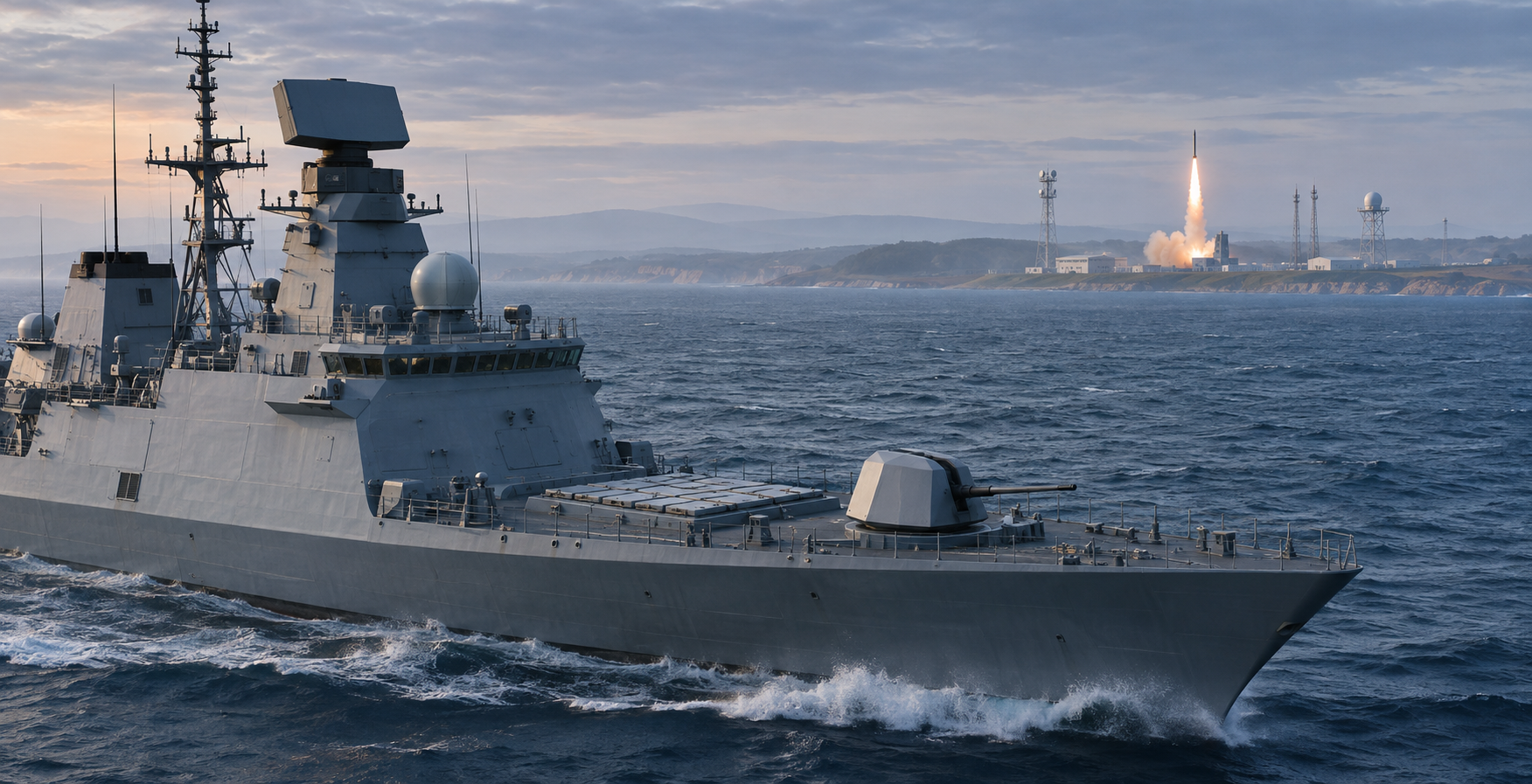
DRDO’s indigenous Vertical Launch Short Range Surface-to-Air Missile, or VL-SRSAM, is the obvious long-term context for the decision. The system was first tested in March 2025 and remains under development.
A successful developmental test and operational deployment are not the same milestone. A naval weapon must progress through testing, qualification, integration with shipboard systems, production, crew preparation and fleet introduction. The precise remaining schedule for VL-SRSAM has not been disclosed in the material available here, so it would be premature to assign an induction date.
The Navy still has to protect ships during that interval. Allowing an installed defensive system to decline through hardware obsolescence, unsupported software or an uncertain spares chain would create a present vulnerability in exchange for a future capability that is not yet fielded. The Barak upgrade reduces that transition risk.
This is why the choice should not be framed as foreign procurement versus self-reliance. A serious indigenisation policy has to do two things at once: sustain the force that must operate now and build the domestic system intended to serve it later. Upgrading Barak-1 addresses the first requirement; completing and inducting VL-SRSAM would address the second.
The upgrade should not, however, become an excuse for an indefinite transition. Its strategic value will be greatest if it gives the Navy a reliable bridge without slowing testing, production planning or ship integration for the indigenous system.
Four details will determine whether the upgrade delivers value
The contract establishes intent, expenditure and a broad scope. It does not provide enough public detail for a complete value-for-money judgement. If you want to follow this programme intelligently, watch for four specific disclosures rather than relying on slogans about either imports or indigenisation.
- Ships and installation schedule: The number and classes of vessels receiving the upgrade will show how much of the operational fleet benefits and how quickly.
- Verified capability changes: Future trials or official statements should clarify what the new hardware and software improve. Claims about greater range, faster reaction or better engagement performance need evidence specific to the upgraded configuration.
- Support and obsolescence arrangements: The practical value of the contract depends on whether critical components, maintenance and software support remain available for the required service period.
- The transition to VL-SRSAM: Testing, integration and induction milestones will reveal whether Barak-1 is functioning as a defined bridge or becoming a substitute for completing the indigenous programme.
Several tempting conclusions should wait for those facts. The contract alone does not prove that every Barak-equipped ship will be upgraded, that the missile’s effective range will change by a stated amount, or that VL-SRSAM has been delayed for a particular reason. Avoiding those assumptions makes the strategic picture clearer, not weaker.
Key takeaways
- Bharat has committed Rs 1,976.40 crore to upgrade and manage obsolescence in Barak point-defence systems aboard Indian Navy ships.
- Barak-1’s reported range of about 12 kilometres reflects its close-in defensive role; it should not be judged as though it were a long-range fleet-area weapon.
- The immediate purpose is to keep serving warships protected while the indigenous VL-SRSAM remains under development.
- The deal is compatible with Aatmanirbhar Bharat only if operational continuity is matched by sustained progress towards indigenous deployment.
- Ship coverage, installation timing, demonstrated improvements and the VL-SRSAM transition plan are the next facts worth watching.
For now, treat the Barak-1 upgrade as insurance against a capability gap, not as the end of the Navy’s short-range air-defence journey. The next meaningful judgement point will come when Bharat can show upgraded systems protecting ships in service while VL-SRSAM advances through clearly identified milestones towards fleet induction.
References

Leave a Reply
You must be logged in to post a comment.