
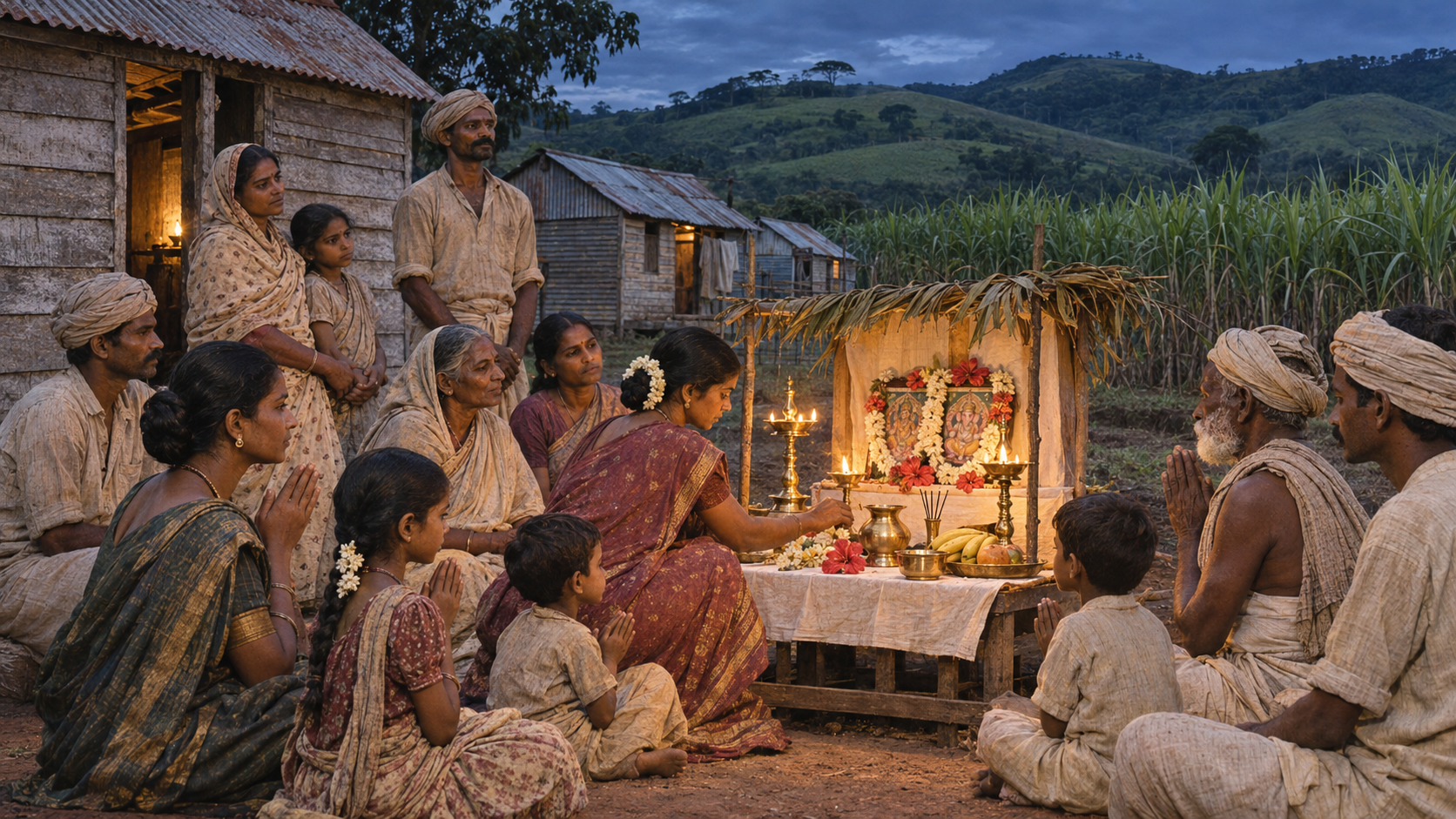
If you have inherited Natal Hindu customs that feel unmistakably connected to Bharat yet do not fit neatly into one regional or caste history, you are not looking at a broken tradition. You are seeing the result of a community compelled to rebuild its religious world under indenture.
The clearest way to understand that world is to follow the order in which it was reconstructed: old social boundaries became difficult to maintain, worship took root in improvised spaces, temples gave it permanence, festivals gathered people into communities, and Hindu societies carried their religious claims into public life. That sequence helps you distinguish what was inherited, what was adapted and what was created in Natal.
Indenture changed the social grammar of Hindu life
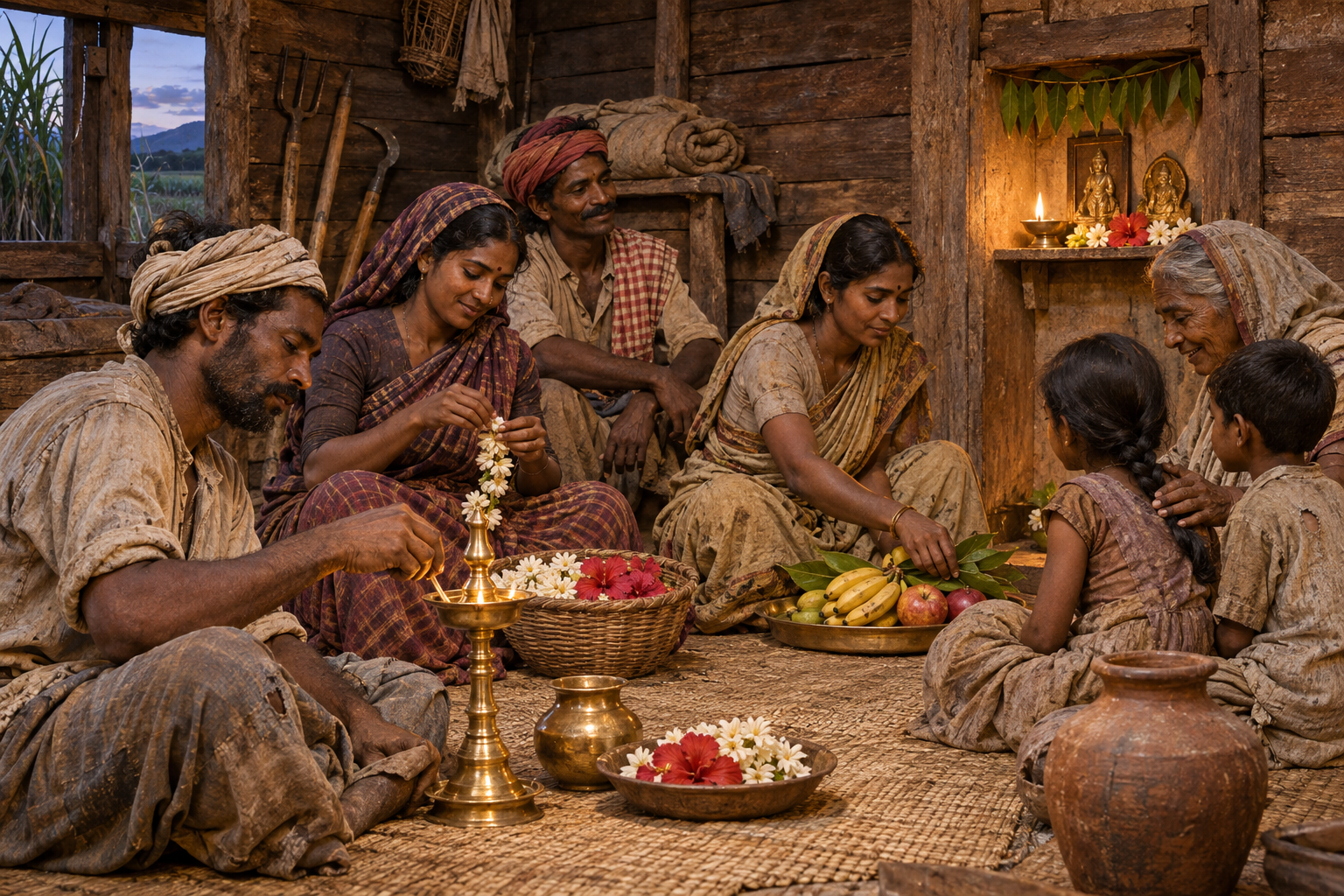
An established social order could not simply be transported from Bharat and resumed on a Natal estate. Indentured migrants were recruited as individuals rather than as intact families or communities. They then endured a crowded journey, lived in shared barracks and performed the same plantation labour. Those conditions made the strict separation associated with caste extremely difficult to reproduce in everyday life.
This distinction matters. Indenture did not prove that every caste belief disappeared, nor did an oppressive labour system create genuine social equality. It damaged the practical machinery through which separation had previously been enforced. People who might once have eaten, lived, worked or worshipped apart were placed in the same constrained environment.
Difference did not vanish. Regional rivalry became more prominent, especially through the recorded alignments described as Madrassee and Calcuttia. It would therefore be misleading to tell a simple story in which indenture dissolved every inherited division. One organising boundary weakened while another kind of affiliation gained force.
If you are tracing a family or community history, do not begin by assuming that a later caste identity explains the earliest period. Start with the conditions people actually faced. Were they recruited with relatives or alone? With whom did they live and work? Who joined them in worship? Which regional labels mattered locally? A later identity is evidence about a later community; it is not automatic proof that the same arrangement survived the voyage unchanged.
This also changes how you should read early Hindu cooperation in Natal. Worship across older boundaries was not necessarily a philosophical rejection of every distinction. It was a practical response to displacement. That does not make it less significant. It shows how Dharma could be sustained when the social structures that had once carried it were no longer available.
The shrine came before the institution
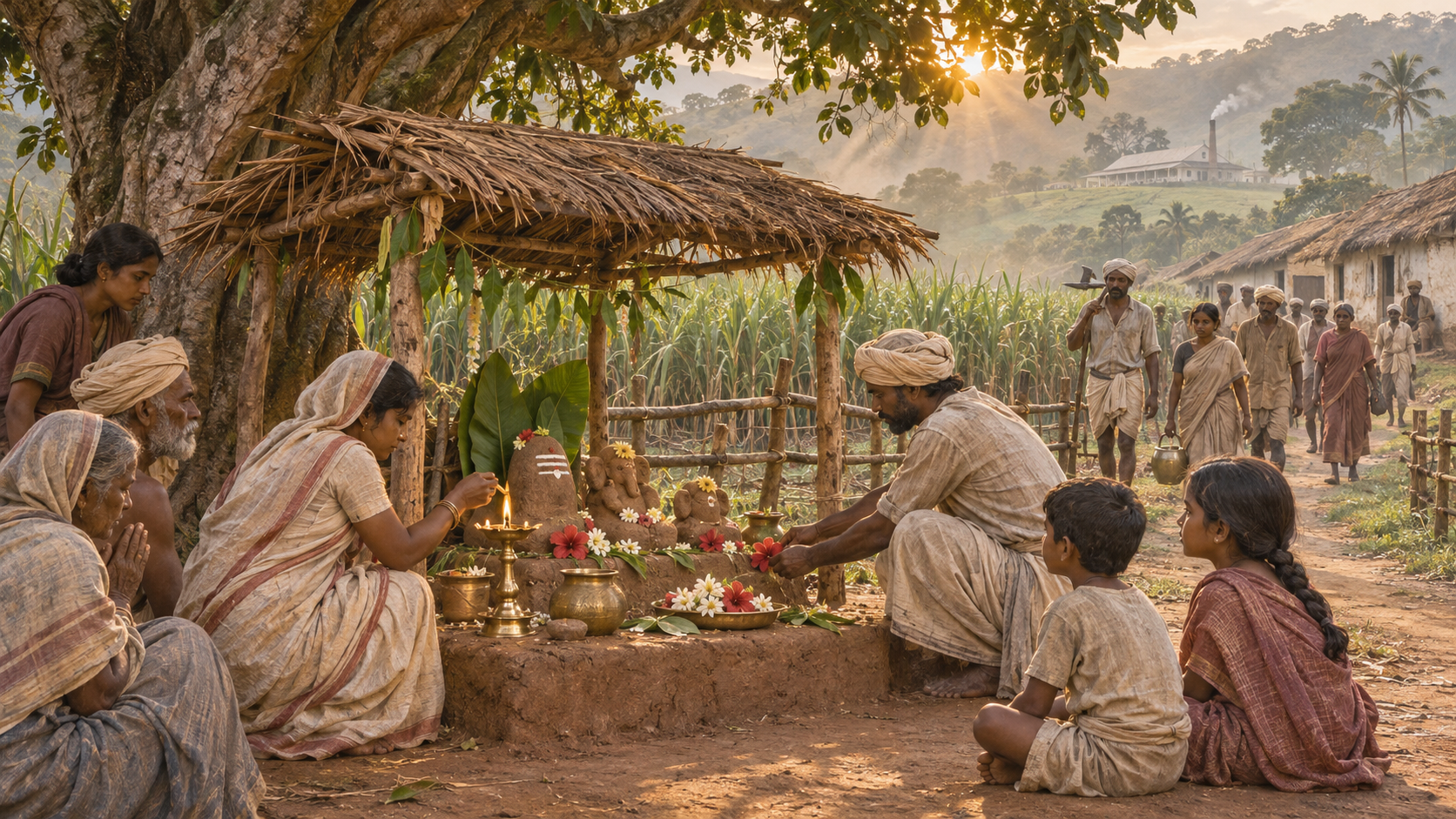
Religious reconstruction began at the scale workers could control. On the estates, Hindus created shrines from wattle and thatch. These were modest structures, but modest materials should not be mistaken for weak conviction. A shrine gave worship a place, marked sacred space within the plantation environment and allowed observance to continue without waiting for wealth or official approval.
The material progression is revealing. Estate shrines were followed by the first wood-and-iron temple at Rossburgh in 1869, while temples subsequently appeared along the Natal coast. Within a generation, an improvised sacred presence was becoming a durable religious landscape.
Do not use a temple’s construction date as the birth date of its community. A permanent building usually marks the point at which an existing body of worshippers could give its practice a more durable home. The religious life that made the building possible may be older than the building itself.
When you investigate a temple’s history, separate three questions. First, when did worship begin? Second, when did worship acquire a recognised place? Third, when was a permanent structure built? Collapsing those questions into one date erases the wattle-and-thatch phase in which much of the real work of continuity occurred.
The coastal distribution also suggests that Natal Hinduism developed through several local centres rather than through a single founding institution. That pattern helps explain why practices could remain recognisably Hindu while acquiring distinct local forms. Communities were reconstructing Dharma under related conditions, but not necessarily under one central direction.
For anyone preserving this heritage, the practical lesson is simple: document predecessor spaces as carefully as formal temples. Record memories of estate shrines, temporary structures and earlier gathering places separately from foundation stones and opening ceremonies. Otherwise, the most vulnerable stage of the history disappears precisely because it left the least substantial architecture.
Festivals turned scattered worshippers into a community
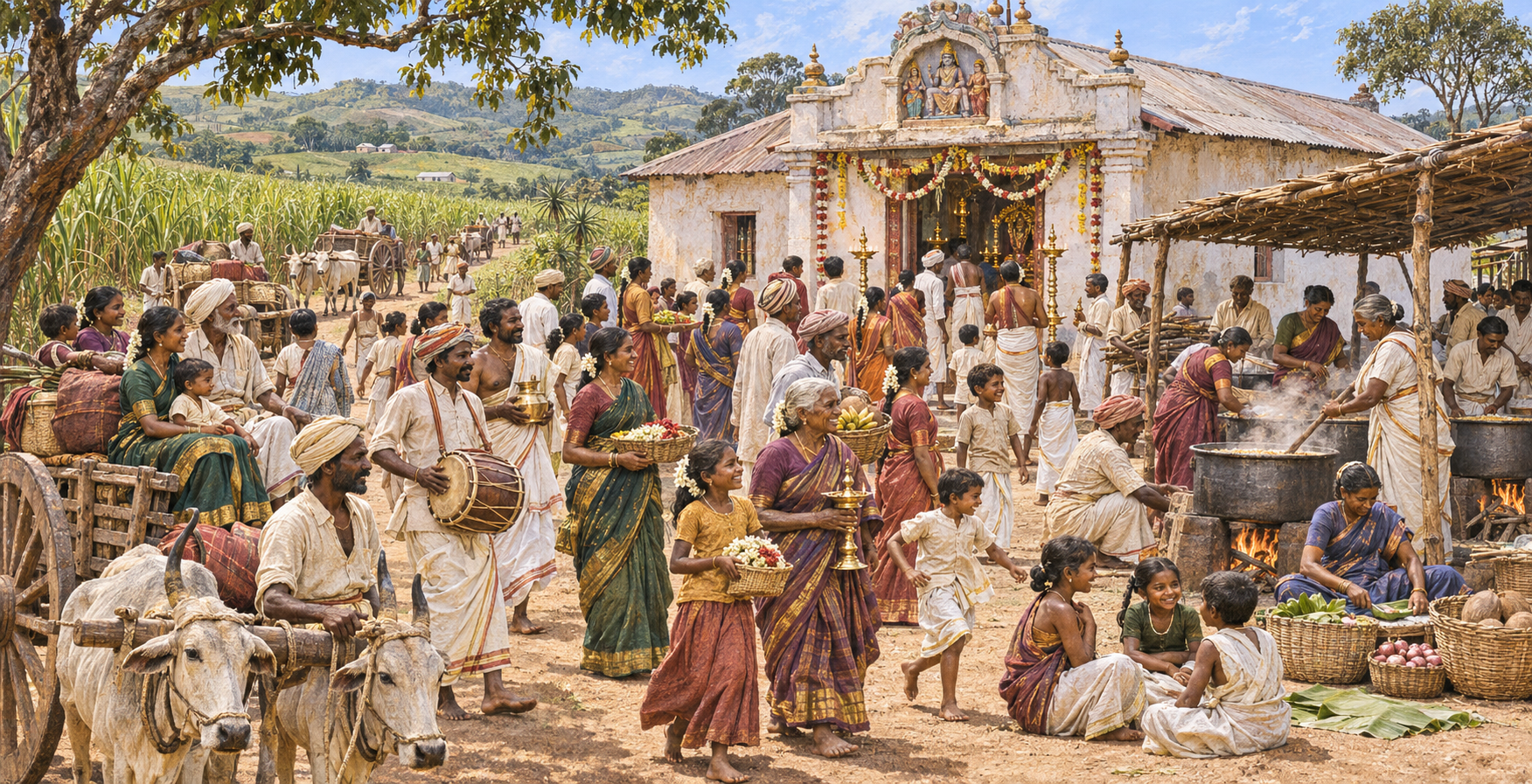
A temple fixes sacred space. A festival orders sacred time. Natal’s coastal temples hosted Thai Poosam, Diwali, Puratassi, Holi and Krishna Jayanti. That range matters because it prevents the history from being reduced to Diwali alone.
Each recurring observance gave dispersed workers a reason to assemble beyond the routine imposed by plantation labour. Repetition also made knowledge transmissible. A festival returned each year, giving children and new participants another opportunity to learn its rhythms, obligations and sacred meanings. Continuity did not depend solely on written instruction or an unbroken institutional hierarchy; it could be carried by a calendar enacted together.
The variety of observances also tells you something important about unity. A shared Hindu public life did not require every participant to abandon a particular regional inheritance. Several traditions could occupy the same religious landscape. The community became broader through coordination, not through the erasure of every difference.
If you are trying to understand an inherited Natal practice, a festival question may reveal more than a broad question about identity. Ask which observances an earlier generation kept, where people gathered, who prepared the space and whether families crossed regional lines to participate. The answers can show how a community functioned even when formal membership records are absent.
Treat the festival calendar as a historical map. Thai Poosam or Puratassi may point you toward one stream of continuity; Holi or Krishna Jayanti may reveal another; Diwali may show where several streams met. The point is not to assign every family to a rigid box. It is to notice that Natal Hindu life was plural before it was institutionally unified.
Religious practice became a public claim
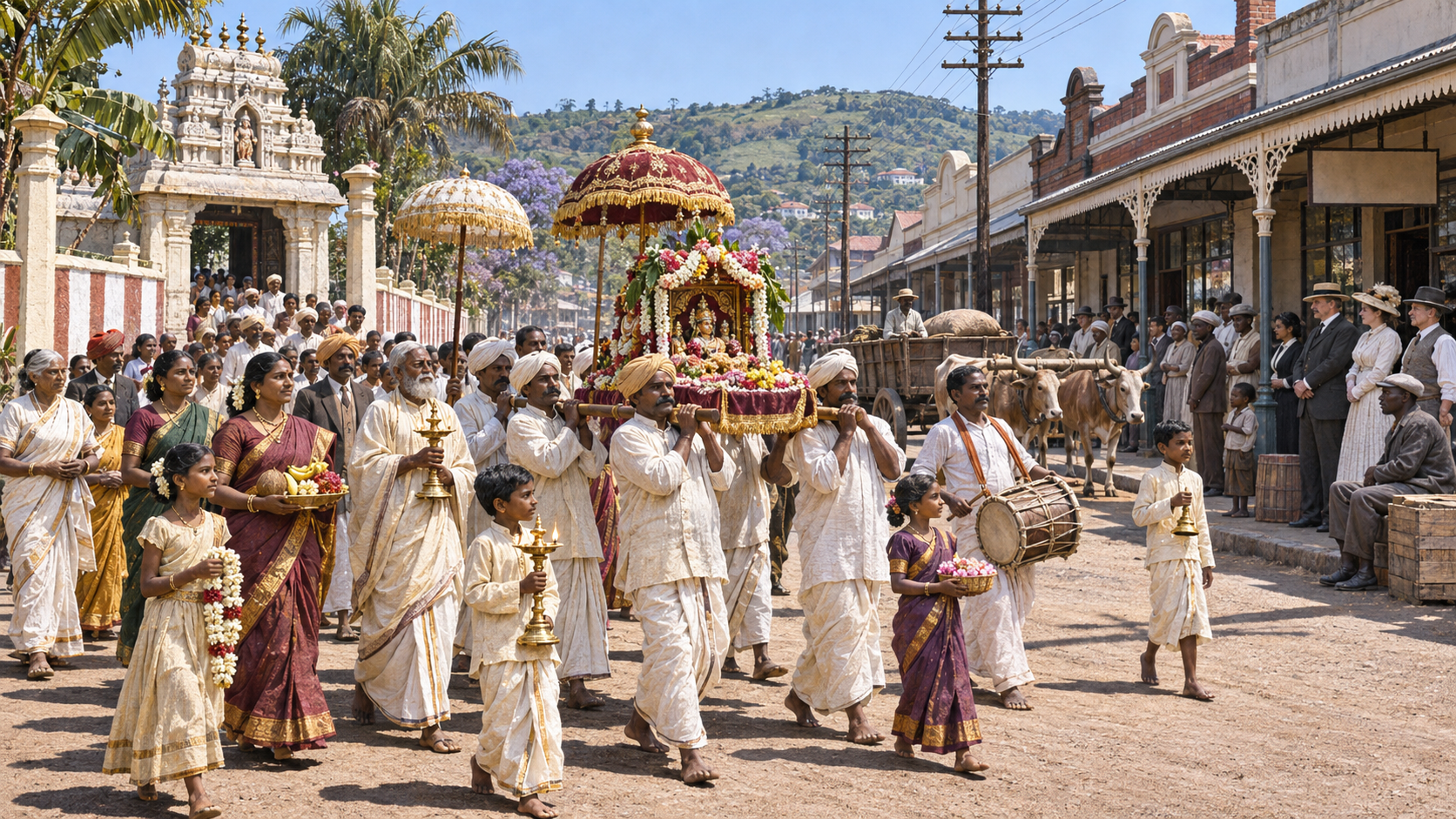
Shrines, temples and festivals could sustain a community internally. Engagement with colonial authority required another layer: organisations and recognised representatives. That institutional turn is visible in the Hindu society-building associated with Professor Parmanand in 1905 and Swami Shankeranand in 1908.
The dates show how reconstruction accumulated. A wood-and-iron temple existed at Rossburgh in 1869. Decades of worship and festival life followed. By the first decade of the twentieth century, Hindu leadership was creating societies capable of speaking in an organised voice. Institutionalisation did not precede devotion; it grew from a religious community that had already established places and patterns of gathering.
In 1909, Swami Shankeranand asked the Protector of Indian Immigrants to recognise Diwali as a holiday. The request carried Hindu religious time into the administrative realm. It asserted that an observance maintained by indentured people deserved accommodation from the authority governing their working lives.
Be exact about what this episode proves. A request is evidence of a claim, not proof that the claim was granted. Turning the 1909 petition into an achieved holiday would go beyond the available fact. Its historical importance lies in the act of asking: Hindus were no longer only maintaining Dharma within estate shrines and temples; they were seeking its recognition in public arrangements.
This gives you a useful three-level test for interpreting diaspora history. A tradition can be practised without a formal organisation. It can be organised without recognition from the state. It can seek recognition without immediately obtaining it. Evidence at one level should not be made to prove all three.
When you encounter a petition, meeting record or institutional anniversary, record four details separately: who acted, which office or body they addressed, what they requested and whether an outcome is actually documented. That discipline preserves the difference between aspiration and achievement while still giving acts of cultural assertion their proper weight.
Key takeaways
- Read Natal Hindu practice as reconstruction, not as either perfect preservation or cultural loss. Continuity survived through adaptation.
- Do not assume indenture erased every division. It weakened the conditions needed to enforce old caste separation while regional alignments remained significant.
- Look behind a temple’s opening date. Estate shrines and temporary sacred spaces may preserve the earlier history of worship.
- Use the full festival calendar, not Diwali alone, to identify the different religious streams that formed community life.
- Keep practice, organisation and official recognition separate. A shrine, a Hindu society and a holiday petition represent different stages of public presence.
If you want to preserve this inheritance, choose one family custom, temple or festival and place it on that sequence. Ask what social boundaries surrounded it, where it was first practised, how it entered the calendar, when an organisation carried it and whether public recognition followed. Even one carefully documented tradition can recover part of the human story hidden between the barracks, the shrine and the institution.
References

Leave a Reply
You must be logged in to post a comment.