
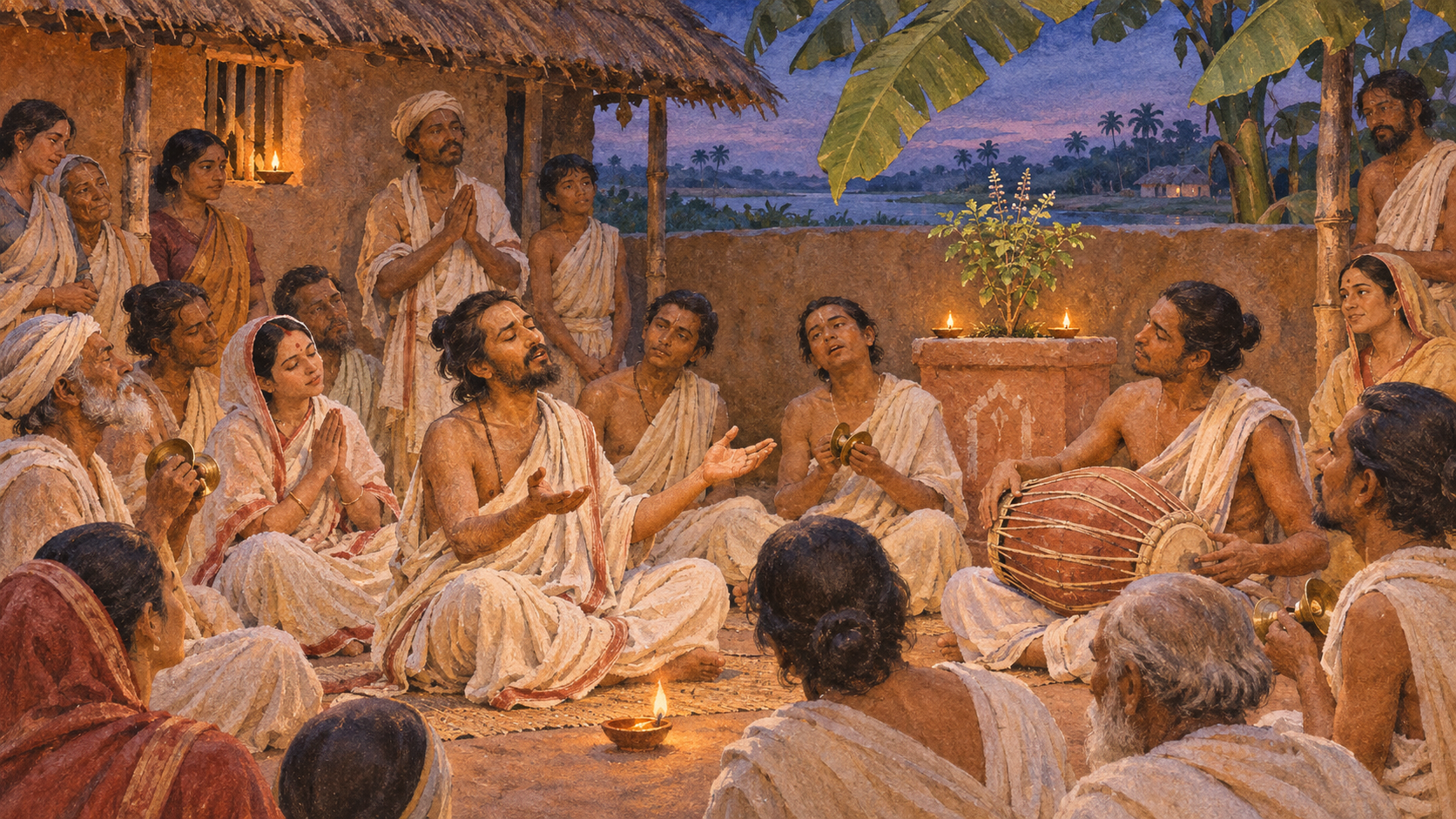
If you have heard Yadi Gaura Na Hoito in a temple, you may know the melody’s emotional pull without knowing what gives it such weight. Or perhaps you lead kirtan and want to sing the compositions of Vasudeva Ghosh without reducing them to attractive Bengali songs.
The essential shift is simple: begin with the devotional argument, not the musical arrangement. Vasudeva Ghosh shows you how poetry, theology, musical discipline and congregational participation can become one act of remembrance.
Remember the servant before admiring the singer
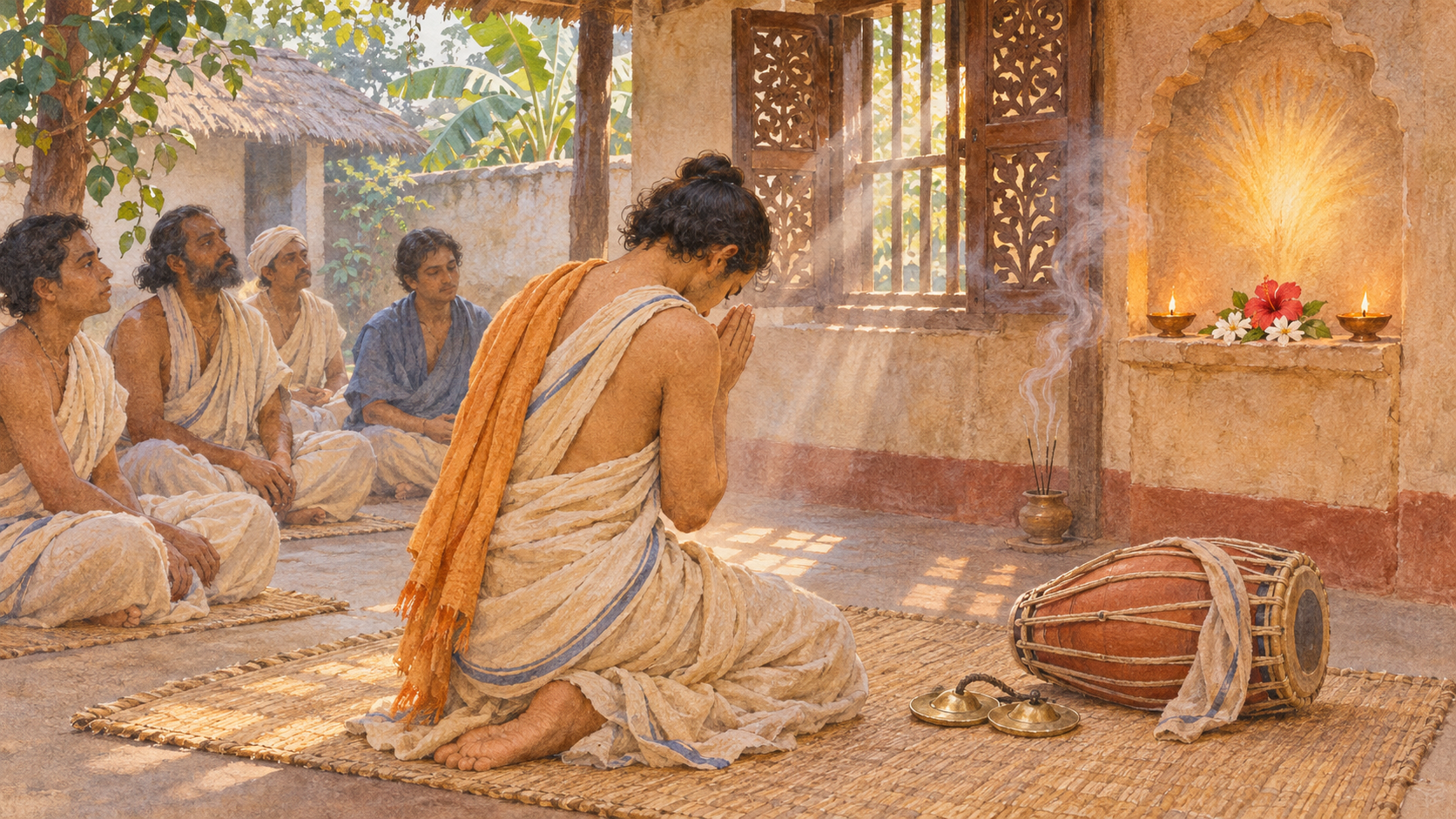
Vasudeva Ghosh was not remembered as an isolated musical celebrity. He belonged to a devotional community. Along with his brothers Govinda and Madhava, he was one of the celebrated kirtan singers associated with Sri Chaitanya Mahaprabhu and Sri Nityananda Prabhu. Gaudiya tradition remembers Chaitanya and Nityananda dancing when the brothers sang.
That setting matters. The brothers’ ability was offered within seva, companionship and a living sampradaya. They participated in one of the organized kirtan parties during the Ratha-yatra at Jagannatha Puri. Vasudeva and Madhava also accompanied Nityananda’s mission in Bengal. Music was therefore not an ornament attached to their spiritual lives. It was one of the ways they served, taught and gathered people around the holy name.
This corrects two common mistakes. The first is to imagine that devotional sincerity makes musical discipline unnecessary. The Ghosh brothers were accomplished singers trusted with demanding congregational service. The second is to assume that musical accomplishment is the purpose of kirtan. Their accomplishment was valuable because it carried remembrance of the Lord and enabled others to participate.
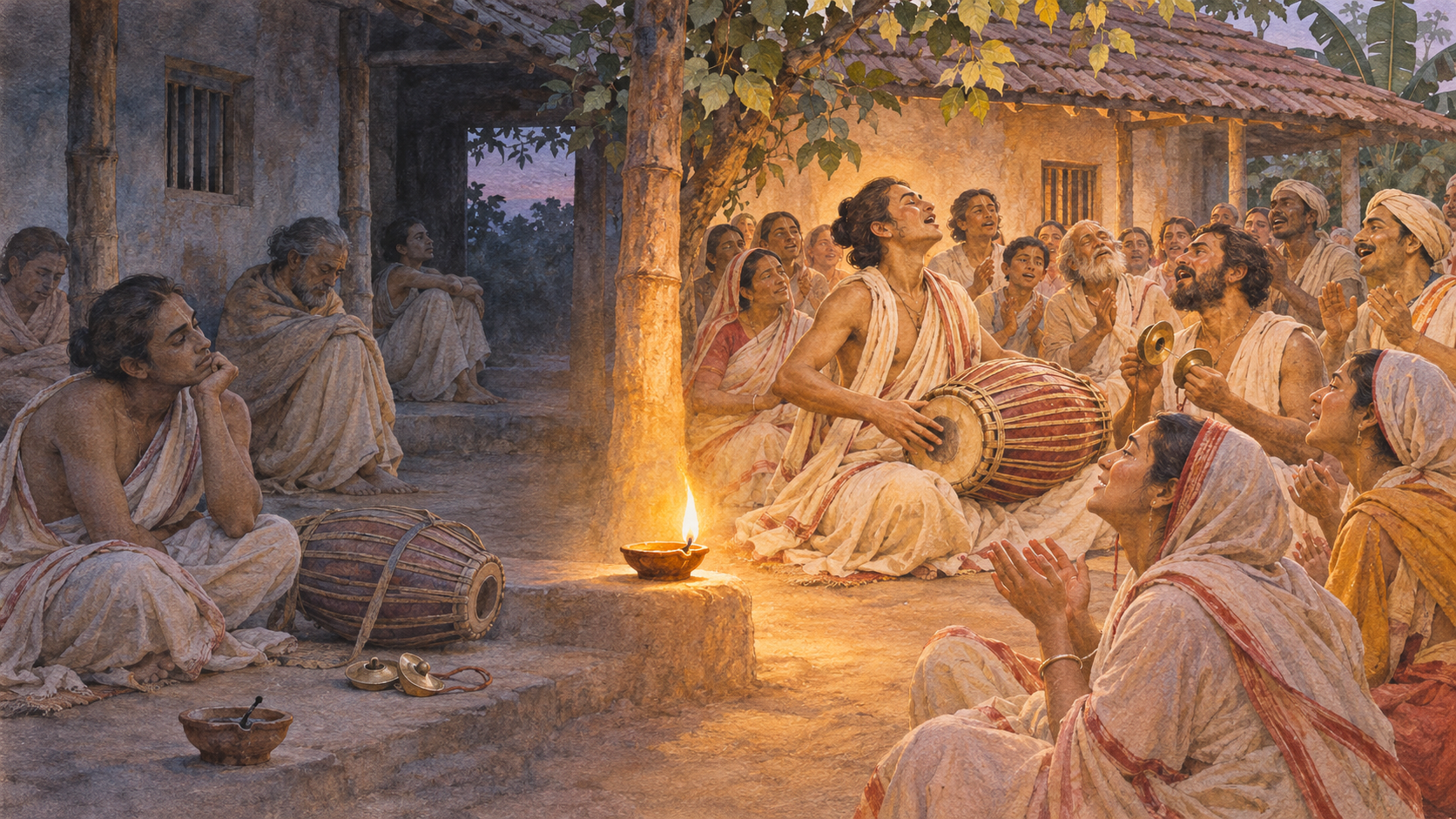
Traditional praise says that Vasudeva Ghosh’s kirtan could melt wood and stone. This is devotional language, not a claim about acoustics. It describes the perceived power of bhakti to soften what is inwardly unresponsive. The image turns the question back toward you: if the song is entering your ears but leaving your attention untouched, are you hearing its appeal or only its sound?
Read Yadi Gaura Na Hoito as a devotional argument
Vasudeva Ghosh’s best-known doorway for many devotees is Yadi Gaura Na Hoito. Its opening question can be rendered plainly: if Gaura had not appeared, what would have become of us? That is not a decorative expression of admiration. It asks the singer to imagine the spiritual loss that would remain without Sri Chaitanya’s mercy.
The song then identifies what Gaura’s appearance makes known: the glory of Srimati Radharani, the summit of divine love and the devotional mood found in Vraja. Its praise is therefore precise. Gauranga is not celebrated merely because the singer feels affectionate toward him. He is celebrated for revealing a dimension of bhakti that would otherwise remain inaccessible to ordinary perception.
You can follow the song through three movements:
<!– wp:list {
Leave a Reply
You must be logged in to post a comment.