
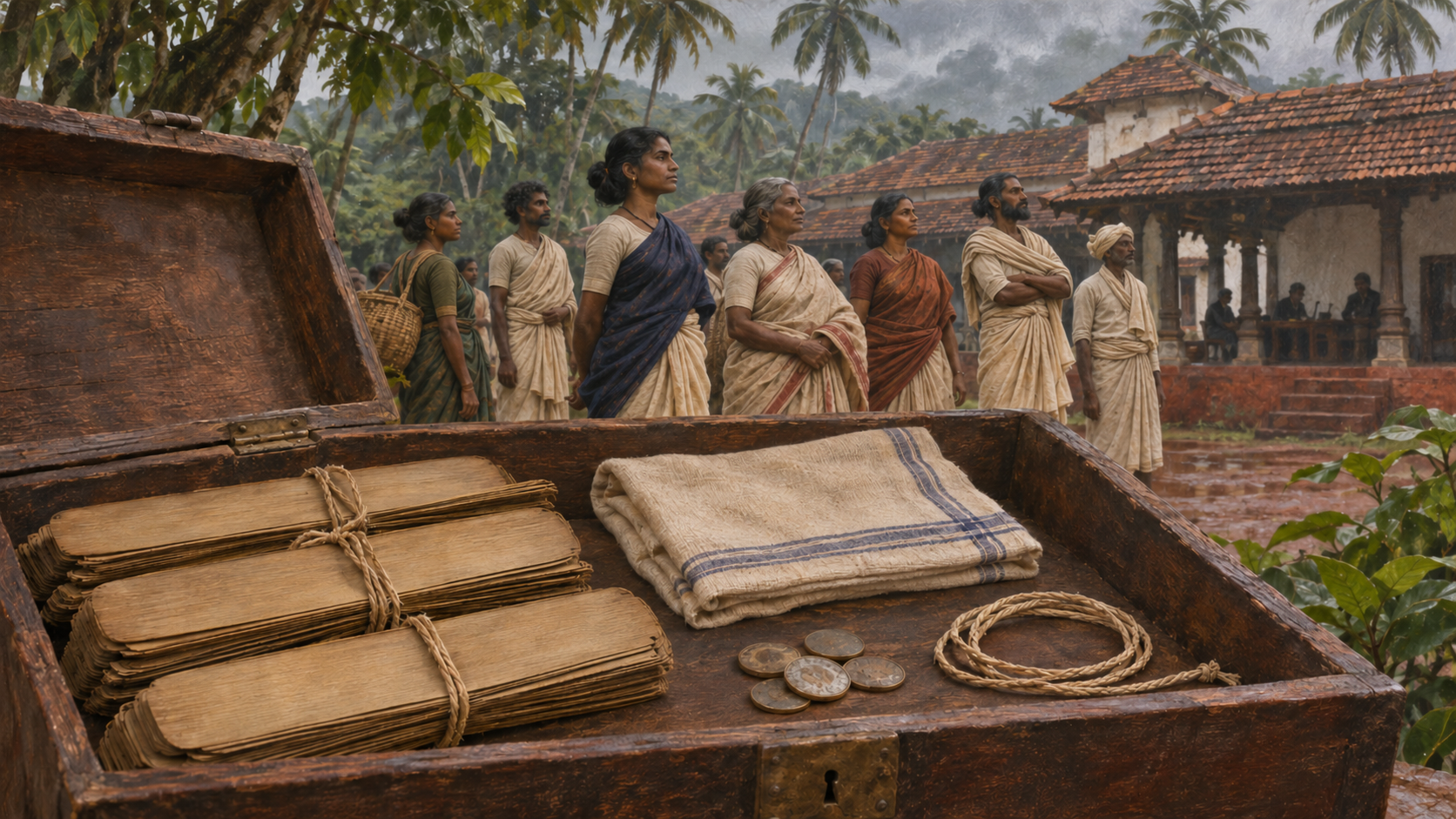
You may be trying to settle a blunt question: did Travancore force women from subordinated communities to pay for the right to cover their breasts? The best-supported answer is no. Mulakkaram was a real levy associated with women, but its existence does not establish a tax on breast covering, let alone one calculated by breast size or attractiveness.
That answer does not sanitize Travancore’s social order. Personal taxes burdened subordinated communities, clothing rules marked caste rank, and women had to contest restrictions on dignified dress. Historical honesty requires us to preserve those injustices without treating every later detail as documented fact.
Key takeaways: five claims require five verdicts
- Mulakkaram existed: Yes. It functioned as a gender-differentiated personal levy imposed within a wider system of taxes on members of subordinated communities.
- Women paid it because they were women from taxed communities: This is the best-supported administrative interpretation. In relevant terminology, Thalakkaram applied to men and Mulakkaram to women.
- Payment purchased permission to cover the breasts: Not established. No identified tax rule connects payment of Mulakkaram to permission to wear an upper-body garment.
- Officials assessed breasts by size, beauty, or physical inspection: Not established. The sensational assessment mechanism in popular retellings is not supported by a cited revenue provision.
- Nangeli’s self-mutilation caused the ruler to abolish the tax: This remains an uncertain oral narrative. The available record does not demonstrate that incident-and-repeal sequence.
These verdicts matter because the popular story bundles all five claims together. Once the first claim is shown to be true, the remaining four are often assumed to follow. They do not. A real tax can acquire an inaccurate explanation, just as a real struggle against discrimination can acquire a dramatic but unverified origin story.
The name Mulakkaram cannot decide what the tax did
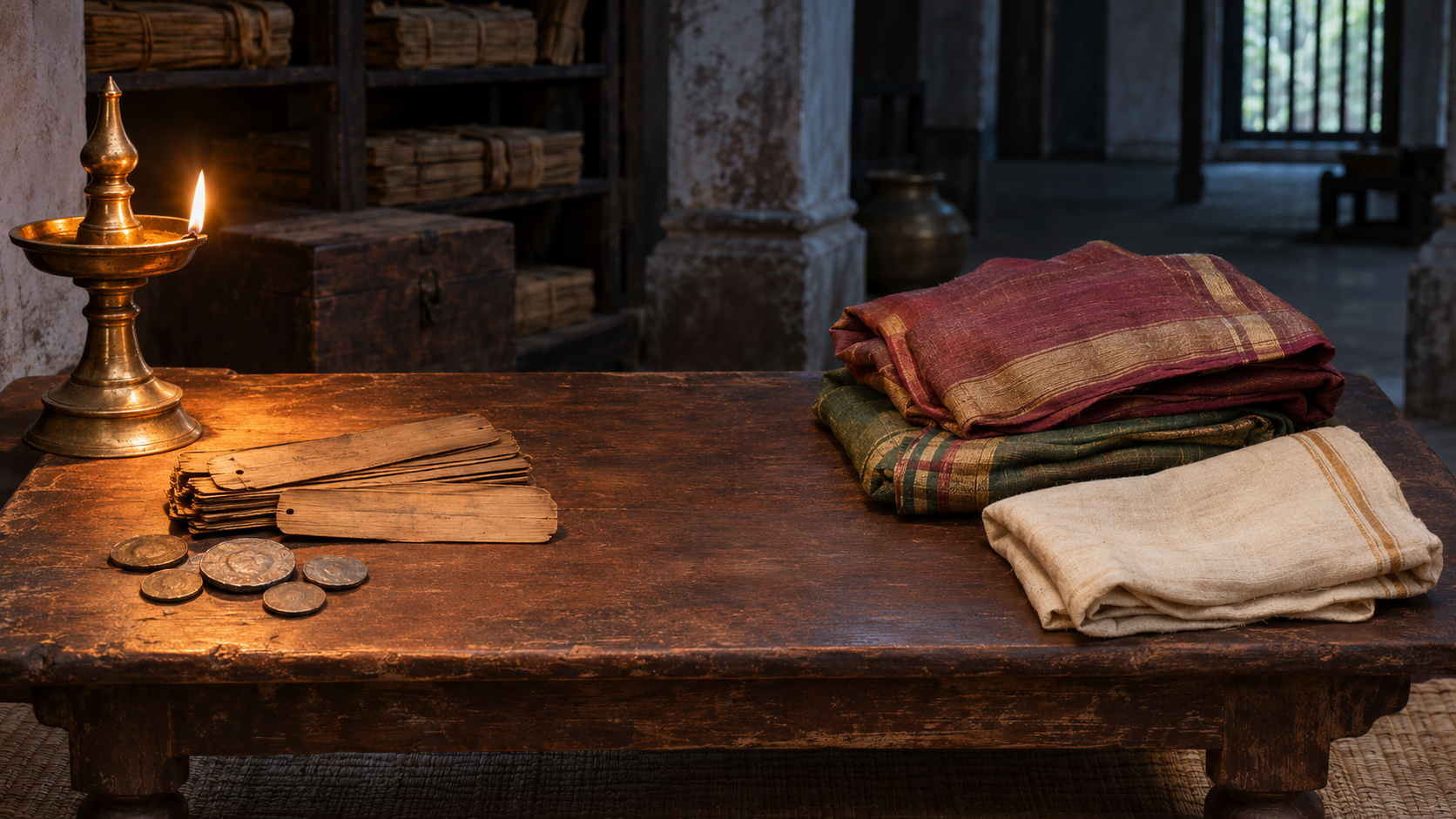
The familiar argument starts by dividing the Malayalam term into mula, meaning breast, and karam, meaning tax. That translation is relevant, but it cannot establish the levy’s legal purpose. A tax name is a clue to investigate, not a substitute for its rules.
To identify any historical levy, you need four pieces of information:
- Who was legally liable to pay it?
- What status, possession, transaction, or act triggered liability?
- How was the amount assessed?
- What happened if the person did not pay?
For Mulakkaram, the administrative setting points to a personal or poll tax. Travancore imposed such levies on members of several subordinated communities, including Nadars, Ezhavas, Mukkuvas, Parayars, and Pulayars. In the gendered terminology described for this system, Thalakkaram designated the male levy while Mulakkaram designated the female levy.
The relevant distinction was therefore between male and female taxpayers, not between covered and uncovered women. Nothing in that structure creates a rate based on breast size, attractiveness, or the kind of cloth worn. To establish one of those claims, you would need an assessment schedule, collection instruction, proclamation, receipt, or comparable administrative evidence that actually mentions it.
This is where literal translation becomes dangerous. A modern reader can see the word “breast,” imagine a charge imposed on that body part, and then unconsciously supply the missing mechanism. Repetition turns the imagined mechanism into a supposed fact: officials inspected women; larger breasts attracted higher payments; payment permitted covering. Each added detail needs its own evidence. None becomes historical merely because it fits an emotionally powerful reading of the name.
The careful conclusion is narrow but firm: Mulakkaram’s existence is documented, while the interpretation of it as a fee for breast covering is not established. This does not prove that every undocumented abuse was impossible. It tells you what the available evidence can responsibly support.
Clothing restrictions and personal taxes were separate controls
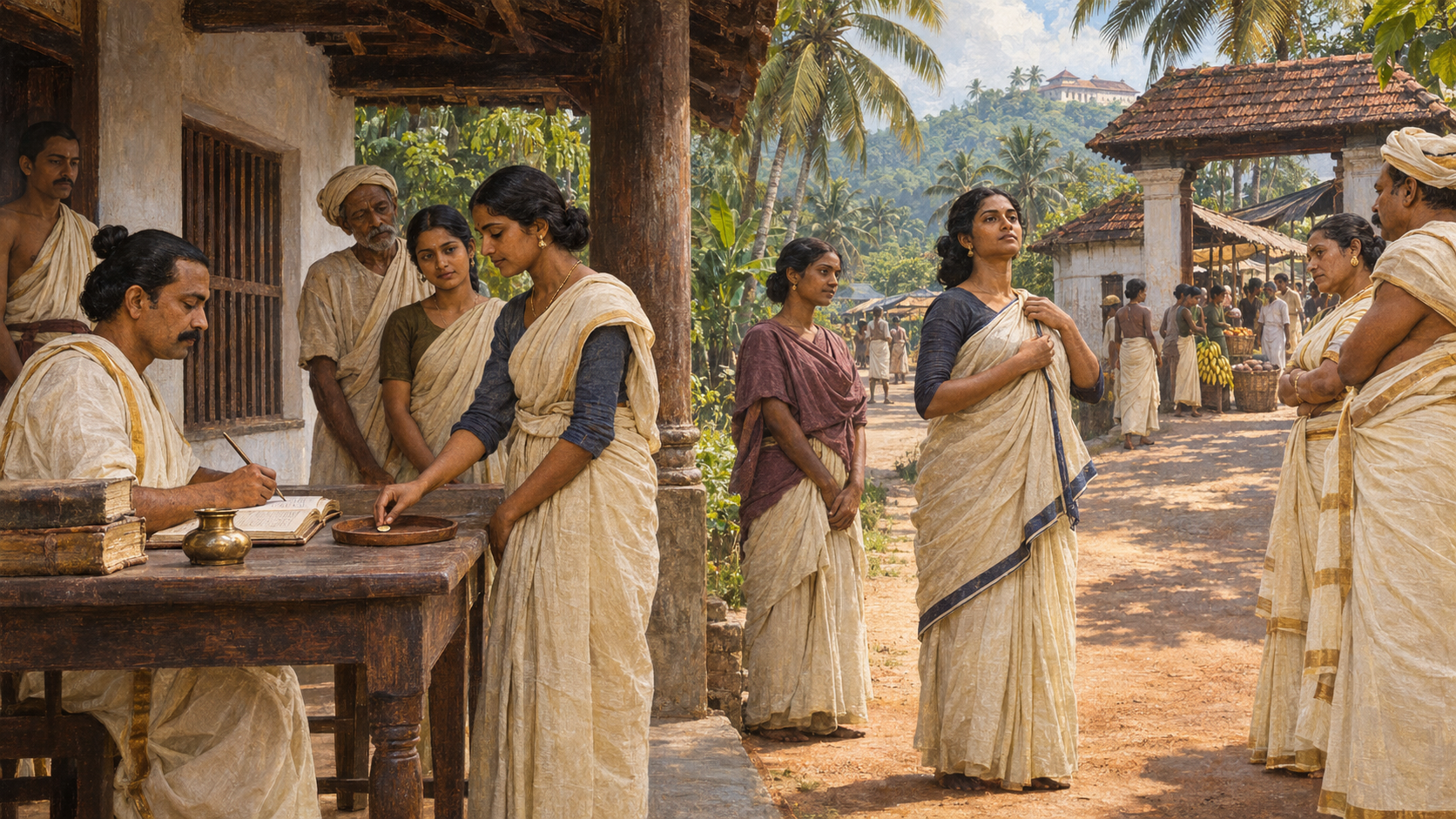
The confusion persists because Travancore did regulate clothing. A discriminatory tax system and discriminatory dress rules operated in the same society, against overlapping communities. That proximity makes it easy to merge them into one institution even when their administrative mechanisms were different.
In 1812, during Colonel John Munro’s administration, certain Christian converts from Ezhava and similar communities received permission to cover their breasts in the manner followed by Christians elsewhere. A later clarification allowed jackets called kuppayam while restricting the upper cloth associated with Nair women. In 1829, Travancore’s authorities again addressed the upper-cloth restrictions. These distinctions appear in the historical trail identified through C. M. Agur’s Church History of Travancore and V. Nagam Aiya’s The Travancore State Manual, with the relevant locations summarized alongside the tax terminology.
Notice what the rules were distinguishing. The issue was not only whether a woman’s upper body could be covered. It was also which garment she could wear and which social identity that garment communicated. A jacket could be allowed while an upper cloth identified with a higher-status community remained restricted.
That was not a harmless dress preference. Clothing could publicly encode hierarchy. Telling a woman that she may cover herself only in a form that marks her as socially inferior is still coercive and degrading. Recognizing this makes the history more precise, not less serious.
The Upper Cloth struggle should therefore be understood as a contest over dignity, social status, and the right to adopt a contested form of dress. Reducing it to “women were naked unless they paid a breast tax” obscures the very hierarchy the struggle challenged.
When evaluating a claim, keep the two questions separate:
- The tax question: Was a person liable for a personal levy because of community status and sex?
- The clothing question: Which garments could a woman wear, and what social rank did those garments signify?
Both systems could be unjust without being the same system. To turn one into the other, evidence must show that paying the personal levy changed a woman’s clothing rights. The known proclamations instead discuss permitted forms of dress, not a payment that purchased coverage.
Nangeli should be presented as oral memory, not settled chronology
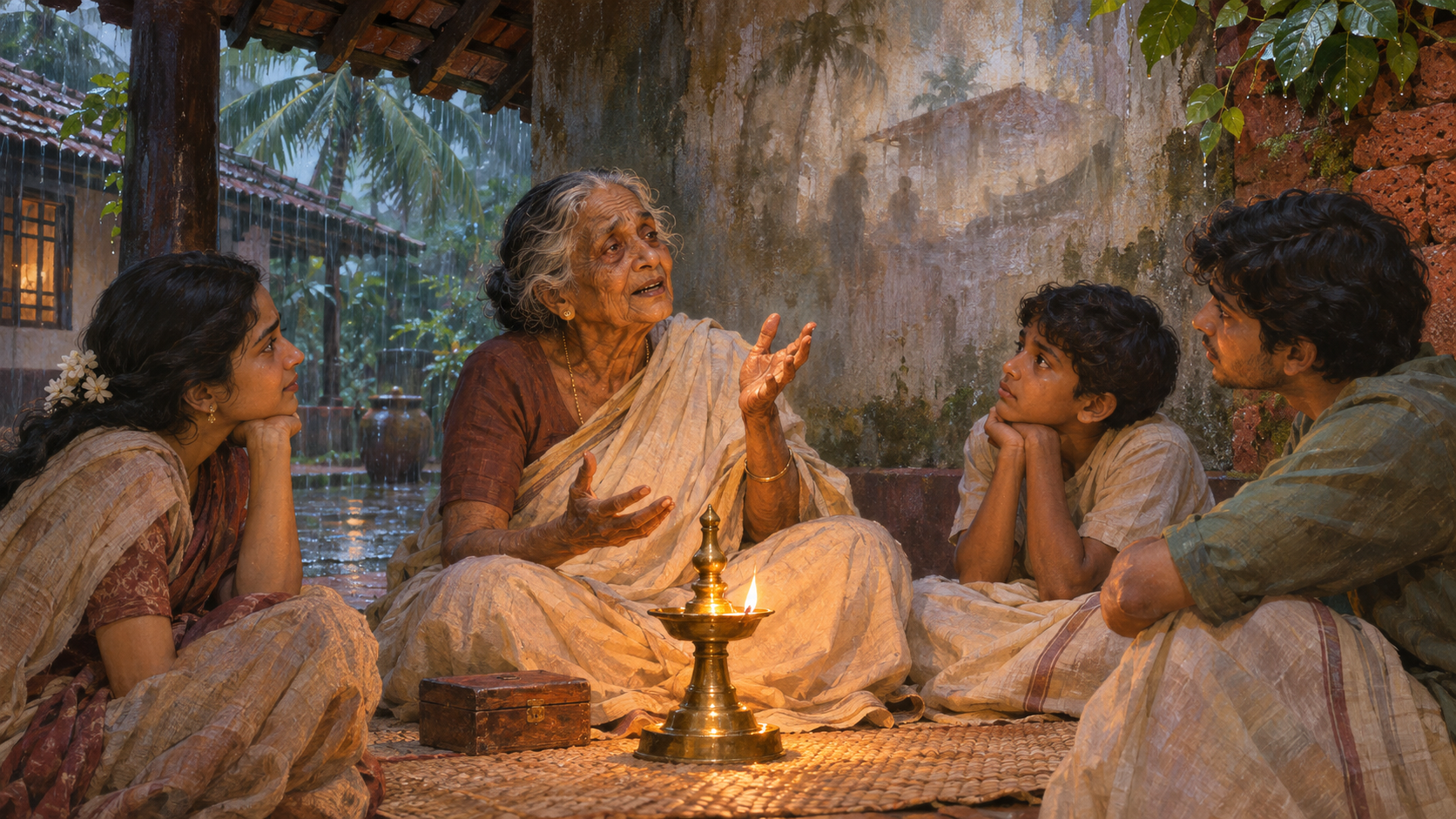
The most widely shared version introduces Nangeli, an Ezhava woman from Cherthala. When a collector supposedly came for the tax, she is said to have severed both breasts, placed them on a banana leaf, and died from her injuries. Her husband is then said to have entered her funeral pyre, after which the horrified ruler abolished the levy.
The narrative’s emotional force is undeniable, but emotional force is not corroboration. Even the husband’s identity varies between retellings, with Chirukandan and Kandappan both appearing. A changing name does not disprove the entire account, but it warns you not to repeat every detail as fixed chronology.
Four kinds of evidence would materially strengthen the popular version:
<!– wp:list {
Leave a Reply
You must be logged in to post a comment.