
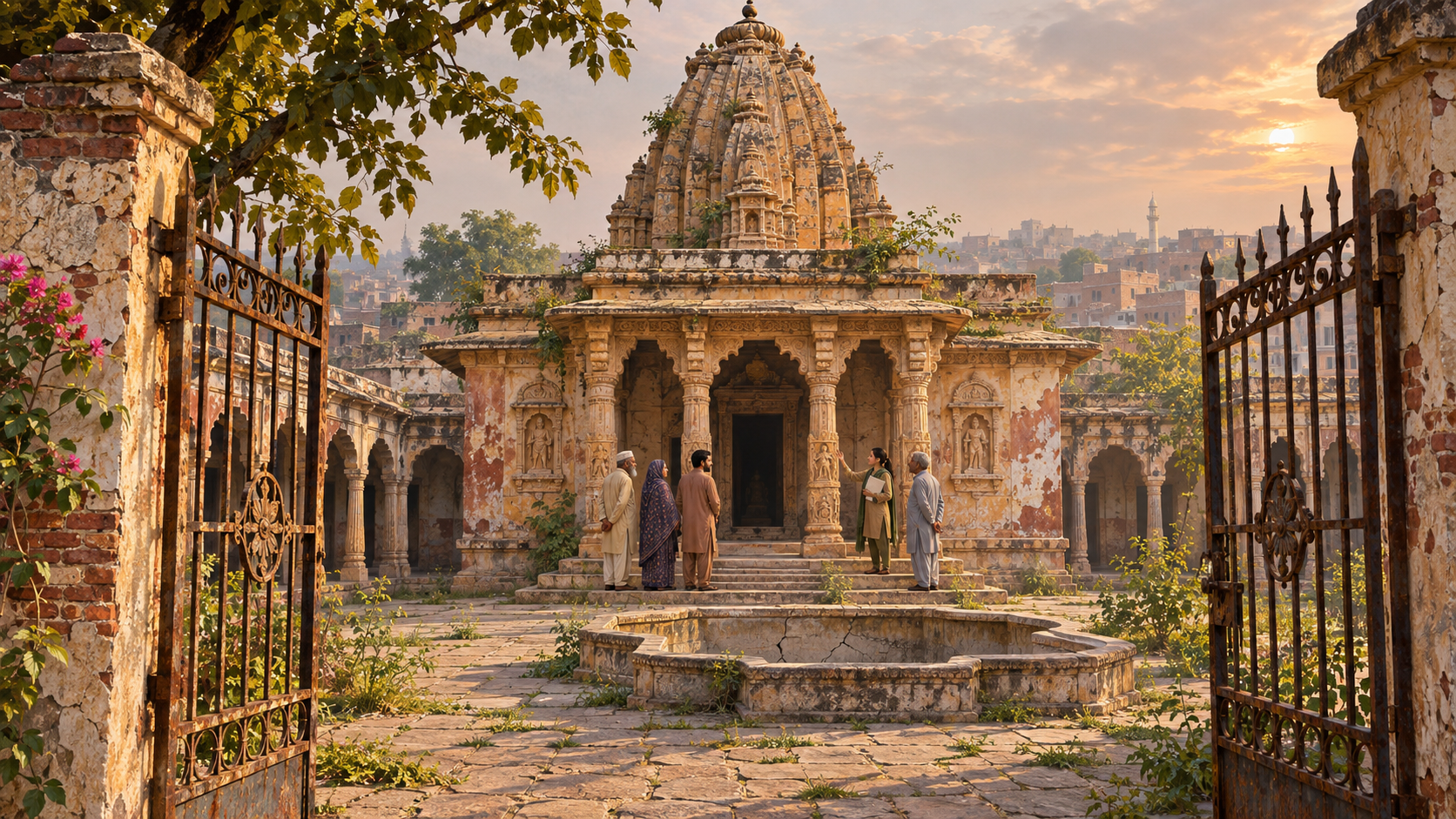
You may have seen Pakistan invoke Panini, Takshashila or the Indus Valley Civilization and wondered whether this marks an overdue acceptance of its pre-Islamic past or merely selective branding. You do not have to settle that question by interpreting slogans. Judge the claim by what happens to the Hindu temples, memories and communities that still exist within Pakistan.
The useful test is stewardship. A country claiming an ancient civilization as part of its inheritance assumes duties toward the people and places that carry that inheritance now. Celebration without protection is not civilizational recovery; it is curation at a safe historical distance.
Civilizational inheritance begins with stewardship
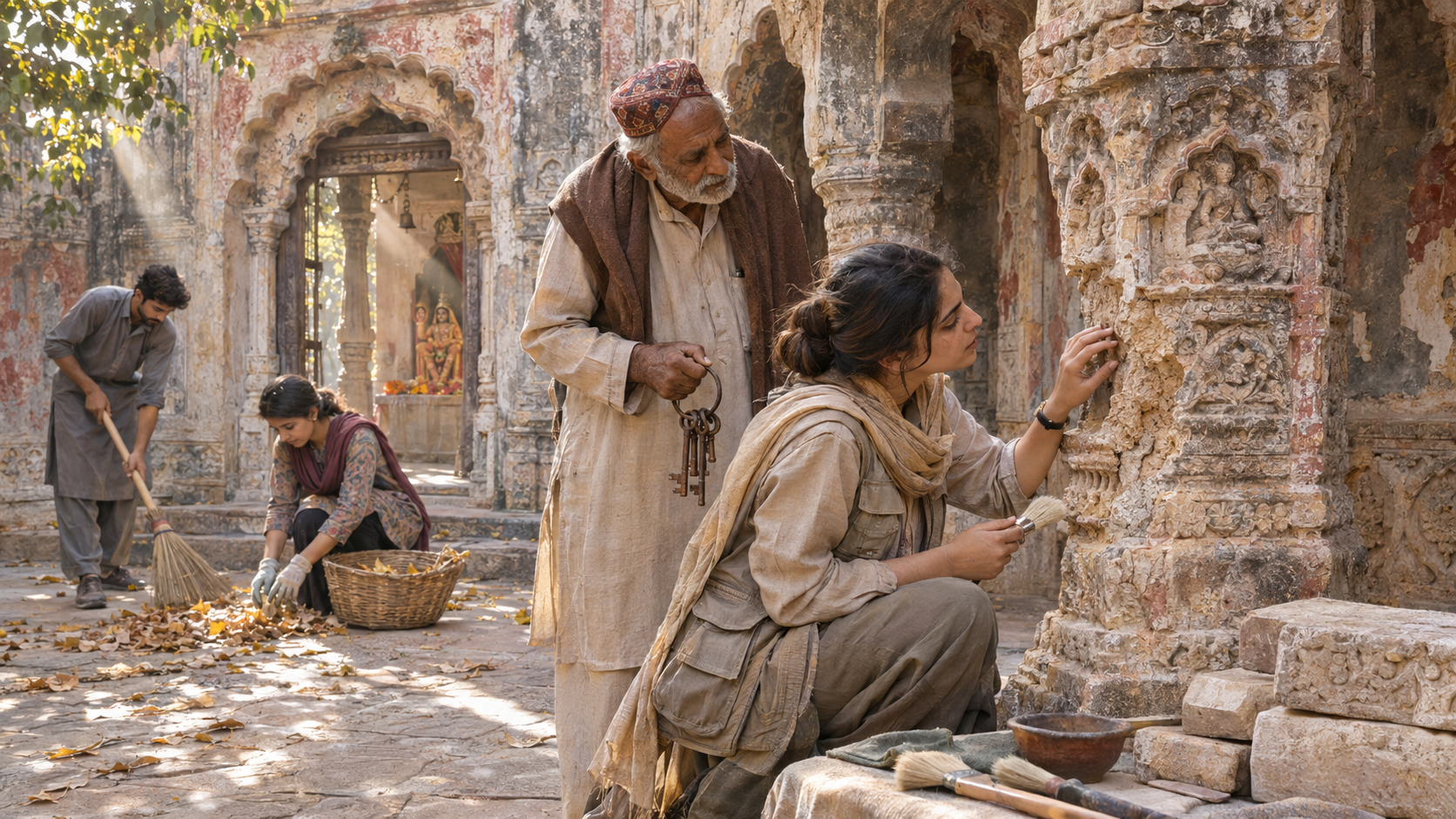
Pakistan has recently promoted Panini, Takshashila and the Indus Valley Civilization as elements of its ancient inheritance. There is value in acknowledging that the land’s history did not begin with its present political borders or its dominant religion. The difficulty appears when antiquity is welcomed as an object of prestige while its living Hindu continuities remain insecure.
Heritage is an obligation before it is an asset. If you want to assess the seriousness of a civilizational claim, look for evidence that the state and its institutions do the following:
- Acknowledge the religious identities attached to ancient places rather than absorbing everything into a vague national past.
- Protect temples from damage, encroachment and avoidable decay.
- Preserve the ability of Hindu communities to enter, worship at and maintain their sacred places where those traditions remain active.
- Investigate alleged attacks or unlawful seizures and publish conclusions that can be examined.
- Give affected communities a practical route to restoration, security and legal remedy.
This test prevents a common mistake. A restored monument, a tourism campaign or a celebratory reference to Takshashila may be worthwhile, but none can answer questions about another temple that is inaccessible, neglected or destroyed. Each claim has to be measured against the condition of the whole inheritance, including the people for whom it remains sacred.
Ask one revealing question whenever ancient Pakistan is presented to you: is the pre-Islamic past being treated as a dead precursor to the present state, or as a continuing inheritance whose Hindu custodians still possess rights? The answer tells you whether the language of civilization has reached beyond symbolism.
A temple can survive as masonry and still disappear
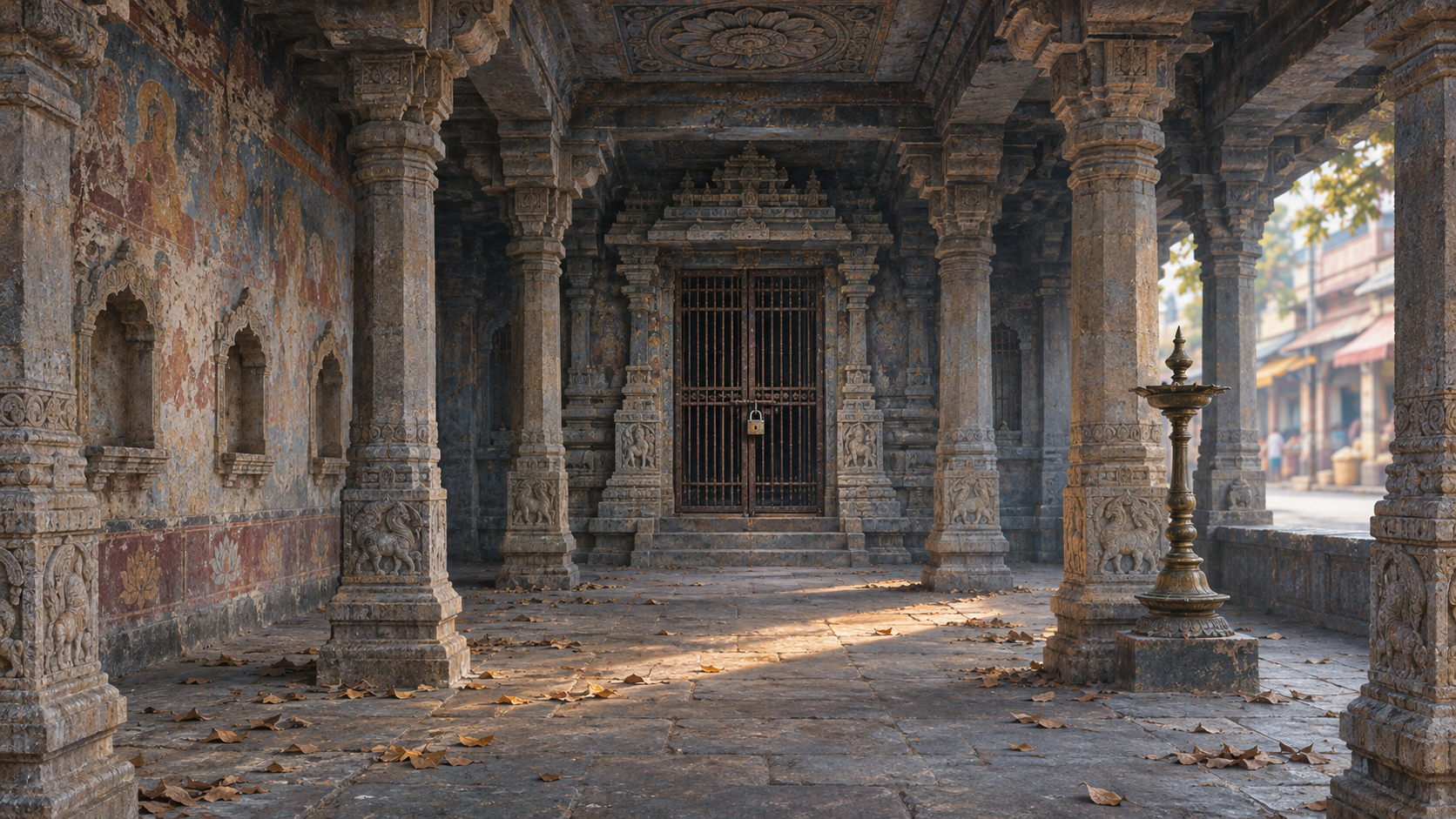
A Hindu temple is not simply an old structure. It joins sacred space, murti, ritual practice, local memory and a community capable of transmitting all of them. That is why a building can remain physically visible while ceasing to function as living heritage.
When you encounter a claim that a temple has been lost, damaged or preserved, separate the different layers:
- Material survival: Is the structure standing, stable and protected from further deterioration?
- Religious continuity: Can the relevant Hindu community perform worship and maintain the site’s sacred character?
- Community access: Can worshippers reach the place safely and without arbitrary obstruction?
- Historical memory: Are the temple’s Hindu identity, names, traditions and custodians recorded accurately?
- Institutional protection: Is responsibility for maintenance clear, and is there an accountable response when harm occurs?
This distinction makes heritage reporting more precise. Preserved masonry is not the same as a functioning mandir. Occasional access is not the same as secure religious freedom. A plaque acknowledging that Hindus once worshipped at a site does not compensate for excluding Hindus who seek to worship there now.
It also helps you notice slow disappearance. Dramatic destruction attracts attention, but neglect can produce a similar result without a single decisive event. Unrepaired damage accumulates, community access becomes irregular, ritual continuity breaks and the next generation inherits a monument rather than a sacred place. Conservation must therefore be judged by continuity as well as appearance.
Separate disputed incidents from the wider pattern
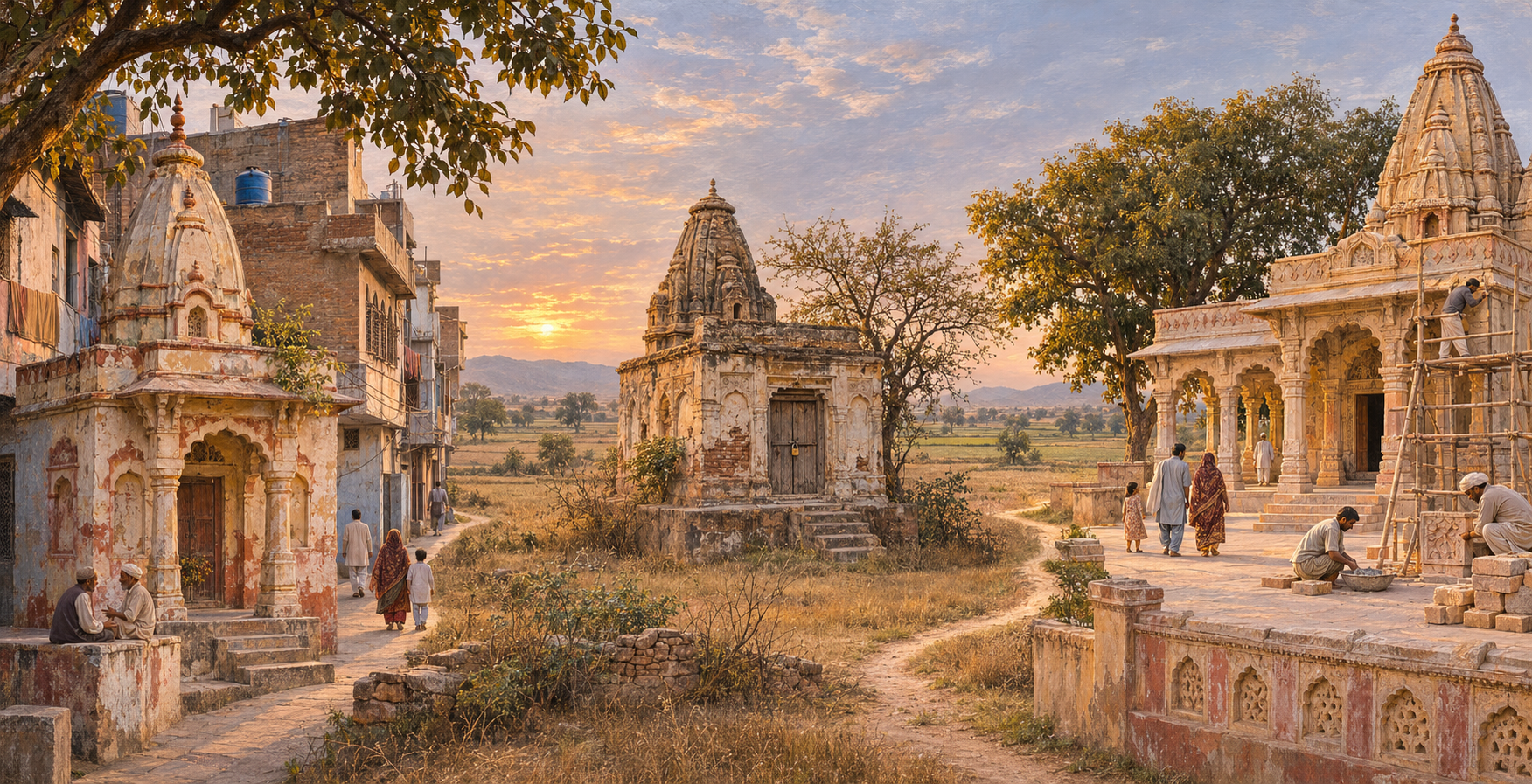
A sharp example emerged in August 2026. A century-old Hindu temple in Siraj village, Punjab, was reported as having been demolished, while Pakistani authorities attributed its collapse to torrential rain. Those are materially different accounts. The responsible formulation preserves both: demolition was reported, and weather-related collapse was the official explanation.
Do not turn uncertainty into false certainty in either direction. An official explanation should not be accepted merely because it is official. An allegation should not be treated as proved merely because it fits an established concern. Unless independent structural evidence resolves the question, keep the disputed cause visible.
For any similar case, build an evidence record around concrete questions:
<!– wp:list {
Leave a Reply
You must be logged in to post a comment.