
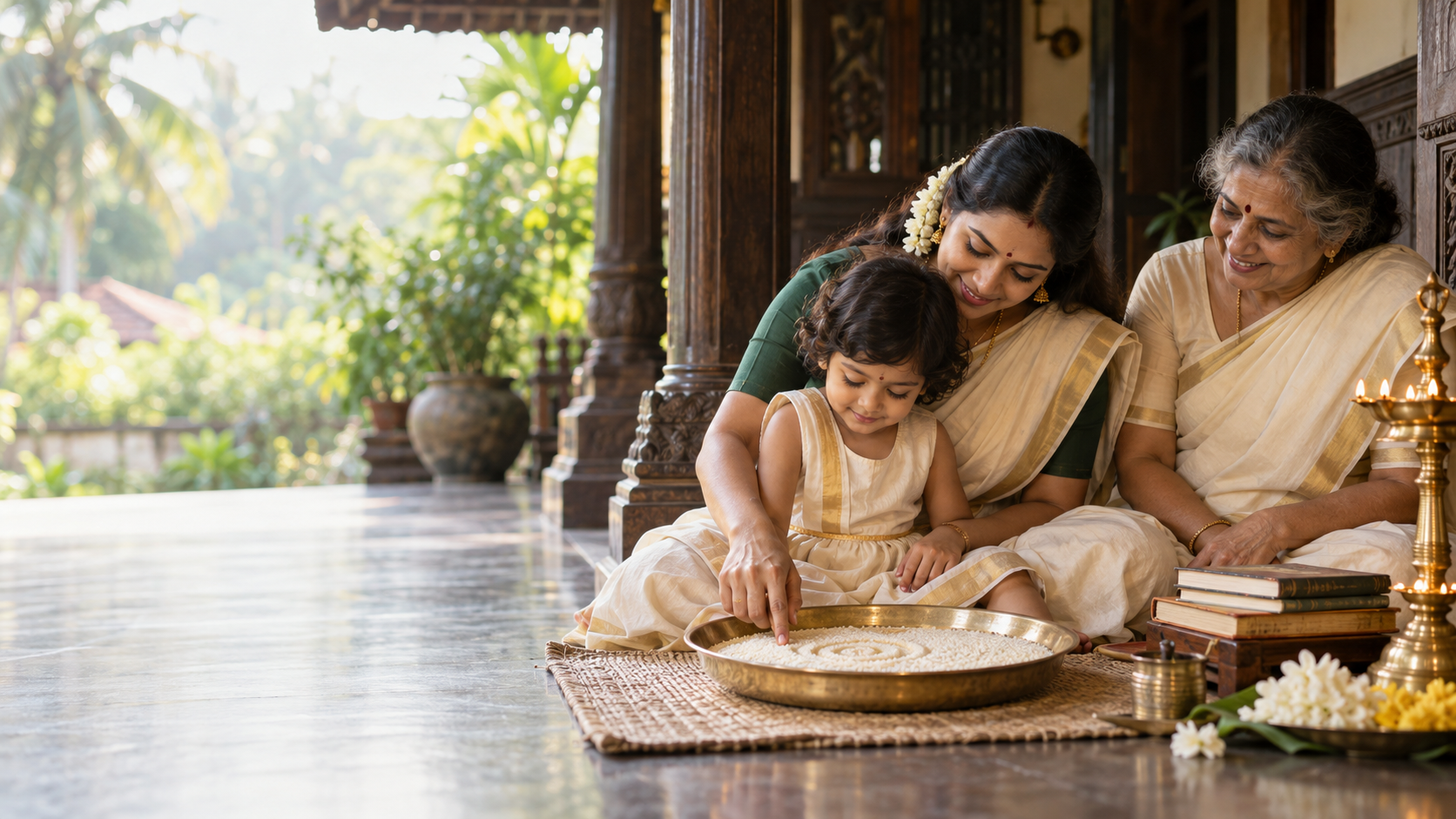
You may already have the clothes, the family calls and the temple visit in mind. The two decisions that matter most, however, are more basic: which day your community will observe Vidyarambham in 2026, and how you will help your child experience it as a joyful beginning rather than a performance.
A little preparation protects the meaning of the occasion. Settle the local date first, learn the form your family or venue follows, and keep the child’s part gentle. Vidyarambham should open a relationship with knowledge, not test what the child already knows.
Confirm the 2026 date with the people conducting the ritual
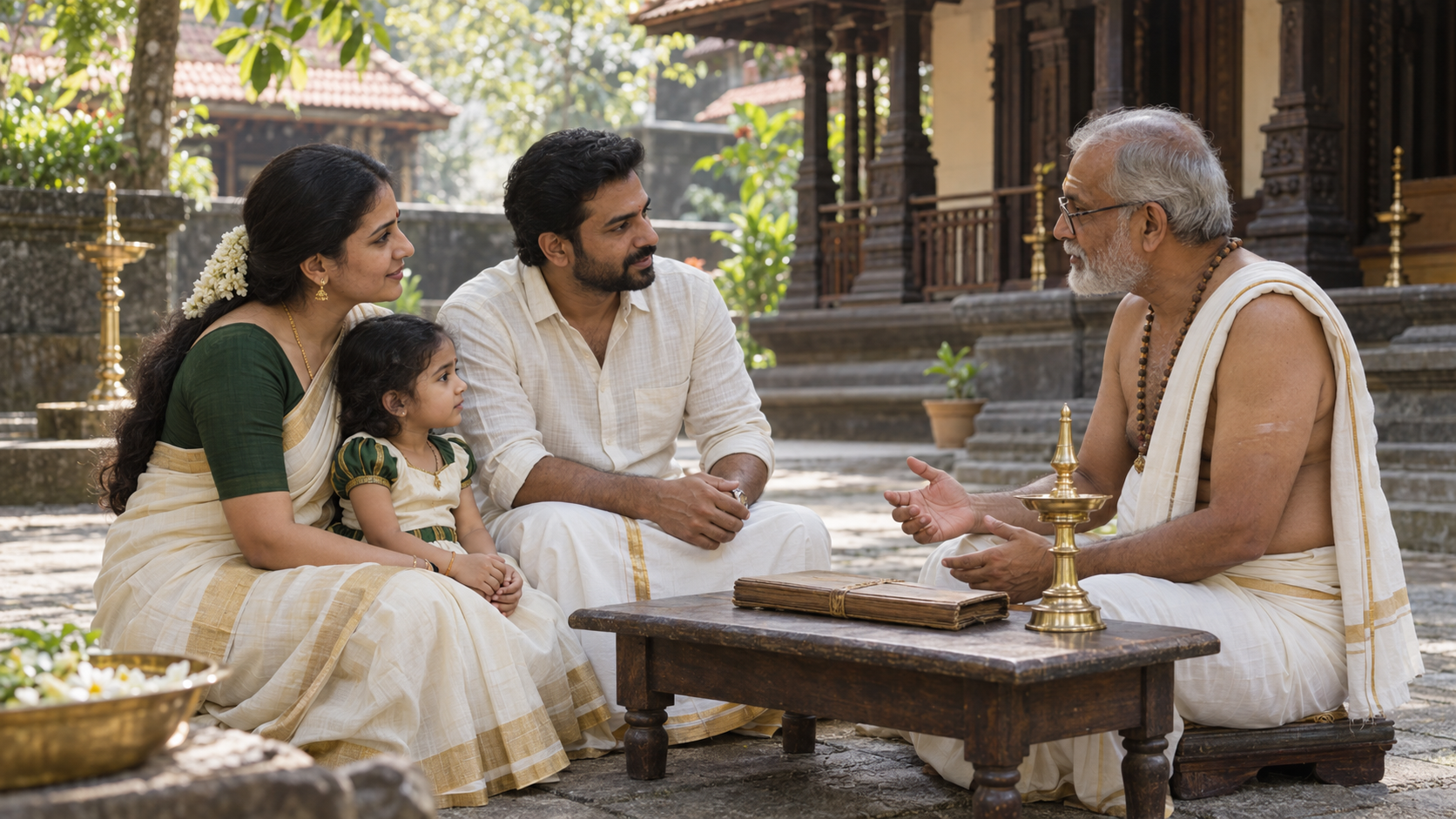
For 2026, Vidyarambham is listed for October 20, while some places in Kerala will observe Vijayadashami and Vidyarambham on October 19. That one-day difference is important if you are arranging travel, inviting relatives or registering at a temple.
Do not try to settle the difference by choosing whichever date appears most often online. Follow the calendar and custom of the temple, teacher, cultural institution or family tradition under which the initiation will actually take place.
- If you are attending a temple or organised ceremony, ask for its announced calendar date and reporting time.
- If you are observing at home, consult the panchangam and customary authority your family normally follows, such as your priest, teacher or knowledgeable elder.
- If several relatives are involved, send them the confirmed date rather than forwarding a generic festival calendar.
- If you want to participate in more than one gathering, check each organiser separately. Do not assume that every venue in Kerala will use the same day.
When you contact a venue, ask practical questions in one message: Is advance registration required? What must the family bring? Who guides the child’s hand? Which script or customary first form is used? Are there age rules? May parents take photographs? These details affect the child’s experience more than elaborate decoration does.
The child is beginning a relationship with knowledge
Vidyarambham, also known in Kerala as Ezhuthiniruthu, is one of the principal rituals associated with Durga Navaratri puja in Kerala and is performed on Vijayadashami. In its familiar form, a teacher, elder or another respected guide helps the child make the first letters or marks on a prepared writing surface. The exact prayer, text, material and order can vary by family and institution.
Its meaning is larger than an early handwriting exercise. The child approaches learning through blessing, guidance and humility. The adult guiding the hand represents the truth that knowledge is received within relationships: from parents, gurus, elders, language, tradition and the divine source of wisdom.
Vijayadashami gives that beginning a particularly Dharmic frame. Victory is not only victory over an external opponent. It can also mean ignorance giving way to knowledge, confusion to discernment and indiscipline to steady practice. A child’s first mark therefore points beyond literacy. It begins the lifelong work of learning how to see and act rightly.
This is why perfect writing is the wrong measure of success. A very young child may make an uneven mark, lose interest or need the adult to guide most of the movement. None of that empties the ritual of meaning. The meaningful acts are approaching knowledge respectfully, accepting guidance and taking the first step.
Prepare a calm ritual instead of rehearsing a performance
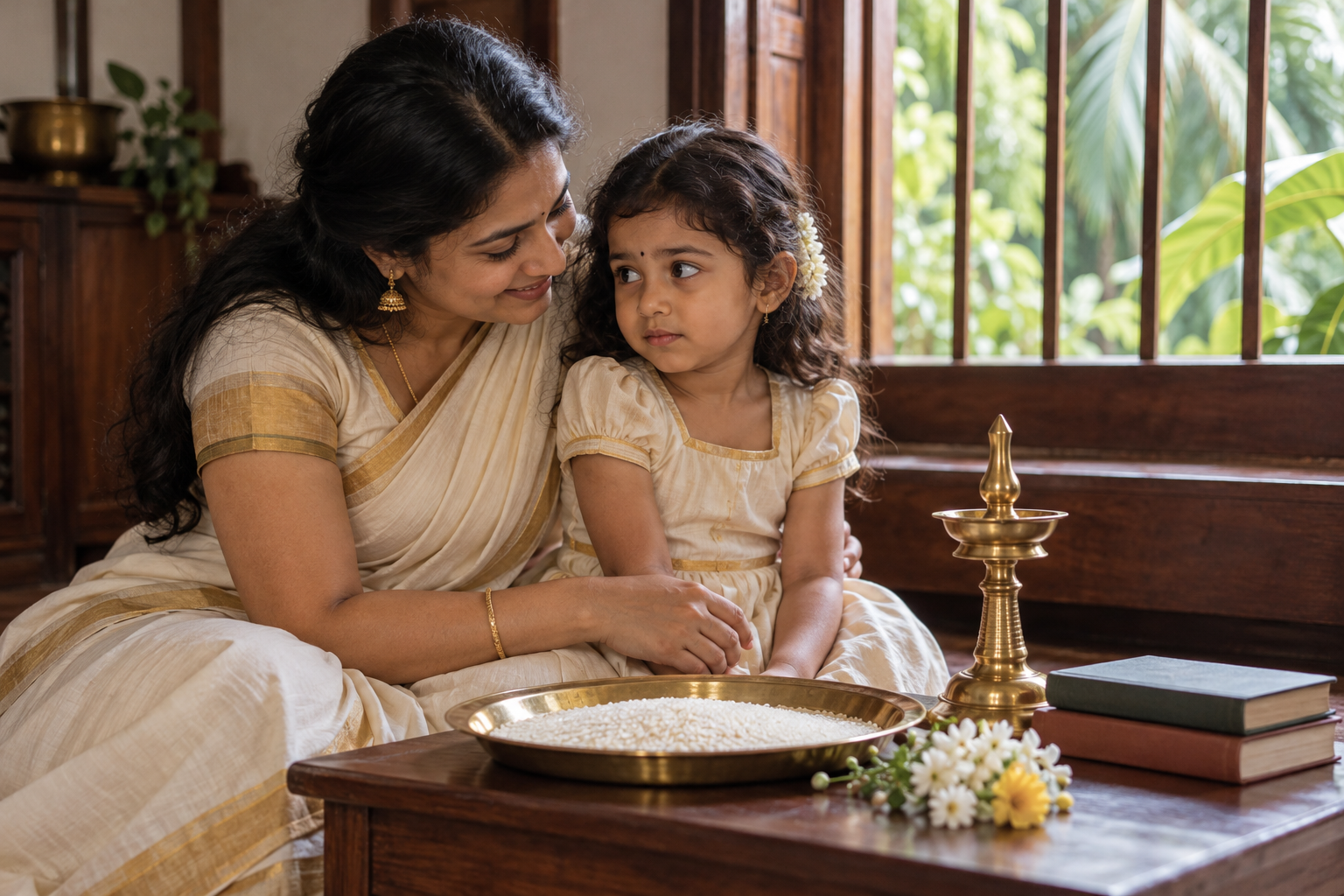
Before Vijayadashami
Explain the occasion in language the child can understand: “We are going to receive blessings and make your first writing marks.” Avoid promising a large spectacle or repeatedly asking the child to demonstrate the letters beforehand. Heavy rehearsal can quietly turn initiation into an examination.
- Choose the person who will guide the child. The best guide is someone the child trusts, who understands the family’s form and will not hurry.
- Confirm the prayer, first letters or customary form in advance. If the family uses more than one language or script, decide which one belongs in this ritual rather than improvising during it.
- Ask the venue what it supplies. If the observance is at home, prepare only the writing surface, materials and puja items required by your own custom.
- Let the child wear clothing that is appropriate to the occasion but comfortable enough for sitting and moving.
- Tell accompanying adults that the child’s pace comes before photographs, repeated poses or demands for a perfect result.
During the initiation
Follow your family’s or temple’s established procedure. A simple underlying sequence can help you understand what is happening even when the ceremonial details differ:
- Settle the child beside the guide and allow a moment to become comfortable.
- Begin with the prayer, invocation or blessing followed in that tradition.
- Let the guide demonstrate the movement before expecting the child to copy it.
- Guide the child’s hand only as much as needed to make the first mark or letters.
- Accept the result without correction or comparison.
- Close with blessings and gratitude to the deity, guru, elders and everyone supporting the child’s learning.
If the child hesitates, let the child watch another trusted person make the movement. If distress continues, pause. Restraining a frightened child or forcing the hand may produce a mark, but it teaches the opposite of reverence for learning. Your priest, teacher or elder can help you complete or adapt the observance according to local custom.
Immediately afterward
Do one small, ordinary act of learning while the occasion is still fresh. You might read a familiar page together, name objects in the family’s language, listen to a sacred story, draw, sing or place the child’s books neatly in their proper place. The activity need not prove ability. Its purpose is to connect the ceremonial beginning with the daily life that must follow it.
Key takeaways for families
- The main listed date for Vidyarambham in 2026 is October 20, but some Kerala observances will be held on October 19.
- Use the date announced by the temple, institution or family authority conducting your ceremony.
- Confirm registration, reporting time, required materials, script and the person who will guide the child.
- Treat the first mark as an initiation, not a handwriting test.
- If the child is reluctant, slow down and preserve trust rather than forcing completion.
- Carry the ritual forward with a small, repeatable learning practice at home.
Let the first letters shape what happens next
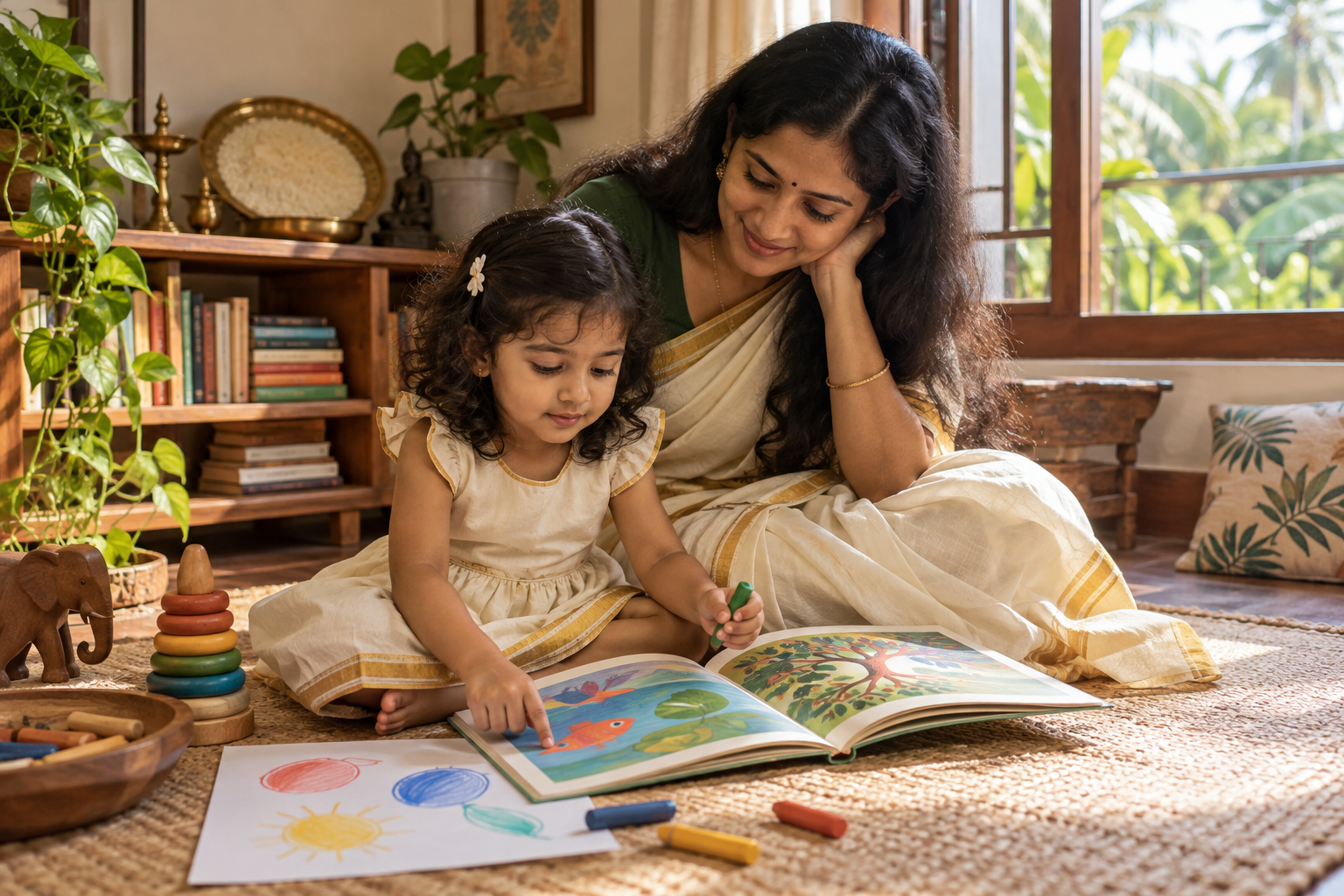
The easiest mistake is to make Vijayadashami memorable while leaving the following days unchanged. Vidyarambham becomes formative when the household confirms, through its habits, that knowledge really is worthy of attention and care.
Give the child a regular place for books and writing materials. Keep shared reading or storytelling short enough to repeat. Handle books respectfully. Let grandparents and elders pass on words, songs, prayers and family histories. Speak of teachers with gratitude while also encouraging sincere questions. Praise patience, curiosity and renewed effort, not only correct answers.
Adults can make a parallel beginning. Choose something you have postponed learning: a script, a verse, a language, a philosophical text, music or a practical discipline. When a child sees parents and elders remaining teachable, the central lesson of Vidyarambham becomes visible without a lecture.
Before arranging the ceremonial extras, make the two calls that matter: one to confirm your local 2026 date and procedure, and one to decide who will guide the child. Then choose the modest learning habit your household will begin after the blessings. The first mark lasts when the family gives it a second, a third and a hundredth step.
References

Leave a Reply
You must be logged in to post a comment.