
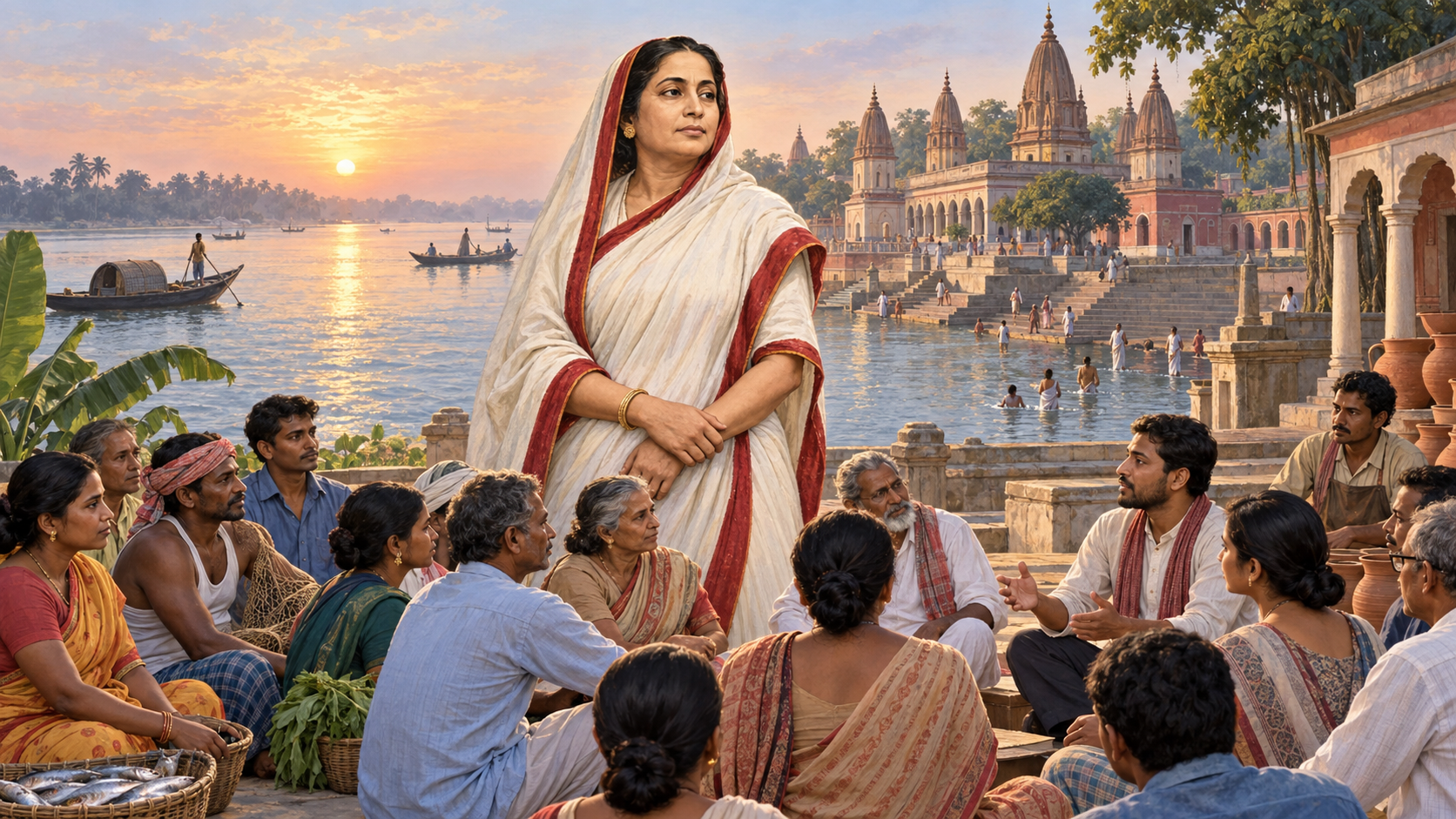
If you are deciding whether Kolkata’s Rani Rashmoni commemoration is simply a cultural programme or the beginning of a larger political campaign, separate the issues before you take a position. Reverence for a Hindu figure, support for a memorial institution and approval of a reservation proposal are three different judgments.
On 28 September 2026, the Hindu OBC Front is scheduled to mark Rani Rashmoni’s 233rd birth anniversary at Rabindra Sadan in Kolkata. The programme will highlight her religious legacy, philanthropy and public role. The mobilisation also advances two demands: a Rani Rashmoni Dham in Bengal and an OBC quota limited to Hindus.
The commemoration is being asked to carry three causes
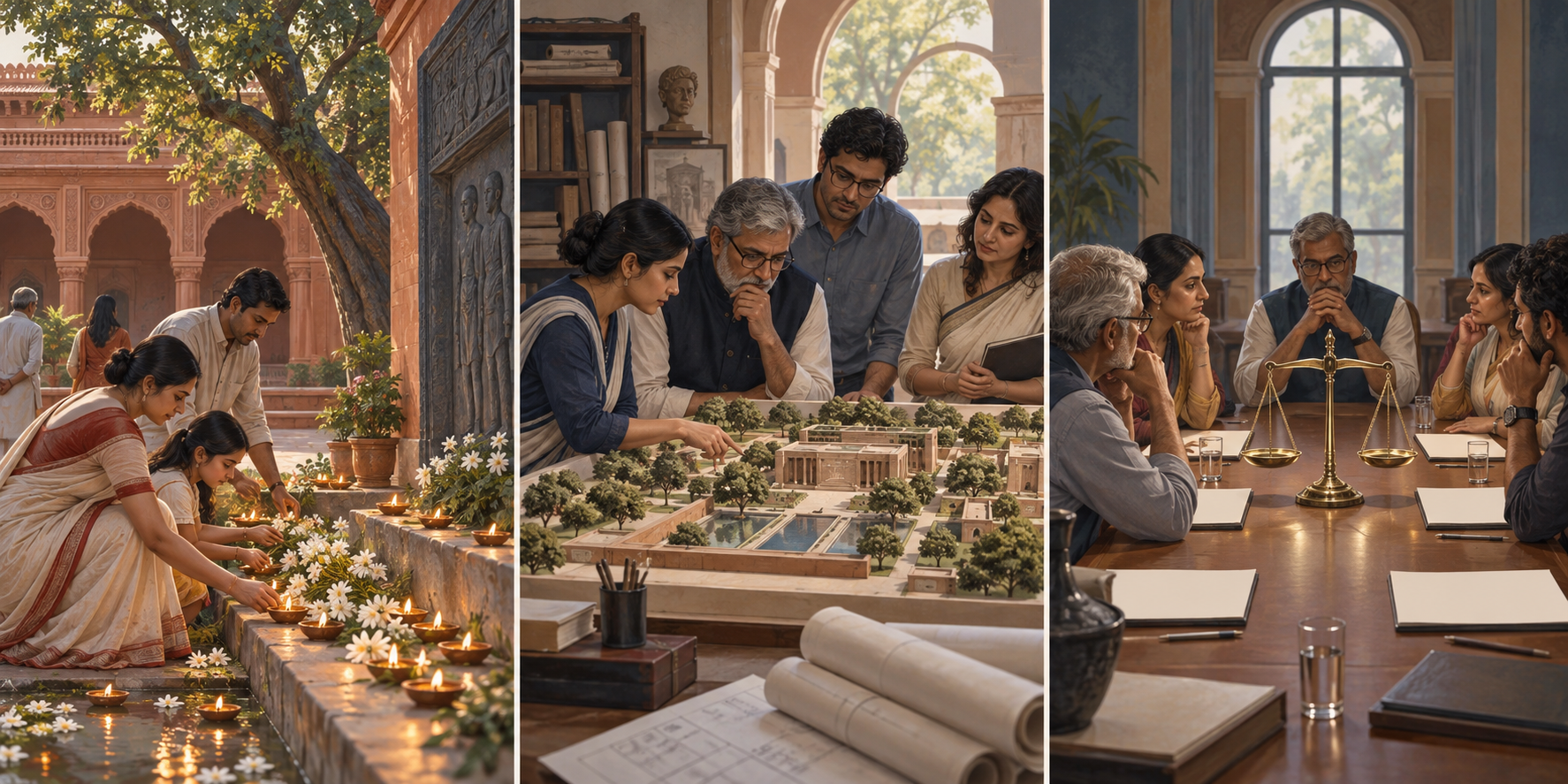
Rani Rashmoni’s commemoration can restore a nineteenth-century Hindu personality to public memory. That cultural purpose has value of its own. It asks what Bengal remembers, whose service it honours and which models of Hindu public leadership it passes to the next generation.
A Rani Rashmoni Dham is a different proposition. It asks Bengal to create a lasting institution around that memory. The quota demand moves into a third field: the distribution of public benefits and the definition of eligible communities. These causes may appear on one platform, but one does not prove the case for another.
This distinction gives you a practical way to listen to the speeches. A commemoration should explain why Rashmoni deserves remembrance. A dham proposal should provide an institutional plan. A reservation demand should supply a legal route, eligibility rules and evidence of the disadvantage it intends to remedy. If a speaker moves from devotion to policy without doing that work, admiration is being used as a substitute for argument.
That scrutiny is not hostility to Hindu mobilisation. A pro-Hindu politics becomes more credible when it can translate cultural respect into durable institutions and defend its social-policy proposals without asking the audience to treat questions as disloyalty.
A Rani Rashmoni Dham needs an institutional definition
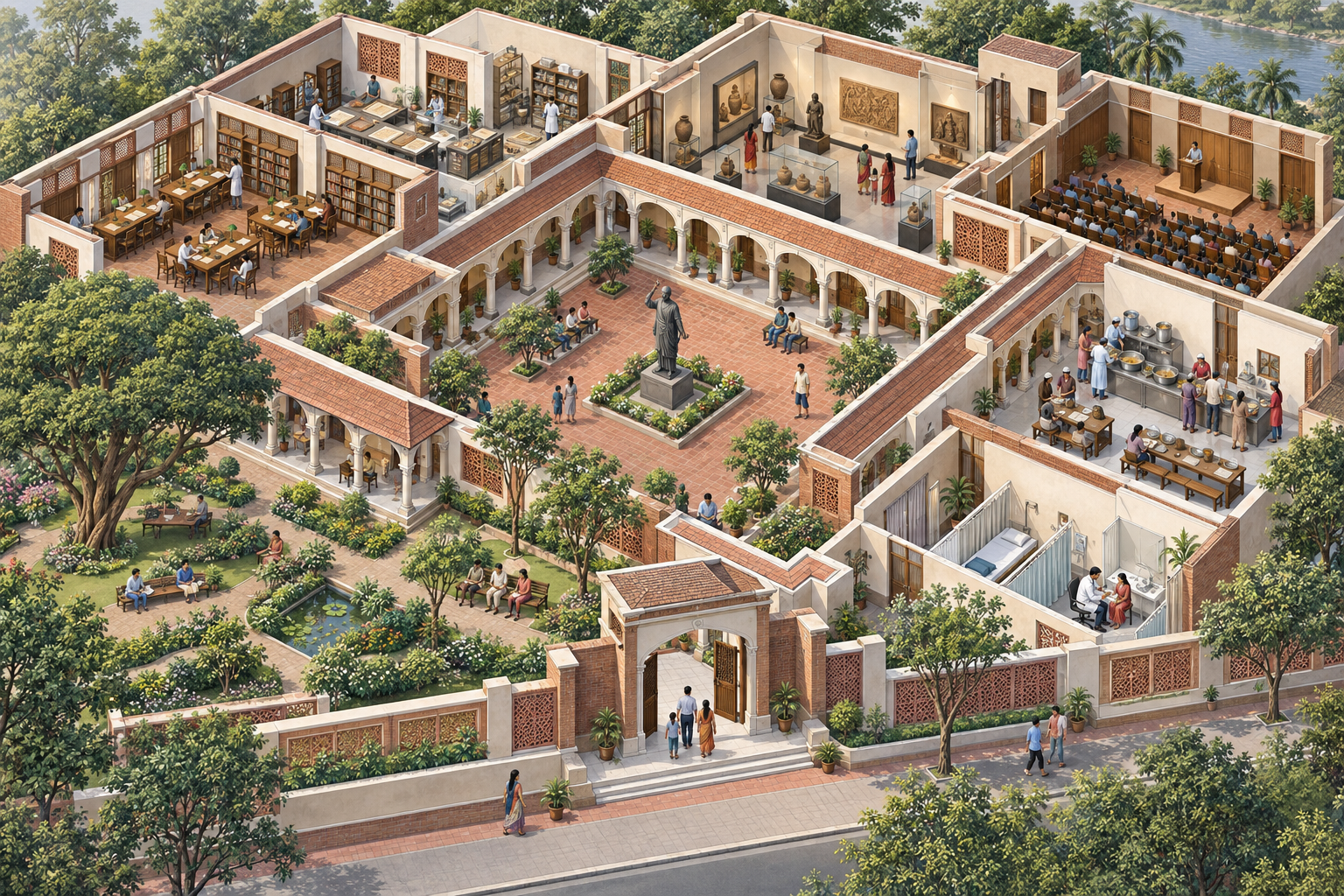
The word “dham” communicates reverence, but it does not tell you what will be built. Before supporting the proposal, ask whether it means a sacred complex, a museum, an archive, a research centre, a public-service campus or some combination of these. Each option requires different land, governance, expertise and recurring expenditure.
Ask what the institution will preserve
A serious plan should identify the material it intends to collect or present. It should also explain who will verify historical displays and how visitors will encounter Rashmoni’s religious legacy, philanthropy and public work. Without a defined collection, programme or educational purpose, a large name can produce a small institution.
Ask who will control it
The proposal needs a named governing structure. Who would own the land? Who would appoint trustees? Would historians, religious representatives and members of the communities invoked by the campaign have defined roles? How would accounts, donations and decisions be published? A memorial intended to represent a broad Hindu constituency should not depend indefinitely on an informal committee whose authority cannot be examined.
Ask how it will remain useful after inauguration
Construction is only the visible beginning. Staffing, conservation, research, worship where applicable, educational programming and maintenance determine whether an institution remains alive. The demand should therefore include an operating plan, not merely a call for land or a ceremonial foundation. If those details are not yet available, support the principle conditionally and ask for a written concept before treating the project as ready.
The Hindu-only OBC demand requires separate scrutiny
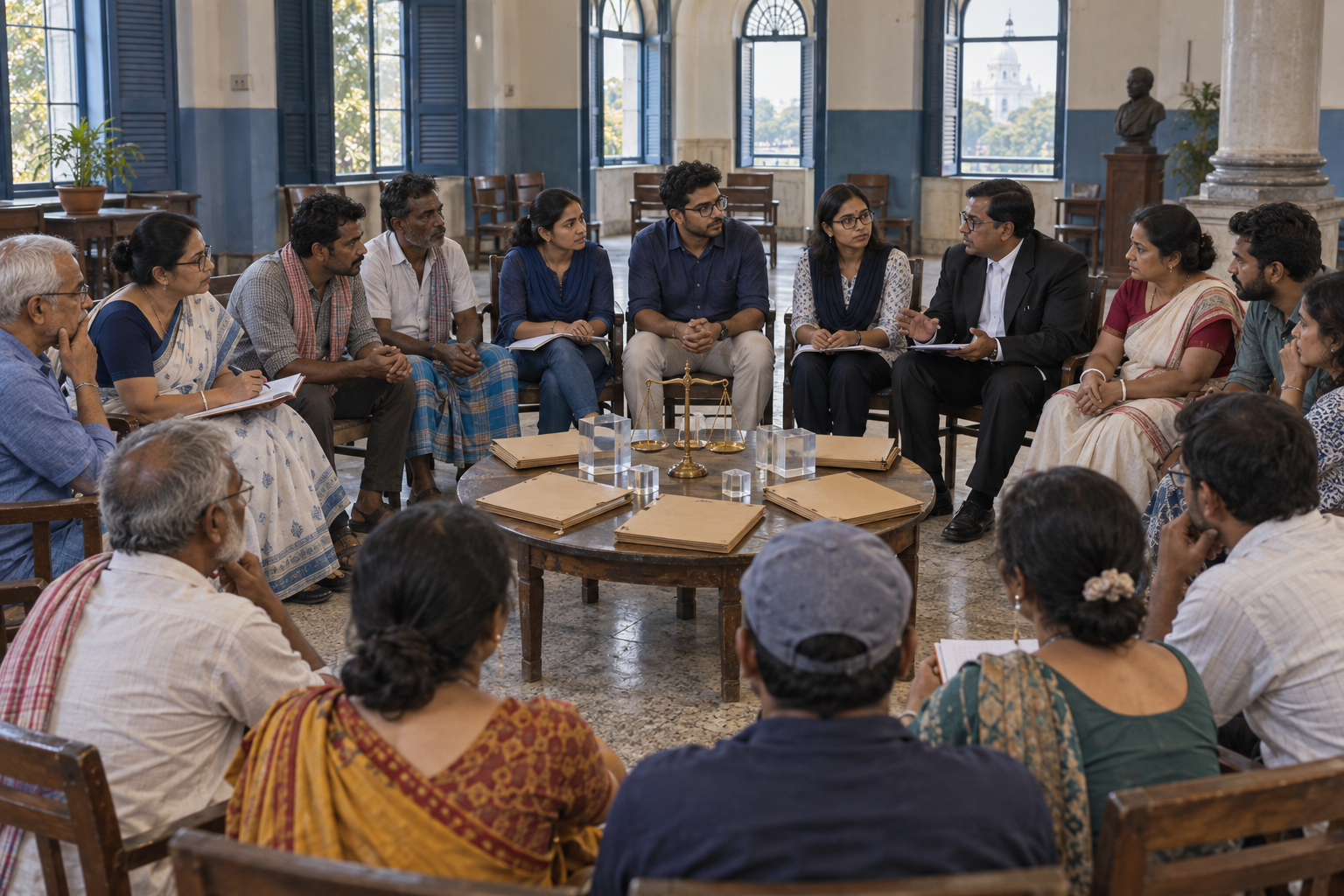
The call for an OBC quota limited to Hindus is the most consequential part of the mobilisation. It is a political demand advanced by the Hindu OBC Front, not an existing entitlement or a settled legal conclusion. You should not repeat it as though a slogan already answers the questions that administrators, courts and affected communities would have to confront.
OBC policy concerns backward-class recognition and access to reserved opportunities. A proposal that also makes religion an eligibility boundary must explain how those two classifications interact. Which recognised classes would be covered? What evidence shows that the proposed boundary addresses the stated disadvantage? What legal mechanism would create it? How would it affect people presently recognised under existing arrangements? These are central design questions, not procedural details to be supplied later.
Proponents also need to distinguish two arguments that are easily blurred. One argument may be that backward Hindu communities do not receive adequate representation or benefits. Another may be that OBC eligibility itself should be restricted by religion. Evidence for the first does not automatically establish the second. If the concern is unequal delivery, the remedy might involve enforcement, representation, outreach or a different allocation mechanism. If the demand is an explicit religious restriction, its advocates need to defend that rule directly.
You do not have to choose between indifference and an unconditional endorsement. It is coherent to support focused attention to disadvantaged Hindu communities while withholding approval from an undefined quota formula. Until the legal basis, covered classes, evidence and effect on current beneficiaries are stated, describe the proposal accurately as advocacy rather than workable policy.
Credible Hindu OBC politics must outlast an anniversary
The phrase “Hindu OBC” can create a useful political focus, but it should not be treated as if it names a community with one occupation, one regional interest or one view of public policy. Consolidation is credible only when the people gathered under the label can help set the agenda rather than merely supply an audience for it.
First, look for representation with authority. Community representatives should have defined roles in preparing demands, governing any proposed institution and reviewing outcomes. Their names, responsibilities and method of selection should be visible. A campaign speaking for backward Hindu communities should be able to show how those communities speak inside the campaign.
Second, look for a written programme. The memorial proposal and the quota proposal should appear as separate resolutions, each with objectives, responsible bodies and next steps. That prevents an easy political manoeuvre in which agreement with one cause is advertised as consent to the entire platform.
Third, look for continuity. A public meeting can display numbers for one day. Lasting organisation requires published follow-up, open consultations and progress reports. For the dham, that means a concept, governing model and operating plan. For OBC policy, it means evidence, a draft mechanism and engagement with objections. If the campaign returns only for commemorative dates, it is building visibility rather than institutional power.
Finally, notice whether Rashmoni is being remembered as a moral example or used merely as a recognisable emblem. The declared focus on religion, philanthropy and public life sets a demanding standard. A movement invoking that legacy should be prepared to show the public benefit of its own institutions and the fairness of its own political programme.
Key takeaways
- Treat the commemoration, the proposed Rani Rashmoni Dham and the Hindu-only OBC quota as three separate propositions.
- Judge the commemoration by the historical and cultural understanding it creates, not merely by attendance or rhetoric.
- Do not endorse a dham without clarity on its purpose, ownership, governance, operating costs and continuing public use.
- Do not present the quota demand as established policy. Ask for its legal basis, eligible classes, supporting evidence and effect on current beneficiaries.
- Judge Hindu OBC mobilisation by whether backward Hindu communities receive decision-making authority and sustained institutional support after the event.
If you attend, support or discuss the 28 September programme, carry three questions with you: What exactly will the dham do? What exact legal and administrative mechanism is proposed for the quota? Who from the communities being represented will control the follow-through? Direct answers would move the initiative from symbolic mobilisation towards accountable Hindu public action. Evasion would tell you just as much.
References

Leave a Reply
You must be logged in to post a comment.