

If a mayor says Jai Shri Ram at a public forum and someone objects, what exactly should you defend or challenge? Treating the sacred words alone as the verdict is too crude. It fails citizens who care about both Hindu civilizational confidence and fair civic administration.
You need a test that looks at context, conduct, and civic consequences. That test should protect voluntary Hindu expression while refusing coercion, unequal treatment, and the misuse of public authority.
What the Kolhapur incident does and does not establish
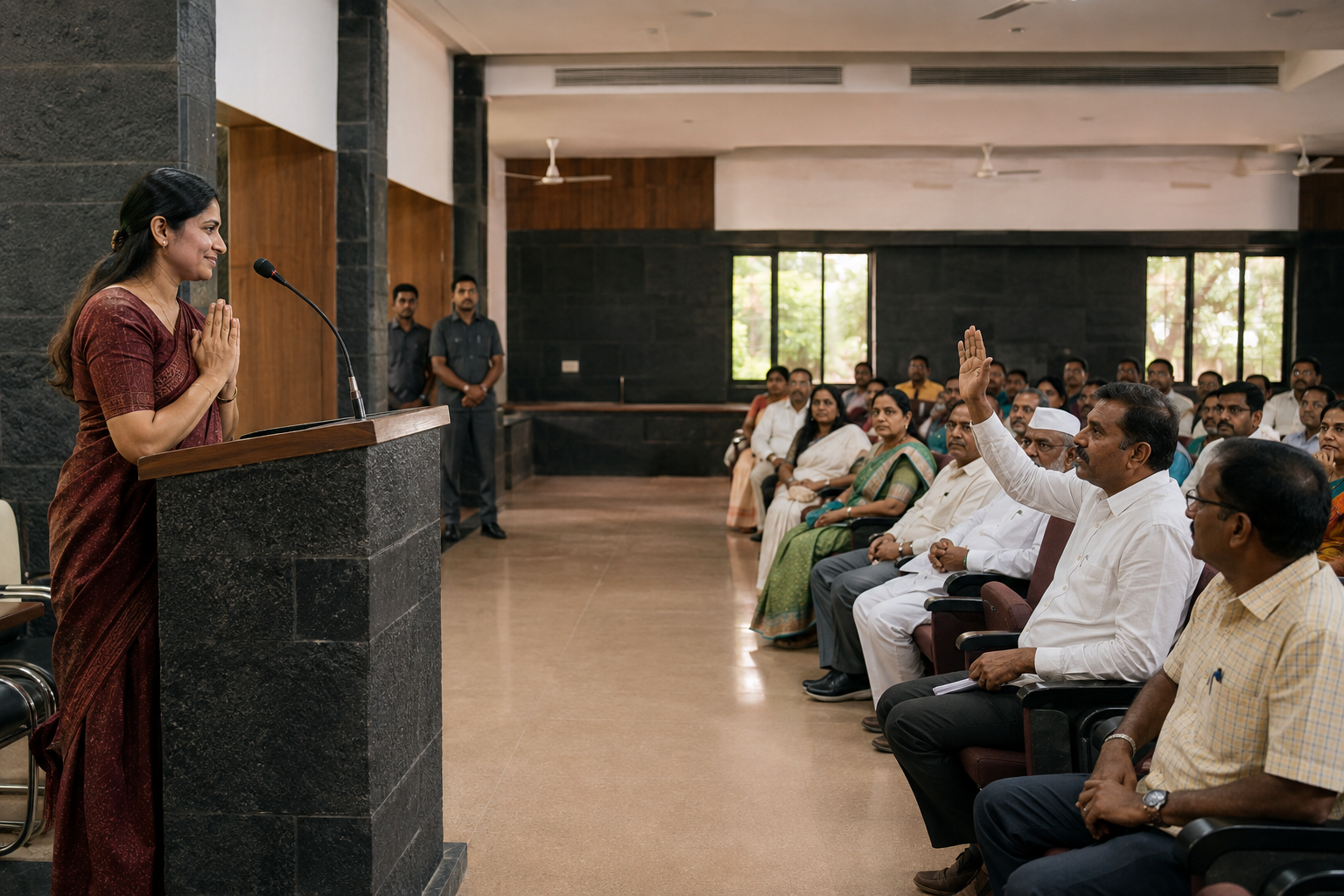
Kolhapur Mayor Ruparani Nikam faced an objection after chanting Jai Shri Ram at a Mayor Janta Darbar. She firmly answered the objection, and Hindu Janajagruti Samiti and other supporting organisations later felicitated her with a portrait of Shri Ram.
No detail is available about the exact wording of the objection, the complete exchange, or any effect on a resident’s access to civic service. Those gaps matter. Jai Shri Ram can function as devotion, a greeting, cultural identification, political solidarity, or provocation. The words do not reveal their complete civic meaning without the speaker, occasion, tone, and consequences.
The felicitation indicates that supporters understood the mayor’s answer as a defence of Hindu expression. That interpretation deserves consideration, but it does not eliminate the need to examine what actually happened. If you want a durable standard, do not begin by assigning heroes and villains. Begin by identifying the conduct in dispute.
Separate religious expression from the exercise of civic power
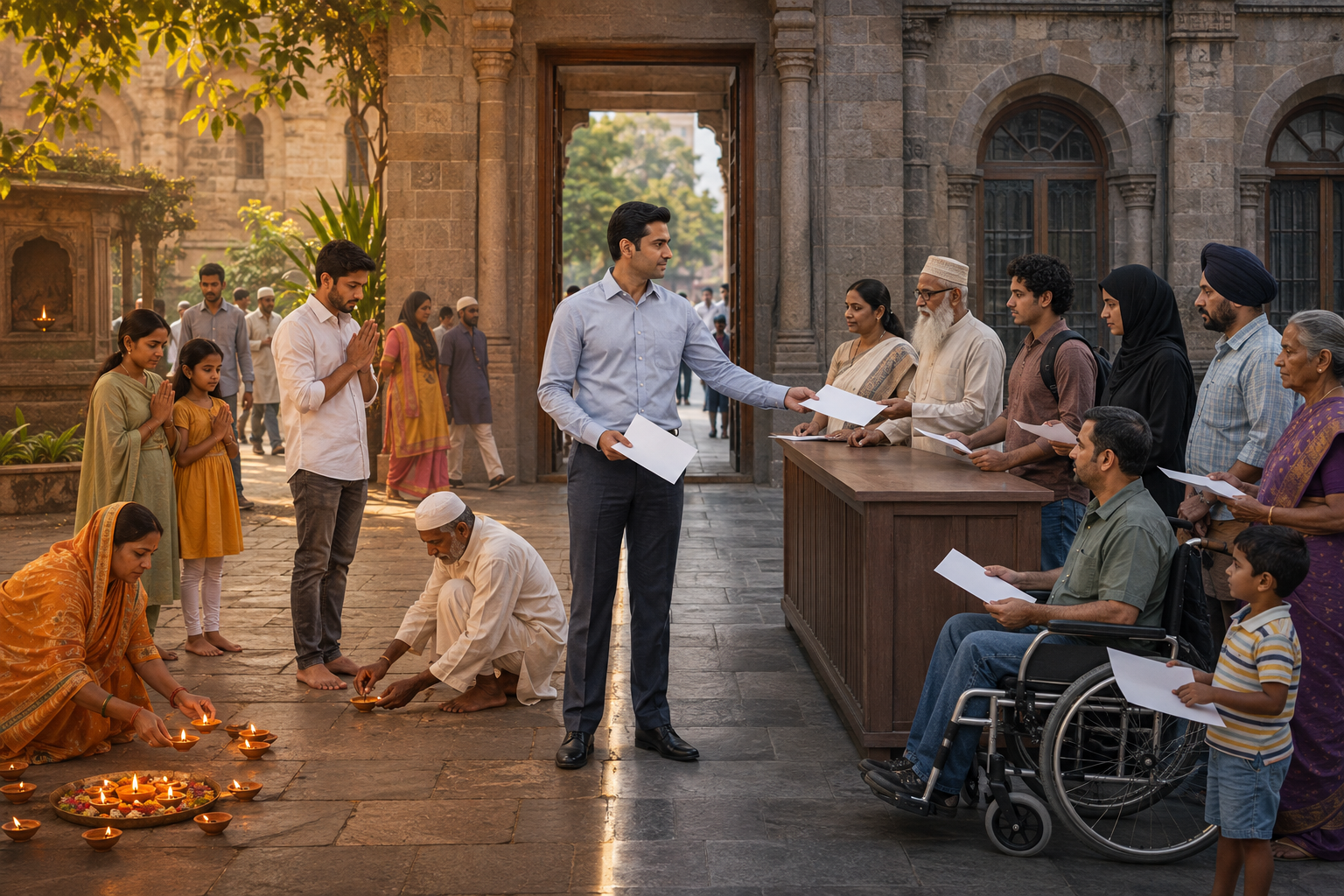
A public official does not become culturally anonymous on taking office. A Hindu need not pretend to have no religious vocabulary, symbols, or loyalties before serving the public. Visible faith is not, by itself, proof that someone has been excluded.
Public authority nevertheless changes the stakes. A citizen may freely decline a slogan among equals. The same citizen may feel pressured when the speaker controls access to a hearing, certificate, benefit, licence, or grievance process. The decisive line is therefore not religious versus non-religious speech. It is voluntary expression versus the use of authority to compel participation or influence public treatment.
This distinction also prevents careless accusations against either side. An objection is not automatically anti-Hindu; it may concern coercion, partisanship, tone, or the purpose of the forum. But a demand that every Hindu word, symbol, or invocation disappear from civic life goes much further. It turns administrative impartiality into cultural erasure.
Rajadharma offers a more demanding frame. Public authority carries a duty toward everyone under its care, including people who disagree with the office-holder. In a modern civic setting, that does not require a faithless official. It requires restraint, equal service, and freedom from retaliation.
Use five questions before taking a side

When the next controversy appears in Maharashtra, work through these questions before sharing a clip, filing a complaint, or declaring an attack on Dharma.
- Who initiated the expression, and in what capacity? Distinguish an office-holder’s personal utterance, an audience response, a ceremonial invocation, and an instruction issued in the name of a civic body. The same words can carry different weight in each setting.
- Was participation genuinely voluntary? Ask whether anyone was ordered, pressured, or publicly singled out for remaining silent. A citizen’s refusal to chant, bow, applaud, or adopt another person’s devotional practice must not become a test of loyalty.
- Did the expression affect access or treatment? Look for a concrete consequence: Was a grievance ignored, a hearing interrupted, a service delayed, or a person favoured because of religious participation? If nothing about civic access changed, the disagreement may concern expression rather than exclusion.
- What purpose and conduct surrounded the words? A brief invocation, a cultural greeting, a response to criticism, a campaign appeal, and a taunt are not interchangeable. Tone matters, but conduct matters more: threats, humiliation, disruption, and retaliation turn a symbolic dispute into a substantive civic problem.
- What evidence is complete enough to support a conclusion? Seek the exact words, the exchange immediately before and after them, any unedited recording, the forum’s stated purpose, and evidence of an administrative consequence. A clipped slogan often proves only that the slogan was spoken.
Your answers will usually place the incident in one of three practical categories:
- Ordinary civic expression: Religious or cultural language was voluntary, brief, and unrelated to anyone’s access or treatment.
- Poor civic judgement: No one was coerced, but the timing, tone, or partisan character needlessly disrupted the public purpose of the forum.
- Possible misuse of authority: Participation was demanded, dissent brought retaliation, or a public service depended on belief or religious conduct.
These are civic assessment categories, not legal findings. If you believe a service was denied, a threat was made, or an official retaliated against a resident, preserve the original evidence and use an appropriate grievance process or qualified legal advice. Do not turn an incomplete allegation into social-media certainty.
Respond in a way that protects both Dharma and civic fairness
If you are defending the religious expression
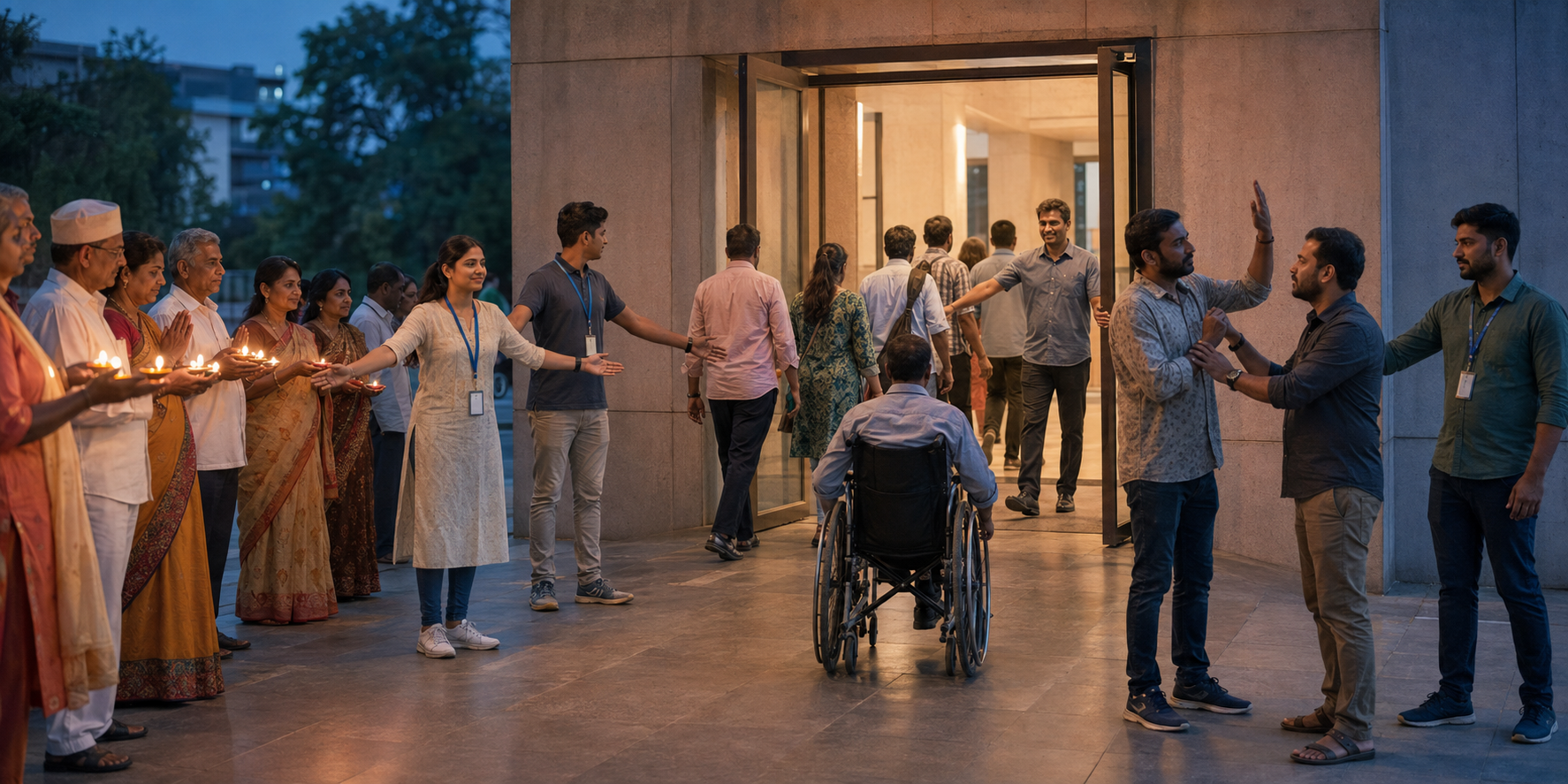
State the boundary you are defending. Say that an official may use a voluntary Hindu greeting or invocation; do not imply that public power may be used to demand agreement. Then ask the concrete question: Was any resident compelled, disadvantaged, or denied a hearing?
Use the fullest available record. Defending an edited clip merely because you approve of the slogan weakens your position. It allows critics to shift the issue from Hindu visibility to factual carelessness. Answer the objection itself, and do not direct a personal or communal pile-on against the objector.
If you are objecting
Name the civic mechanism that concerns you. Explain whether you faced pressure, disruption, partisan campaigning, unequal treatment, or a credible fear of retaliation. Mere dislike of a Hindu phrase does not establish misuse of office.
A precise objection is also easier to remedy. Instead of making the sweeping claim that religion has no place in public life, request a clear assurance that participation is optional and services remain equal. That protects your civic standing without demanding that Hindu officials conceal their identity.
If you hold public office
When controversy arises, clarify three points promptly: the expression was personal or ceremonial, no one was required to join it, and every resident will receive the same civic treatment. If any of those statements is not true, correct the practice rather than defending the symbol in the abstract.
For a planned religious element, make its voluntary character clear before it begins. Keep the citizen-service purpose of the event visible. A calm answer demonstrates confidence more effectively than humiliation, and it prevents a disagreement over words from damaging trust in the office.
A Dharmic standard is more demanding than slogan politics
Two weak positions often dominate these disputes. One treats a civic space as legitimate only when it is culturally blank. The other treats majority religious expression as beyond scrutiny. Neither position serves Dharma.
For those who invoke Shri Ram, the harder question begins after the chant: Did the official display maryada through discipline, composure, duty, and fair treatment of a critic? Sacred language should raise the standard of conduct. It should not become a shield against questions about how authority was exercised.
Critics have a corresponding responsibility. Plural civic life requires tolerance of visible traditions, not merely tolerance of private belief. Offence is not the same as exclusion. At the same time, calling an act devotional does not erase a power imbalance or excuse compulsion.
Use labels such as anti-Hindu only after examining the objection. A demand to remove Hindu identity from public visibility can fairly be challenged as discriminatory in spirit. An allegation of coerced participation, however, should be tested against evidence rather than dismissed because the disputed words are sacred.
Key takeaways
- Judge religious expression by its context, voluntariness, conduct, and civic consequences, not by sacred words alone.
- Defend the freedom to say Jai Shri Ram without defending any attempt to make citizens join in.
- Ask whether access to a hearing or public service changed; that is more revealing than whether someone felt offended.
- Apply the same standard to Hindu, Buddhist, Jain, Sikh, other religious, and non-religious expression.
- Before supporting or condemning an official, obtain the exact objection, the complete exchange, and evidence of any administrative consequence.
- Public officials should pair visible faith with an explicit assurance of voluntary participation and equal treatment.
The next time a Maharashtra civic controversy turns on a religious phrase, slow the argument down. Ask the five questions, defend Hindu presence where participation remains free, and challenge the conduct if public power crosses into coercion. That is a standard you can apply consistently, including when the slogan belongs to someone else.
References
