

If you are looking for a fixed Bhadrapada or Ashwin date labelled Arogya Saptami, the first thing to know is that two related ideas are easily confused. One is a formally named calendar observance. The other is a vrata, or intentional religious discipline, undertaken for arogya: health and well-being.
You can undertake a health-oriented vrata during these months without pretending that every Hindu community follows one identical rite. The sound approach is to name your observance accurately, receive ritual details from the tradition you actually follow, and reject any form of fasting that endangers your health or disrupts necessary treatment.
First decide which kind of Arogya Vrata you mean
The formally titled Arogya Vrata, also called Arogya Saptami, is best known in Magha and is sometimes observed in Margashirsha, while a health-directed vrata in Bhadrapada and Ashwin carries its own scriptural and Ayurvedic significance. These are related, but they should not automatically be treated as identical calendar rites.
This distinction matters when your local panchanga does not show an event called Arogya Saptami in Bhadrapada or Ashwin. That absence does not make a sincere health vow meaningless. It may simply mean that you are undertaking a personal or lineage-based arogya sankalpa rather than observing a universally fixed festival under that name.
Before choosing a date or fast, answer three questions:
- Has your family, guru, temple, or sampradaya given you a particular form of this vrata?
- Does the panchanga followed by your community assign a specific tithi to it?
- Are you trying to preserve an inherited rite, or are you making a personal vow for greater discipline around health?
If you have inherited instructions, follow them rather than reconstructing the rite from fragments. If you have no such instructions, describe the practice honestly as a health-oriented vrata during Bhadrapada or Ashwin. Do not attach a fixed ritual status to it that your tradition has not supplied.
Let your sampradaya settle the date and ritual details
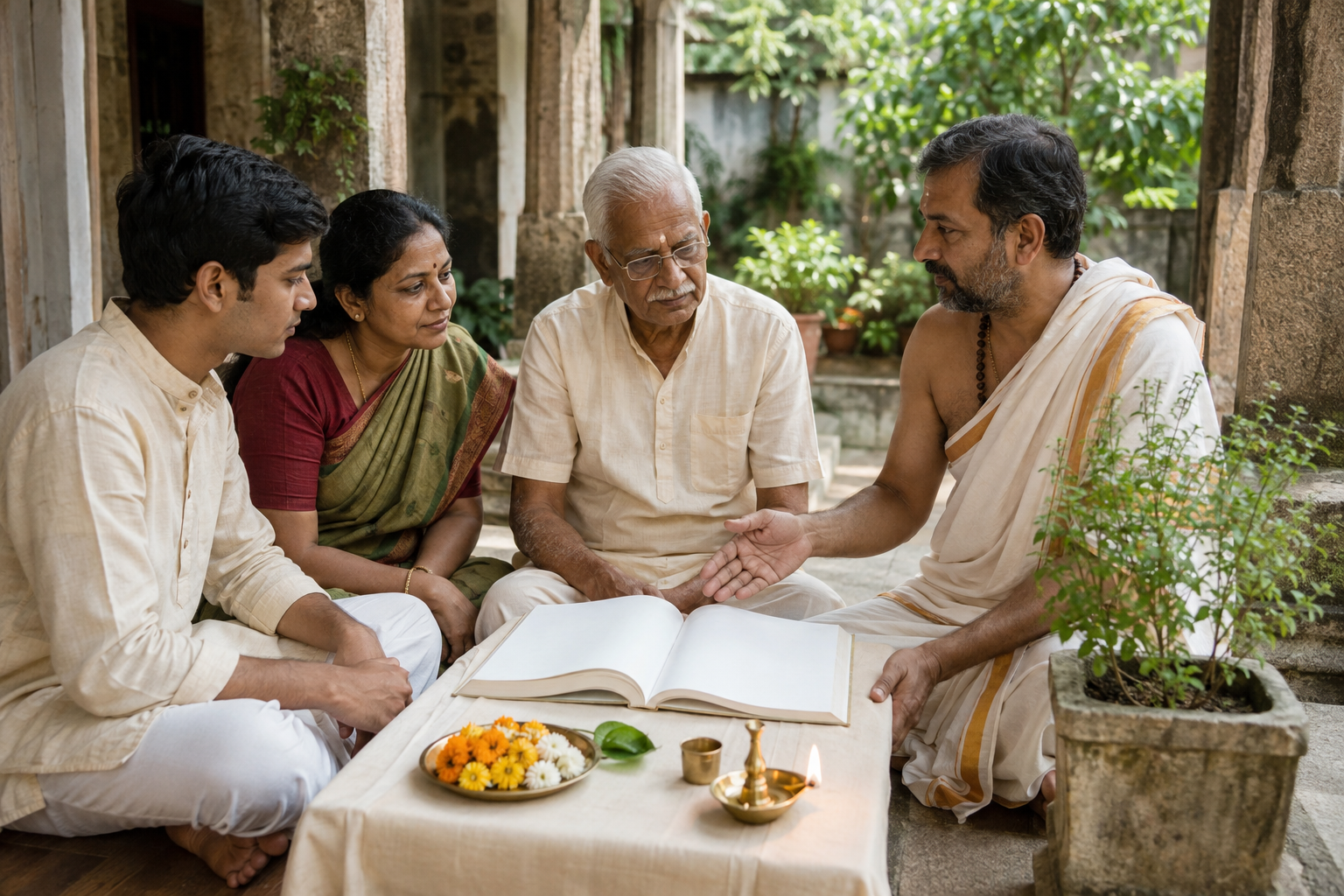
The month name by itself does not settle the observance. Hindu calendars differ by regional convention, and the applicable date can also depend on the panchanga used in your location. A date copied from another region may not answer the question for your household.
- Begin with your household practice. Ask whether parents, grandparents, or another knowledgeable relative remember an arogya vow in either month. Record the name, tithi, food rule, worship, and method of completion separately; memory often preserves one element while losing another.
- Check the panchanga your community actually follows. Do not combine the date from one calendar, the food rules from another, and the mantra from a third. That produces a new observance while giving it the appearance of an inherited one.
- Ask a qualified religious guide precise questions. Request the intended tithi, the wording or purpose of the sankalpa, the expected form of upavasa, the relevant worship, and the proper parana, or completion of the fast. A broad question such as “How do I do Arogya Vrata?” may receive an answer for Magha when you are asking about Bhadrapada or Ashwin.
- Name a personal vow as personal. If no fixed rite applies, say plainly that you are undertaking an arogya sankalpa during the chosen month according to your capacity. That is clearer than claiming a uniform rule for all Hindus.
- Write down what you followed. Keep the calendar name, tithi, location, instructions, and person consulted together. Next year, you will have a traceable practice rather than another round of guesswork.
This process also prevents a common mistake: silently transferring Magha Arogya Saptami rules into Bhadrapada or Ashwin. Similar names do not establish identical dates, deities, mantras, food restrictions, or completion rites.
Build the vrata around a sankalpa you can actually keep
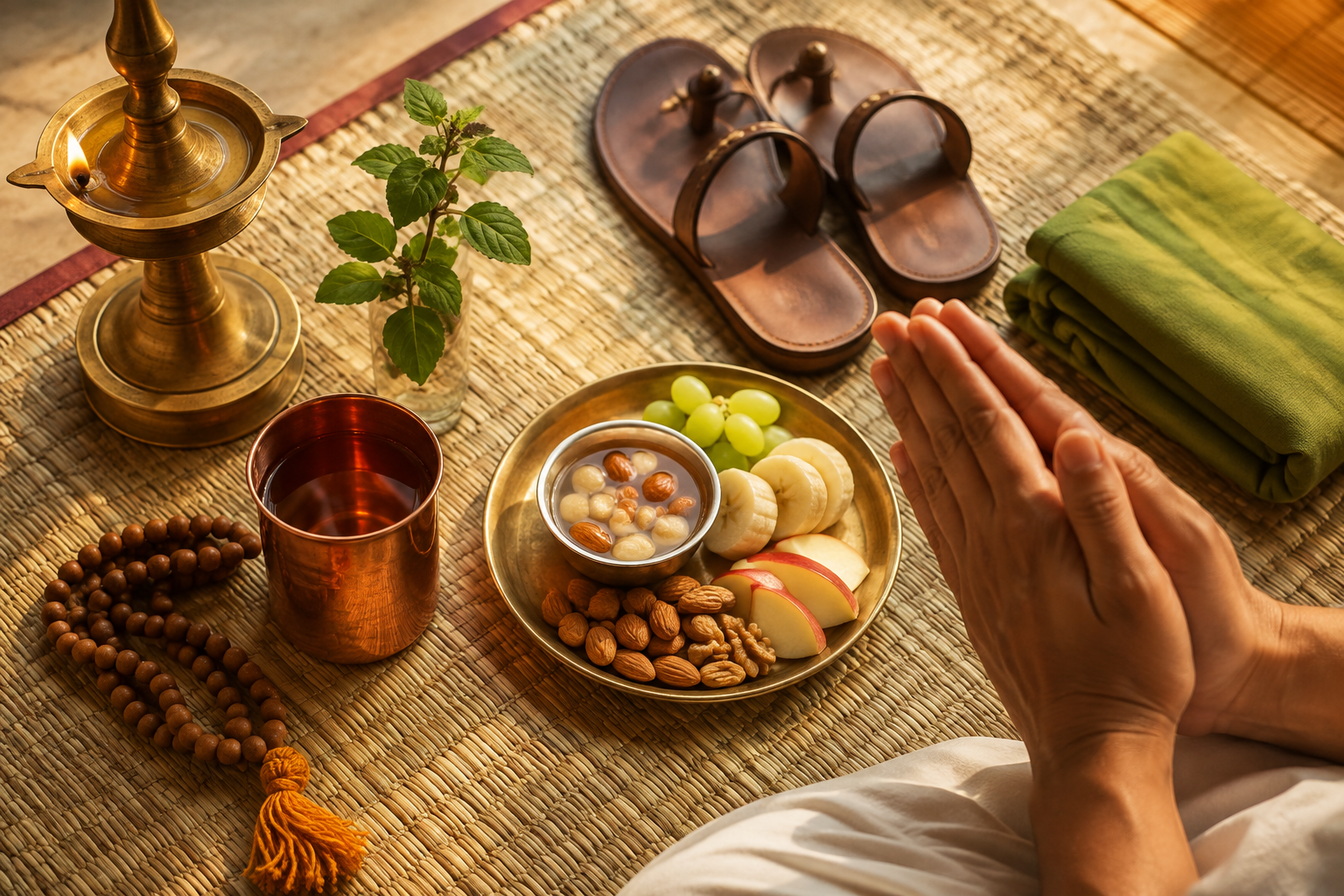
A vrata is more than an accidentally missed meal. Its strength lies in a deliberate promise, a defined discipline, and faithful completion. Decide the boundaries before you begin; do not keep making the vow harsher during the observance because the original commitment suddenly feels too modest.
If your tradition does not prescribe a fixed formula, you can use a simple statement of intent in your own language. For example: “During Bhadrapada, I undertake this discipline according to my capacity so that health may support clear thought, right conduct, and the fulfilment of dharma.” This is an example of plain-language intent, not a canonical mantra.
Define four parts of the commitment:
- Purpose: connect health to dharmic responsibility rather than appearance, punishment, or anxiety about the body.
- Restraint: follow the food rule received from your tradition, or choose a safe and modest discipline if the vow is personal. A simpler diet, restraint from a habitual indulgence, or a non-food vrata may be more appropriate than complete abstinence.
- Positive practice: pair restraint with prayer, japa already authorised in your tradition, dana, seva, or another constructive discipline. Do not invent a supposedly mandatory mantra or deity merely because the vow concerns health.
- Completion: decide whether the commitment applies on one instructed day or across a stated period, and know how you will conclude it. If a formal parana has been prescribed, follow that guidance.
Keep the purpose visible throughout the vrata. A modest promise kept with attention is more coherent than an impressive restriction abandoned halfway through or pursued recklessly.
Do not let a vow for health damage your health
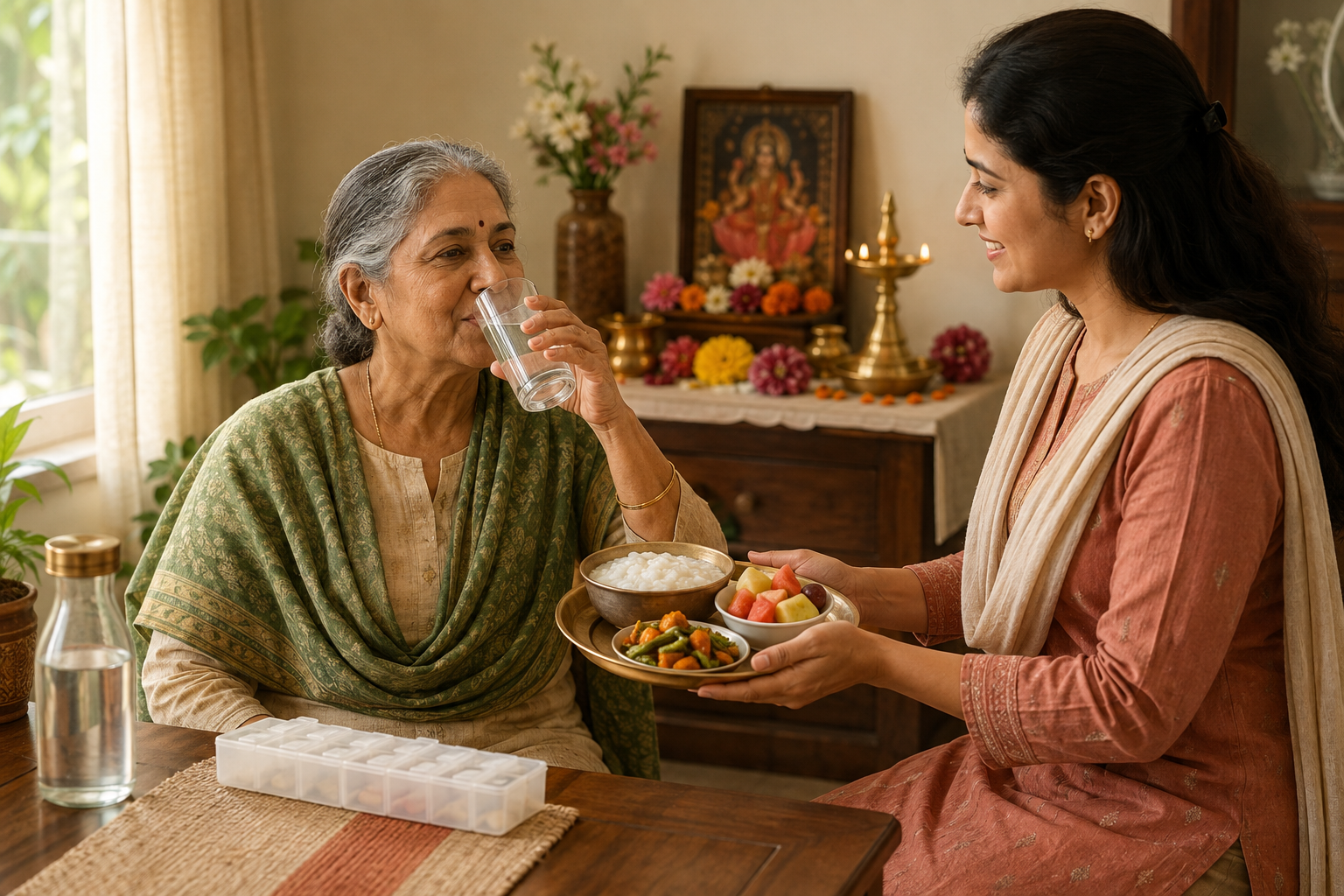
Fasting is a religious discipline, not a substitute for medical care. It can affect hydration, blood sugar, nutrition, and the timing or absorption of medicines. Do not stop a medicine, skip a required dose, or alter its schedule solely to preserve a fast. Ask the clinician who manages the treatment whether any adjustment is safe; when it is not, adapt the vrata instead.
Do not improvise a food or water fast for a child, during pregnancy or breastfeeding, in frail old age, during an acute illness, after a history of disordered eating, or when a medical condition is affected by food, fluids, or medication timing. A clinician familiar with the person’s condition should determine what is safe. A religious guide can then help shape an appropriate alternative.
A non-food vrata can preserve the deliberate restraint at the heart of the observance. Depending on your tradition and capacity, that could mean renouncing a habitual indulgence, setting aside additional time for prayer, keeping a steadier sleep routine, or undertaking dana or seva. Present these as personal disciplines unless your sampradaya specifically prescribes them.
If fasting causes fainting, confusion, chest pain, severe weakness, persistent vomiting, or inability to take fluids, end the fast and seek prompt medical help. Continuing through a dangerous symptom does not turn preventable harm into spiritual discipline. If ending the fast raises a ritual concern, protect health first and then ask your religious guide how the vow should be completed.
When the observance ends, return to your usual eating pattern gently instead of compensating with an unusually large meal. The aim is steadiness, not a cycle of deprivation and excess.
Key takeaways
- A health-oriented vrata in Bhadrapada or Ashwin can be meaningful without being presented as a universally fixed Arogya Saptami rite.
- The formally named Arogya Vrata is most closely associated with Magha and is also observed in some contexts during Margashirsha.
- Use your family tradition, sampradaya, local temple, and applicable panchanga to settle the tithi and ritual procedure.
- If no prescribed rite applies, make an honest personal sankalpa with a clear purpose, defined limits, a constructive practice, and a planned completion.
- Never change medical treatment to accommodate a fast. Choose a safer or non-food form of vrata when abstaining from food or water could cause harm.
Before Bhadrapada or Ashwin begins, write down exactly what you intend to observe and who supplied each ritual detail. One careful conversation with a trusted religious guide, followed where necessary by medical advice, will give you a more faithful and sustainable vrata than a collection of disconnected online instructions.
References
