
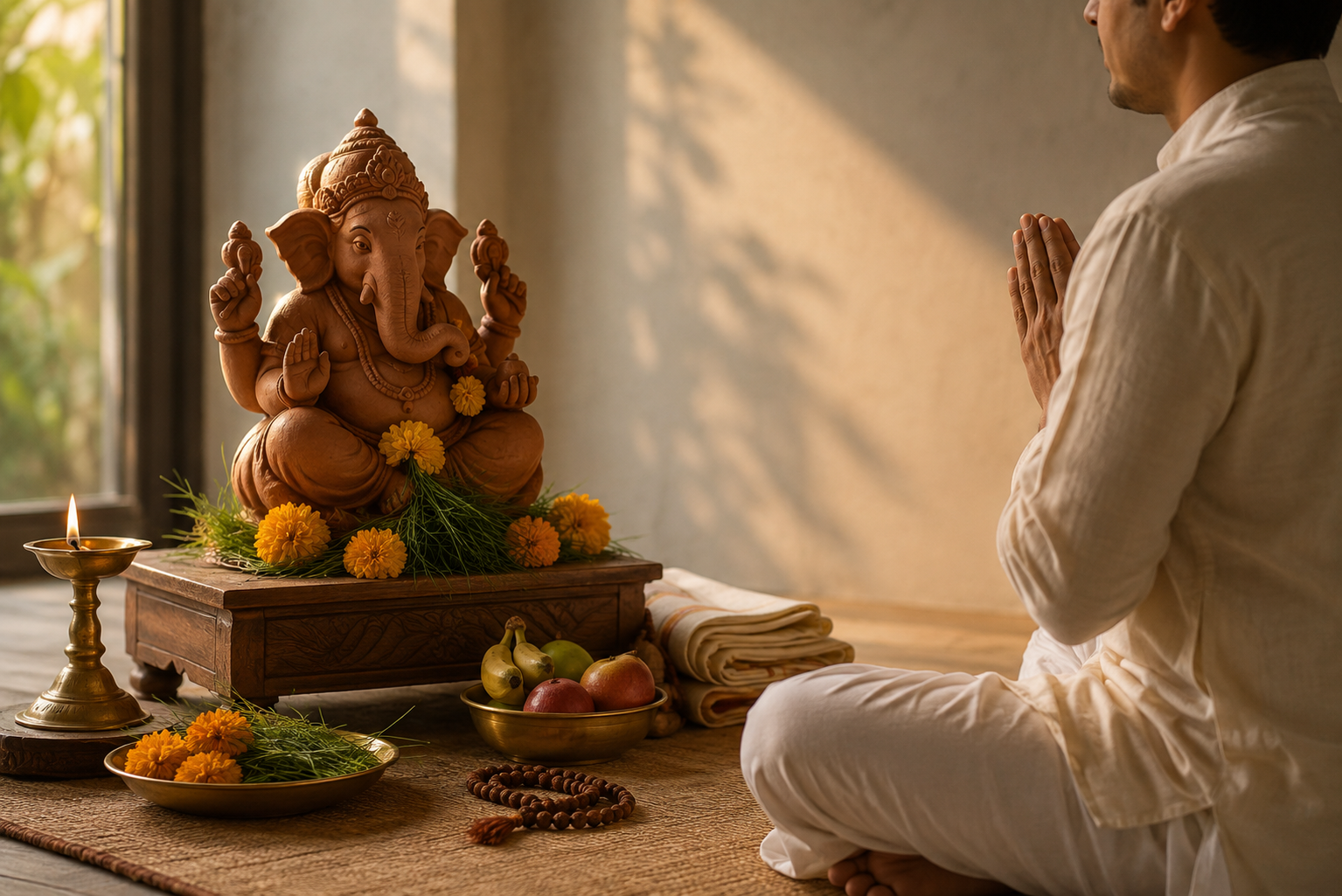
You may be ready to take Ganapati Deeksha and still be unsure which rules truly belong to it. That uncertainty matters. A deeksha is carried by a clear sankalpa and steady observance, not by collecting the strictest practices you can find.
Before you begin, identify one tradition, confirm its instructions, and decide whether you can keep them alongside your health and existing duties. That preparation will do more for the integrity of your vow than adding austerities after it has started.
Begin with one tradition and a written sankalpa
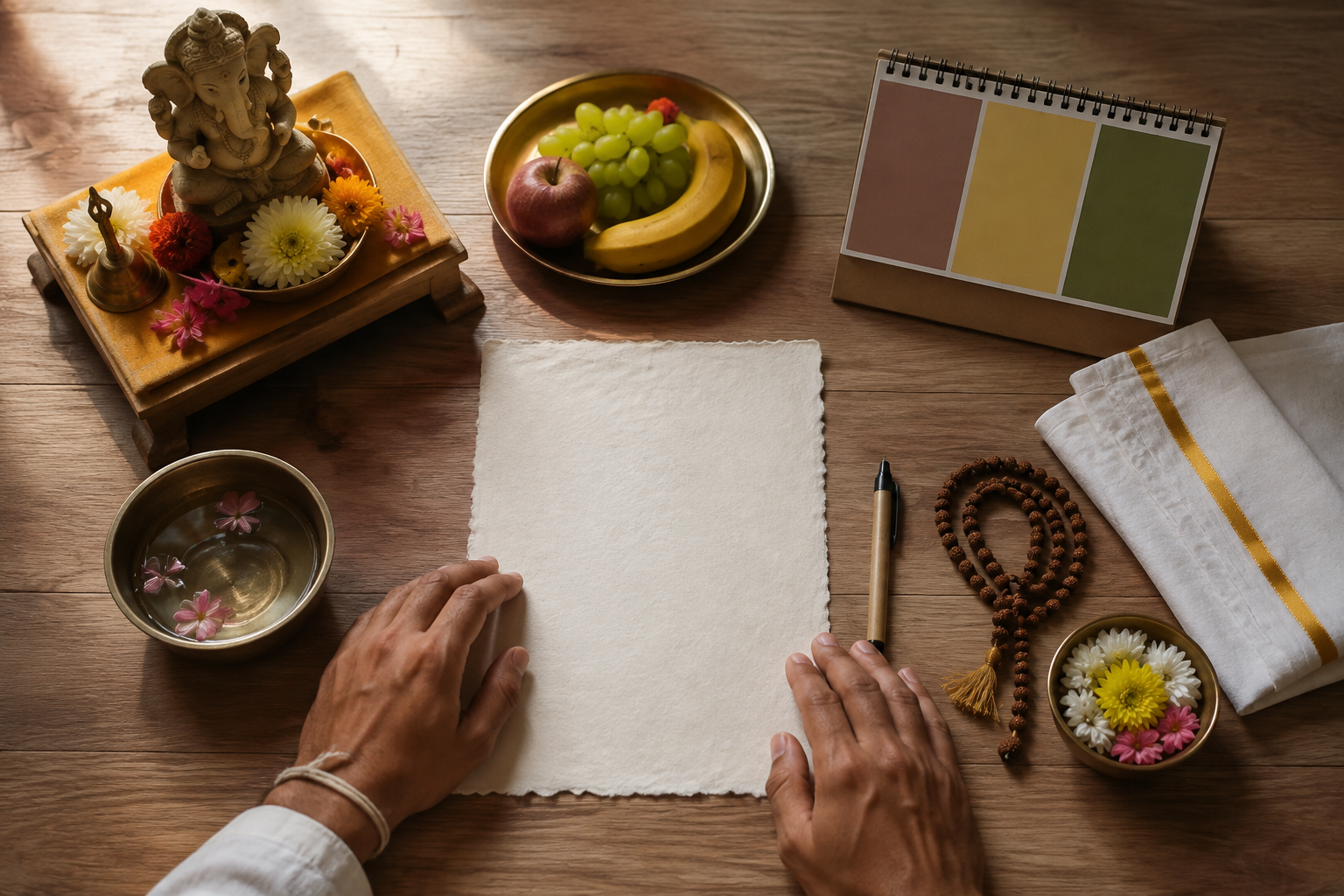
Ganapati Deeksha is a bounded devotional commitment to Sri Ganapati. Its discipline may involve daily worship, rules of conduct, dietary restraint, distinctive clothing, temple attendance, or other practices. The important word is may: there is no single checklist that can replace the temple, guru, priest, or family paddhati under which you receive the vow.
Prominent centres associated with Ganapati Deeksha include the Swetharkamula Ganapati Temple in Kazipet, Warangal, Telangana, and the Varasiddhi Vinayakaswamy Temple at Kanipakam. If you are following either temple’s tradition, obtain the rules from that temple or from a priest who actually knows its practice. Do not combine instructions from several traditions merely because each is labelled Ganapati Deeksha.
Ask these questions before making the sankalpa:
- Which form of Ganapati Deeksha am I taking?
- What are the exact beginning and completion dates, and how is the first day counted?
- Who formally gives the deeksha, and are initiation, a mala, particular clothing, or other visible observances prescribed?
- Which daily puja, nama-japa, mantra, aarti, or temple attendance is required?
- What rules apply to food, bathing, dress, sleep, grooming, footwear, work, and travel?
- What should I do after an accidental lapse, illness, family emergency, or unavoidable missed observance?
- Which act formally completes the vow, and must it be performed at a particular temple?
Write the answers on one page under three headings: required, recommended, and local custom. That distinction prevents a helpful recommendation from gradually becoming an invented command. It also gives you something definite to follow when memories, opinions, and forwarded messages begin to conflict.
Choose among the four forms by capacity, not prestige
The four forms named in this tradition are Ardha Mandala Ganapathi Deeksha, Mandala Ganapathi Deeksha, Shodasha Deeksha, and Ekadasha Deeksha.
- Ardha Mandala Ganapathi Deeksha
- Mandala Ganapathi Deeksha
- Shodasha Deeksha
- Ekadasha Deeksha
Do not turn those names into a timetable from memory. Confirm the precise duration, the initiation day, the closing day, and the local method of counting with the authority guiding you. A familiar name does not guarantee that every temple follows an identical calendar or concluding procedure.
The longest available form is not automatically the right form for you. A vow should require discipline, but it should not depend on pretending that work, caregiving, health, or unavoidable travel will disappear. A shorter form kept with attention and honesty is better than a longer commitment undermined by constraints you knew about before beginning.
Use this decision sequence:
- Mark every fixed obligation that will fall within the possible observance period, including travel, examinations, work shifts, medical appointments, and family duties.
- Tell the priest or guide about those obligations plainly. Do not hide a difficulty in the hope that enthusiasm will solve it later.
- Ask which forms are appropriate for a first observance and which can be kept within your actual circumstances.
- Receive the exact calendar and rules for the chosen form.
- Make the sankalpa only after you understand what you are promising.
Once the choice is made, stop comparing your deeksha with someone else’s. Duration, clothing, public visibility, and the number of outward restrictions are poor measures of another person’s devotion.
Turn the received rules into a workable daily rhythm
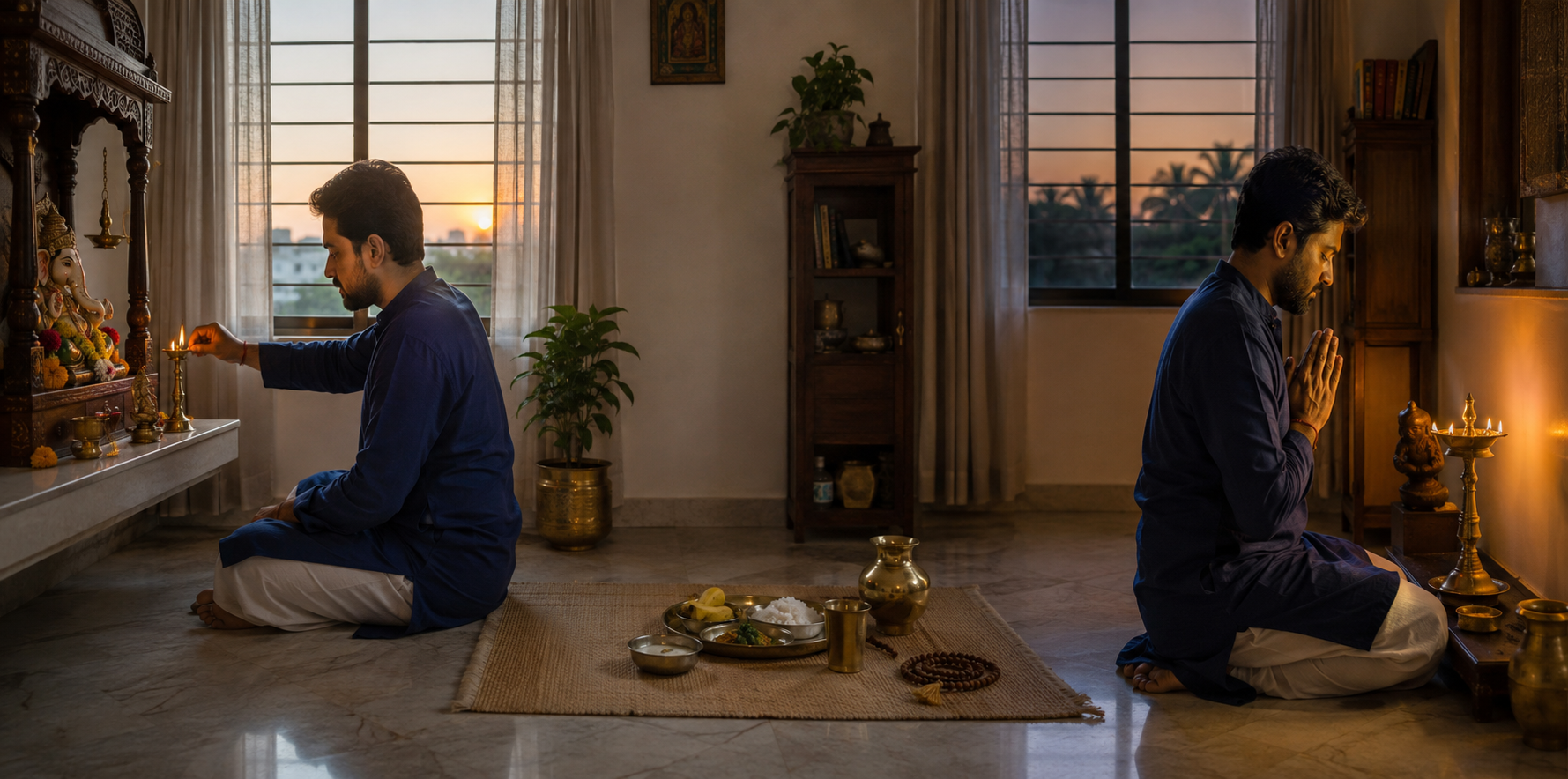
A rule that exists only in conversation is easy to misremember. Convert your instructions into a one-page observance sheet before the first day. It should contain:
- Calendar: the initiation date, every specially designated day, and the formal completion date.
- Morning practice: the required preparation, worship, recitation, and approximate time you must reserve.
- Daytime boundaries: the food, dress, conduct, travel, and workplace rules you were actually given.
- Evening practice: the required worship or recitation and the latest practical time for completing it.
- Contingency: the person to contact and the instruction to follow if illness, delay, or an accidental lapse occurs.
- Completion: the place, worship, materials, and arrangements required to close the vow properly.
Prepare the household logistics before day one. Establish a clean place for worship, assemble only the required materials, plan food that fits the instructions, tell affected family members about your schedule, and arrange necessary temple visits. These are ordinary tasks, but leaving them unresolved forces you to make religious decisions while tired or hurried.
Keep the ritual core exactly as taught. If you were not given a mantra count or an elaborate puja, do not manufacture one from unrelated online fragments. Ask your guide for a simple, appropriate daily practice. More complexity is not automatically more devotion, especially when it obscures the discipline you actually undertook.
The ethical side of deeksha should remain visible even when no ritual is taking place. Watch your speech, anger, consumption, promises, and treatment of other people. If special clothing attracts attention while your conduct becomes irritable or self-important, the outer sign is no longer serving the inner discipline.
A small daily record can help without turning worship into scorekeeping. At night, note whether the required practices were completed and whether anything needs to be reported to your guide. Record facts, not spiritual rankings. The purpose is honesty and continuity, not competition.
Plan for lapses, health needs, travel, and completion
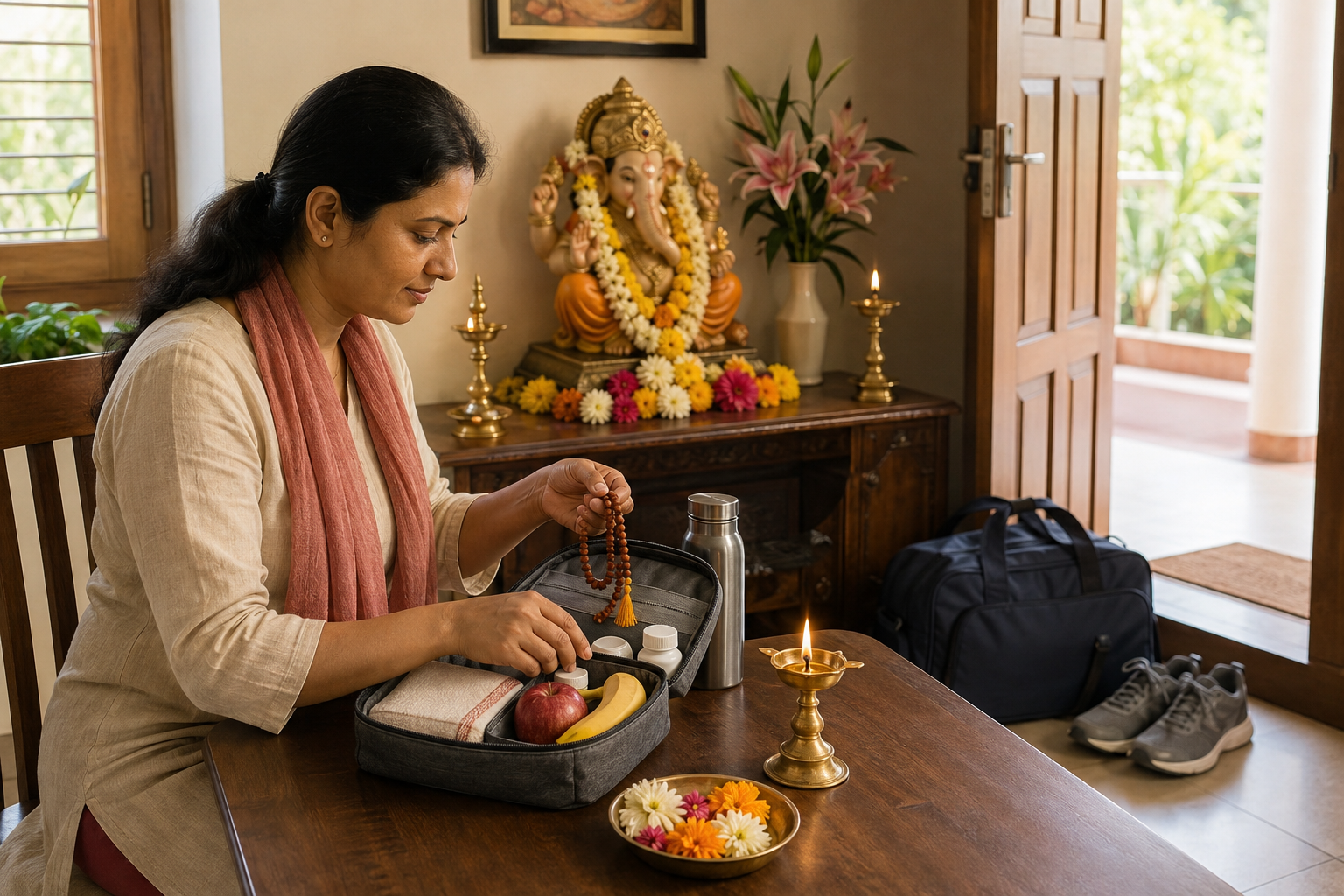
A missed time, work journey, or illness is harder to handle when you have never asked what your tradition requires. Settle the correction procedure before taking the vow. Ask specifically what to do if:
- a required practice is completed late or missed unintentionally;
- travel prevents access to the usual worship space;
- illness changes your ability to bathe, fast, stand, sit, or visit the temple;
- medication or medically necessary food conflicts with an ordinary dietary schedule;
- a family emergency interrupts the day’s routine;
- a rule is broken accidentally rather than deliberately; or
- you cannot reach the expected place of completion on the planned day.
Use the correction you are given. Do not impose an extreme fast, double a mantra count, restart the entire observance, or declare the vow ruined unless the responsible guide instructs you to do so. Improvised severity can replace repentance with panic.
Do not stop prescribed medicine, skip medically necessary nourishment, or continue a fast that is making you unwell merely to preserve the appearance of strictness. If you have a health condition, are pregnant, or have a history that makes fasting unsafe, settle suitable adjustments with a qualified clinician and your religious guide before the sankalpa. This is not a choice between health and devotion; it is part of choosing an honest form of discipline.
Work and family obligations also need advance planning. If the observance affects your clothing, meal times, travel, or availability, tell the relevant people before it begins. Deeksha should deepen reliability in your existing dharma, not become a last-minute explanation for duties you could have arranged responsibly.
Finally, establish what formally ends the vow. Ask where the concluding worship occurs, what materials are needed, whether any worn item is removed or returned, and what offerings or temple arrangements are expected. Reserve the time and transport early. Do not assume that reaching the apparent last evening automatically completes every part of the observance.
Key takeaways
- Follow one temple, guru, priest, or family paddhati instead of combining attractive rules from several traditions.
- Confirm the exact duration and calendar of Ardha Mandala, Mandala, Shodasha, or Ekadasha Deeksha before making the sankalpa.
- Choose the form you can keep faithfully within your real health, work, travel, and family responsibilities.
- Write down the daily practice, restrictions, lapse procedure, and completion rite on one page.
- Never invent a harsher correction for a lapse or sacrifice necessary medical care to maintain an appearance of austerity.
- Measure the observance by steadiness, honesty, self-restraint, and proper completion rather than public display.
Your next step is not to buy more ritual items. Contact the temple or priest whose tradition you intend to follow, ask the practical questions above, and prepare your written rule sheet. Once the sankalpa is made, leave comparison behind and keep the discipline you actually received, quietly and completely.
References
