
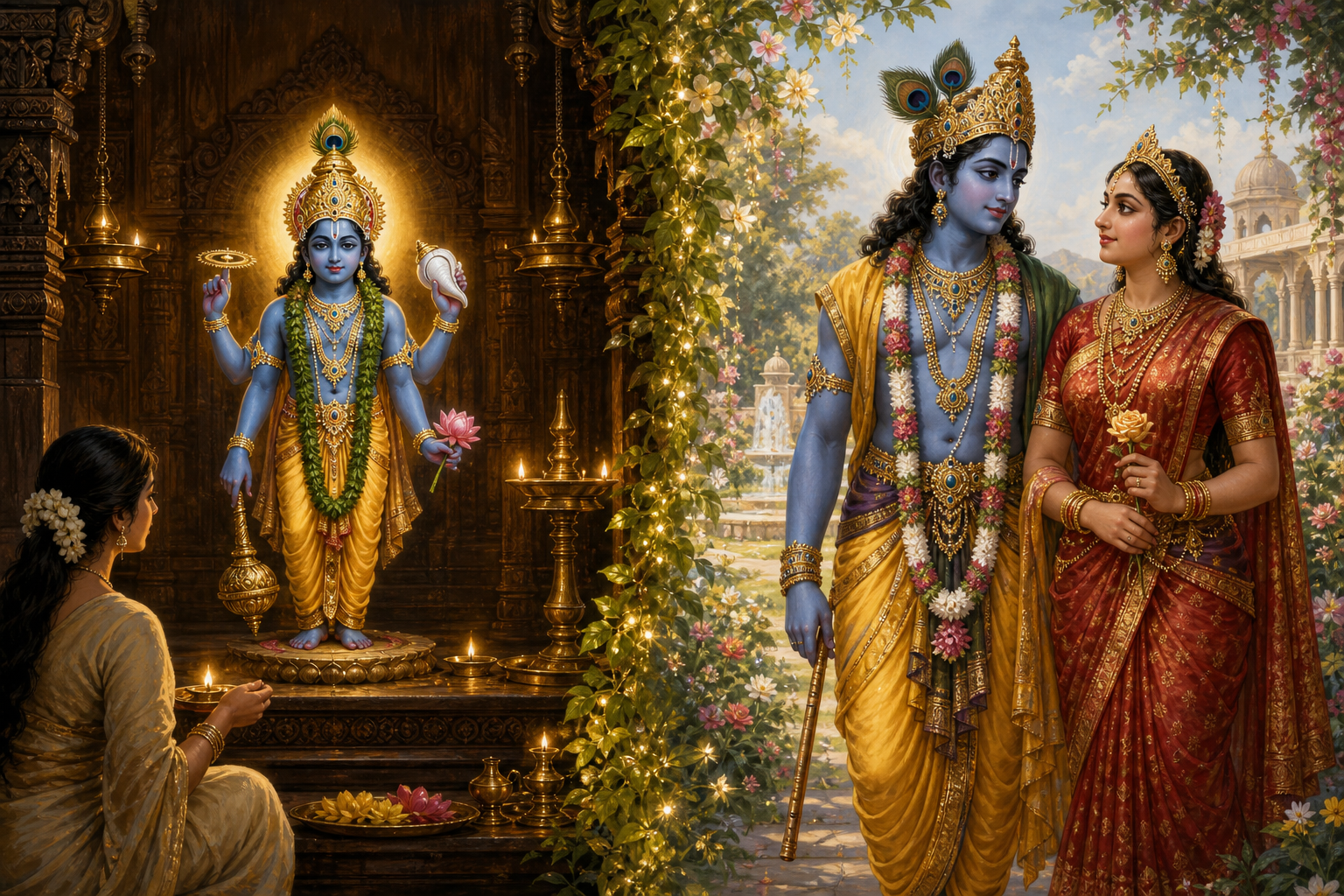
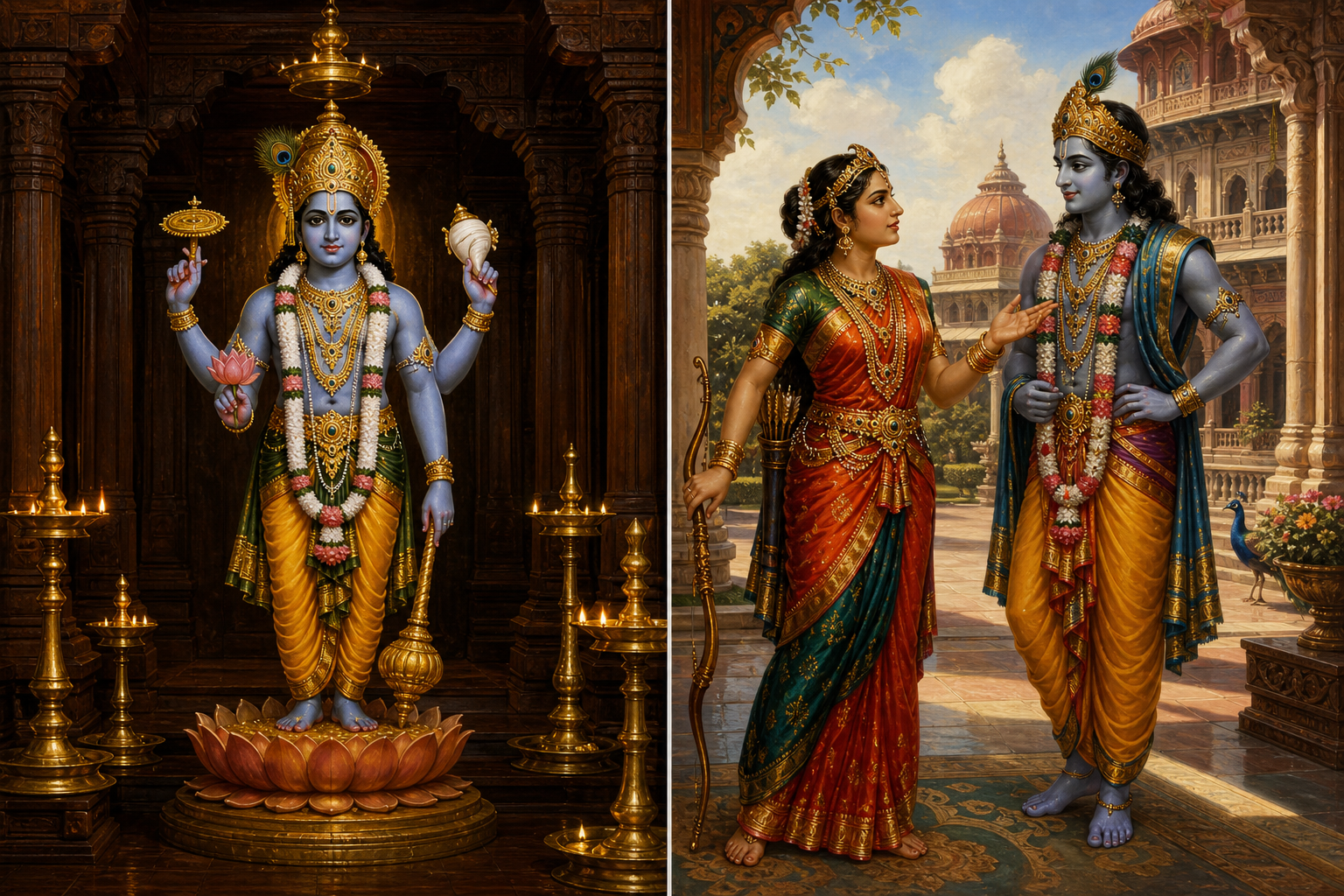
If you found Guruvayurappan beside Satyabhama in a list of Krishna traditions, the names may look as though they belong to the same category. They do not. Guruvayurappan is Krishna approached in child form and rooted in a particular temple tradition; Satyabhama is Krishna’s consort and an active figure within his sacred narratives.
Once you make that distinction, each tradition becomes easier to understand. Guruvayurappan shows how the devotee approaches Krishna through tenderness, trust, and place. Satyabhama shows how divine relationship can involve identity, initiative, partnership, and decisive action.
Begin with the distinction that prevents most confusion
Guruvayurappan is the child form of Krishna worshipped as the principal deity of the Guruvayur temple in Kerala. The temple stands in Guruvayur in Kerala’s Thrissur district, and the devotion is especially associated with Kerala.
Satyabhama is Krishna’s consort, the daughter of the Yadava king Satrajit, and is revered as an incarnation of Bhu Devi, the Goddess of Earth. She is therefore not another name or form of Krishna. She is a distinct divine personality who relates to Krishna and participates in his deeds.
The categories matter. A form of Krishna tells you how Krishna is being encountered in a particular devotional setting. A consort’s narrative tells you who stands in relationship with Krishna and how that relationship acts in the world. Confusing the two removes the temple and devotional mood from Guruvayurappan while reducing Satyabhama to a label attached to Krishna.
When you encounter an unfamiliar name in Krishna devotion, ask three questions before assigning a meaning:
- Is this a name or form of Krishna?
- Is this a person in relationship with Krishna?
- Is the name rooted in a particular temple, region, or sacred narrative?
Those questions give you the theological grammar of the tradition. They also prevent every Krishna-related name from being flattened into a generic list of deities.
Guruvayurappan brings together Krishna, childhood, and place
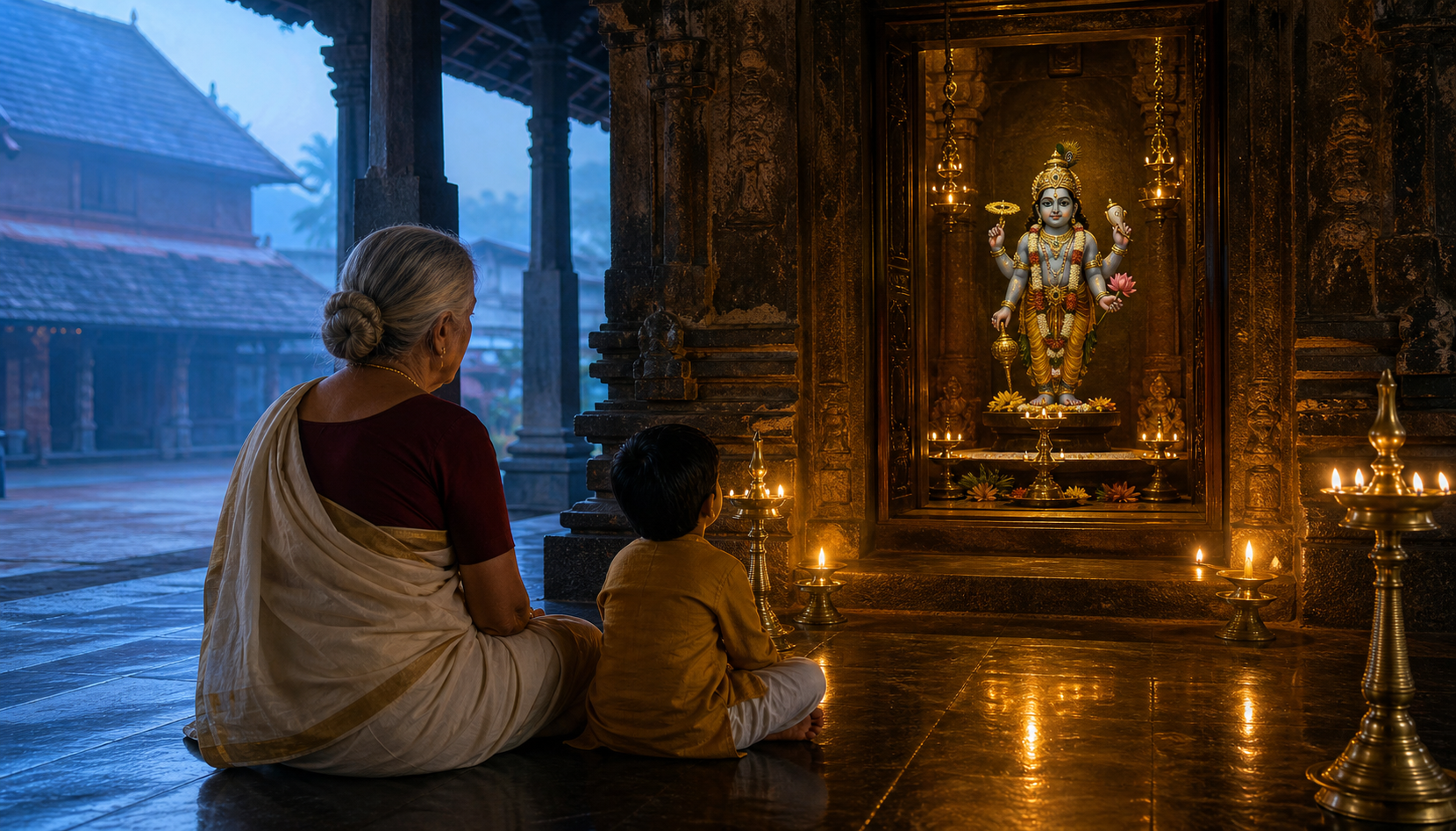
At Guruvayur, you are not being asked to contemplate Krishna only as an abstract divine principle. You meet Krishna through the devotional nearness of the child. Childhood changes the devotee’s posture: awe remains, but tenderness, care, trust, and loving attention can stand beside it.
This does not make Krishna less divine. The child form makes divine presence approachable through a relationship that many devotees immediately understand. Power appears without remoteness. Reverence becomes intimate without becoming casual.
The temple setting is equally important. Guruvayurappan is not a detachable character name whose meaning is complete without Guruvayur. The sacred place gives the form a living regional home and gives devotees a concrete center for worship. If you discuss Guruvayurappan while omitting Guruvayur, you have left out part of what the name communicates.
Keep three levels together whenever you explain or contemplate Guruvayurappan:
- Krishna is the divine identity.
- The child form establishes the devotional relationship.
- Guruvayur supplies the temple and regional setting in which that relationship is cultivated.
This is also a useful way to approach temple traditions more generally. A local name need not indicate a separate god. It can identify the distinctive way a community knows, addresses, and draws near to the divine.
Satyabhama must be read as a participant, not an ornament
Satyabhama’s identity as Krishna’s consort is only the beginning of her story. Two episodes make her agency impossible to ignore: she helps Krishna defeat the demon king Narakasura, and she brings the wish-fulfilling Kalpavriksha from heaven with Krishna’s help.
Notice the verbs. Satyabhama helps, participates, and brings. Krishna is neither absent nor irrelevant, but Satyabhama is not merely standing beside him while the action belongs to someone else. The relationship is active.
Her identification with Bhu Devi adds another layer. Earth is not presented merely as scenery beneath divine action. Earth is personified and enters the relationship as a divine presence. Without forcing every episode into a single interpretation, you can still notice that Satyabhama joins questions of earthly responsibility to the deeds of Krishna.
When reading a Satyabhama narrative, resist reducing her to one personality trait. Instead, follow the structure of the episode:
- What does Satyabhama choose or initiate?
- Where does she act directly?
- How does Krishna assist her rather than erase her agency?
- What changes when you remember that she is revered as Bhu Devi?
That method keeps the focus on what she actually does. It is especially useful when a retelling treats a divine consort as background decoration while giving all initiative to the male deity.
Key takeaways
- Guruvayurappan and Satyabhama are not two equivalent forms of Krishna.
- Guruvayurappan is Krishna approached in child form as the principal deity of the Guruvayur temple in Kerala.
- Satyabhama is Krishna’s consort, the daughter of Satrajit, and is revered as an incarnation of Bhu Devi.
- Her participation in the defeat of Narakasura and the bringing of Kalpavriksha makes her agency central to understanding her.
- Approach Guruvayurappan through the relationship between child Krishna, devotee, and temple; approach Satyabhama by attending to identity, partnership, and action.
The shared lesson is relational, not merely biographical
Krishna devotion is not only concerned with identifying who Krishna is. It also asks how you relate to him. Guruvayurappan and Satyabhama illuminate different sides of that question.
With Guruvayurappan, the relationship runs between the devotee and Krishna in child form. The emphasis falls on nearness, loving attention, and a temple-centered encounter. With Satyabhama, Krishna appears within a divine relationship whose other participant possesses her own origin, identity, and capacity to act.
One does not cancel or correct the other. They address different devotional problems:
- If Krishna feels distant, the child form makes room for intimacy without surrendering reverence.
- If a local divine name seems unfamiliar, Guruvayurappan shows why temple and region must be understood before the name is classified.
- If divine consorts appear secondary, Satyabhama’s actions require you to look again at who initiates, assists, and participates.
- If mythology seems like a sequence of wonders, the two traditions redirect attention toward the relationships those wonders reveal.
These are devotional interpretations, not a claim that every Krishna-following community must place the same emphasis on every episode. The disciplined approach is to preserve each figure’s identity and setting before drawing a spiritual lesson from it.
Carry the distinction into devotion, teaching, or study
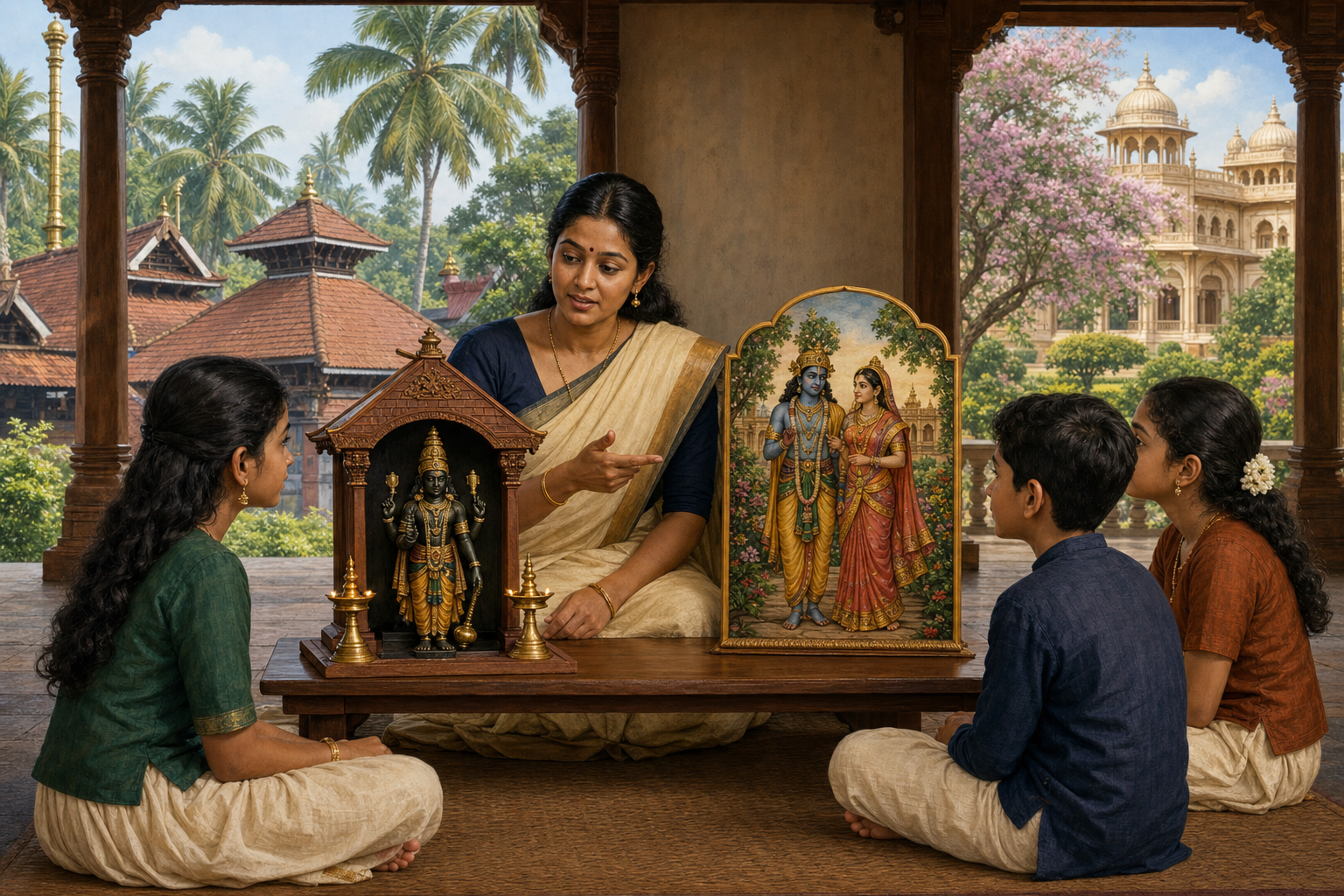
You do not need an elaborate system to engage these traditions carefully. Use four steps:
- Name the relationship first. Say that Guruvayurappan is Krishna in child form and that Satyabhama is Krishna’s consort. Do this before discussing symbolism.
- Keep the setting attached. Remember Guruvayur temple and Kerala when speaking about Guruvayurappan. Remember Satyabhama’s identity as the daughter of Satrajit and as Bhu Devi when reading her deeds.
- Track agency through verbs. In Satyabhama’s narratives, notice who helps, brings, chooses, and acts. This is more reliable than assigning her a convenient personality label.
- Let your reflection match the tradition. Guruvayurappan invites attention to tenderness, trust, and sacred place. Satyabhama invites reflection on partnership, responsibility, and action within divine relationship.
The next time you meet either name, pause before merging it into generic Krishna lore. Identify who is being encountered, where that encounter is rooted, and what relationship the narrative reveals. That small discipline turns recognition into understanding and makes devotion more attentive.
References
- Hindu Pad – Guruvayurappan | Story of Lord Guruvayurappan | Why Krishna called ‘Guruvayurappan’
- Hindu Pad – Satyabhama | Satrajiti | Legend of Krishna & Satyabhama
