
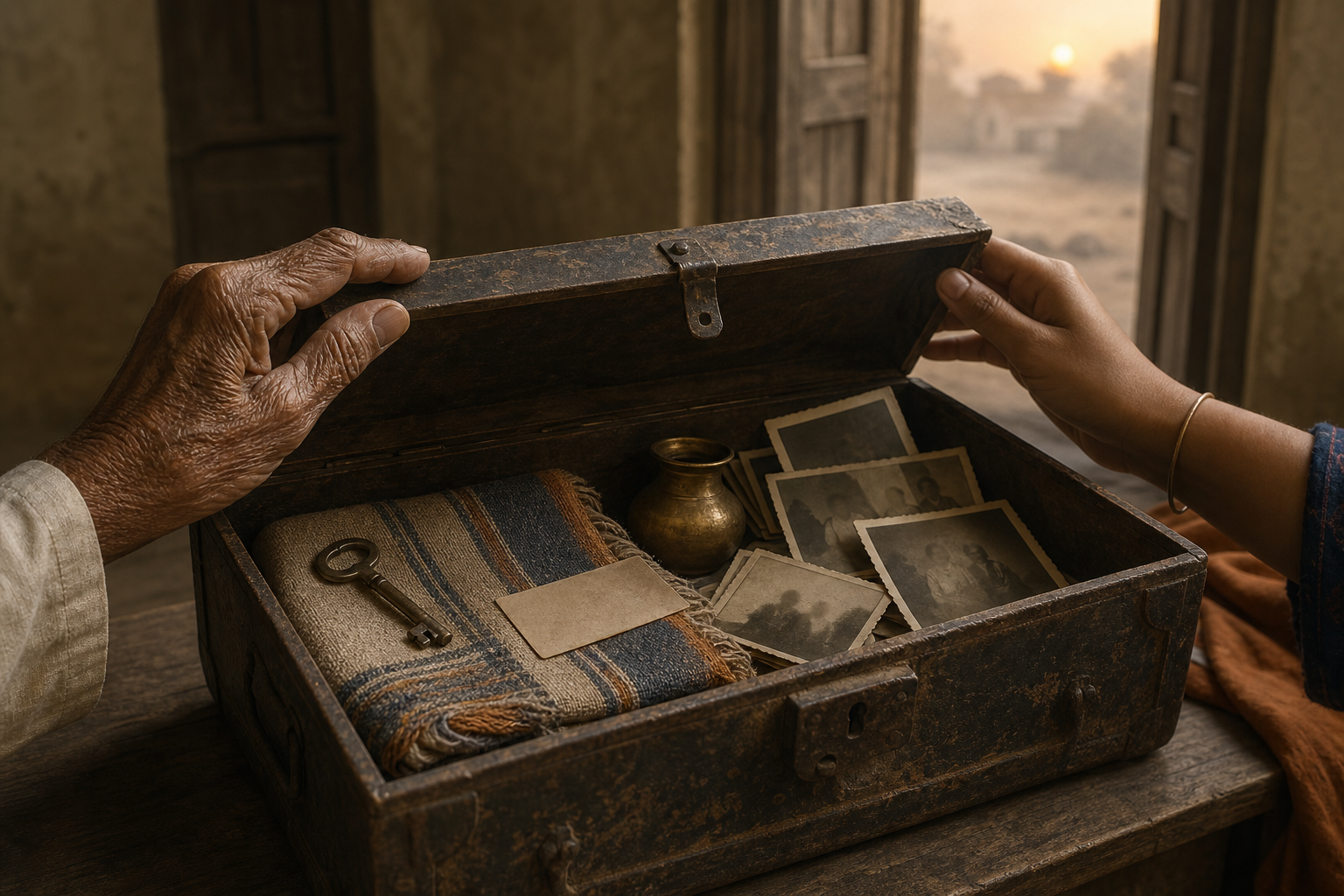
You may have inherited Partition as a place-name, a missing photograph, a repeated warning, or a silence that no one in the family explains. If you want to preserve that inheritance, your problem is practical: how do you tell the truth without reducing it to a slogan, and how do you honour suffering without passing on hatred?
Begin by refusing the false choice between celebrating freedom and remembering rupture. Bharat marks Independence Day on August 15. Yet Partition in 1947 divided Punjab and Bengal, separated long-established communities, and forced millions from their homes and ancestral lands. National maturity requires room for both realities.
Civilisational memory begins before the border
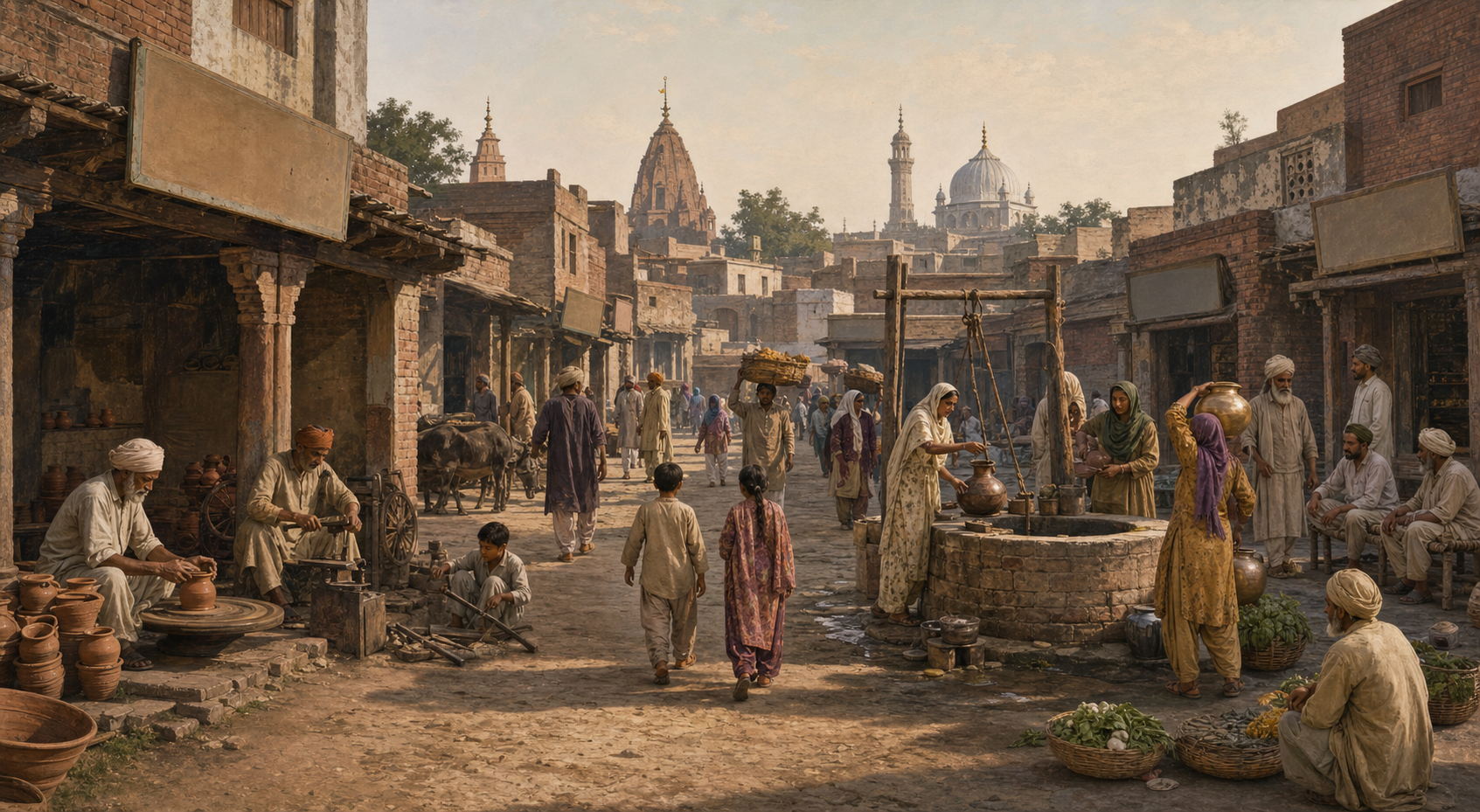
A political map tells you which state governs a place. A civilisational map tells you why that place matters. The distinction is essential. Present sovereignty and inherited belonging are related, but they are not the same claim.
Civilisational consciousness is the ability to connect a family story to a larger cultural world: language, sacred geography, local customs, institutions, occupations, festivals, routes of pilgrimage, and relationships between neighbouring communities. Partition changed jurisdiction and compelled migration. It did not make the life before the border unreal.
This is also why civilisational remembrance should not be reduced to a proposal about present-day borders. You can preserve the memory of an ancestral town without pretending that current political realities do not exist. You can acknowledge an older cultural continuity without turning every family recollection into a territorial demand. Keeping those categories distinct makes the historical case stronger, not weaker.
Start your own record with concrete fields rather than a grand declaration:
- The ancestral village, town, district, and province, using the names remembered by the family.
- Alternative spellings and later place-names, clearly labelled rather than silently substituted.
- The languages and scripts used at home, in worship, at school, and in trade.
- The family’s livelihood, neighbourhood, and community institutions.
- The temple, gurdwara, monastery, shrine, market, river, road, or landmark that anchored local life.
- The practice, object, recipe, prayer, song, manuscript, or craft that survived migration.
This turns an abstract claim about civilisation into evidence of continuity. It also prevents Partition from becoming the beginning of the story. A displaced family had a complete social world before it became a refugee family.
Preserve family testimony without polishing it into legend
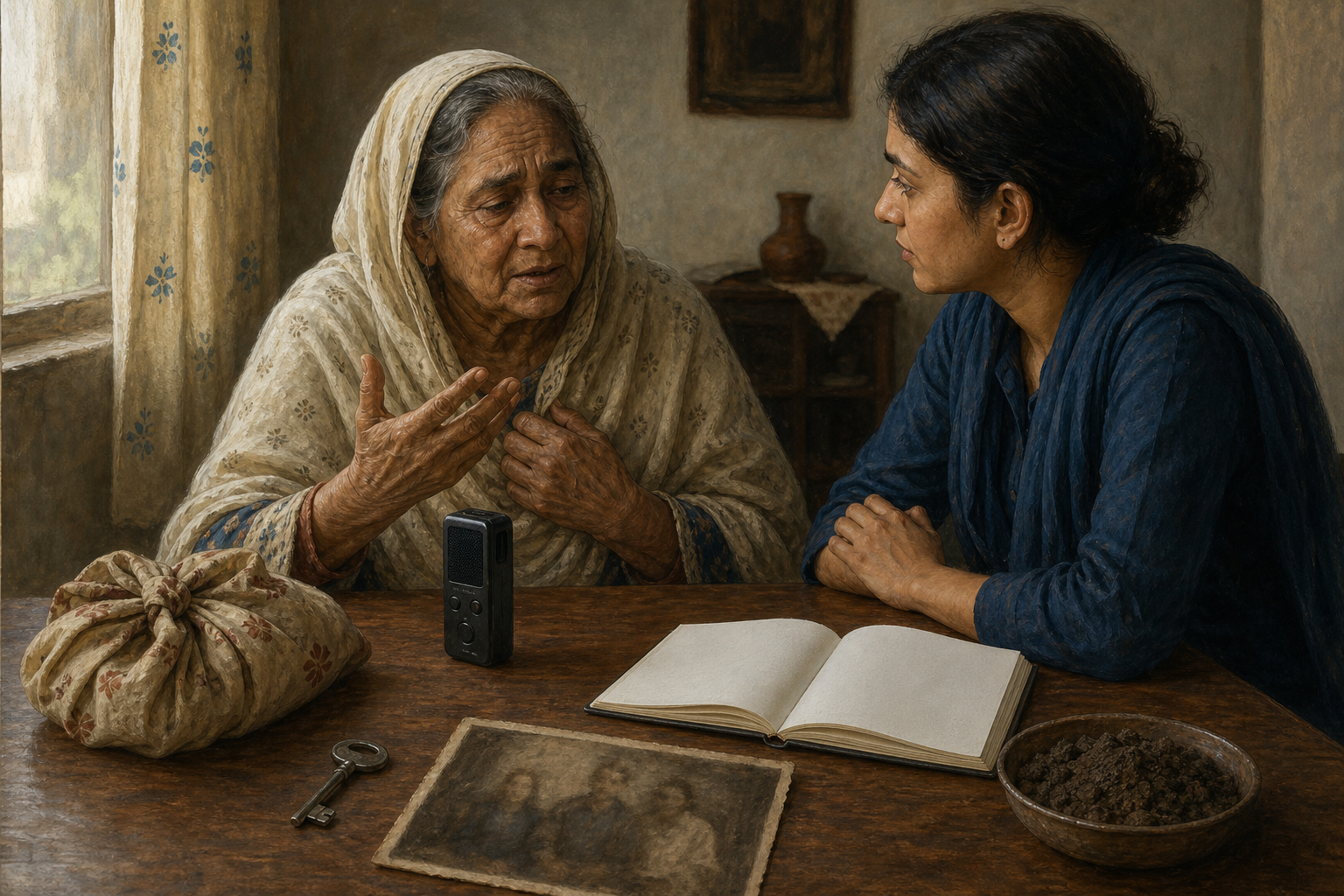
Family memory is indispensable, but it is not automatically precise. A witness may remember the colour of a doorway while being uncertain about a date. A story heard in childhood may later feel like a personal recollection. Several relatives may remember the same departure differently. None of this makes oral testimony worthless. It means you must preserve its layers.
- Ask permission before recording. Explain who will hear or read the account. Let the narrator refuse a question, stop the conversation, or restrict access to part of the recording.
- Begin with ordinary life. Ask about the house, school, work, worship, neighbours, food, journeys, and local language before asking about violence. Civilisational memory is not only a catalogue of death; it is a record of the life that was interrupted.
- Anchor the account to place. Ask the narrator to identify the locality on a map or sketch the route from home to familiar landmarks. Record historic and current place-names separately.
- Reconstruct the sequence. Ask what changed first, what the family knew at the time, who decided to leave, what they carried, which route they took, and where they first found safety. Do not supply answers inside the question.
- Label the kind of knowledge. Mark a statement as witnessed personally, heard at the time, learned later from relatives, or interpreted in retrospect. A clean transcript can preserve these distinctions in brackets.
- Keep the original language. Preserve the audio and the exact regional wording before making a translation or edited version. Names, kinship terms, idioms, and devotional expressions often lose meaning when prematurely standardised.
- Preserve uncertainty. If two memories conflict, retain both with their attribution. Do not invent a compromise date or combine separate incidents into a smoother story.
- Create usable copies. Keep the recording, transcript, document scans, place list, and access instructions together. Use consistent file names built from the family name, narrator, place, and item type so that the archive remains intelligible to the next generation.
Treat silence with the same discipline. A refusal to discuss an episode may reflect pain, privacy, uncertainty, or a promise made within the family. It is not proof of a particular event. Record that the subject was not discussed, but do not fill the gap with an assumption.
If you are interviewing an elderly relative, do not make a complete testimony the price of preserving anything at all. A remembered address, an ancestral name, or the route of departure can be recorded now and expanded later. The smallest verified fragment is more valuable than an elaborate reconstruction no witness can support.
Teach the causal chain, not a comforting myth
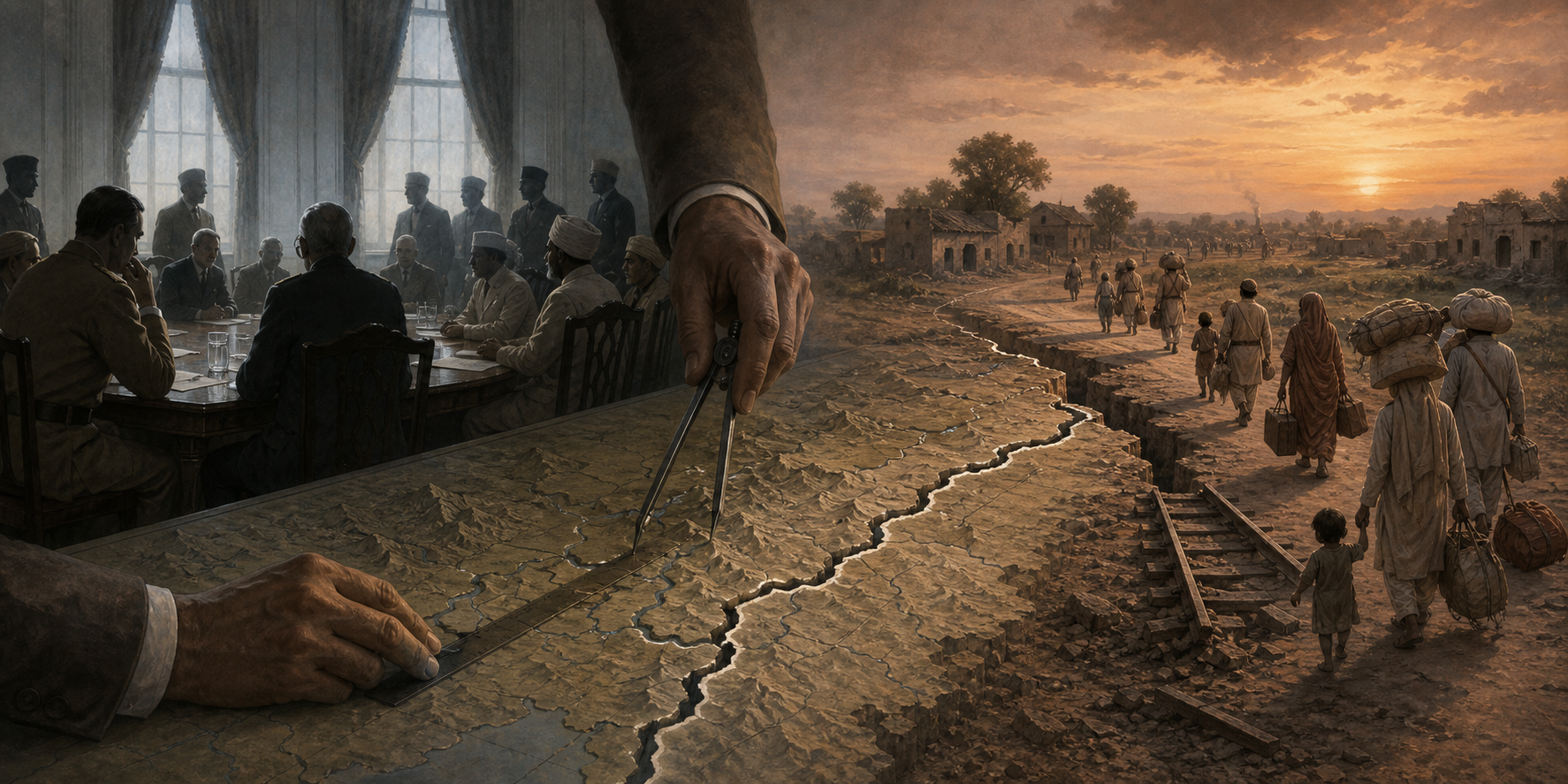
Partition becomes unusable history when it is explained either as spontaneous madness or as the inevitable outcome of timeless hostility. Both formulas remove human decisions from view. A sound account separates background conditions, political doctrines, organised mobilisation, official choices, local events, and human consequences.
The circumstances included colonial divide-and-rule policies, the Muslim League’s demand for Pakistan, the Two-Nation Theory, escalating communal politics and violence, and political choices made during the final years of British rule. That list is a framework for investigation, not permission to collapse every cause into one vague sentence.
- Structure: Ask how colonial governance categorised, represented, or separated communities.
- Doctrine: State what the demand for Pakistan and the Two-Nation Theory claimed. Do not hide an ideological proposition behind the neutral word “tension.”
- Mobilisation: Identify how political competition moved into communal mobilisation and violence.
- Decision: Examine which choices were available during the final years of British rule, who made the consequential choices, and what followed.
- Local event: Name the place, actors, action, victims, and limits of the available evidence. Do not use a provincial label as a substitute for local detail.
- Consequence: Follow the history into divided provinces, abandoned homes, migration routes, resettlement, inherited loss, and the cultural practices carried forward.
Named episodes also need their own contexts. The Direct Action Day killings in Calcutta, violence in Noakhali and Bihar, attacks and massacres across Rawalpindi and Punjab, and bloodshed accompanying mass migration were not interchangeable labels for one event. If you mention one, establish where it happened and what you can substantiate. If you cannot verify a dramatic detail, narrow the claim rather than intensifying it.
Two moral errors commonly enter at this point. One erases ideology and agency in the name of harmony. The other transfers guilt by birth to people living now. You do not have to choose between them. Name political doctrines, organisations, decisions, and perpetrators as precisely as the evidence permits; refuse collective hereditary guilt just as precisely.
Shared human suffering should widen moral concern, but it must not flatten the record. Different localities had different sequences, actors, targets, and balances of power. Respecting every victim does not require declaring every event identical. The honest question is not “Which slogan makes everyone comfortable?” It is “What happened here, who acted, what evidence supports the claim, and what remains uncertain?”
Practise remembrance as a Dharmic responsibility
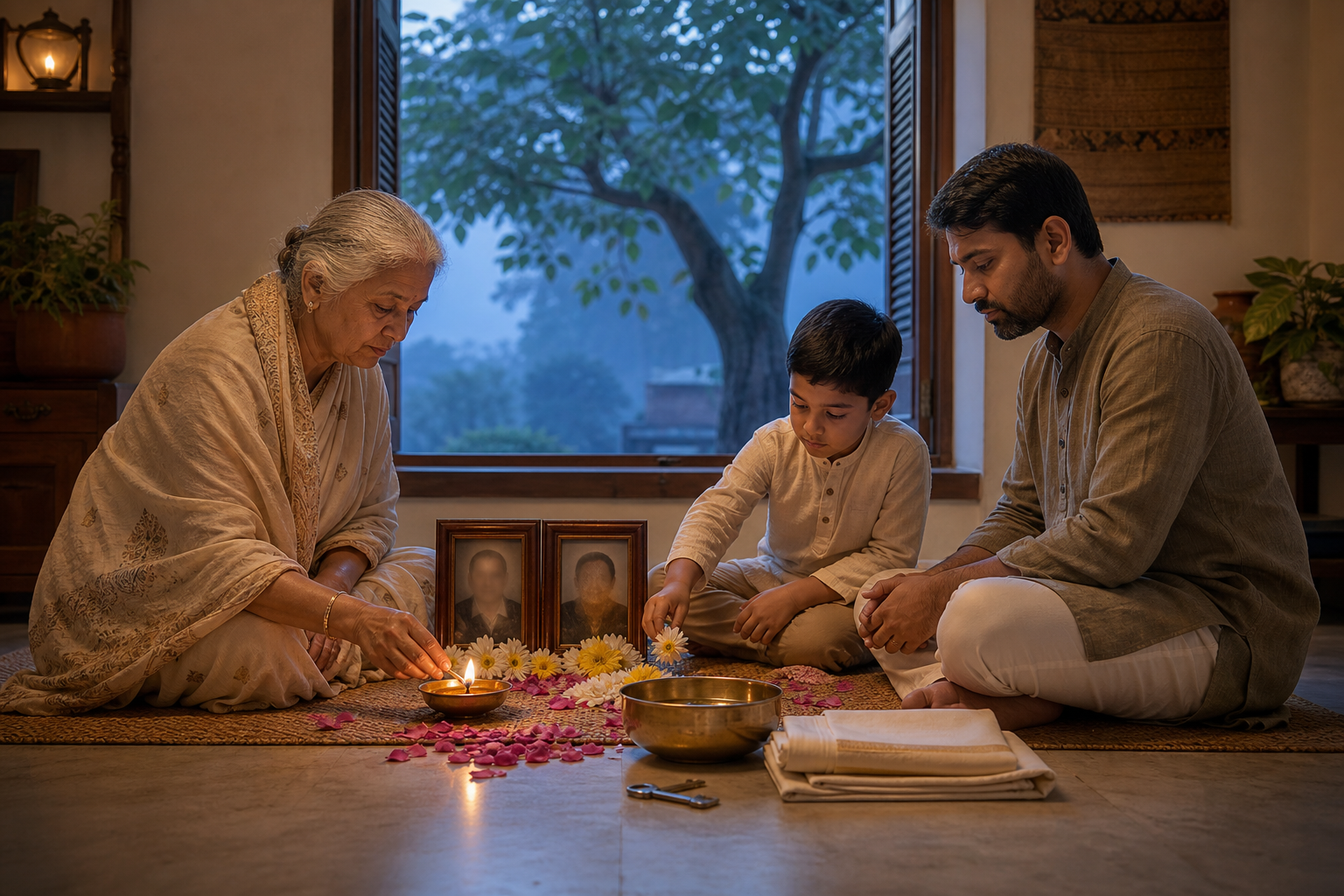
A Dharmic approach to Partition memory is neither amnesia nor revenge. It joins satya, truthful naming, with ahimsa, refusal to reproduce harm. It brings karuna to the uprooted, viveka to contested claims, and responsibility to the act of transmission. These are disciplines, not decorative Sanskrit words.
- Satya: Do not embellish a family story because the embellished version appears more heroic or more terrible.
- Ahimsa: Do not turn remembrance into permission to humiliate a living neighbour or an entire present-day community.
- Karuna: Restore the displaced person as a whole human being with work, worship, humour, skill, relationships, and hopes, not merely as a victim in a final scene.
- Viveka: Distinguish an ideology from every person associated with a religious label, a documented perpetrator from a presumed one, and evidence from inference.
- Dharma: Accept a duty to preserve truthful memory, correct falsehoods, honour the dead, support living elders, and teach descendants without recruiting them into inherited vengeance.
A household observance that joins mourning to freedom
On the eve of Independence Day, gather around an ancestral map, document, photograph, or written place-name. Speak the names of relatives and localities. Describe ordinary life before displacement. Tell the verified sequence of departure and resettlement. Mark what is uncertain. End with silence, prayer, recitation, or another practice appropriate to your sampradaya and family.
Then assign a preservation task: transcribe a recording, identify an unlabelled photograph, scan a document, confirm a place spelling, or give younger relatives a copy of the family record. On August 15, celebrate independence without pretending that freedom arrived without rupture. Mourning on the eve need not diminish the celebration; it can make gratitude less shallow.
Match the detail to the listener’s maturity. A child can learn ancestral names, places, the fact of forced displacement, and the importance of courage without being given graphic descriptions. Older listeners can be shown the evidence and taught how claims are verified. The goal is not to make the next generation afraid. It is to make them historically literate.
Check a claim before you repeat it publicly
Partition content becomes propaganda when emotional force replaces provenance. Before publishing a family account, forwarding a message, or using a story in a public commemoration, ask:
- Can the audience distinguish witnessed fact, family memory, later information, and present interpretation?
- Are the date and place known, or have we clearly said that they are uncertain?
- Have we named the relevant doctrine, organisation, decision, or actor instead of blaming an undifferentiated population?
- Have we preserved the victim’s individuality rather than using suffering as a rhetorical prop?
- Does an image, quotation, or document have a traceable origin?
- Would correcting a factual error weaken only our pride, or would it actually change the central historical conclusion?
- Does sharing this material advance memory and understanding, or is its practical purpose to provoke humiliation and retaliation?
A claim does not become safer because it supports your side. False or carelessly attributed material gives opponents an easy way to dismiss genuine testimony. Accuracy is therefore not a restraint on civilisational memory. It is one of its defences.
Key takeaways
- Hold independence and Partition in the same historical frame; celebration does not require amnesia.
- Begin with ancestral places, ordinary life, language, institutions, and surviving practices so that displacement does not become the beginning of the family story.
- In oral testimony, separate what was witnessed, heard at the time, learned later, and interpreted now.
- Teach the causal sequence from colonial policy and political doctrine through mobilisation, decisions, local violence, displacement, and inherited consequences.
- Name ideology and responsibility accurately while refusing collective guilt by birth.
- Turn commemoration into preservation by completing a concrete family-archive task each year.
If you do only one thing now, write down the exact ancestral place-name your family remembers and ask the eldest willing relative how it was pronounced locally. Add what they know, label what they do not, and preserve the original answer. Civilisational consciousness survives through such disciplined acts: a name retained, a memory tested, a practice carried, and truth handed forward without hatred.
References
