

If you were taught to see Gandhi only as a saint, criticism can feel like vandalism. If you encounter him only as the cause of every Hindu political defeat, condemnation can become just as unthinking. You do not have to choose between those two habits.
The more useful question is concrete: when Gandhi pursued Hindu-Muslim unity, who was expected to absorb its cost? That question lets you respect his role in mobilising Indians against colonial rule while examining whether Hindu restraint was sometimes turned from a moral choice into an unequal political duty.
Ask who was made responsible for unity
Unity is a goal. Restraint, concession, forgiveness and sacrifice are ways of paying for it. A serious evaluation must therefore examine not only whether Gandhi wanted communal peace, but how he distributed those burdens when peace was threatened.
The central pro-Hindu charge is that Gandhi repeatedly showed interpretive generosity toward Muslim political demands, communal sentiment and, at times, violent perpetrators, while asking Hindu victims to demonstrate restraint, forgiveness or continued commitment to unity. In this reading, Hindu suffering did not merely call for redress. It became an occasion on which Hindus were expected to prove their moral worth.
That is a grave charge, but it is more precise than saying Gandhi simply favoured one community. It concerns moral agency. One side’s conduct is explained through its grievances, fears or political circumstances; the other side is addressed as the responsible adult whose self-control must save the relationship. Even when the language is compassionate, the structure can be unequal.
You can notice this structure by asking three questions whenever a leader appeals for harmony after communal violence:
- Who committed the act that created the crisis?
- Who is being directly instructed to change, forgive or sacrifice?
- What obligation is imposed on the aggressor, and how does it compare with the obligation imposed on the victim?
If the victim repeatedly receives the clearer moral instruction, unity has begun to operate as moral asymmetry. The peaceful purpose of the appeal does not erase that imbalance.
Five episodes raise one recurring question
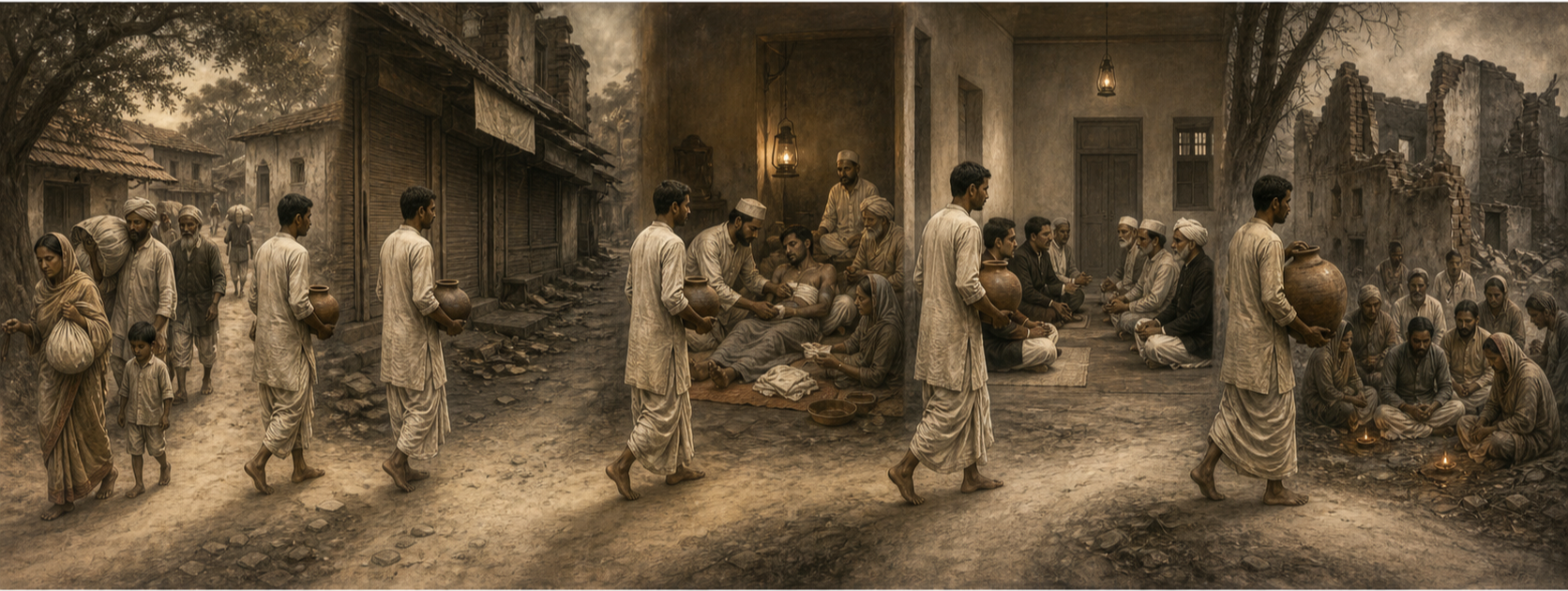
The sequence commonly placed under scrutiny runs through the Khilafat Movement, the Moplah violence, the assassination of Swami Shraddhanand, Noakhali and the Partition refugee crisis. These events are not interchangeable. They involved different actors, circumstances and forms of political responsibility. Listing them together does not prove that every dispute must have the same verdict.
They can, however, be examined through the same diagnostic question: did Gandhi’s language place a heavier burden of preserving unity on Hindus than on the people or political forces whose conduct endangered it?
- Khilafat Movement: examine the political bargain. What did cooperation require from Hindu participants, what reciprocal obligation was expected from Muslim leaders, and what happened to the alliance when those expectations diverged?
- Moplah violence: examine the moral vocabulary used after Hindus became victims. Did the language begin with the victims’ loss and the perpetrators’ agency, or did a larger political cause displace those facts?
- Assassination of Swami Shraddhanand: examine whether compassion for a perpetrator’s social or religious setting obscured individual responsibility. Explanation can add context, but it must not dissolve culpability.
- Noakhali: examine the relationship between reconciliation and protection. Calls for courage and coexistence should be judged alongside the safety, dignity and freedom of those who had suffered.
- Partition refugee crisis: examine what was demanded from people already carrying the consequences of communal rupture. A displaced person may freely choose forgiveness, but a national leader should not treat that choice as a debt owed to an ideal of unity.
This method prevents two errors. The first is hagiography: assuming that a noble intention makes every political judgement noble. The second is collective blame: turning the acts of particular leaders, organisations, crowds or perpetrators into inherited guilt for Muslims as a whole. Civilisational honesty requires precise responsibility, not indiscriminate hostility.
A pattern becomes persuasive only when it survives episode-by-episode scrutiny. For each event, identify the actor, the victim, the demand, the response and the expected sacrifice. If the same community repeatedly occupies both the victim’s position and the position of the party told to concede, the criticism of asymmetry gains force. If the evidence varies, the conclusion must vary with it.
Ahimsa cannot mean assigning suffering to someone else
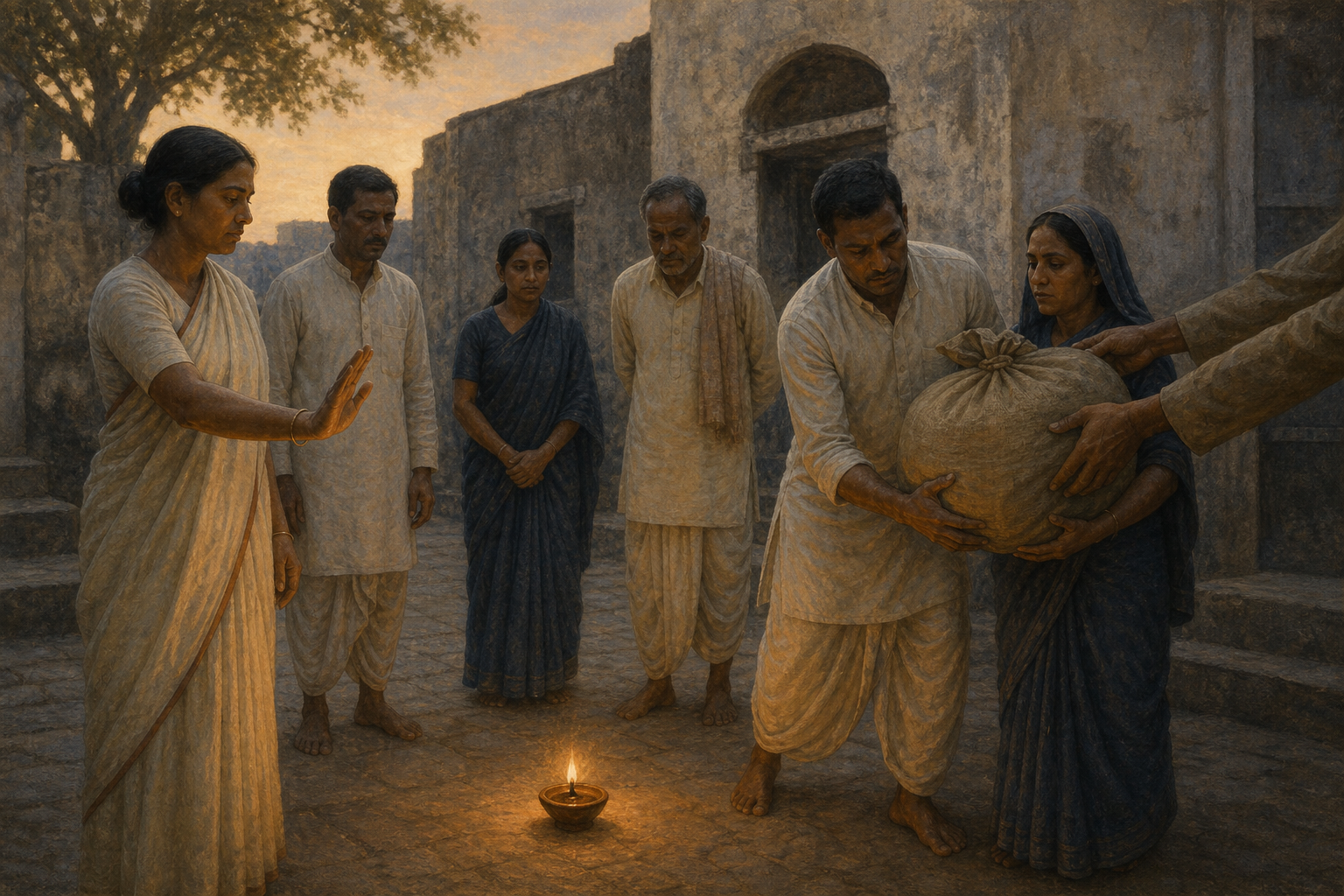
Ahimsa is most morally demanding when a person binds his or her own conduct. It becomes politically troubling when a leader effectively assigns its cost to people who have already been attacked, dispossessed or bereaved.
This distinction is essential. Voluntary self-restraint can be an act of spiritual strength. Prescribed vulnerability is something else. A Hindu may choose not to retaliate. A Hindu victim may choose forgiveness. A community may even accept a painful compromise to prevent wider bloodshed. But those choices are morally meaningful precisely because they are choices. No leader is entitled to convert them into a permanent obligation owed by the injured party.
Nor does rejecting retaliation require silence about aggression. Four different acts are often collapsed under the word peace:
- refusing revenge;
- protecting people from further harm;
- naming the perpetrator and demanding accountability;
- rebuilding relations after truth and security have been established.
These acts can support one another. A politics of non-retaliation does not require a politics of non-recognition. You can oppose collective vengeance and still insist that violence be named plainly, victims be protected first, and perpetrators be held responsible.
Forgiveness also differs from exoneration. Forgiveness concerns what a victim chooses to release. Exoneration concerns whether the wrongdoer is treated as blameworthy. Reconciliation concerns whether a damaged relationship can be rebuilt. Political rhetoric becomes coercive when it asks for reconciliation before acknowledging guilt, or praises forgiveness while evading protection and accountability.
This is where the language of sacrifice needs particular care. Tapasya chosen for oneself can deepen moral authority. Suffering prescribed for another person can conceal a failure of leadership. The test is not how elevated the vocabulary sounds. The test is whether the person paying the price consented to it and whether that price produces safety, reciprocity and justice.
Use a six-part test instead of choosing a Gandhi camp
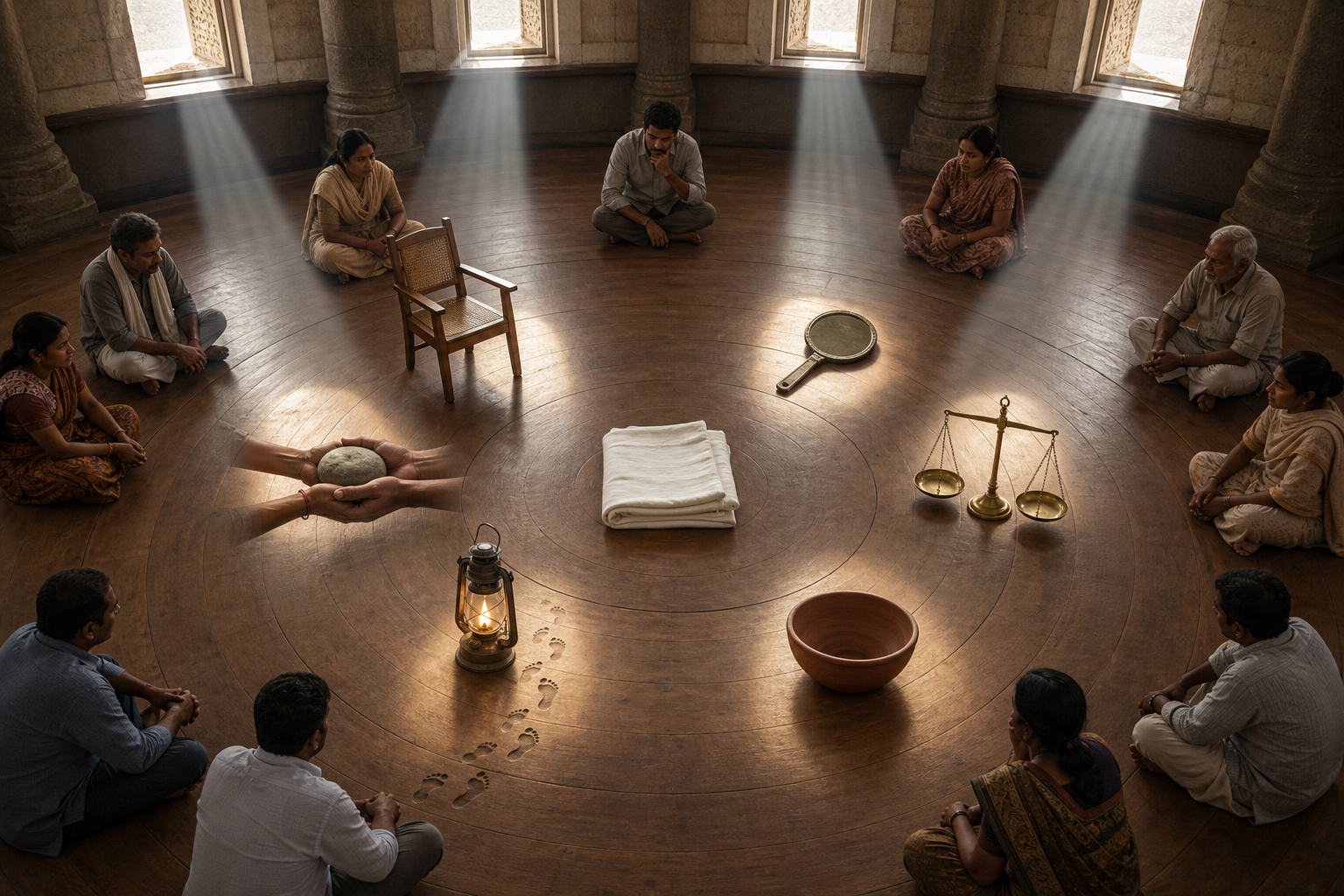
You can evaluate a disputed Gandhi episode without beginning from either reverence or hostility. Keep a simple record with four columns: actor, victim, demand and burden. Then apply these six tests.
- Recover the complete moral instruction. Do not isolate the most generous or most objectionable sentence. Identify what Gandhi asked each party to do, what conduct he condemned and what remedy he supported.
- Name actors precisely. Replace broad labels such as “Hindus” or “Muslims” with the actual category supported by the evidence: political leaders, religious authorities, perpetrators, victims, refugees, local residents or the wider community. Precision prevents both apologetics and communal generalisation.
- Locate the burden. Write down who was told to remain peaceful, who was asked to surrender a demand, who was expected to forgive and who was promised protection. Moral asymmetry often becomes visible only when the verbs are placed next to the affected groups.
- Test reciprocity. Ask whether restraint was required from everyone under the same standard. If one party received contextual explanations while the other received categorical duties, note the difference rather than smoothing it away.
- Separate intention from consequence. Gandhi may have intended to prevent further violence or preserve national unity. That intention matters, but it does not by itself establish that his intervention treated victims justly or created sound incentives.
- Compare the available alternatives. The choice was not necessarily between Gandhi’s preferred appeal and vengeance. Protection, evacuation, public condemnation, negotiation, legal accountability and later reconciliation occupy different places in a political response. Ask which of them were possible before accepting a forced choice between unilateral suffering and communal catastrophe.
The fifth test is especially important. Political judgement must consider foreseeable incentives. If leaders learn that violence produces concessions while victims are praised for absorbing the loss, moderation becomes a burden carried mainly by the already moderate. A call for peace can then reward the very conduct it hopes to restrain.
At the same time, outcome alone cannot reveal motive. A failed policy is not proof of malice, and a morally serious leader can make grave errors. The responsible judgement may therefore be mixed: Gandhi’s intention could have been national reconciliation, his personal commitment to nonviolence could have been sincere, and his allocation of moral burdens could still have been unjust. Those propositions do not cancel one another.
A Dharmic politics of unity must begin with justice

Gandhi’s stature should not make him unavailable for criticism. Nor should criticism require erasing his historic importance. A mature civilisation can remember a leader’s service, study his discipline, reject his errors and refuse to turn national memory into either worship or demolition.
For a pro-Hindu politics, the harder task is to build a better standard. It is not enough to reverse the asymmetry and excuse Hindu wrongdoing. A Dharmic standard must apply accountability to the actual wrongdoer, protection to the actual victim and restraint to every community under the same rule.
- Put victims before symbolism. Restore safety, dignity and the freedom to speak before asking injured people to perform harmony for a national audience.
- Demand reciprocal restraint. A peace compact should state what every party must stop doing and what happens when the compact is violated.
- Do not confuse contextual understanding with acquittal. Grievances may help explain conduct. They do not make attacks on uninvolved people morally acceptable.
- Keep forgiveness voluntary. Public institutions may facilitate reconciliation, but they should not stigmatise victims who are not ready to forgive.
- Reject collective guilt. Responsibility belongs to identifiable people and organisations. Communal identity is not evidence of complicity.
- Preserve memory with moral clarity. Teach achievements and failures together. A truthful account strengthens national judgement because it prevents old habits from returning under sacred names.
Unity secured by suppressing one community’s pain is fragile. It teaches the injured that belonging requires silence and teaches political aggressors that someone else will be asked to restore peace. Durable unity asks more of everyone: truth from the public record, restraint from every side, accountability from wrongdoers and protection for those at risk.
Key takeaways
- The decisive question is not whether unity was desirable, but who was repeatedly asked to pay for it.
- Ahimsa is a voluntary discipline; it becomes coercive when leaders prescribe vulnerability to victims.
- The Khilafat Movement, Moplah violence, Swami Shraddhanand’s assassination, Noakhali and the Partition refugee crisis must be tested individually before they are treated as one pattern.
- Rejecting retaliation is compatible with protection, truthful naming and accountability.
- Criticism of Gandhi does not justify collective blame against Muslims, just as Gandhi’s stature does not place his political choices beyond examination.
- A just standard applies the same moral rule to every community and places the immediate burden on the actor responsible for the wrong.
The next time you hear an appeal for communal harmony, make three notes before accepting its moral framing: who acted, who suffered and who is being asked to concede. If the last two positions repeatedly belong to the same people, question the formula. Unity worth defending does not require Hindu suffering to disappear from the moral account.
References
