
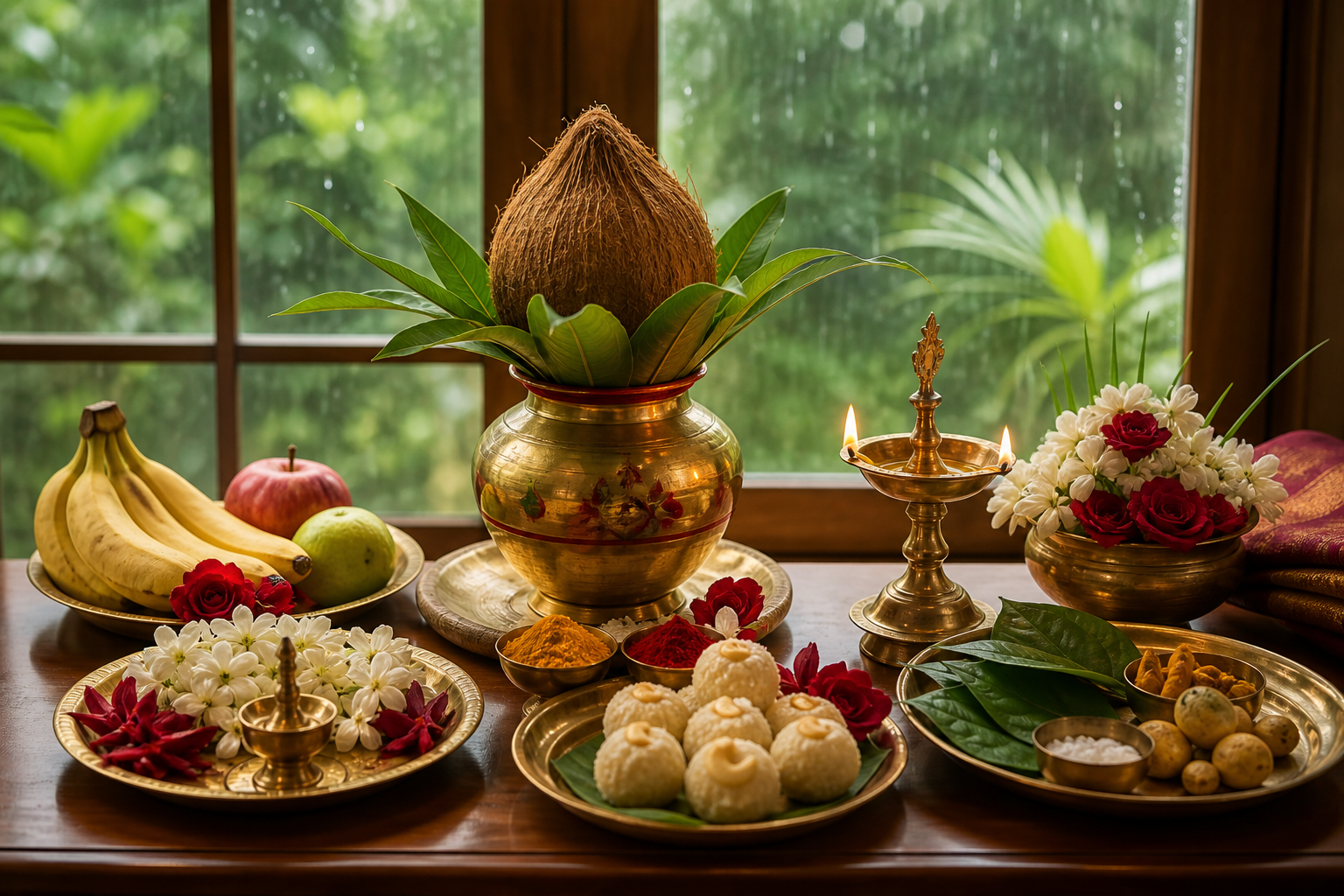
If you want to observe your family’s Shravana Friday vrata, the difficult part may not be the puja itself. You may be wondering whether Gowri or Lakshmi should be worshipped, which Friday applies where you live, and what to do when nobody preserved the complete procedure.
You do not have to invent certainty. First identify the regional and family tradition behind the name. Then confirm the dates through the calendar your community actually follows. If the detailed family method is unavailable, you can offer a simple, coherent Lakshmi puja without pretending that it is the only correct form.
Start by identifying the vrata your family means
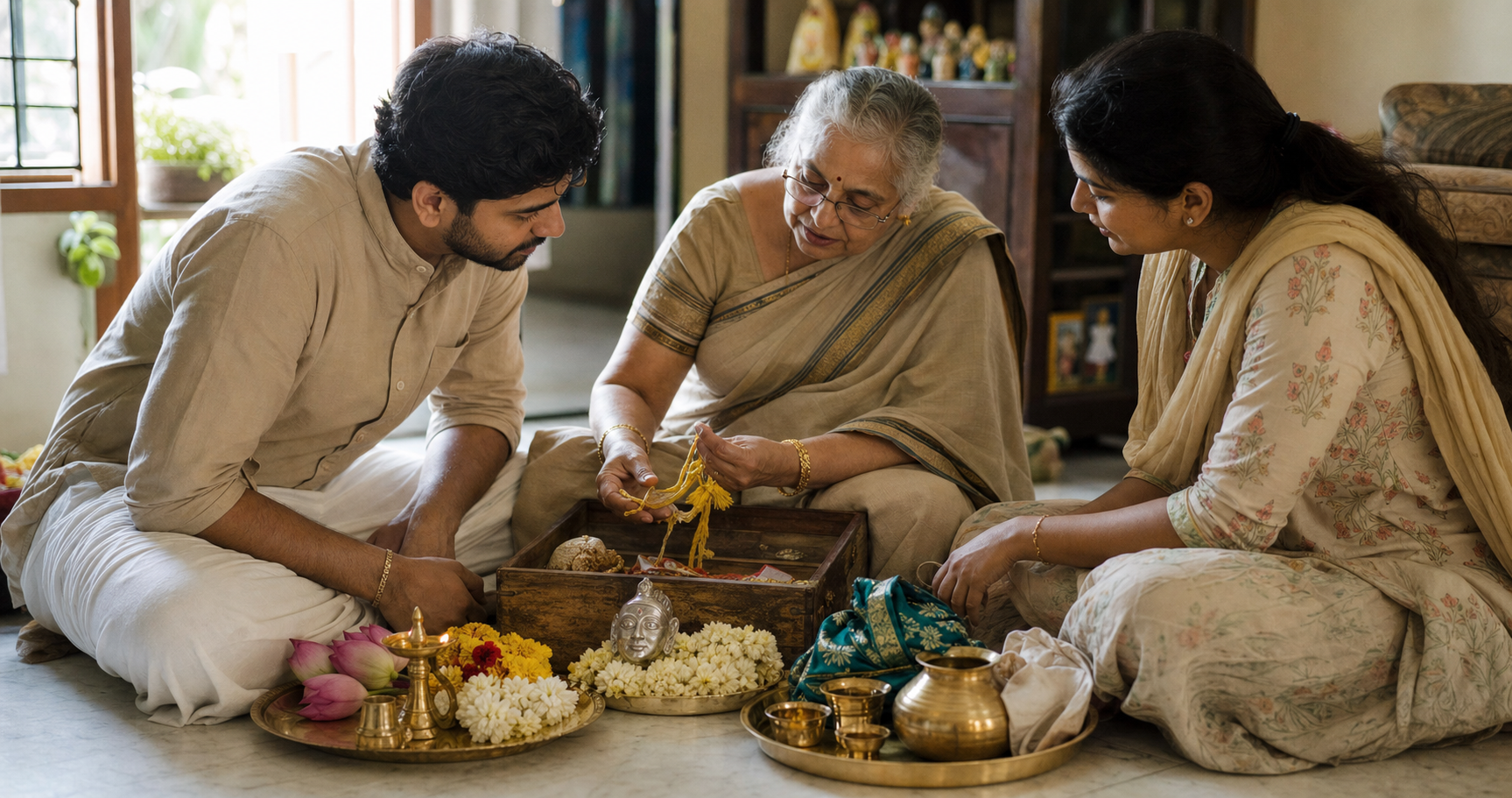
In Karnataka and Kannada-speaking areas adjoining Maharashtra, the Shravana Friday worship of Goddess Lakshmi is known as Shukravara Gowri Vratha or Sampath Shukravara Vratha. Shukravara means Friday, while sampath points to prosperity or abundance. The spelling vrata and the regional English spelling vratha refer to the same kind of disciplined devotional observance.
The name Gowri can create understandable confusion. Many Hindus ordinarily associate Gowri with Parvati, but this regional observance is presented as worship of Lakshmi. Do not resolve that difference by declaring that your elders used the wrong name. Festival names, deity identifications and household practices do not always fit a single pan-Indian vocabulary.
Before choosing an image, mantra or offering, ask a knowledgeable family member four precise questions:
- Which Devi did our household invoke during this vrata?
- Did we use an image already in the shrine, a separate representation, or another customary arrangement?
- Was there a family prayer, vrata narrative or song associated with the day?
- Was any particular food, flower or concluding act considered essential?
These questions recover practice more reliably than asking only how the festival is generally celebrated. A relative may not remember an entire ritual sequence but may remember the deity, the principal offering and the way the vrata ended. Those details reveal the family’s actual continuity.
Choose the Friday from the right regional calendar

A Shravana Friday is a Friday falling within Shravana as calculated by the calendar followed in the relevant community. That sounds straightforward, but the beginning and end of a lunar month can differ among regional calendar systems. Panchanga calculations also depend on location. A festival date copied from a calendar prepared for another region may therefore be unsuitable for a Karnataka family tradition.
Use this order when fixing the dates:
- Identify the place and community from which the household custom came.
- Consult a Kannada panchanga prepared for the location where the vrata will be observed.
- Mark the Fridays that the calendar places within Shravana.
- Check the result with the temple or priest your family normally trusts if the calendar gives a special festival rule.
- Write down the calendar name, location and confirmed dates so the decision can be understood next year.
For 2026, August 14 is listed as a Shravan Friday Lakshmi-puja date in Karnataka. Treat that as one confirmed date, not as permission to manufacture the rest of the schedule by adding seven days indefinitely. The next Friday may fall outside the locally observed month, so verify every date rather than extrapolating from the first one.
When your family’s traditional calendar and a general-purpose phone app disagree, check what region, location and calendar convention the app is using. Convenience is not the same as relevance. The calendar closest to the lineage and place of the observance should carry more weight.
Use a simple, complete home-puja sequence when details are missing
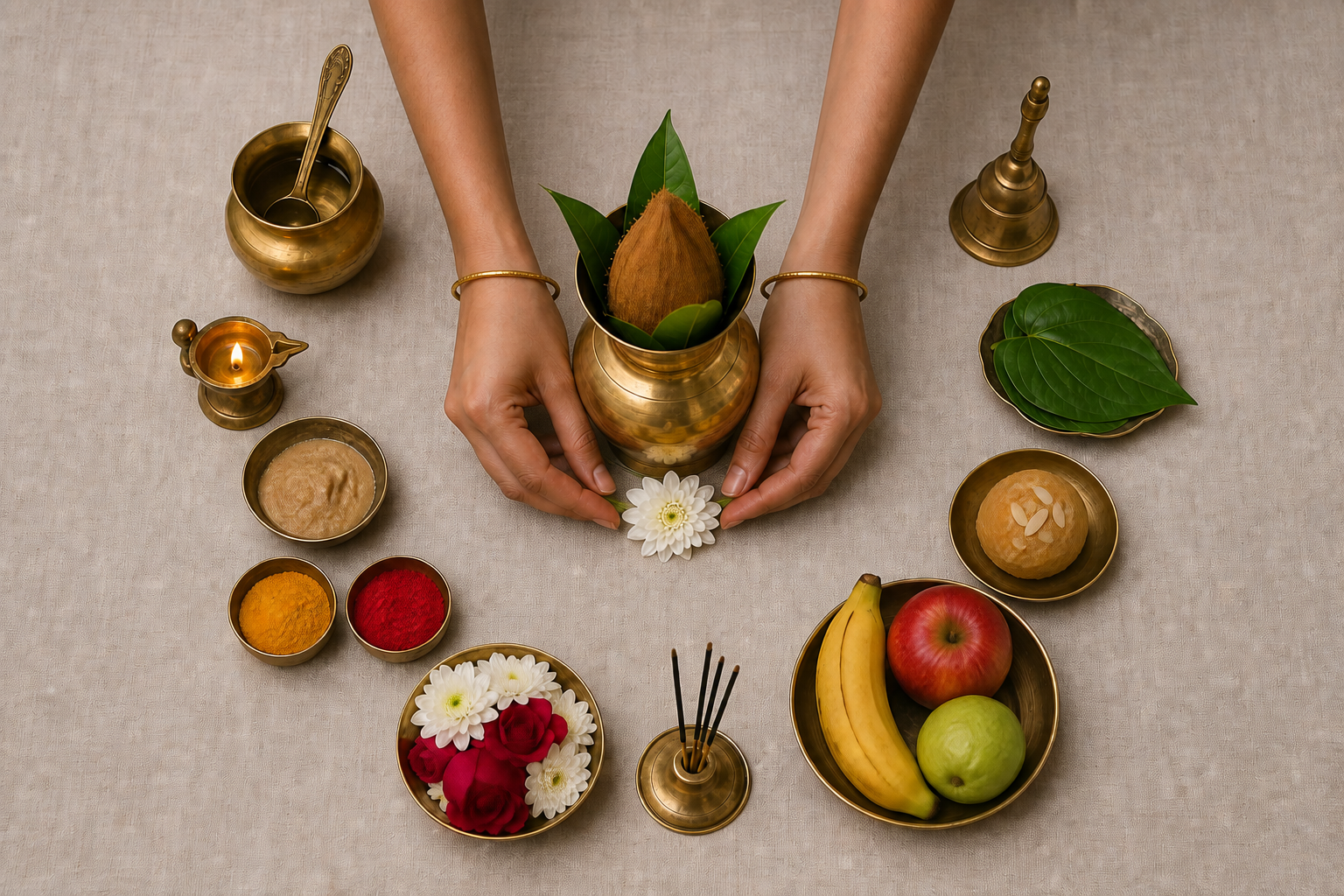
If your household preserved a paddhati, follow it. If it did not, a modest puja performed attentively is more honest than an elaborate procedure assembled from unrelated regional customs. The aim is not to recreate forgotten details by guesswork. It is to worship Lakshmi respectfully while leaving room to restore the family method when better information becomes available.
Prepare only what you can offer cleanly and without waste: the Lakshmi representation used in your shrine, water, flowers where available, a suitable food offering, and a lamp if lamps are part of your practice. Put any flame on a stable surface away from curtains, clothing and loose decorations, and never leave it unattended.
- Prepare yourself and the shrine. Bathe or wash appropriately, wear clean clothes, clean the worship area and arrange the materials before beginning.
- State the intention. In your own language, say that you are observing the Shravana Friday vrata and offering worship to Goddess Lakshmi according to your capacity and family tradition.
- Invite the Devi’s presence. Place your attention on Lakshmi through the image or representation your household accepts. Do not substitute a complicated installation rite that you have not learned.
- Make the basic offerings. Offer water, flowers and other customary items one at a time. Simplicity does not diminish an offering made with care.
- Recite what you genuinely know. Use a Lakshmi prayer, names of the Devi, stotra, bhajan or family song you can pronounce and understand with reasonable confidence. Repetition of a short known prayer is preferable to racing through an unfamiliar text.
- Offer naivedya. Present food prepared according to the household’s dietary and ritual norms. Avoid making a large quantity merely for display; the offering should be received as prasada rather than wasted.
- Conclude deliberately. Perform the customary arati if you know it, bow, express gratitude and pray for prosperity governed by dharma.
- Share the prasada. Distribute it respectfully among those present and complete any family custom of giving or sharing associated with the vrata.
Do not assume that the word vrata automatically commands a total fast. A vrata can include dietary discipline, but its exact form belongs to the particular observance and lineage. If your family custom includes fasting, do not ignore medical needs in order to imitate somebody else’s rule. Children, pregnant or nursing people, older adults, and anyone managing a health condition should obtain appropriate professional guidance before beginning a restrictive fast.
Keep prosperity connected to dharma
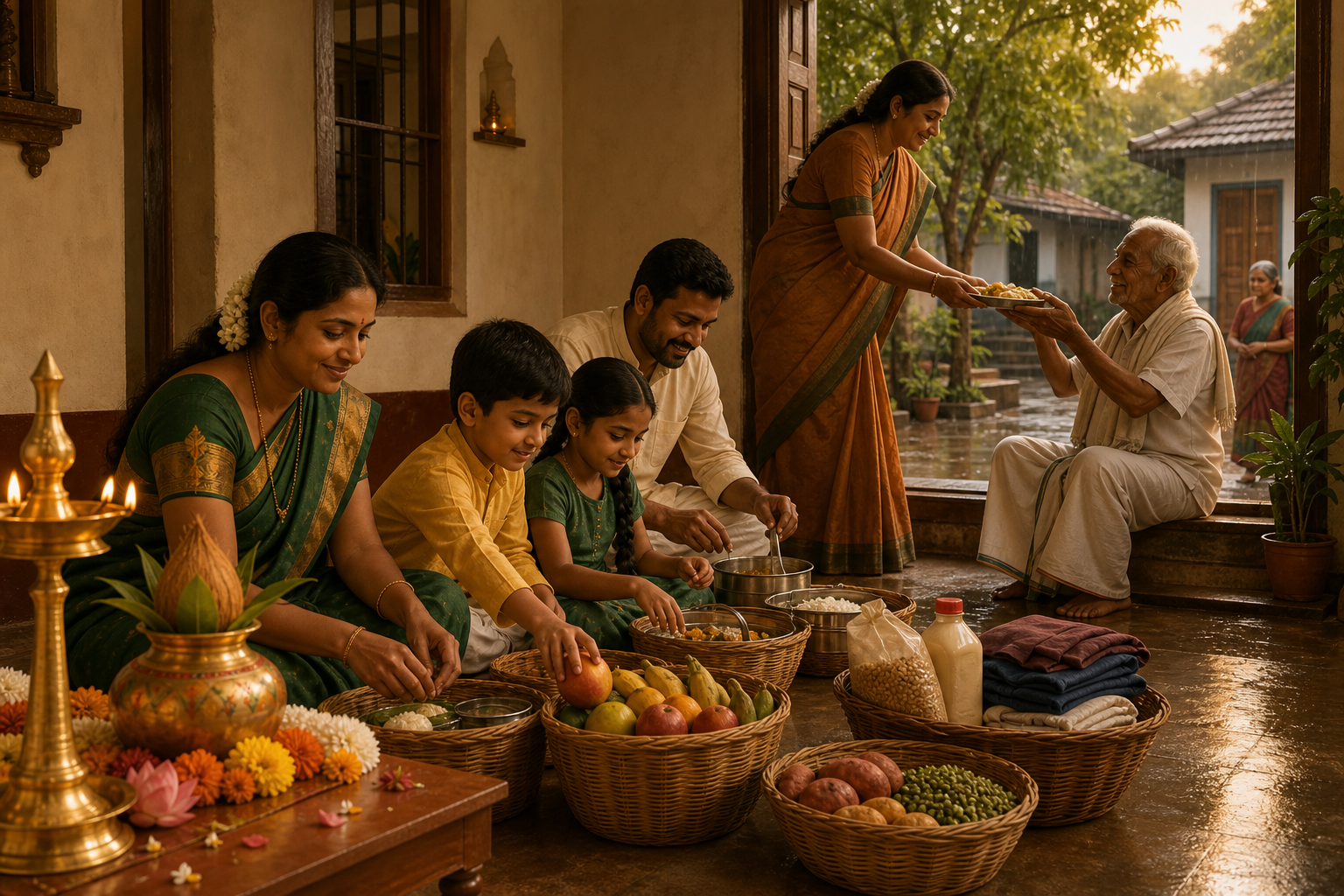
Sampath should not turn the vrata into a bargain in which a particular offering is expected to produce instant money. Lakshmi worship gives you a better question: if prosperity enters this household, how will it be received, protected, shared and used?
Choose one concrete household action to accompany the puja. You might stop a recurring form of food waste, care for a neglected sacred or domestic space, set aside dana within your means, settle an obligation you have unnecessarily delayed, or begin recording expenses that have become disorderly. These actions are not replacements for worship. They prevent a prayer for abundance from being separated from the conduct required to hold abundance responsibly.
Family variation should be handled with the same discipline. Preserve a remembered practice when it is safe and clearly identified. Ask an elder when a detail is uncertain. Consult a trusted local priest when ritual knowledge is needed. Use a simple offering when no authoritative answer survives. Do not combine every attractive custom you find and then label the mixture ancient family tradition.
Key takeaways
- Shukravara Gowri Vratha and Sampath Shukravara Vratha are regional names associated with Shravana Friday worship of Lakshmi in Karnataka and nearby Kannada-speaking areas.
- Confirm each date through a location-appropriate Kannada panchanga; do not rely on a calendar configured for another region.
- Let an inherited family paddhati take priority over a generic online ritual sequence.
- When the detailed method has been lost, perform a restrained Lakshmi puja with preparation, intention, known prayers, offerings, a clear conclusion and prasada.
- Do not invent a severe fast or an elaborate rite merely to make the observance appear more authentic.
- Connect the prayer for sampath with one dharmic act involving care, restraint, generosity or responsible household order.
Before the next Shravana Friday, make a one-page family record. Note the local date, the name by which your family knows the vrata, the Devi invoked, the essential offerings, the prayers used and the person or calendar that confirmed them. That small record will make next year’s worship clearer and give the next generation something more dependable than guesswork.
References
