,

Shah Alam II and the Unraveling of Mughal Sovereignty

2 min read
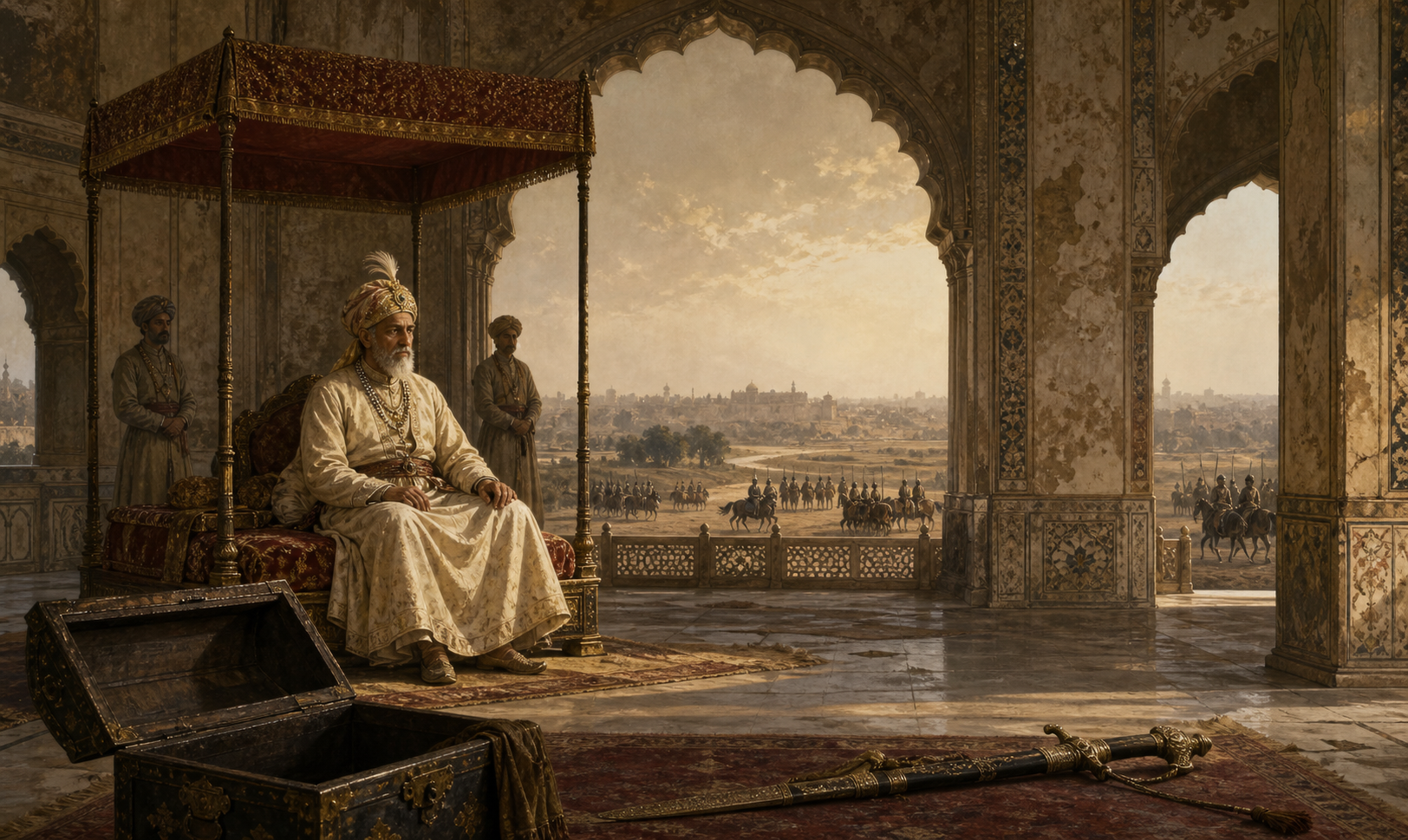
An elderly Shah Alam II sits beneath a canopy in a faded Mughal audience hall, with an empty treasury coffer nearby and armed forces dispersing beyond the palace arches.

If you have wondered how a man could remain emperor while losing the power to govern, Shah Alam II gives you the clearest answer. His long reign did not end in one decisive collapse. The crown, treasury, army and public recognition of sovereignty separated from one another, until the emperor’s title described far more than he could command.

Following that separation will help you make sense of eighteenth-century Bharat without reducing it to a tired story of Mughal decline followed automatically by British rule. The space around the weakening court was not empty. Maratha, Sikh, Jat, Afghan and Company power pressed into it, sometimes competing and sometimes using the emperor’s surviving prestige for their own purposes.

The crown survived after the machinery of rule had broken apart
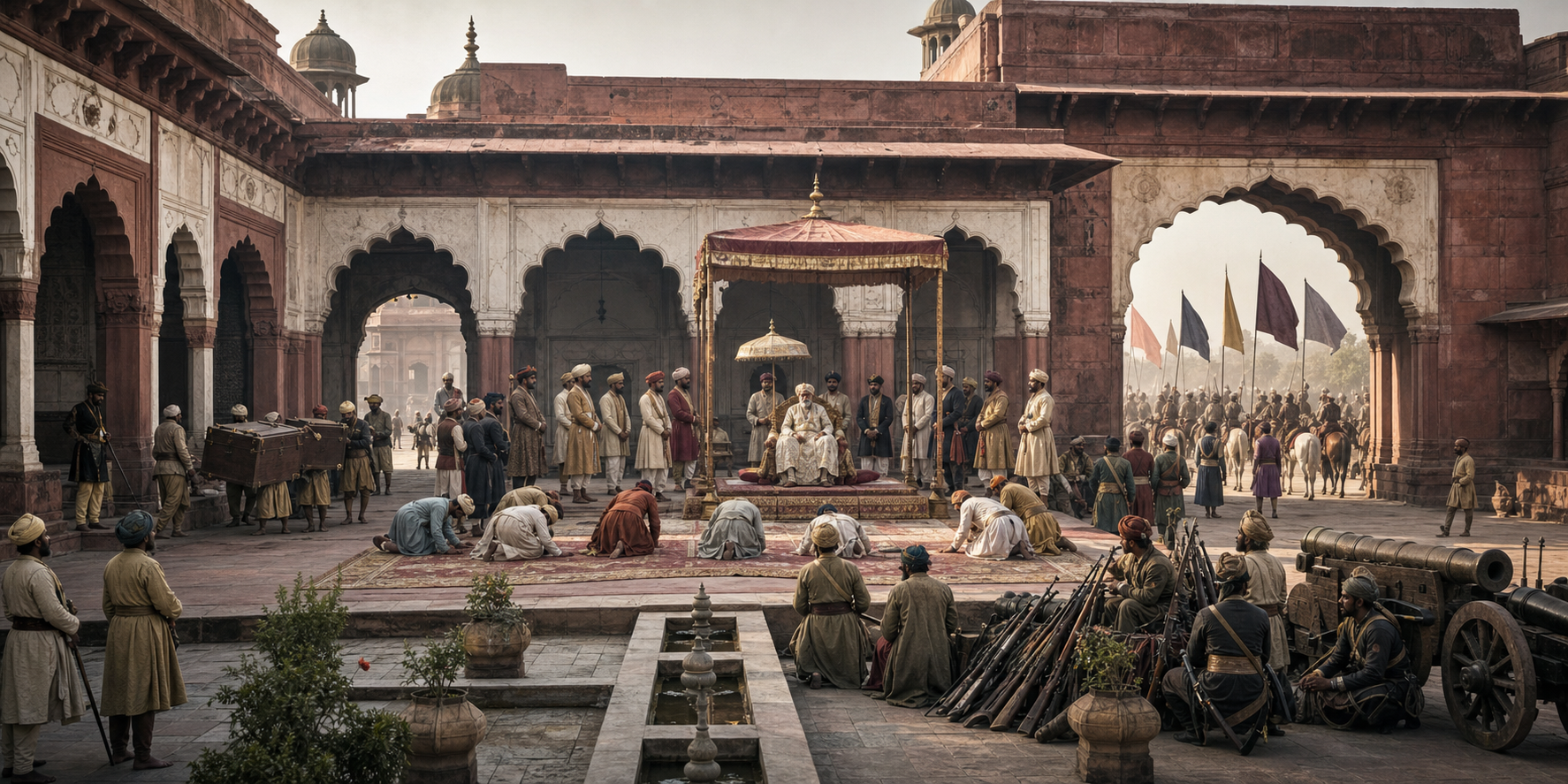
Shah Alam II presides over a formal court ceremony while revenue chests, unpaid soldiers, departing envoys, and mounted forces disperse through different palace gates.

Shah Alam II ascended the throne in 1760. His chosen name meant “emperor of the world,” but the irony became sharper as his effective reach contracted. A cutting popular expression reduced his dominion to “Sultanat-e-Shah Alam, Az Dilli ta Palam”: Shah Alam’s realm extended from Delhi only as far as nearby Palam.

That saying is memorable, but it can also mislead if you treat territory as the only measure of sovereignty. The late Mughal title still carried ceremonial value. Court ritual continued. Regional rulers could invoke the emperor when it suited them, seek formal recognition through him or present their own authority as compatible with an older imperial order. The symbol remained useful precisely because effective control had passed elsewhere.

Tipu Sultan exposed this distinction in a letter to Kutub-ud-din Khan. He treated Shah Alam as a dependent of stronger regional brokers and therefore questioned the legitimacy of using the emperor’s name in the Khutbah, the Friday sermon in which naming a sovereign could signify political recognition. Tipu’s judgment was political rather than neutral, but it shows that contemporaries themselves distinguished an imperial name from an independent ruler.

When you assess Shah Alam’s position, use three tests rather than asking only whether he occupied the throne:

<!– wp:list {

FAQs

How could Shah Alam II remain emperor while losing the power to govern?

His reign shows the crown separating from the treasury, army and public recognition of sovereignty. Court ritual and the imperial title survived even as effective control passed to stronger powers.

When did Shah Alam II ascend the Mughal throne?

Shah Alam II ascended the throne in 1760. His chosen name meant “emperor of the world,” even as his effective reach contracted.

What does “Sultanat-e-Shah Alam, Az Dilli ta Palam” mean?

The expression says that Shah Alam’s realm extended from Delhi only as far as nearby Palam. The article cautions that territory alone does not capture the ceremonial value his title still retained.

Why did Shah Alam II’s imperial title still matter?

The late Mughal title retained ceremonial and political value. Regional rulers could invoke the emperor, seek recognition through him or frame their authority as compatible with the older imperial order.

Which powers competed around the weakening Mughal court?

Maratha, Sikh, Jat, Afghan and Company powers pressed into the space around the weakening court. They sometimes competed and sometimes used the emperor’s surviving prestige for their own purposes.

Why did Tipu Sultan question using Shah Alam II’s name in the Khutbah?

Tipu Sultan treated Shah Alam as dependent on stronger regional brokers and therefore questioned naming him in the Friday sermon. His political judgment illustrates the distinction between an imperial name and an independent ruler.

What could naming a sovereign in the Khutbah signify?

The Khutbah was the Friday sermon, and naming a sovereign in it could signify political recognition. The article uses the practice to show how contemporaries distinguished ceremonial status from independent power.