
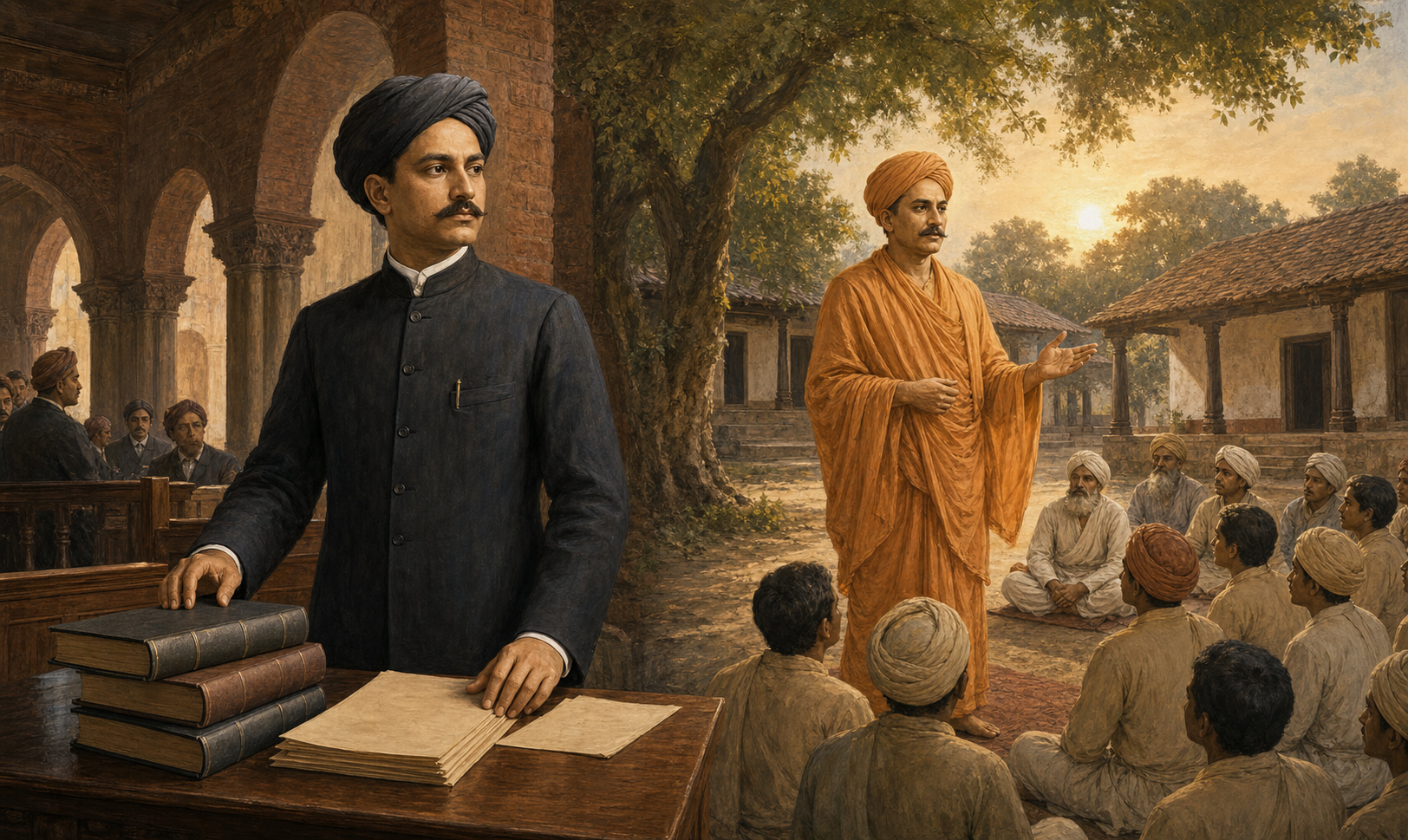
If you know Swami Shraddhananda chiefly as a Hindu revivalist, the legal contest from his earlier life may seem like a colourful footnote. It deserves more attention. The episode reveals a form of Dharmic leadership that joins moral transformation to practical competence.
That distinction matters whenever you commemorate him, teach his life or invoke his example in present-day Hindu work. Shraddhananda’s legacy is weakened when he becomes only a heroic name. It becomes usable when you notice how Munshi Ram confronted institutional power, earned credibility before taking on a sacred identity and treated revival as work requiring discipline.
The legal victory was about competence, not symbolism
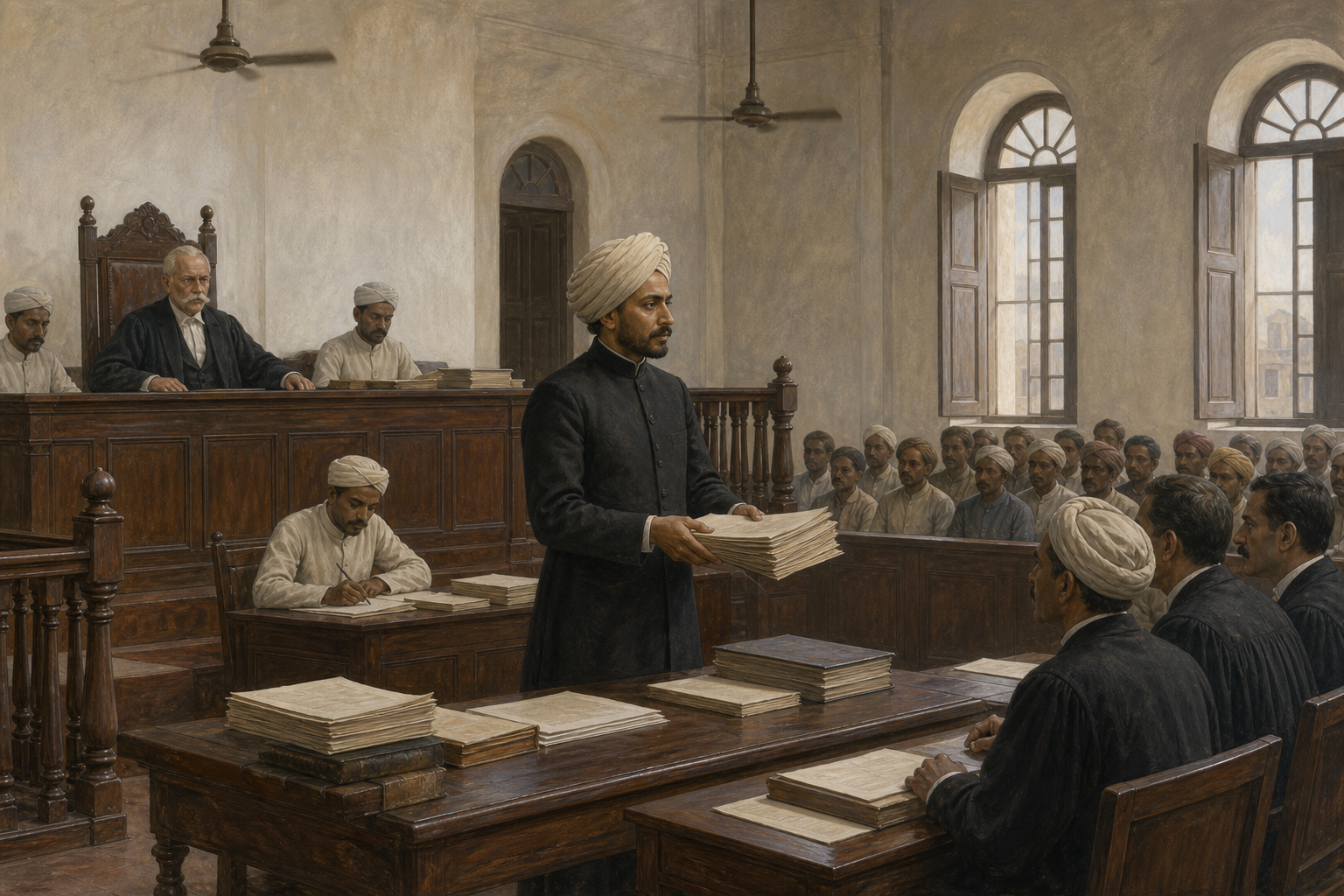
Before he was known as Swami Shraddhananda, Munshi Ram faced William Rattigan in a legal battle at Hoshiarpur. Rattigan was no minor opponent. He was an English barrister with a highly lucrative practice, enjoyed the confidence of the provincial government, chaired the council managing Khalsa College and served as vice-chancellor of Punjab University. Munshi Ram made his plea against Rattigan’s and won.
The scale of the opponent is important, but the meaning of the encounter must be stated precisely. Munshi Ram did not merely denounce an influential colonial figure from outside the system. He entered a formal contest in which argument, preparation and judgment mattered. He met professional prestige with an effective case.
We should also resist saying more than the available facts permit. A legal victory against an eminent barrister does not by itself establish that Munshi Ram was a barrister, created a precedent or defeated colonial law as a whole. The case number, legal question, pleadings and judgment are not identified here. The historically responsible formulation is narrower and stronger: as Munshi Ram, he prevailed in a legal contest against one of Punjab’s most prominent English lawyers.
Use that formulation when you write a speech, social-media thread or educational note. It preserves the achievement without converting an incomplete case history into a legend. Precision is not timidity. It protects a real victory from the easy criticism that follows an exaggerated claim.
Why a legal episode belongs within Hindu revivalism
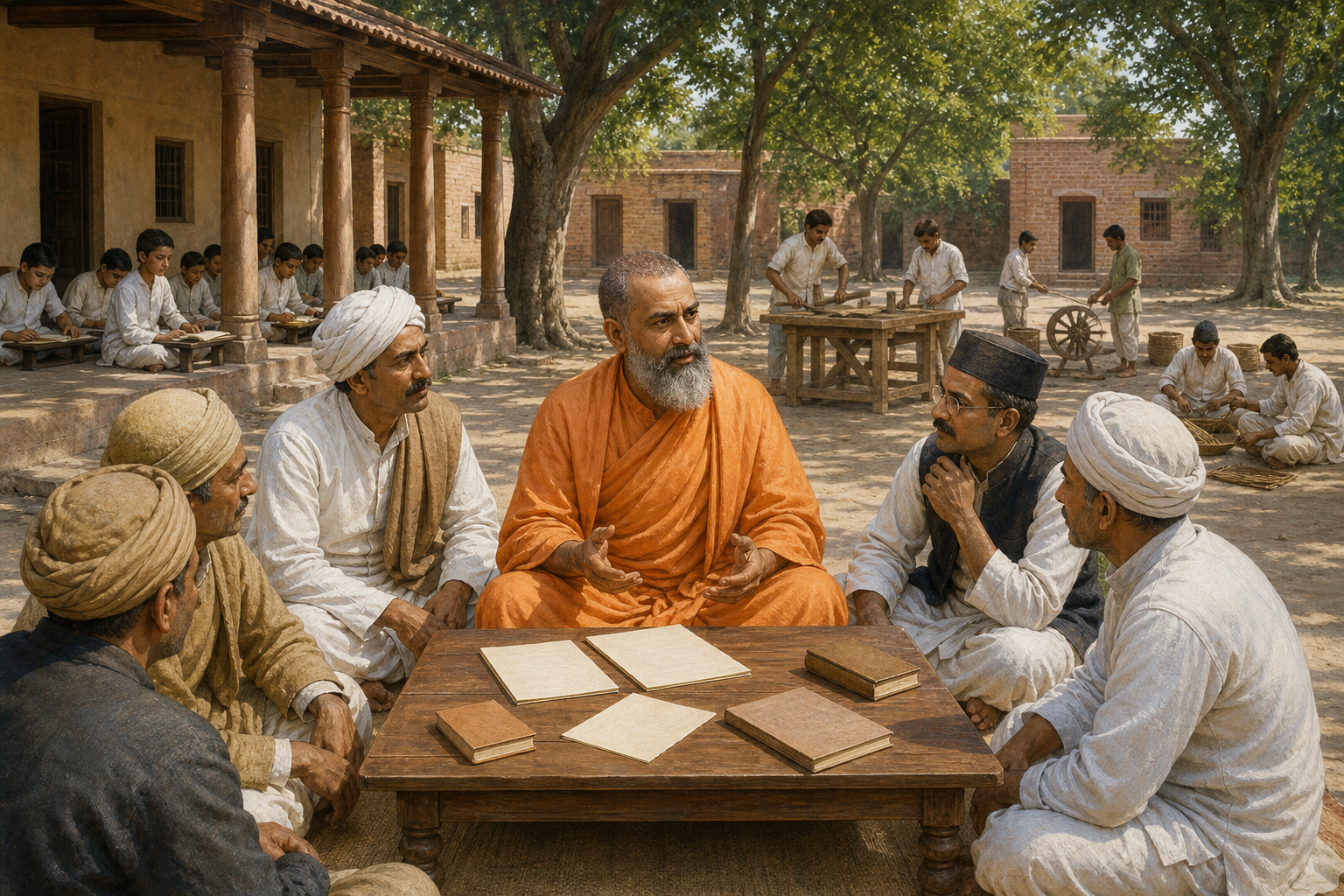
Religious revival is often reduced to preaching, ritual renewal or the defence of identity. Shraddhananda’s example points to a wider field. A community also lives through schools, associations, property, public argument and institutions governed by rules. Moral conviction cannot protect these spaces if its defenders are unable to understand procedures, assemble facts or make a disciplined case.
The victory over Rattigan therefore matters even though we lack enough information to extract a legal doctrine from it. It demonstrates institutional confidence. Munshi Ram was prepared to contend on ground associated with professional authority and official influence. He did not treat the prestige of his opponent as proof that resistance was futile.
This gives you a practical test for present-day cultural advocacy. When an organisation announces that it is defending Dharma, look beyond the intensity of its language. Ask whether it can define the issue accurately, preserve records, understand the forum, select qualified counsel when counsel is needed and distinguish a moral grievance from a legally sustainable claim. Public devotion and professional competence are not rival virtues. In durable revivalist work, each corrects the weaknesses of the other.
The same test applies outside litigation. A school needs sound administration as well as an inspiring vision. A temple dispute requires documentation as well as community solidarity. A campaign gains credibility when its public claims can survive scrutiny. Shraddhananda’s legal victory should not be stretched into specific advice for disputes about which we know nothing; it should sharpen our standard for preparedness.
Munshi Ram’s transformation came before the icon
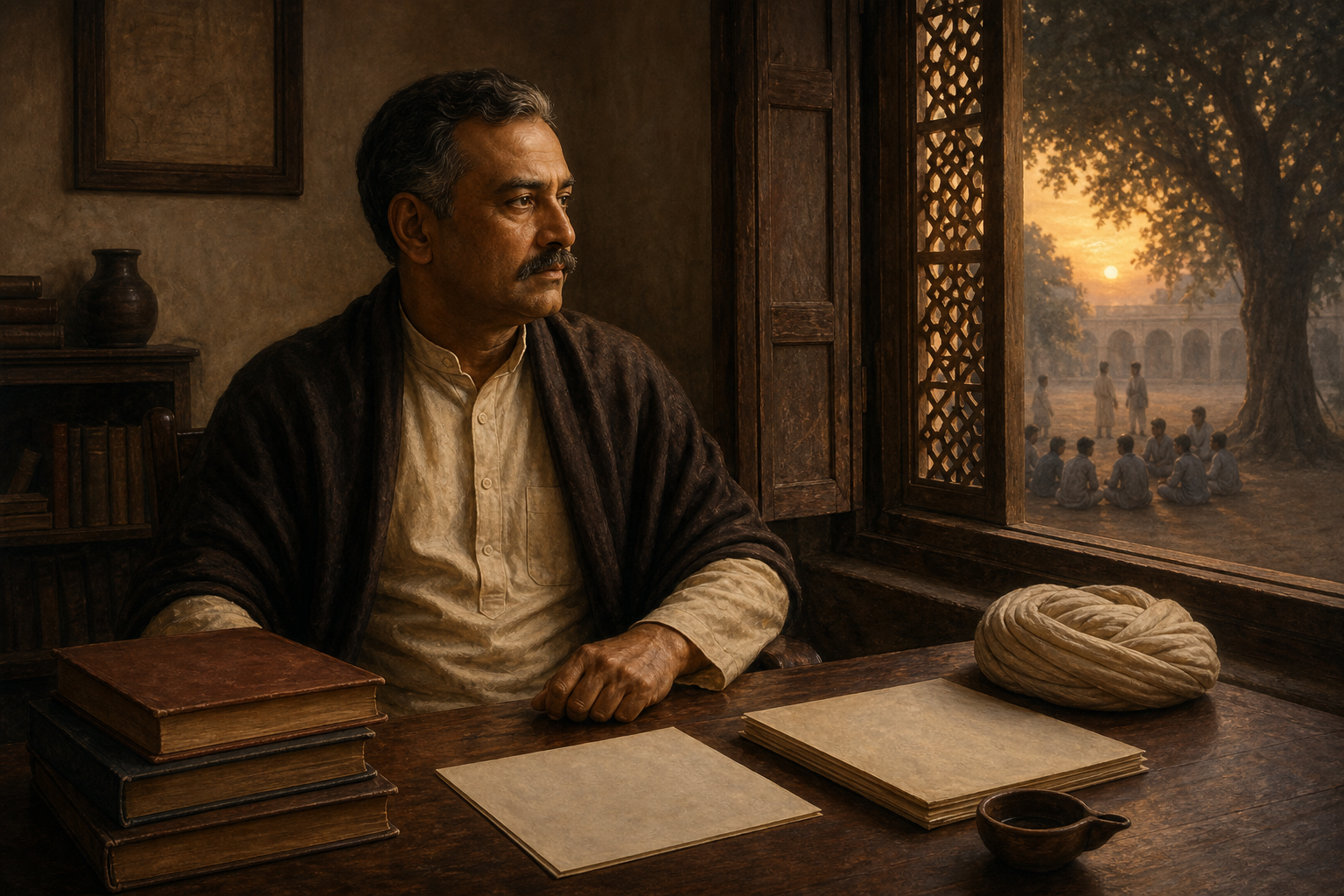
The name “Swami Shraddhananda” can make a completed spiritual personality seem inevitable. Munshi Ram’s earlier life prevents that convenient reading. Sant Nihal Singh, who knew him from childhood, remembered a man once notorious for drinking, meat-eating and profligacy. The same person later became the revered revivalist whose monastic name endured.
This contrast should be handled with care. It does not supply the stages, timing or inner causes of his transformation, so those details should not be invented. Nor should one person’s meat-eating be turned into a universal test for the diverse Hindu traditions. What the contrast does establish is that his later authority was not the result of an immaculate public biography. Discipline changed the direction of a flawed life.
That is a more demanding lesson than simple admiration. If you invoke Shraddhananda as a model, ask what your own work requires you to reform: an unreliable habit, careless speech, weak preparation or the tendency to substitute indignation for execution. Revival begins to acquire public force when the person calling for renewal has accepted discipline personally.
His transformation also changes how we should judge potential leaders. The child who first met Munshi Ram expected the man capable of defeating Rattigan to look like a stereotypical scholar: slight, stooped, bespectacled and visibly cerebral. Instead, Munshi Ram appeared tall, broad-shouldered, erect, loud and physically imposing. His appearance did not fit the observer’s picture of legal intelligence.
You can apply that correction directly. Do not confuse polish with competence, sacred clothing with prior discipline or elite mannerisms with judgment. Examine what a person can actually explain, organise and accomplish. Shraddhananda’s life crossed several identities; the continuity lay not in appearance but in the growing capacity to act.
Read the victory as history, not as a slogan
The story reached us through memory and confirmation. Sant Nihal Singh recalled meeting Munshi Ram as a child after hearing that he had defeated Rattigan. Lala Sham Das, identified as the Government Advocate and a leading Hoshiarpur lawyer, then confirmed that a legal battle had occurred, that both men made their pleas and that Munshi Ram won. The recollection was published in 1945.
That evidentiary chain supports the central event, while leaving important legal particulars unanswered. You should hold both truths at once. Dismissing the event because every procedural detail is unavailable would be excessive. Supplying those missing details from imagination would be equally unsound.
A reliable way to preserve Shraddhananda’s legacy is to separate three levels whenever you discuss it:
- State what is attested. Munshi Ram prevailed against Rattigan in a legal contest after both presented their pleas.
- Mark what can reasonably be inferred. Defeating such an eminent opponent required preparation, confidence and an effective argument.
- Leave unidentified facts unidentified. Do not assign a case name, legal issue, court, doctrine or wider institutional consequence without further evidence.
- Explain why the bounded fact matters. The episode adds institutional capability to our understanding of Shraddhananda’s revivalism.
This method is useful beyond one biography. Dharmic history suffers when real accomplishments are inflated until they become vulnerable, but it also suffers when colonial prestige is allowed to obscure indigenous agency. Careful narration avoids both failures. It neither diminishes Munshi Ram’s achievement nor asks the achievement to prove what it cannot.
Key takeaways
- Munshi Ram, later Swami Shraddhananda, won a legal contest against the eminent English barrister William Rattigan in Hoshiarpur.
- The victory demonstrates effective engagement with an institution; it does not establish an unidentified precedent or justify invented case details.
- Shraddhananda’s revivalist authority is better understood alongside his personal transformation from a markedly undisciplined earlier life.
- His example asks Hindu organisations to pair conviction with records, procedural knowledge, accurate claims and qualified professional work.
- The safest public wording distinguishes attested facts, reasonable inferences and details that remain unknown.
The next time you speak about Shraddhananda, do more than repeat an honorific. Name the legal victory accurately, acknowledge the self-reform behind the Swami and apply the standard his example sets. Choose one institution important to your community, identify the competence it actually demands and help build that competence before the next crisis forces the lesson upon you.
References
