
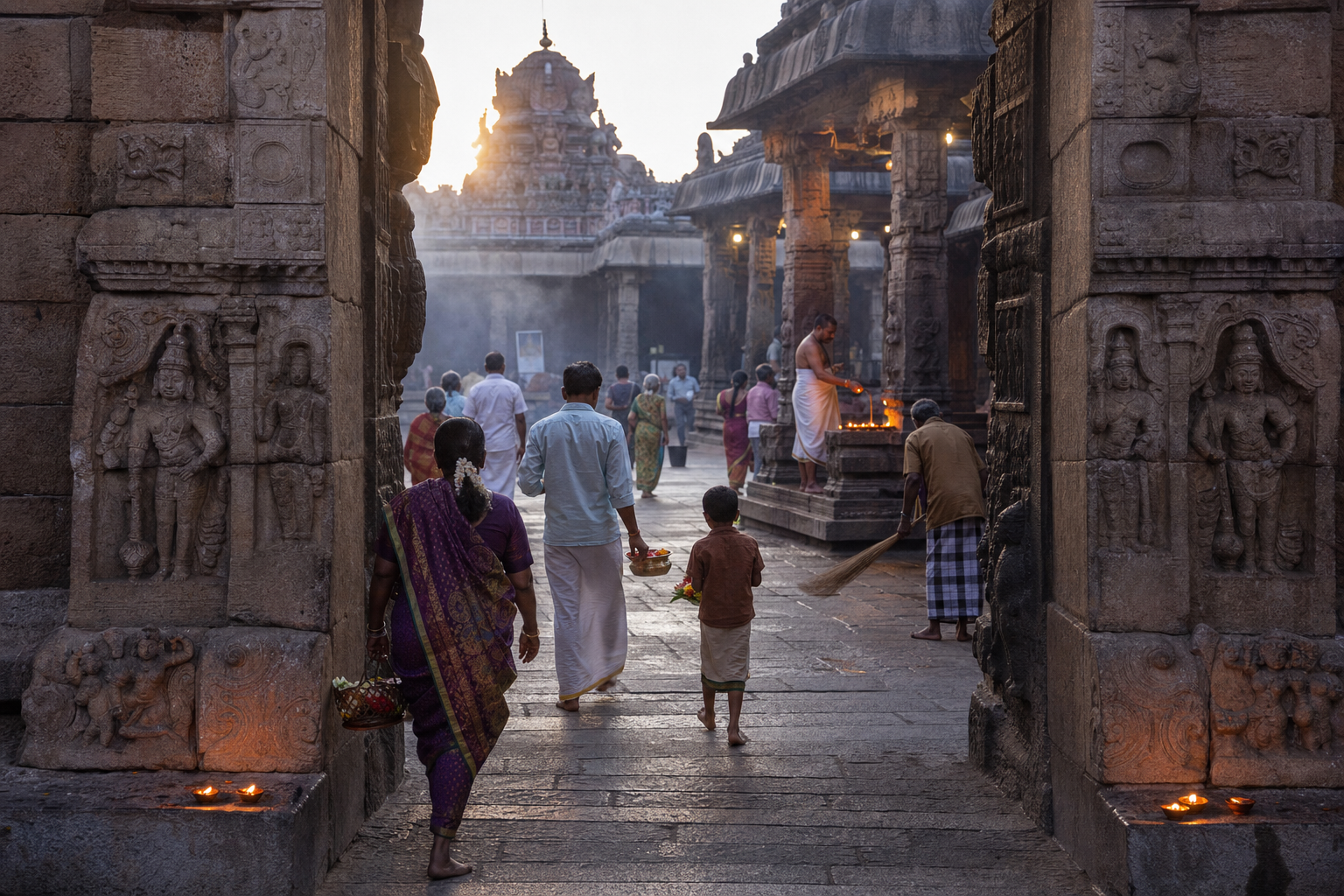
You are standing at a temple gate with two honest intentions: you want to respect the sacred place, and you want to understand what you are seeing. A date on a plaque will not tell you why people still come. A devotional account may reveal the temple’s meaning without settling every question about its chronology.
The useful approach is neither suspicion nor unquestioning acceptance. Read the temple through ritual, architecture, sacred memory, historical evidence and community life. Keeping those lenses distinct will help you recognize continuity without turning faith into a museum exhibit or turning a disputed identification into a settled fact.
Key takeaways: use five lenses, not one verdict
- Begin with living practice. Notice what worshippers do, in what sequence, and around which sacred focus before examining the site as an architectural object.
- Read the plan, movement, light and ornament together. A temple’s theological character may be expressed through the relationship among its sanctums, not through a single sculpture.
- Distinguish sacred memory from historical verification. A Puranic association can shape pilgrimage and identity even when the identification of an ancient place-name remains open to investigation.
- Ask who sustains the temple. Daily worship, devotional singing, local observances and seva are heritage practices, not incidental activity around a monument.
- Record the strength of each conclusion. Use direct language for what you can observe, qualified language for plausible interpretations, and explicit attribution for contested claims.
This method prevents a common mistake: forcing every feature into a single story. A temple can be a place of darshan, a work of architecture, a node in sacred geography, a community institution and a subject of historical disagreement at the same time. Those roles may reinforce one another, but they do not provide the same kind of evidence.
Read the worship before you read the stone
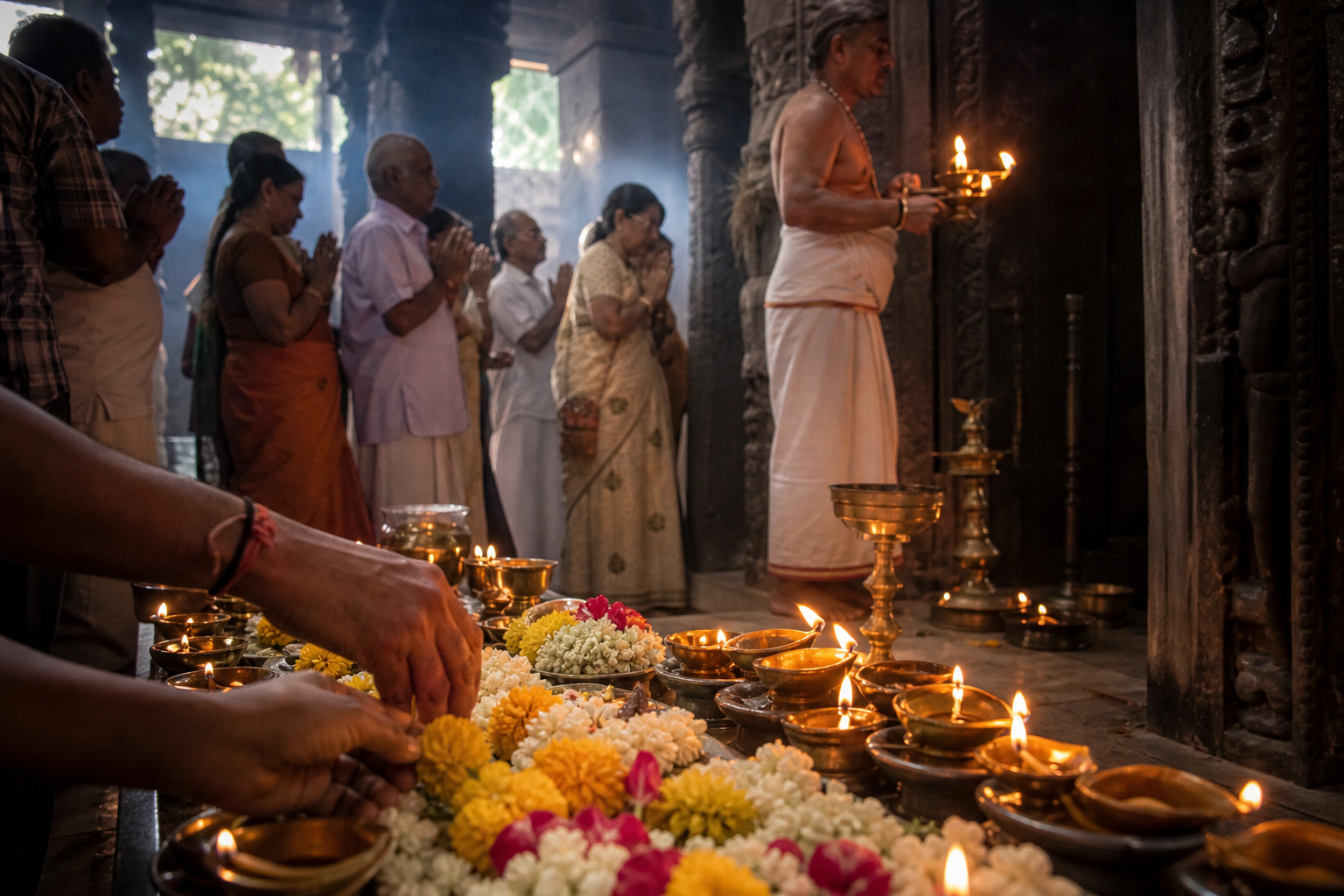
If you enter looking only for carvings, you may miss the activity that makes the place living heritage. Begin by following the temple’s present rhythm. Where do devotees pause? Which direction do they move? What happens before and after darshan? Which acts are individual, and which gather the community?
At Narayani Mata Mandir near Amanbagh in Alwar, the meaningful pattern includes lighting lamps, offering prayers and joining devotional singing. These are not decorative additions to an old structure. They are ways in which bhakti, memory and belonging are renewed. If you photograph the building but fail to notice this rhythm, you have documented its surfaces while overlooking its active inheritance.
Use a simple sequence on your visit:
- Observe the approach. Notice where ordinary movement gives way to sacred attention and how visitors adjust their conduct.
- Follow the ritual sequence without obstructing it. Watch where darshan occurs and whether worship moves among several sacred points.
- Notice participation. Lamps, prayers, singing, offerings and seva tell you how the community carries the place forward.
- Ask before photographing worshippers, sanctums or ceremonies. A temple’s openness to visitors does not make every moment public material.
- Write down what you actually observed before attaching an interpretation to it.
The last step matters. Devotees singing together is an observation. Calling that singing evidence of an unchanged practice across many centuries is a historical claim that requires more support. Respect for tradition does not require you to blur the difference.
Darshan also changes the visitor’s point of view. In ordinary sightseeing, the object is there to be inspected. In temple worship, seeing is part of a relationship with the deity. You do not have to imitate another person’s devotion, but you should understand that the sanctum is not merely an exhibit and the worshipper is not part of the scenery.
Let the temple plan disclose its theological grammar
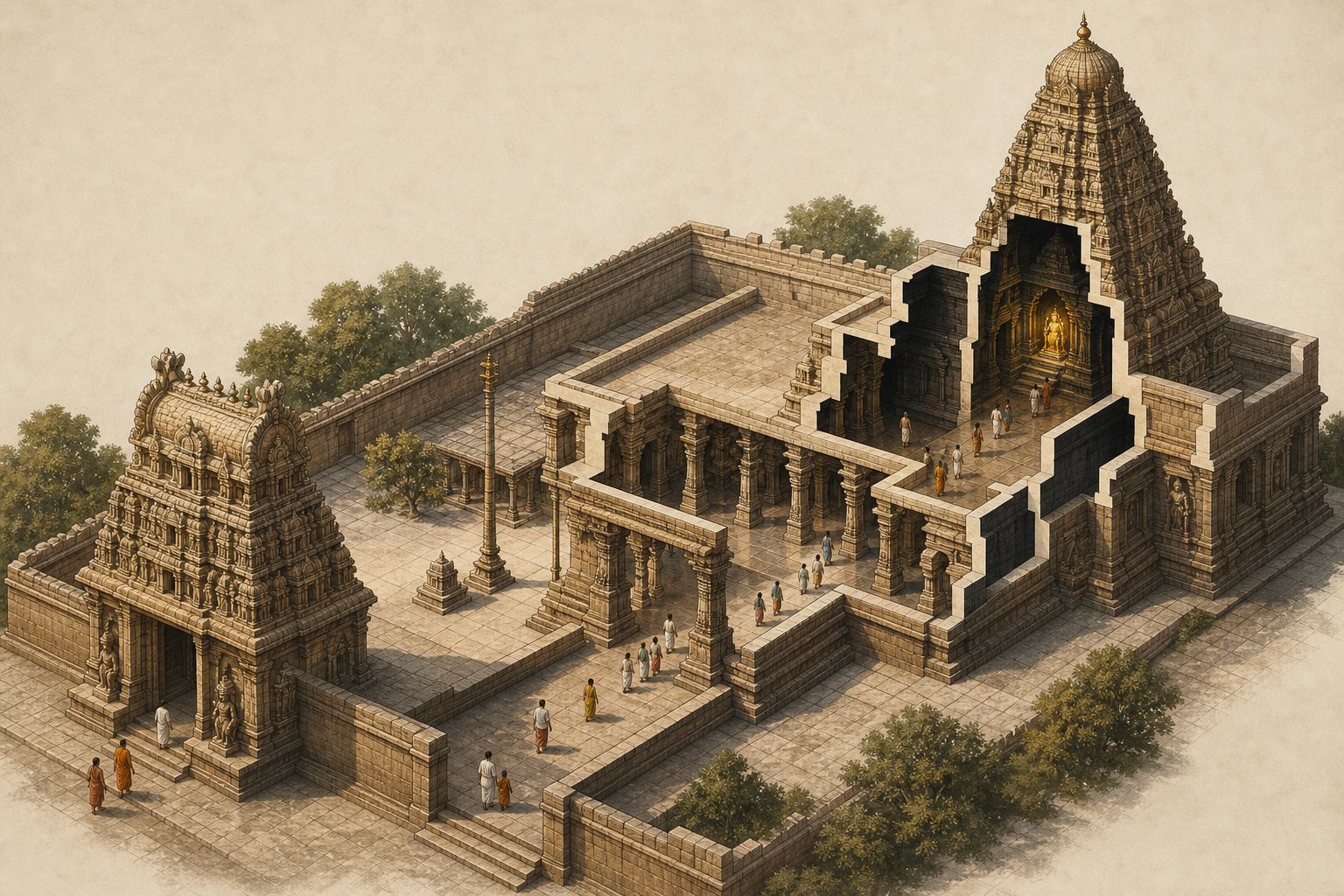
Do not begin at the Thousand Pillar Temple by trying to decide whether the popular name is a literal inventory. Begin with its organizing idea. The historic Rudreshwara Swamy Temple at Hanamkonda is a Trikutalaya: three sanctums are dedicated to Shiva as Rudreshwara, Vishnu and Surya. Their relationship is more interpretively important than any isolated ornament.
The arrangement gives concrete form to plurality within Hindu worship. Shiva, Vishnu and Surya are not collapsed into an indistinct idea of sameness. Each retains a particular sacred identity while participating in one ordered temple complex. That is a more precise reading than applying a modern slogan about tolerance to every multi-deity structure.
The temple belongs to the Kakatiya flowering of the 12th and 13th centuries. Its carved pillars, stone reliefs, ornate ceilings and changing light are not separate attractions. Together they choreograph attention and movement. Craftsmanship becomes part of the devotional experience because the structure determines how sacred forms are approached, framed and encountered.
When you examine a temple plan, record these features:
- Number and relationship of sanctums: Do they share an axis, a hall or a sequence of approach?
- Movement: Does the building direct you toward one focal point or invite movement among several?
- Visibility: What is revealed immediately, and what appears only as you move?
- Light: Which carvings, ceilings or sacred spaces become prominent as illumination changes?
- Repetition: Which motifs or structural forms recur, and where does the pattern deliberately change?
- Present use: Does current worship follow the possibilities built into the plan, or has the active center shifted?
Resist assigning a symbolic meaning to every carving on sight. A plausible visual association is not automatically an established identification. First describe the form, position and relationship. Then consult the temple’s own interpretive tradition or relevant scholarship if you need to name it. Description is not a lesser task; it is the foundation that keeps interpretation honest.
Separate sacred memory, local tradition and historical proof
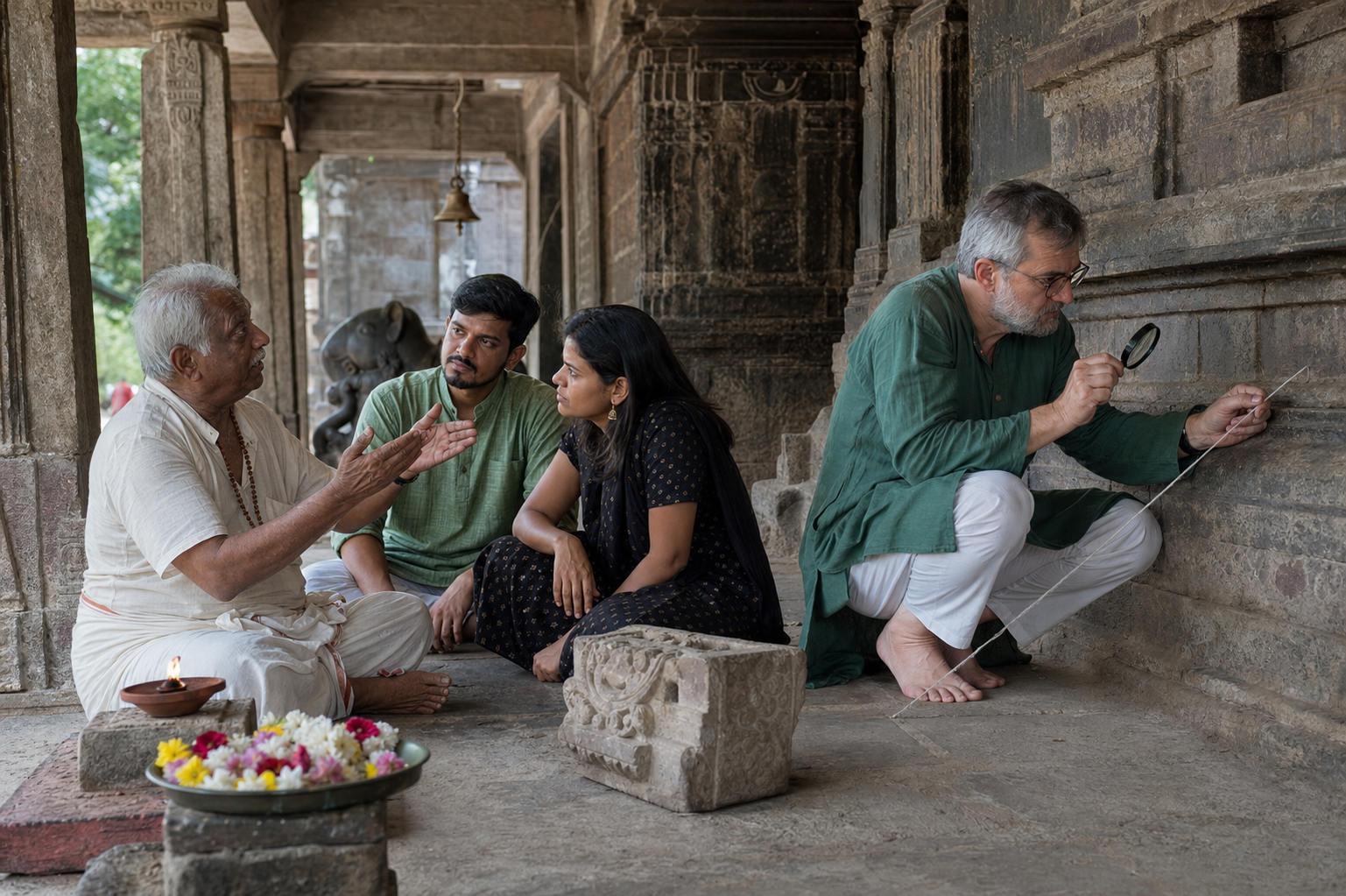
Sacred geography does not function like a modern cadastral map. A place can be remembered through texts, pilgrimage, oral transmission and ritual association. That memory may be historically significant even when an ancient name cannot be matched to a present location with complete certainty.
Sambhal shows why disciplined wording matters. The town’s Harihara tradition is discussed in connection with the Skanda Purana, while some lines of inquiry also bring the Bhagwat Purana and Matsya Purana into the conversation. Puranic place-names can admit more than one geographical reading, so a textual association should not be treated as automatic proof that every proposed modern coordinate has been established.
The same discipline applies to the claim that a Harihar shrine once stood at or near the location of Sambhal Jaama Masjid, which was built in the 16th century. Some historians maintain that a pre-existing shrine was present, while others seek stronger archaeological, epigraphic and archival corroboration. The responsible conclusion is not that memory is worthless or that the disputed claim is already proven. It is that different propositions require different evidence.
| Evidence layer | What it can support | What it cannot establish by itself |
|---|---|---|
| Present worship | The site’s living sacred meaning and current ritual use | The original construction date or an unbroken chronology |
| Puranic association | A place within sacred memory and a wider geography of tirthas | A unique modern identification when the place-name is multivalent |
| Local oral tradition | What a community has remembered, transmitted and valued | A precise chronology without independent corroboration |
| Architecture and material remains | Building phases, design relationships and evidence of alteration | Every claimed textual or devotional identity |
| Inscriptions, archaeology and archives | Specific names, dates, patrons, phases or documented events when the evidence is present | The full spiritual meaning a living community gives the place |
Your language should reveal this hierarchy. Say that a text is associated with a place when that is what can be supported. Say that a community preserves a tradition when describing inherited memory. Say that some historians contend a structure existed when the matter remains disputed. Reserve definitive statements for findings that the available evidence can actually bear.
This is especially important at sites where present religious life, historical injury and public controversy overlap. Inflated certainty may feel protective of heritage, but it makes a claim easier to dismiss. Transparent methods – manuscript comparison, attention to regional commentaries, epigraphic survey, archaeological assessment and access to archives – strengthen the civilizational case because they show how a conclusion was reached.
Follow the community to see how continuity travels
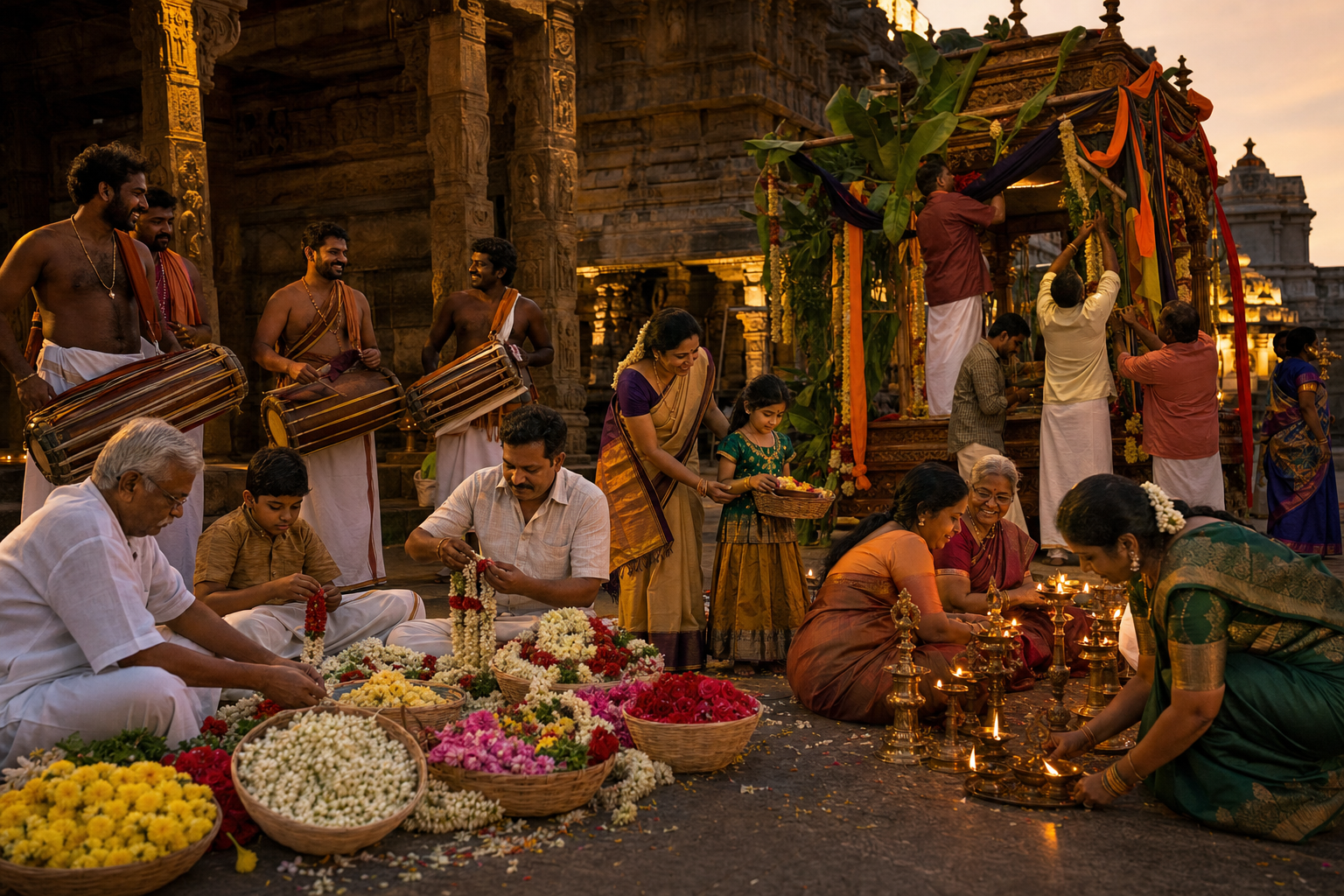
A temple’s heritage does not end at its walls. It also travels through families, devotional groups, festivals, service, songs and journeys between related shrines. If you ask only who commissioned the building, you may miss who has kept its meaning available.
Devotion to Narayani Mata illustrates this wider map. The Alwar shrine has a historical association with the Sain Samaj while remaining welcoming to other seekers. A second Narayani Mata Temple in Lonavala creates a continuity of worship across Rajasthan and Maharashtra. The useful question is therefore not simply whether the two buildings look alike. Ask what devotional identity, practices and relationships allow worshippers to recognize a sacred connection across regions.
Association with a particular community should not be mistaken automatically for exclusion. Nor should openness be used to erase the community whose service preserved the shrine. Record both facts when both are present: a group can carry a distinctive responsibility while the sacred place welcomes a wider circle.
The same care is needed when speaking about shared Dharmic values. Hindu, Buddhist, Jain and Sikh traditions can meet in commitments such as ethical conduct, compassion, non-violence, service and reverence for sacred life. That kinship is meaningful, but unity is not sameness. A Trikutalaya’s relationship among Shiva, Vishnu and Surya is an architectural statement within Hindu traditions. Community seva is a social and devotional practice. Civic stewardship of a layered town is a public responsibility. Do not merge these different forms of connection into one vague claim.
For a useful field note, make five headings: ritual, architecture, sacred memory, historical evidence and community. Under each, write one direct observation, one interpretation and one unanswered question. That small discipline will show you where your understanding is secure and where further inquiry is needed.
On your next temple visit, make the first circuit without trying to capture everything. Watch how the sacred space is used. Then study its form, ask carefully about its memory, and label uncertainty without embarrassment. You will leave with fewer sweeping claims, but with a truer understanding of why India’s temple heritage is still alive.
References
- DharmaRenaissance Blog – Narayani Mata Mandir, Amanbagh, Alwar: A Revered Rajasthan Shrine of Unity and Faith
- DharmaRenaissance Blog – Skanda Purana to Present Day: Sambhal Harihar Mandir’s Layered Legacy and Shared Reverence
- DharmaRenaissance Blog – Thousand Pillar Temple, Hanamkonda: Kakatiya-era Rudreshwara Trikutalaya and Living Heritage
