
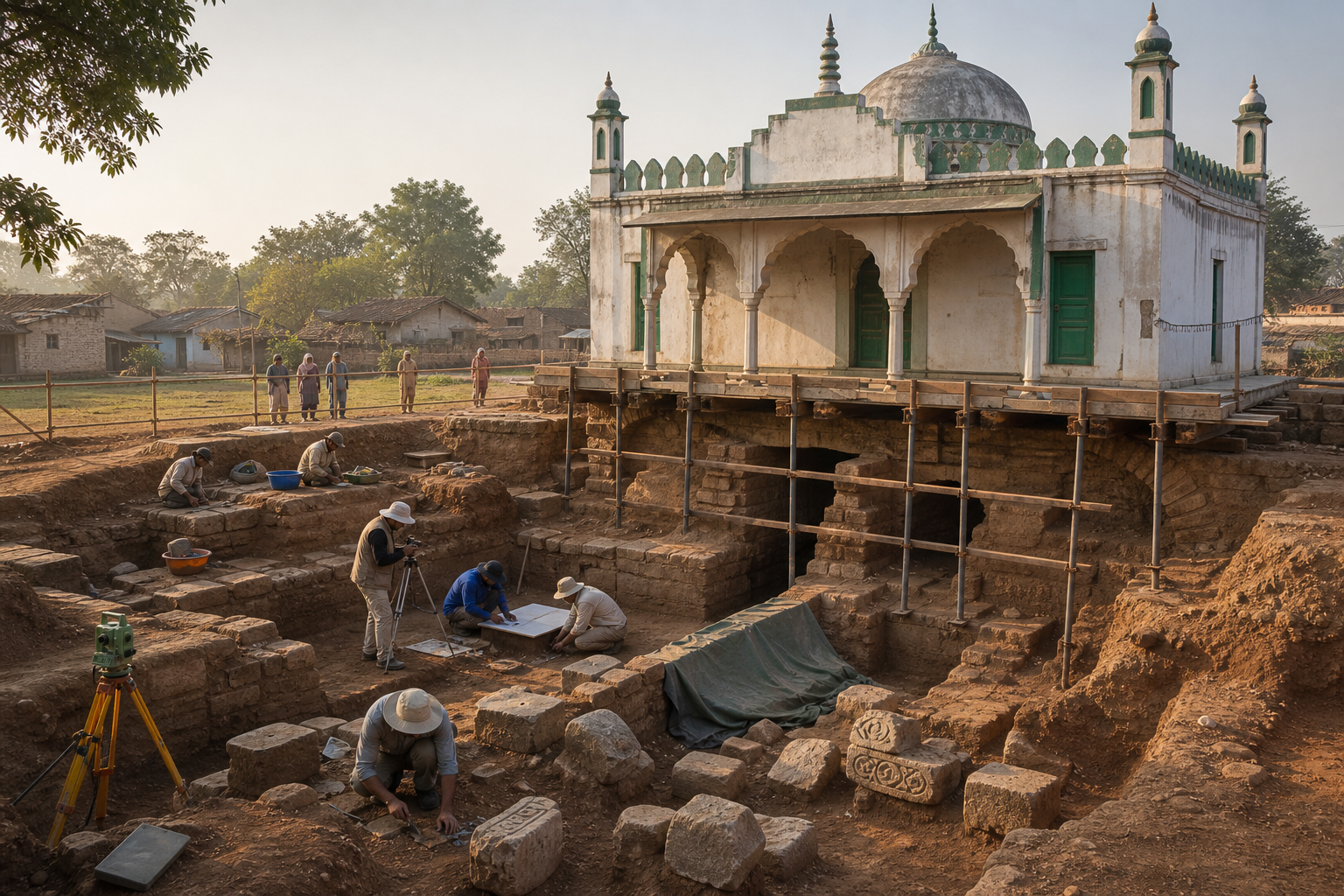
If you have encountered the claim from Sagar, the essential question is not whether the reported find matters. It does. The question is what it can establish – and how to prevent haste, neglect, or conflict from destroying the evidence needed to answer it.
In Papred village in Sagar district, Madhya Pradesh, objects described as idols of Shri Ram were reportedly unearthed during excavation at a mosque. Hindu organisations have sought recognition of possible earlier temple heritage. That possibility deserves a serious investigation, but recognition should follow documented archaeological findings rather than precede them.
Separate devotional significance from the archaeological conclusion
For a devotee, the appearance of a Shri Ram vigraha has sacred meaning even before its date and origin are known. Archaeology asks a different set of questions. Keeping these two forms of understanding distinct does not diminish either one. It protects reverence from careless handling and protects the historical claim from avoidable doubt.
Four questions must be answered separately:
- What are the objects? A qualified examination must assess their material, workmanship, condition, and iconography. A visual resemblance or public description is a starting point, not a final identification.
- When were they made? Artistic style may suggest a provisional period, but stylistic dating becomes stronger when supported by inscriptions, associated material, and an undisturbed archaeological layer.
- How did they reach that location? An object can remain in its original setting, be reused in later construction, be deliberately deposited, or arrive in disturbed fill. These possibilities carry very different historical meanings.
- Was there an earlier temple on the same footprint? That conclusion requires a relationship between the objects and architectural or stratigraphic evidence. An idol found beneath or beside a later structure can indicate earlier Hindu presence without, by itself, proving the plan, date, or fate of a temple at that precise spot.
The distinction matters because each conclusion rests on the one before it. If identity, date, and context remain uncertain, a confident architectural narrative will outrun the evidence. A disciplined inquiry gives a genuine temple-heritage claim the best chance of surviving scholarly, administrative, and legal scrutiny.
What would establish earlier temple heritage at the site
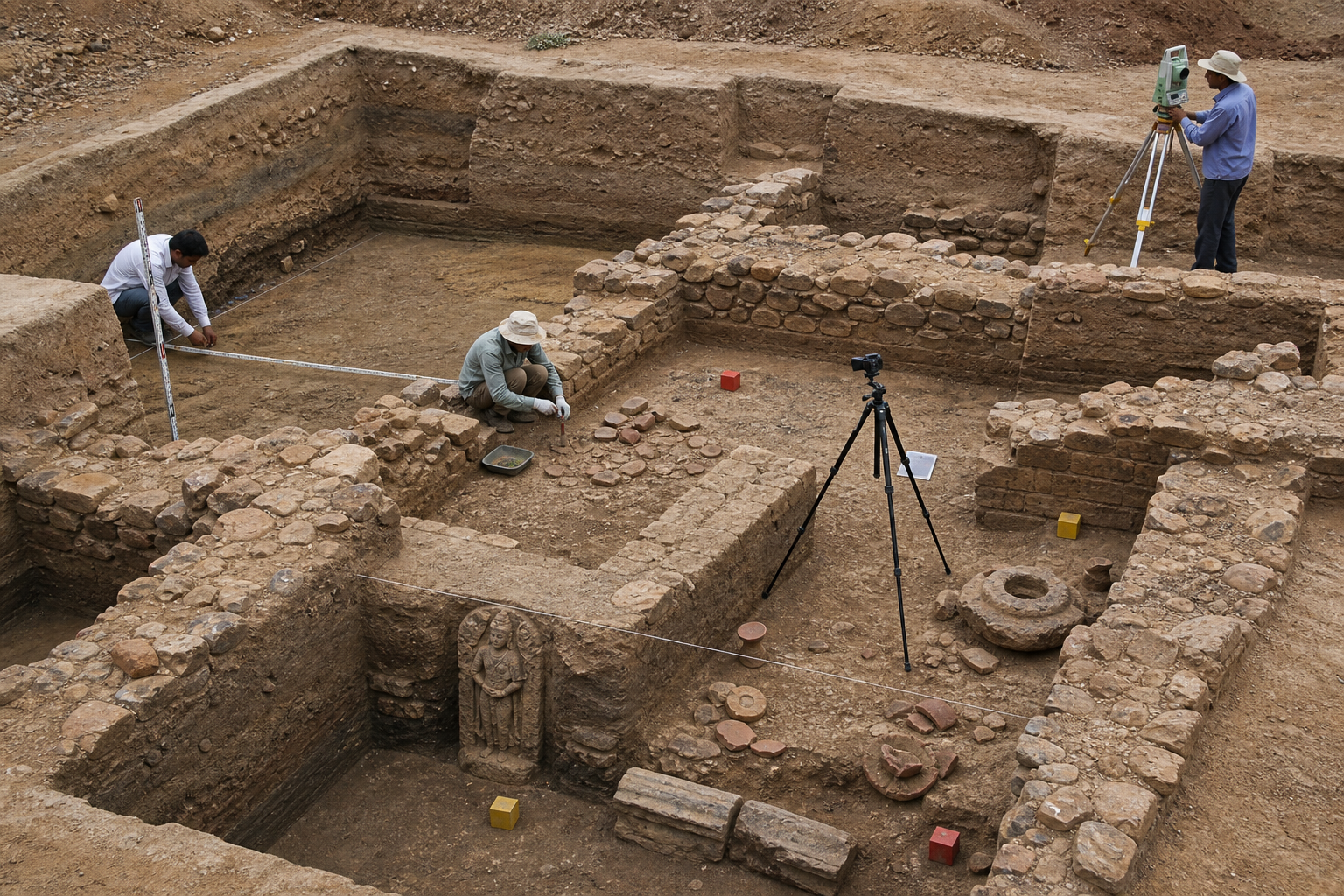
No single photograph or loose object can reconstruct a site’s history. The convincing case comes from several forms of evidence pointing in the same direction.
- Stratigraphy: Archaeologists must document the sequence of soil, floors, foundations, deposits, and later disturbances. An object recovered from a sealed earlier layer carries more chronological value than one found in mixed debris.
- Architectural relationships: Foundations, wall alignments, carved building elements, floor levels, drainage, or other structural remains may reveal an earlier building phase. Their position relative to the mosque must be recorded before interpretation.
- Epigraphy: Any inscription, even if fragmentary, may help identify names, patrons, religious affiliations, or periods. It should be photographed, conserved, transcribed, and reviewed by a suitably qualified specialist rather than interpreted from an unclear image.
- Iconographic and material analysis: The form of a murti, its attributes, stone or other material, carving method, surface condition, and signs of reuse can help place it within a regional artistic sequence.
- Non-invasive survey: Surveying before further digging can identify subsurface anomalies and help experts place limited excavation trenches where they will answer defined questions. Such a survey guides investigation; it does not independently prove that an anomaly is a temple.
- Regional comparison: Securely documented temples, sculptures, inscriptions, and craft traditions from the wider region can provide context. Comparison is useful only when visible similarities are tested against the object’s material and excavated setting.
The strongest finding may be more qualified than public debate expects: evidence of an earlier sacred phase, evidence of reused Hindu material, or evidence of a temple-related deposit are not identical conclusions. A credible technical assessment should state which conclusion the evidence supports, which alternatives remain possible, and where disturbance prevents certainty.
Protect the find before asking it to speak
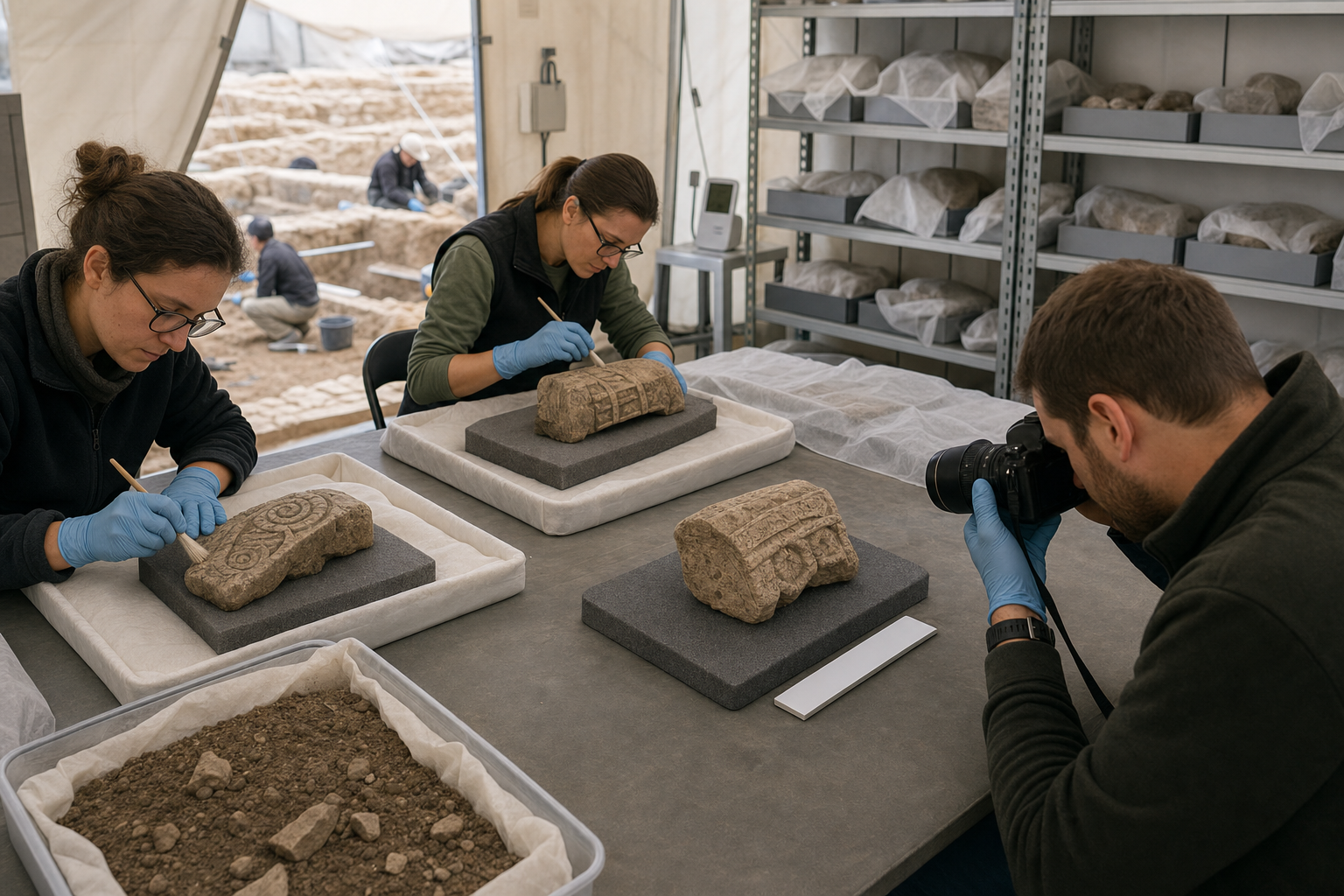
An artefact’s location, orientation, depth, surrounding soil, and relationship to nearby masonry are part of the evidence. Once that context is disturbed without a record, it cannot be recreated. The object may retain devotional and artistic value, but much of its power to establish site history will have been lost.
If you are a resident, organiser, devotee, or community representative involved in seeking action, press for the following sequence:
- Pause additional earthwork in the immediate discovery area. Mechanical digging, debris removal, or exploratory private excavation can mix layers and destroy relationships that experts need to observe.
- Do not clean or alter the objects. Scrubbing, oiling, repainting, repairing, or placing an object in a new setting can obscure surface information and make later conservation harder. Devotional handling should be discussed after professional documentation and stabilisation.
- Preserve the original record. Retain unedited photographs or video showing the objects as encountered, the surrounding ground, nearby masonry, and the sequence in which material was moved. Record who discovered each object and who subsequently handled it.
- Create a signed inventory and custody record. Each object or fragment should receive a distinct entry describing its condition and current location. Every transfer of custody should be documented. This protects the material from substitution, loss, and later disputes.
- Request inspection by competent public authorities. A written request should seek involvement from the Archaeological Survey of India, the relevant state heritage bodies, and the local administration. It should ask for preservation, assessment, and a methodical investigation rather than demand a predetermined finding.
- Use suitable conservation conditions. Secure storage or display must take account of the object’s material and local climate. Minimal intervention and reversible conservation methods should guide any treatment.
Do not trespass, seize an object, conduct unauthorised digging, obstruct worship, or attempt demolition or construction. Apart from the risk of legal consequences, any of these acts can damage the very evidence needed to establish earlier heritage. Parties considering litigation, possession claims, or changes to access should obtain site-specific advice from a qualified Indian lawyer and proceed through written orders.
Ask for a process that every community can verify
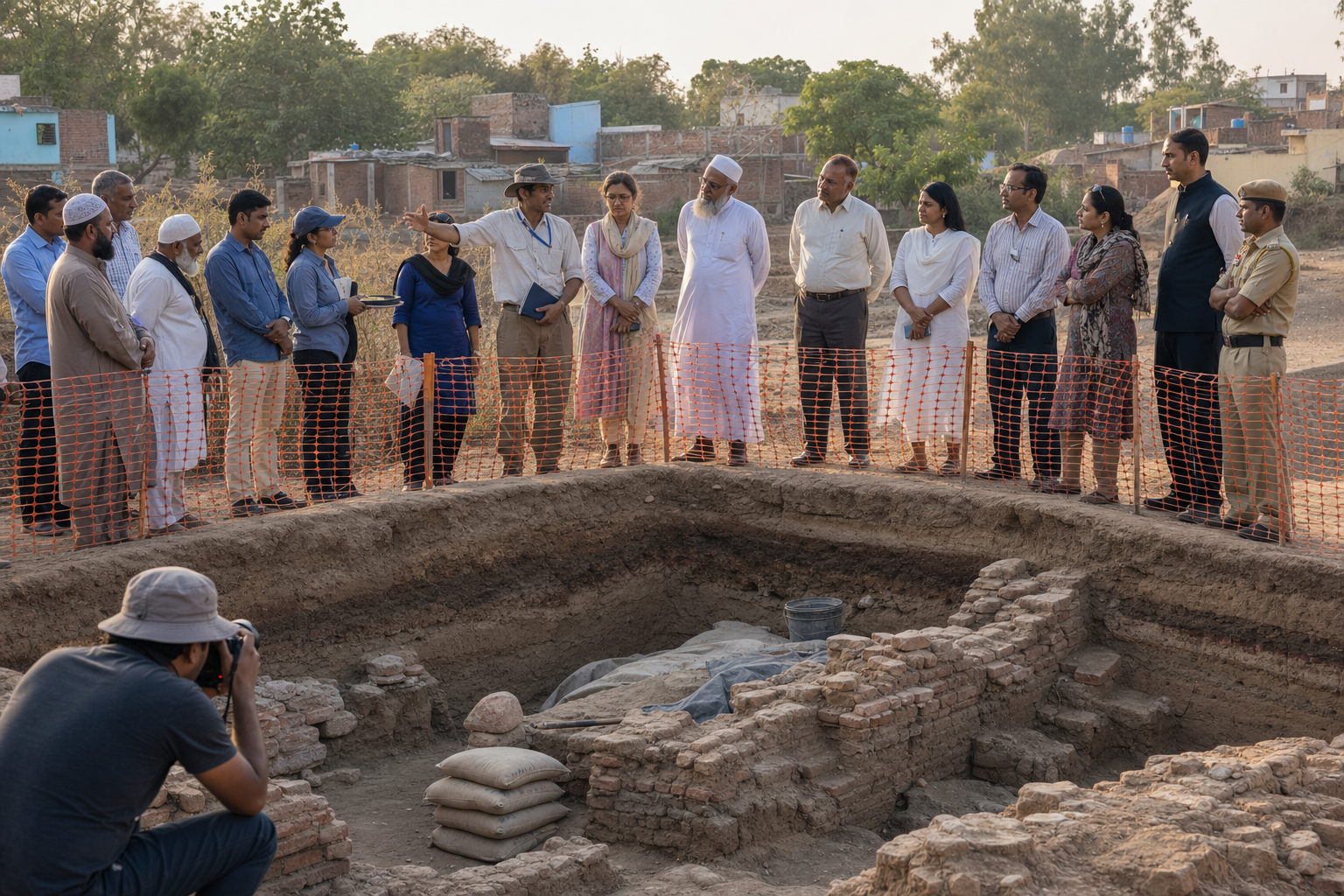
A lawful, pro-heritage response does not require silence about a possible Hindu past. It requires a procedure strong enough that the eventual finding cannot easily be dismissed as partisan, contaminated, or coerced.
A practical written representation to the authorities should request five things: an expert site inspection; a complete inventory of recovered material; secure and documented custody; non-invasive survey followed by any justified archaeological work; and publication of the methods and principal findings. Keep the request focused on preservation and fact-finding. Unsupported claims about dates, rulers, destruction, or the original extent of a temple can be added to social media in seconds and take years to correct.
The local process should include the mosque’s responsible management, Hindu representatives seeking heritage recognition, the administration, archaeologists, and conservation professionals. Their first meeting need not settle history. It should settle immediate responsibilities:
- which area must remain undisturbed;
- who has lawful custody of each recovered object;
- who may enter the protected work area;
- how current religious access will continue safely;
- which institution will direct the technical assessment;
- how photographs, inventories, interim findings, and the final assessment will be released; and
- where either community can record a procedural objection without disrupting the site.
Written minutes and a shared inventory are more valuable than broad assurances. They make it possible to identify exactly where the process has stalled and who is responsible for the next action.
Respecting the mosque’s sanctity while investigating possible earlier temple remains is not a concession about history. The present religious use of a place and the evidence of an earlier phase are different questions. Protecting both during inquiry demonstrates that heritage recognition does not depend on intimidation or evidence loss.
The same discipline applies to the Shri Ram idols themselves. Devotees should be heard on respectful treatment, while conservators protect the material and archaeologists preserve its evidentiary context. Final custodianship, access, conservation, and any form of display or worship should follow lawful decisions informed by all four concerns.
Key takeaways
- Shri Ram idols were reportedly found during excavation at a mosque in Papred village, but the available facts do not yet settle their date, original context, or relationship to an earlier structure.
- An idol can support a case for earlier Hindu presence without independently proving that a temple occupied the mosque’s exact footprint.
- Stratigraphy, architectural relationships, inscriptions, material analysis, and properly planned surveying are the evidence needed to distinguish an earlier temple phase from reuse or redeposition.
- Additional digging, cleaning, relocation, private possession, or premature ritual installation can destroy archaeological information and create legal complications.
- The most useful public demand is for secure custody, an expert-led inquiry, transparent documentation, and a published assessment – not for officials to announce a conclusion before the evidence is examined.
- Protection of current worship and investigation of earlier heritage can proceed together when responsibilities, access, and custody are put in writing.
If you want to help protect the possible temple heritage at Papred, make your next action documentary rather than declaratory. Ask for the inventory, the custody record, the inspection order, the investigation plan, and the eventual findings. Shri Ram’s heritage is served best when reverence is joined to evidence that can endure examination.
References
