-
Landmark ASI survey at Dhar Bhojshala reveals extensive temple spolia in Kamal Maula Masjid

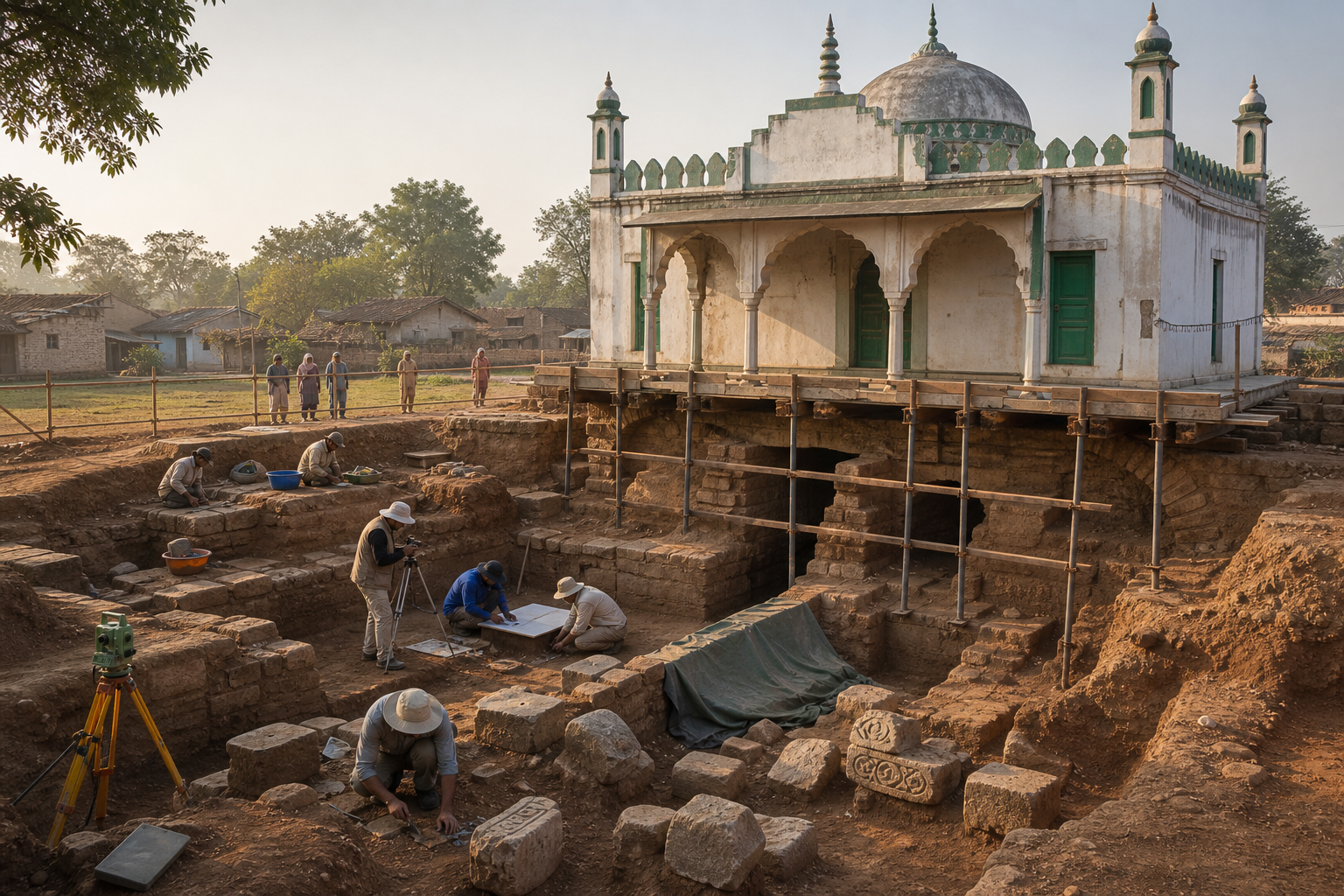
The Archaeological Survey of India informed the Indore Bench of the Madhya Pradesh High Court that Kamal Maula Masjid at Dhar Bhojshala incorporates reused temple materials—architectural members, sculptural fragments, and inscriptions—revealing a stratified building history. This evidence of spolia, identified through standard archaeological methods including architectural typology and epigraphic analysis, places the complex within well-known…
-
California Highway 54’s Mastodon Mystery: Evidence That Could Reframe Early North American Humans

In 1992–1993, monitoring of State Highway 54 construction in San Diego County revealed mastodon remains that some interpret as evidence of early human activity. Subsequent analyses linked the Cerutti Mastodon site to a late Pleistocene age, igniting robust scholarly debate. Critics point to natural breakage or construction damage, underscoring the need for multiple, independent lines…
-
Shri Ram Idols Unearthed in Sagar Mosque Excavation: Heritage Breakthrough, Path to Harmony

Idols of Shri Ram were reportedly discovered during a mosque excavation in Papred village, Sagar, Madhya Pradesh, prompting calls for recognition of possible earlier temple heritage. The situation highlights the importance of transparent Archaeological Excavation guided by ASI and state heritage bodies. A methodical, expert-led inquiry can establish chronology and Historical Significance while respecting ongoing…
-
How a 1990s HRD Directive Stalled Ayodhya Excavations—and Shaped the Ram Mandir Timeline

The post examines how an HRD Ministry directive in the 1990s, issued to ASI official K.V. Ramesh, effectively slowed Ayodhya excavations and influenced the Ram Mandir timeline. It situates the directive within a complex political and social climate following December 6, 1992, emphasizing the need for transparent, court-supervised archaeology. The analysis explains how administrative pauses…
-
A 19th Century Murder that Excavated a Second-Century Sanskrit Manuscript: Episode One

How the brutal murder of a 19th century British trader led to the unlikely discovery of a valuable 2nd century Sanskrit Manuscript. The story begins with the British explorer, tea-planter and diplomat Robert Barkley Shaw who established the Central Asian Trading Company in 1873 to trade primarily in Indian tea.