
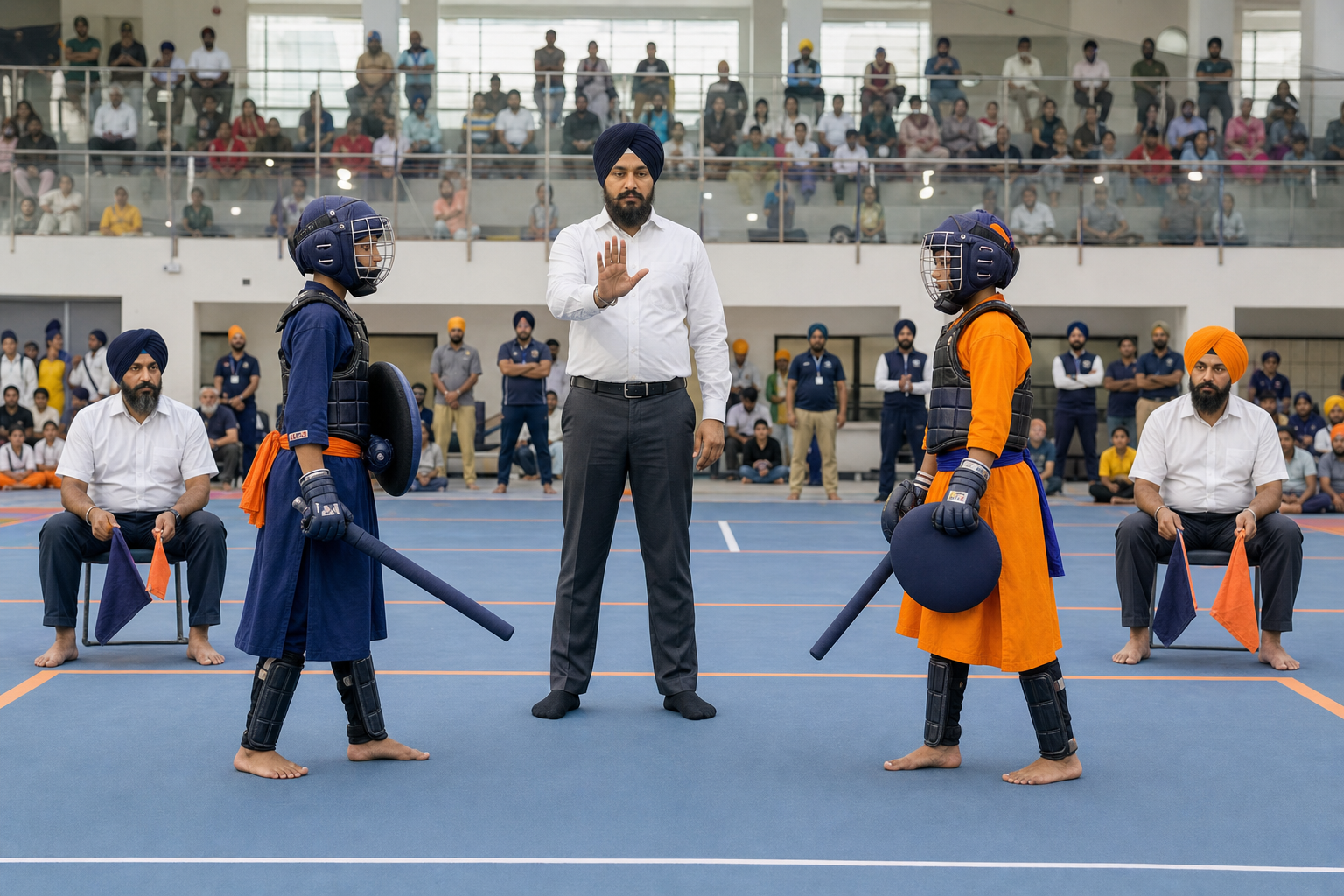
You are preparing a Gatka tournament, selecting officials, or coaching competitors. Two judges interpret the same exchange differently. A coach protests, the schedule stalls, and the audience no longer knows whether the result reflects skill or inconsistency. A longer briefing on tournament morning will not solve that problem.
The durable answer is a national officiating system that makes rules, authority, assessment, and records consistent across regions. That is the practical promise behind NGAI’s nationwide push for standardized training, tiered certification, refresher clinics, harmonized rules, and audit-ready procedures. For organizers and practitioners, the important question is not whether standardization sounds desirable. It is what a credible standard must contain before you rely on it.
Key takeaways
- A national standard begins with one identifiable rulebook version, not an informal understanding that varies between officials.
- Certification must test practical judgment, signals, timekeeping, reporting, and safety decisions. Attendance alone does not establish competence.
- Every event needs written role assignments, a common pre-event briefing, a clear stop authority, and a defined route for resolving procedural disputes.
- Score sheets, warnings, corrections, and incident reports should create an audit trail that can be checked after the event.
- National consistency should expand participation by women, youth, and regional practitioners while preserving Gatka’s Sikh identity and cultural purpose.
One rulebook must answer the decisions that cause disputes
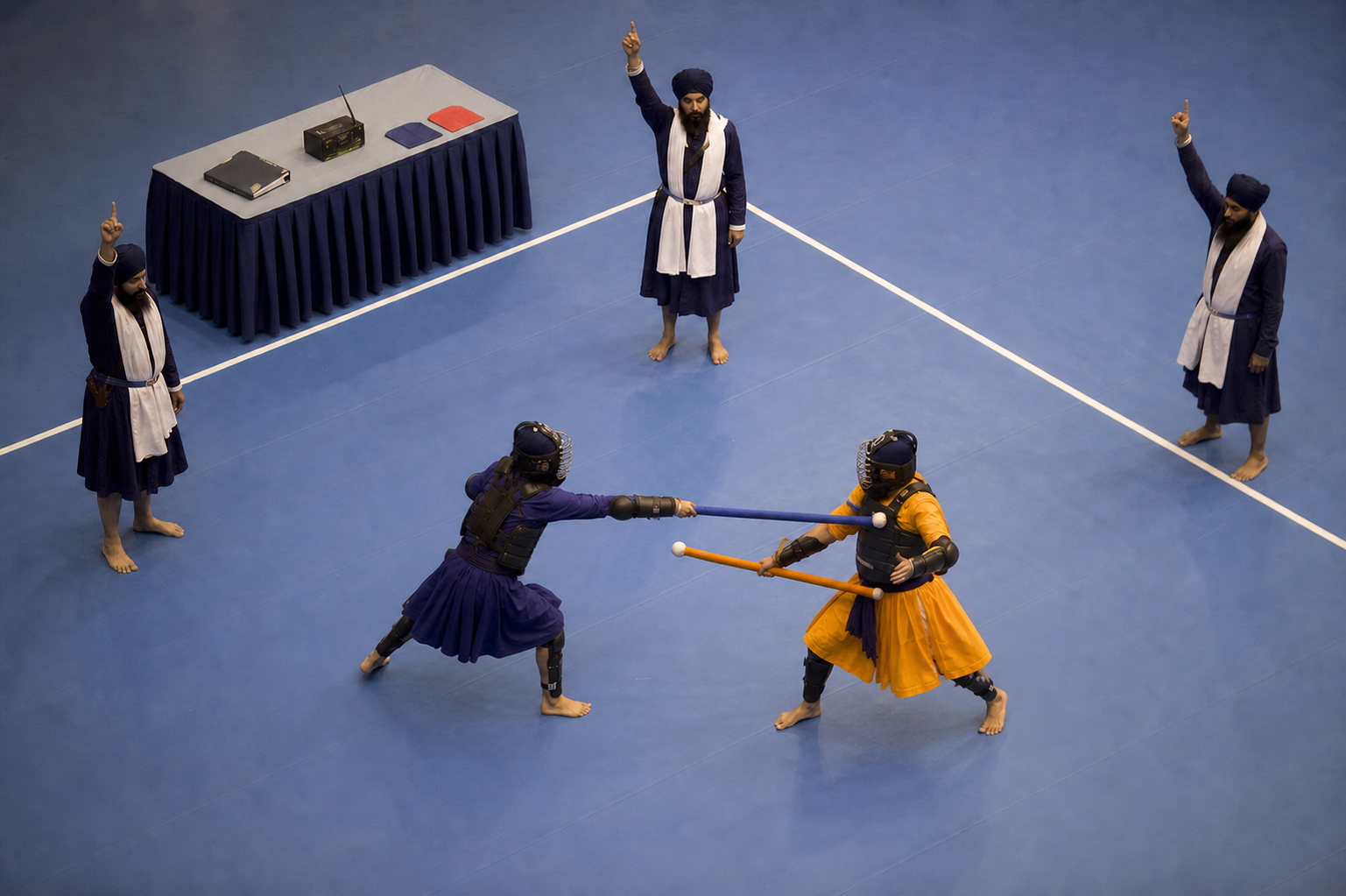
A national rulebook is useful only when it settles decisions an official must make in real time. Broad commitments to fairness and safety are not enough. The operative rules must define how a contest begins and ends, what constitutes a valid action, how boundaries are treated, when a warning becomes a penalty, how time is controlled, who may stop proceedings, and which official has final authority on each type of call.
Those provisions do not have to be identical for every age group, skill level, event format, or equipment category. They do have to identify where distinctions apply. If two divisions use different safety conditions or scoring criteria, officials and teams must be able to find that difference in the governing text before competition begins.
Version control matters as much as the wording. An organizer should be able to state the rulebook title, edition or revision identifier, effective status, and any authorized clarification governing the event. Without that information, one official may rely on an earlier interpretation while another applies a newer one. Calling both approaches standard does not make them compatible.
Before entries open, an organizer should complete five rule-control checks:
- Identify the exact rulebook version that will govern the tournament.
- Circulate the same text and authorized clarifications to officials, coaches, and participating teams.
- Use standardized signals, score sheets, timekeeping records, and penalty terminology that match that version.
- Brief officials with realistic scenarios involving boundaries, simultaneous actions, warnings, stoppages, and disputed calls.
- Record any event-specific variation in writing and confirm that the governing authority permits it.
If a late clarification changes how a rule will be applied, send it to every affected team. Do not resolve a gap through a private conversation with selected coaches or officials. Equal access to the operative interpretation is part of fair play.
Multilingual materials can make national rules usable across India, but translation must not create competing standards. A controlled glossary should keep technical terms and official signals aligned across languages. Where wording appears to conflict, the system must identify which authorized text or clarification governs the decision.
Certification must prove judgment under pressure
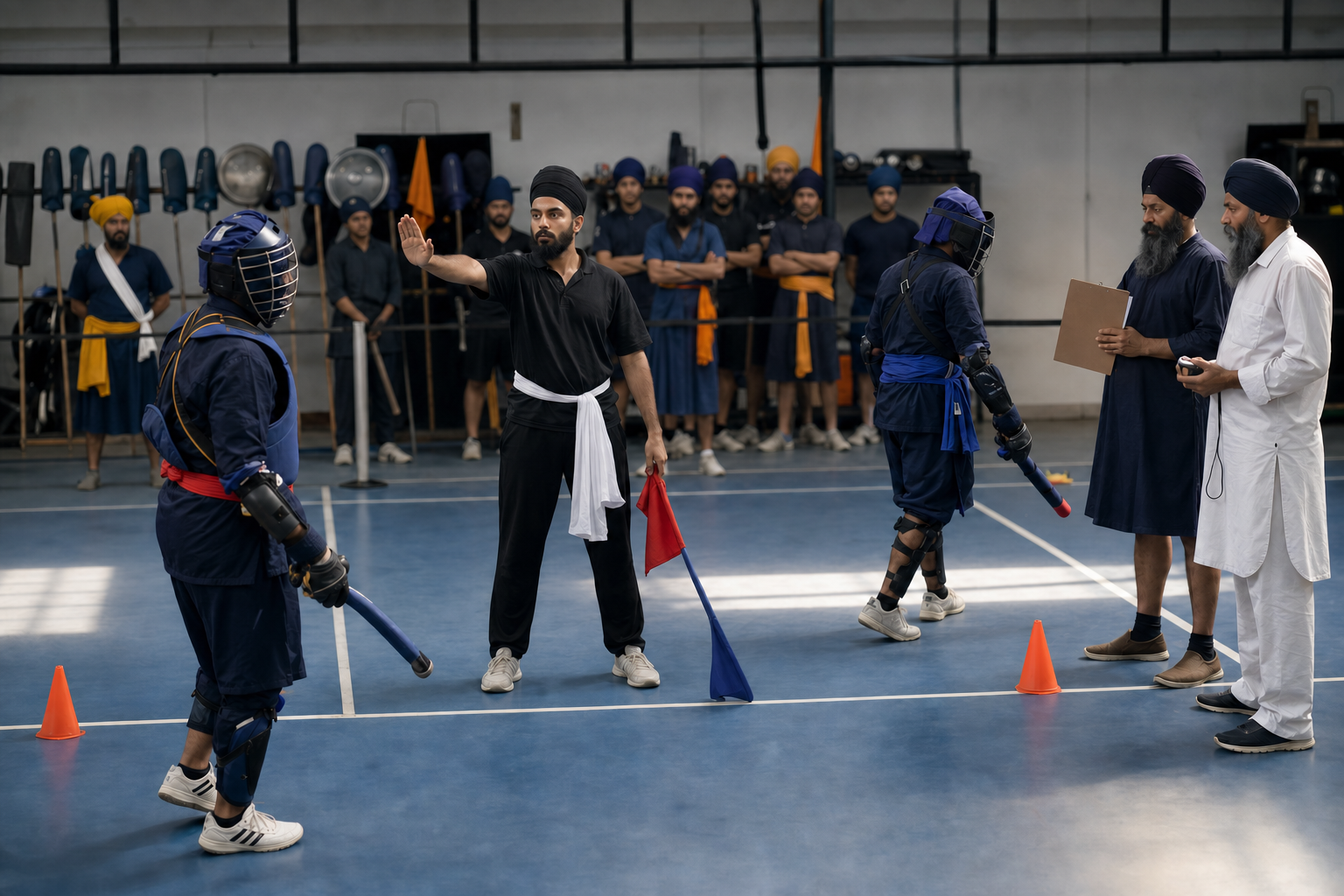
A certificate based only on classroom attendance cannot tell an organizer whether an official will recognize an action from the correct position, communicate a penalty clearly, maintain accurate time, or respond properly when safety and scoring overlap. Standardized modules provide the knowledge base; assessment must show that the candidate can use it.
A defensible certification assessment should cover distinct competencies rather than collapsing them into one overall impression:
- Rule knowledge: the candidate can locate, explain, and apply the provisions relevant to the assigned role.
- Practical positioning and signals: the candidate can observe the contest without obstructing it and can communicate decisions consistently.
- Scoring and timekeeping: the candidate can complete the required record accurately and reconcile it with the other officials’ records.
- Scenario judgment: the candidate can respond to ambiguous exchanges, boundary incidents, warnings, stoppages, and procedural errors.
- Safety authority: the candidate knows when to halt action, who receives the next decision, and what must be documented.
- Ethics and reporting: the candidate can disclose a conflict, avoid biased conduct, and produce a clear factual account after an incident.
Tiered certification should then define scope. Whatever names are chosen for the tiers, each one must state what its holder may do independently, what requires supervision, and which event levels or officiating roles fall outside that credential. A developing official may be ready to shadow or serve in a limited role without yet being ready to lead a high-level officiating team. Clear limits protect both the candidate and the competitors.
Assessment rubrics also need observable criteria. A result such as “good judgment” is too vague to audit. The rubric should instead show whether the candidate identified the governing rule, used the correct signal, communicated with the timekeeper, recorded the decision, and followed the proper escalation route. That structure makes retraining possible because it reveals which skill failed.
Refresher clinics should address rule revisions, recurring errors, safety practice, and difficult scenarios emerging from events. Until an official renewal schedule and certification milestones are formally published, organizers should not invent expiry dates or advertise unannounced credentials. Verify what has actually been issued through the responsible association’s official channels.
A digital registry can make verification practical once it is operational. At minimum, an organizer should be able to confirm a person’s credential status, assessed tier, authorized scope, and relevant refresher completion. Public verification does not require publishing unnecessary personal information; it requires enough authoritative information to distinguish a current, suitable official from an unsupported claim of qualification.
Safety and fair play need authority, evidence, and records
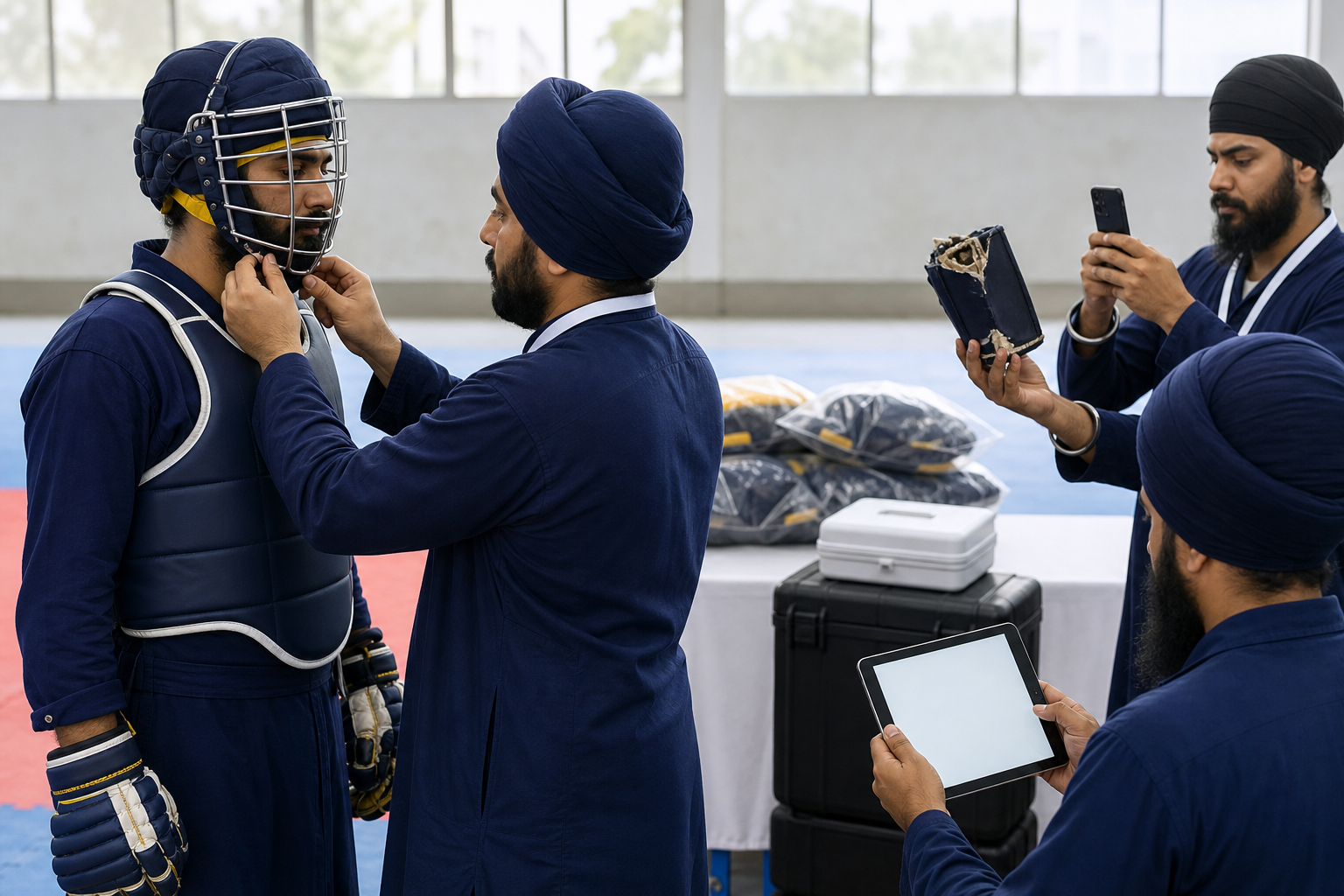
Safety cannot depend on which confident person speaks first when something goes wrong. Before competition, the officiating team should know who may stop action, how the timekeeper acknowledges a stoppage, who examines an equipment or venue concern, and who decides whether proceedings can continue. If an injury requires medical judgment, an official should not improvise a diagnosis; the event’s designated qualified medical personnel must handle that decision.
A practical safety protocol should cover three moments:
- Before the contest: check the competition area, boundaries, required equipment, communication signals, role assignments, and response route for an incident.
- During the contest: use one recognized stop signal, confirm that action and time have stopped, prevent an unsafe resumption, and record any warning or penalty connected to the event.
- After an incident: preserve the relevant score and time records, write a factual report, identify any equipment or venue issue, and route the matter to the person responsible for follow-up.
The incident report should separate observation from conclusion. It should identify what the official saw, what action was taken, which rule or protocol governed that action, and who received the matter next. Loaded descriptions, assumptions about motive, or an account reconstructed much later weaken accountability.
Fair play needs the same discipline. Anti-bias training is most useful when connected to concrete procedures: officials disclose relevant relationships, assignments are reviewed for conflicts, decisions use the same published criteria, and corrections leave a trace rather than silently replacing an earlier record. Confidence and seniority cannot substitute for a verifiable process.
An appeal process should not become an opportunity to replay every close judgment. The governing rules must say which matters are reviewable, who may raise them, what evidence can be considered, and who decides. A disagreement with an official’s observation is different from a wrong rule being applied, an unauthorized person making the call, or a score being recorded incorrectly. Treating those situations as identical creates either endless protest or no meaningful accountability.
Organizers should retain the score sheets, time records, penalty entries, authorized corrections, and incident reports required by the governing framework. Standardized reporting makes recurring problems visible. If several officials misunderstand the same provision, the answer may be a clearer rule or refresher module rather than individual blame.
National consistency should strengthen, not flatten, Gatka
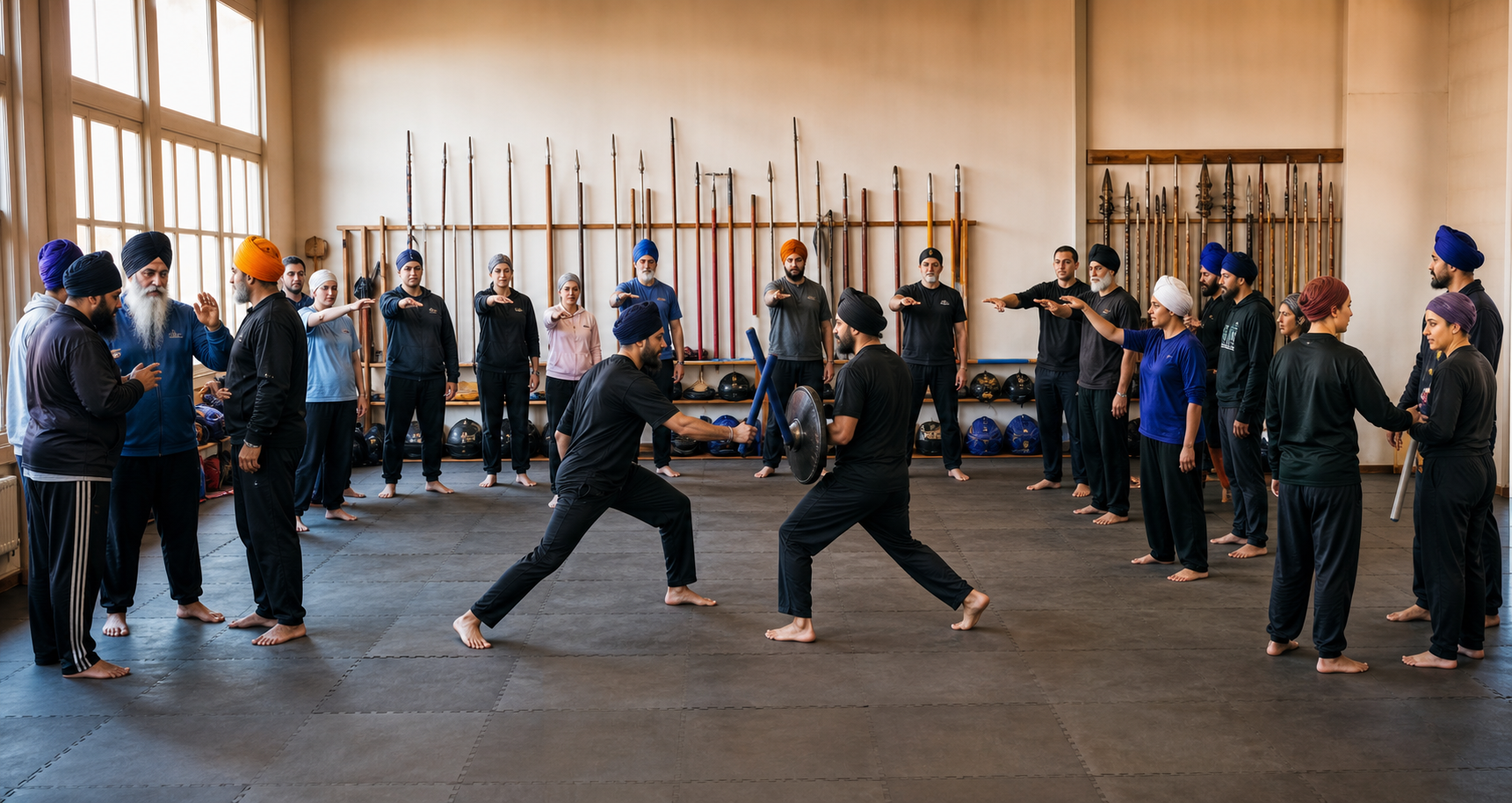
National standards should produce the same technical outcome whether instruction occurs in Punjabi, Hindi, English, or another regional language. The teaching examples can reflect local contexts; the meaning of a scoring signal or safety stoppage cannot change with the workshop location.
That is why participation by women, youth, and regional practitioners belongs inside the design of the officiating system. Inclusion is not an ornamental promise. It affects whether qualified officials are available across the country, whether training materials expose regional ambiguities, and whether emerging participants can see a credible path into service. A youth pathway can develop future officials without assigning a young participant responsibilities beyond the scope that has been assessed.
Dialogue with other Bharatiya martial traditions, including Kalaripayattu and Thang-Ta, can improve thinking about training discipline, event preparation, and community service. It should not blur the technical rules of distinct traditions. Gatka’s scoring, terminology, pedagogy, and Sikh cultural meaning must be governed from within the relevant Gatka framework.
Competition rules should also avoid pretending that a scored tournament contains the whole tradition. A national standard governs the contest placed under its authority. It does not need to redefine ceremonial presentation, community teaching, or Gatka’s wider relationship with Sikh history and discipline. This boundary allows professional officiating to preserve cultural continuity rather than replacing it with a generic sporting identity.
The Dharmic ideal of kshatra joins courage to restraint and responsibility. In officiating, that ethic becomes concrete: an official applies the rule without favoritism, stops unsafe action without hesitation, accepts review without ego, and records the decision truthfully. Values guide conduct, but they cannot replace written rules and assessed competence.
If you are responsible for an upcoming event, act before invitations and schedules are fixed. Request the governing rulebook version, verify each official’s actual scope, assign roles in writing, conduct a scenario-based briefing, give every team the same clarifications, and preserve the resulting records. If any of those elements is missing, describe the event’s level of standardization honestly and send unresolved ambiguities back to the responsible Gatka body. Each well-documented event can then improve the next training clinic, assessment, and revision.
References
