
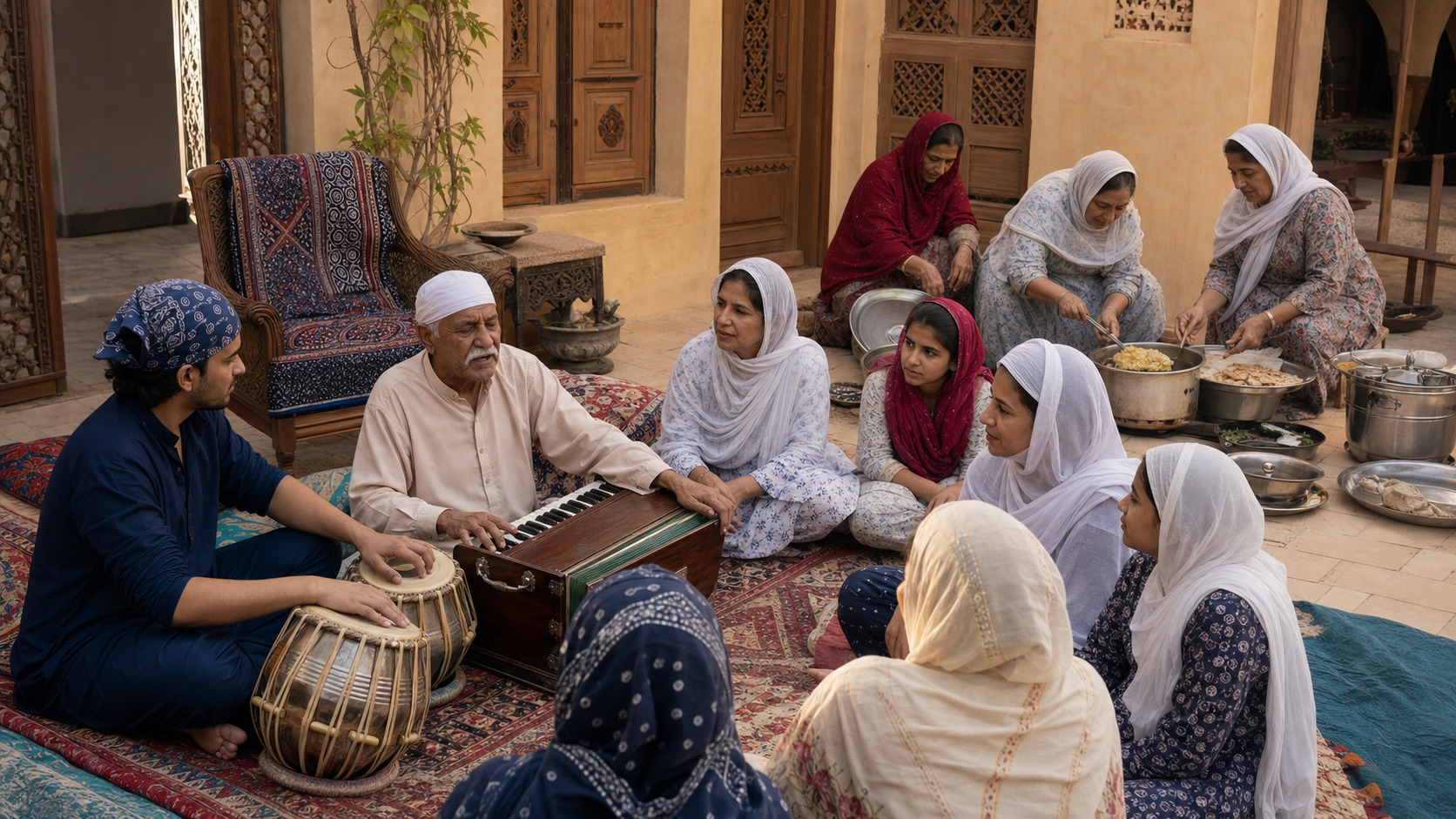
If your family sang kirtan, served in langar, observed gurpurabs, or revered Guru Nanak while remaining deeply rooted in Sindhi life, you may be wondering what to call that inheritance. Was the family Sikh, Sindhi, Hindu, Nanakpanthi, or some combination that no modern form captures neatly?
You do not need to force an answer before you begin. Start with the words your relatives used, the practices they maintained, the places they remembered, and the changes migration brought. That approach will help you describe Sikh-Sindhi Nanakpanthi heritage accurately and preserve more than a convenient label.
Let each identity word answer its own question
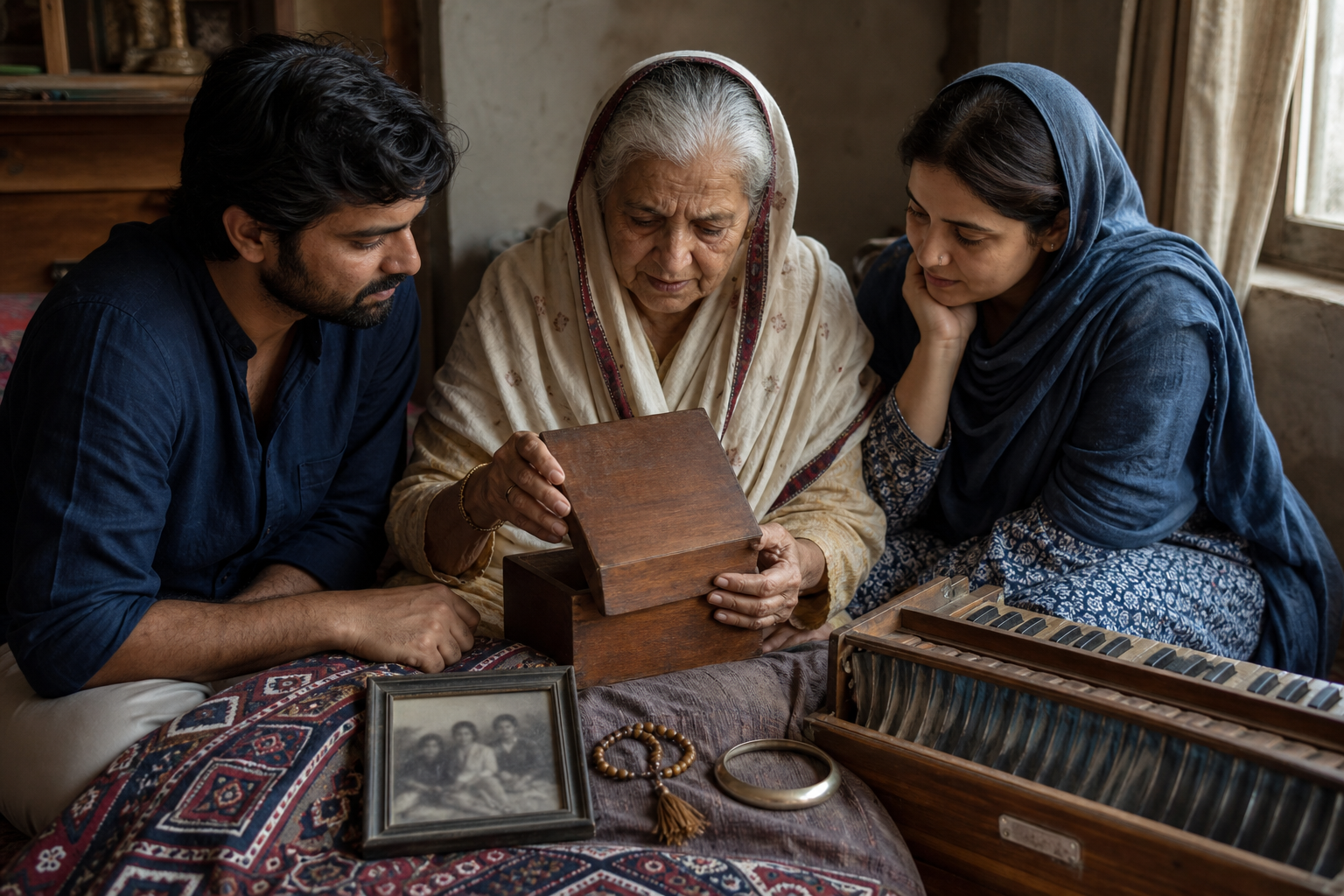
Sindhi, Sikh, and Nanakpanthi do not necessarily compete for the same space. Sindhi can describe a relationship to a region, language, community, and inherited culture. Sikh can identify a religious tradition and community. Nanakpanthi can express devotion shaped by Guru Nanak, although the term may carry different meanings in different families.
This distinction matters because families rarely transmit identity as a tidy definition. They transmit names, prayers, melodies, foods, relationships, sacred objects, and habits of service. A relative may have used several identity words in different settings without experiencing the contradiction that a later generation expects to find.
Create a label ledger before drawing conclusions. For every term you encounter, record:
- The exact word and pronunciation your relative used.
- Who used it and whether it was a self-description or a later description of someone else.
- The setting in which it appeared: home, sangat, school, marriage, migration paperwork, or community organization.
- The practices, places, and relationships the speaker associated with it.
- Any alternative spelling or translation, without silently replacing the original.
If two relatives disagree, preserve both accounts. Do not settle family history by majority vote. A disagreement may reveal a generational change, a difference between public and household identity, or an adaptation made after migration. The disagreement is evidence, not an inconvenience to remove.
Apply the same care when using broad civilizational language. Sikhism, Hinduism, Buddhism, and Jainism can share a Dharmic field of ethical conversation without becoming interchangeable. Ahimsa, dana, satya, and Sarbat da Bhala can illuminate common ground, but shared vocabulary should open inquiry rather than erase the distinct teachings and histories carried by each tradition.
Reconstruct the inheritance through practices
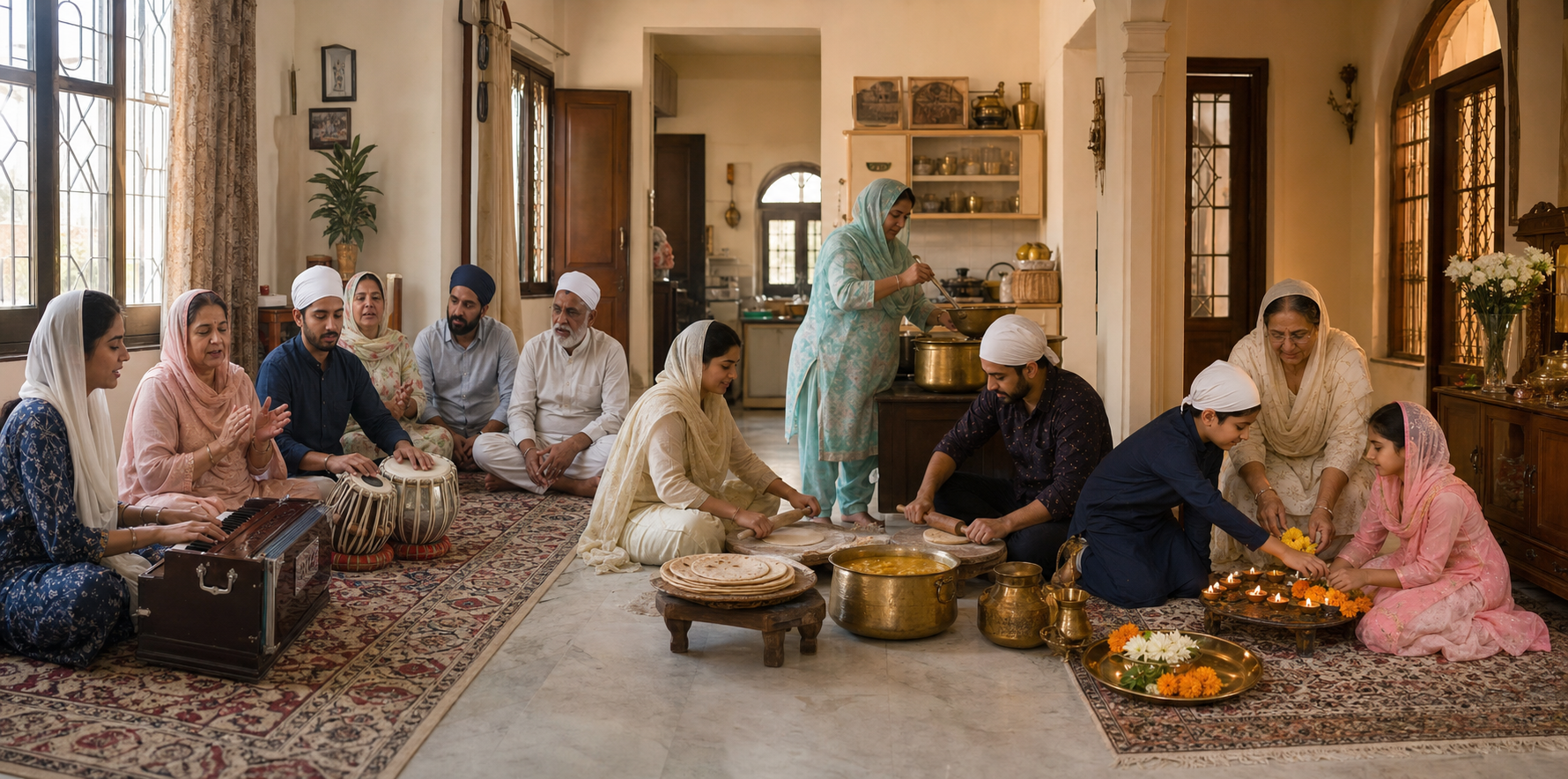
Household practice is often more informative than a label remembered without context. In Sikh-Sindhi history, seva, kirtan, sangat, and langar formed durable connections between Guru Nanakpanthi devotion and Sindhi community life. Treat each practice as a doorway into a larger network of people, places, and obligations.
- Seva: Ask what work was performed, who organized it, who received it, and whether children participated. The answer may show how devotion became a family ethic rather than remaining only a belief.
- Kirtan: Record where it took place, who led it, what language was used, and which compositions people remember. A remembered melody or recurring line can help relatives recover details that a general identity question does not.
- Sangat: Ask who gathered together and how the gathering was named locally. Record whether it met in a dedicated institution, a shared sacred space, or a home. Do not impose a present-day institutional category on an older gathering without testimony.
- Langar: Look beyond the meal. Ask who purchased ingredients, cooked, served, cleaned, donated, and invited others. These roles show how dignity and collective responsibility were practiced.
- Scriptural recitation: Write down the name of the text exactly as the family gives it. Photograph any title page, colophon, handwritten note, cover, or storage chest that can clarify its history. Do not identify an edition or script from memory if you are uncertain.
- Gurpurab observance: Ask which observances the family marked, what happened at home, what happened in the wider community, and what changed after resettlement.
A single practice cannot prove a complete religious identity. Shared spaces and shared service are part of this history, so one photograph of a family at a shrine or one sacred object in a home should not carry more weight than it can bear. Build a bundle of evidence: testimony, material objects, place names, language, recurring observances, and relationships with congregations.
Use the same interview pattern for every practice: What was done? Where? With whom? What did the family call it? What did it mean to them? What changed later? Repeating these questions makes different interviews comparable without steering relatives toward your preferred answer.
Map migration as continuity, change, and loss
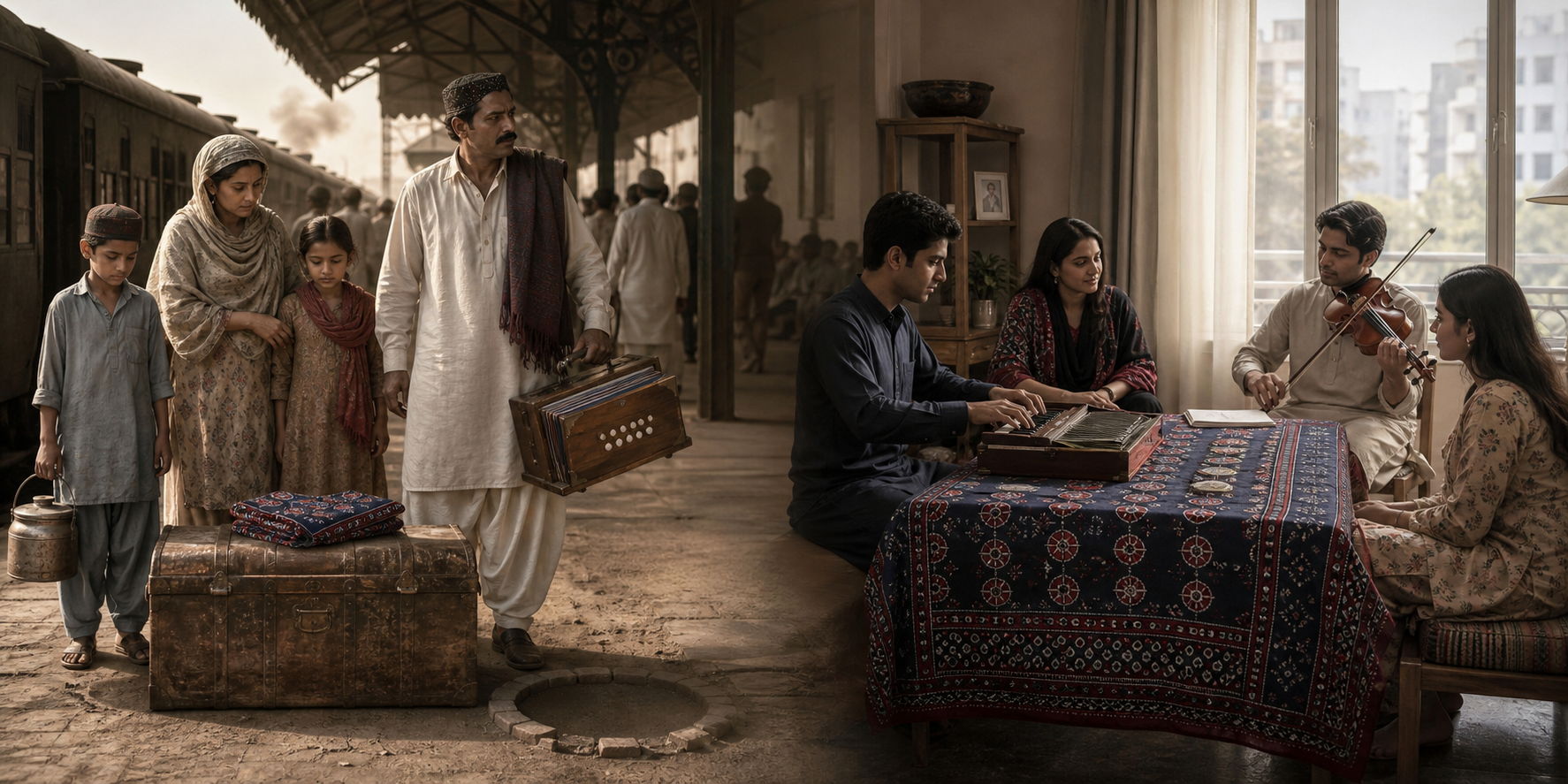
Partition-era migration carried Sikh-Sindhi networks from Sindh into India and the global diaspora. The geography changed, but community kitchens, recitation, gurpurab observance, and other forms of collective devotion continued to carry memory. Your family map should therefore trace practices as well as destinations.
Build the migration account in stages:
- Life in Sindh: Record the town, neighborhood, sacred places, home languages, community names, and recurring gatherings that relatives can identify.
- The departure: Record who travelled together, which possessions or sacred objects moved with them, and which details remain uncertain. Do not turn a family recollection into a precise route unless the evidence supports that precision.
- Initial resettlement: Identify where the family first rebuilt daily life. Ask which observance, gathering, or act of seva was re-established and which relationships made that possible.
- Later dispersal: Follow subsequent movement within India or into the wider diaspora. Note when language, institutional affiliation, or the form of an observance changed.
Then classify each inherited practice under four plain descriptions: continued substantially as remembered, adapted to new conditions, adopted after migration, or discontinued. This prevents two common mistakes. The first is treating every present custom as timeless. The second is treating every adaptation as a loss of authenticity.
Adaptation may be the reason a tradition survived. A household gathering may have moved into a community institution. A recitation may have changed language as younger generations became more comfortable in another tongue. Langar may have become the strongest point of continuity because it could unite people even when vocabulary and formal affiliation shifted. Record the change itself before judging it.
Leave visible gaps where the family does not know. An archive that says unknown is more trustworthy than one that fills silence with an attractive story. Future relatives may discover a photograph, inscription, letter, or testimony that resolves the question.
Build an archive that preserves connection and difference
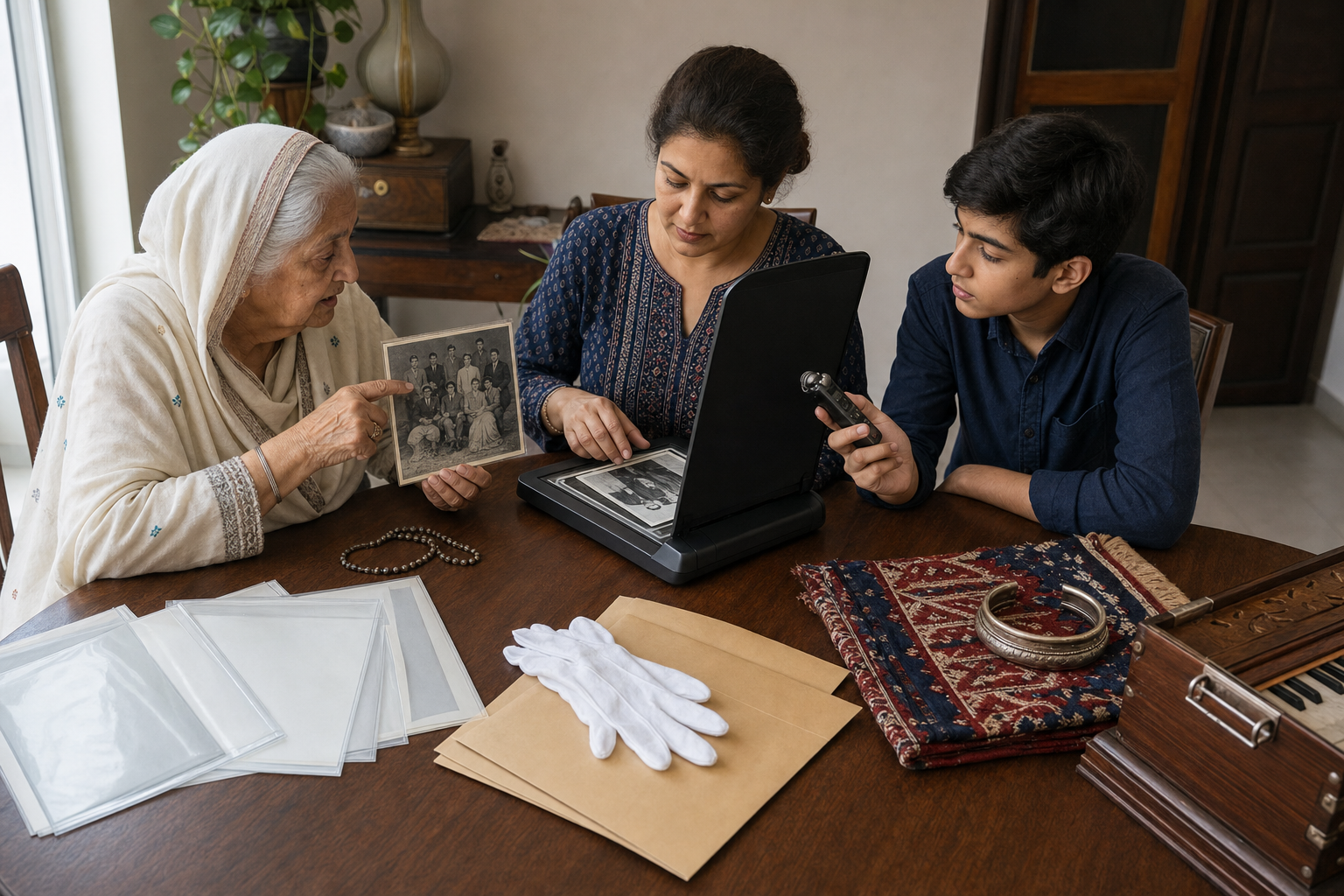
A useful heritage archive is not a folder of unexplained scans. It lets another person understand what an item is, where it came from, why it mattered, and how confidently those facts are known. Begin with a narrow unit: a family branch, a remembered sangat, a sacred site, or a single practice such as langar.
- Obtain consent: Explain what you are recording, who may see it, and whether it may be shared publicly. A relative may permit family access while declining publication.
- Capture exact testimony: Preserve the speaker’s own words, pronunciations, uncertainty, and pauses. Keep your interpretation in separate notes.
- Digitize both sides: Scan or photograph the front and back of photographs, letters, cards, and certificates. Handwriting, studio marks, addresses, and later annotations can matter as much as the main image.
- Add metadata immediately: Record the people, place, approximate period, language or script, original owner, present custodian, associated practice, and person who supplied the identification.
- Separate fact, memory, and inference: Mark what an object itself establishes, what a relative remembers, and what you have tentatively inferred. Never convert perhaps into certainly during transcription.
- Preserve original names: Keep historical place names, personal names, honorifics, and community terms as recorded. Add searchable modern spellings in a separate field instead of overwriting the inherited form.
- Store more than a working copy: Keep a backup in another safe location and give an agreed family custodian access. A private collection that only one person can open is vulnerable to both technical failure and forgotten passwords.
Bring younger relatives into the work with a defined responsibility. They can scan photographs, organize filenames, transcribe a short recording, map place names, or prepare captions while an elder explains context. This makes preservation an act of seva: careful work performed for people who will inherit a memory they did not personally witness.
If you plan a community event, avoid a display that merely declares harmony. Choose a specific practice or migration route. Pair each object with a named place, a family testimony, an explanation of what is known, and a note about what changed. That method shows connection without pretending that Sikh and Sindhi identities, or different Dharmic traditions, have no boundaries of their own.
A compact heritage packet can make the collection usable beyond the family. Include a migration map, a glossary of family terms, selected photographs with captions, short audio clips where permission allows, and a note explaining one practice. Such a packet can support a community discussion, youth project, or classroom activity without exposing the entire private archive.
Key takeaways
- Do not make Sikh, Sindhi, Hindu, and Nanakpanthi compete before you learn how your family used the terms.
- Reconstruct heritage through a bundle of practices, testimony, objects, places, languages, and relationships rather than a single ritual or photograph.
- Map migration in stages and mark each practice as continued, adapted, adopted later, or discontinued.
- Preserve disagreement and uncertainty instead of editing them out of the family record.
- Use consent, metadata, backups, and a clear distinction between fact, memory, and inference.
- Turn preservation into living seva by giving younger relatives concrete archival work and meaningful access to elders.
Before your next family gathering, choose a single remembered practice and ask an elder to describe who participated, where it happened, what the family called it, and what changed after migration. Save the exact words beside any relevant photograph or object. That modest record is already a stronger inheritance than an unsourced family label, and it gives the next conversation somewhere solid to begin.
References
