
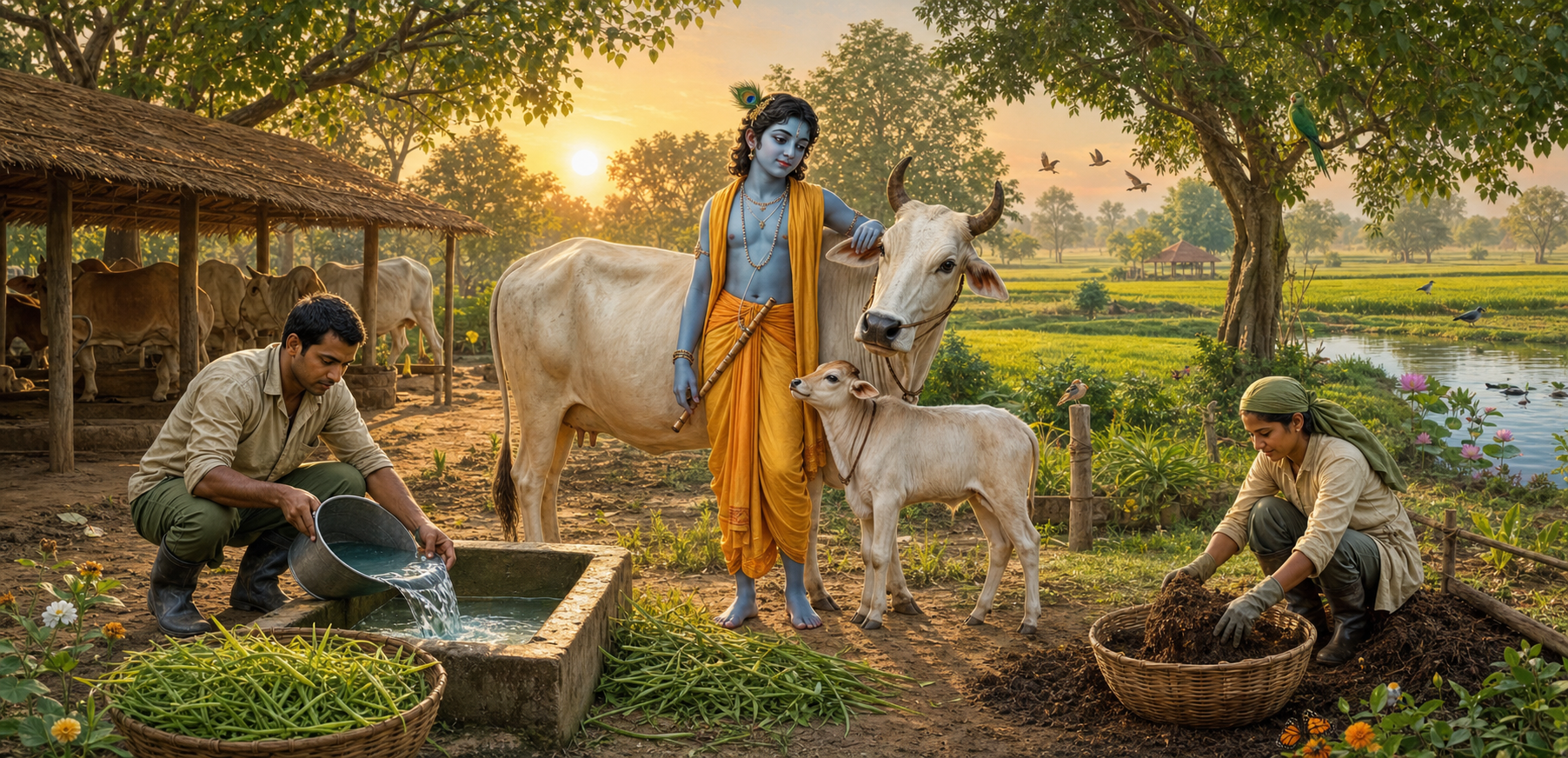
You may love Krishna as the cowherd and still be unsure what that love asks of you, especially if you live far from cows or have never worked in a goshala. You do not need to imitate rural life. You need to make reverence accountable: learn what care requires, support it honestly, and let it change your habits.
Go-seva becomes bhakti when it moves beyond occasional sentiment and becomes dependable service. Feeding, sheltering, protecting, and honoring cows bring the animal, caregiver, community, and land into one field of duty. In a Krishna-centered ethic, cows are not merely sacred symbols. They are sentient participants in a living culture of devotion and care.
Begin with the relationship, not the symbol
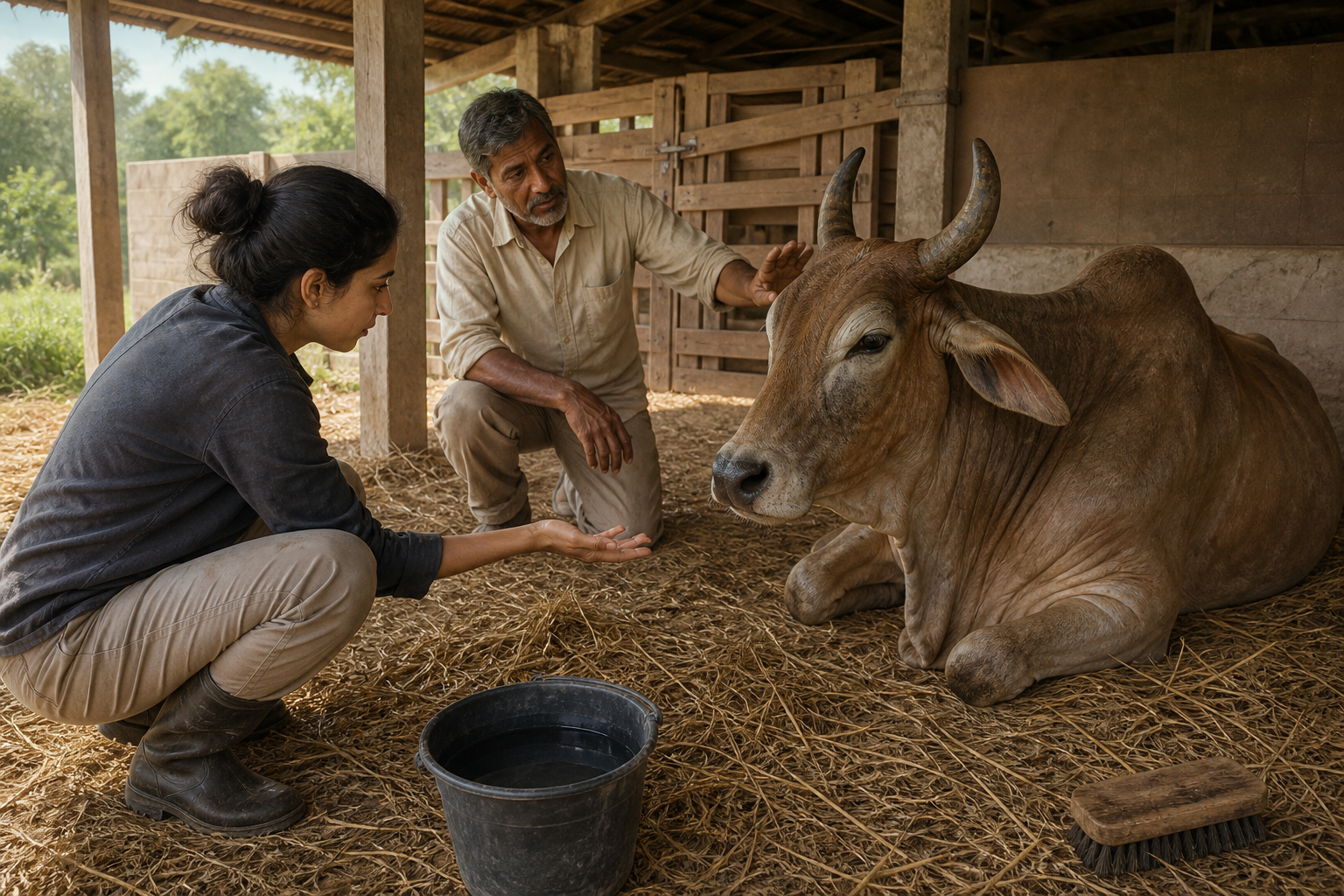
An image asks for your attention. A living being asks for food on schedule, clean water, safe shelter, patient handling, and care when something goes wrong. That difference is the beginning of serious go-seva.
Cows in Krishna-lila embody innocence and generosity, but those qualities should not turn the living cow into a devotional prop. If a ceremony is elaborate while continuing care is uncertain, the priorities have been reversed. The first offering is not display. It is responsibility that remains after the visitors leave.
Before calling an activity cow protection, ask three direct questions:
- What will this cow need on an ordinary day when no festival or donor visit is taking place?
- Who is personally responsible for meeting those needs, and who takes over when that person is absent?
- Will protection continue when the animal becomes old, ill, difficult to handle, or costly to maintain?
These questions turn emotion into duty. They also explain why self-restraint belongs beside compassion. You may have to give time, limit consumption, accept less visible work, or refuse to support an arrangement whose promises exceed its capacity. That restraint is not separate from devotion. It is one of the ways devotion becomes trustworthy.
Choose a form of go-seva you can sustain
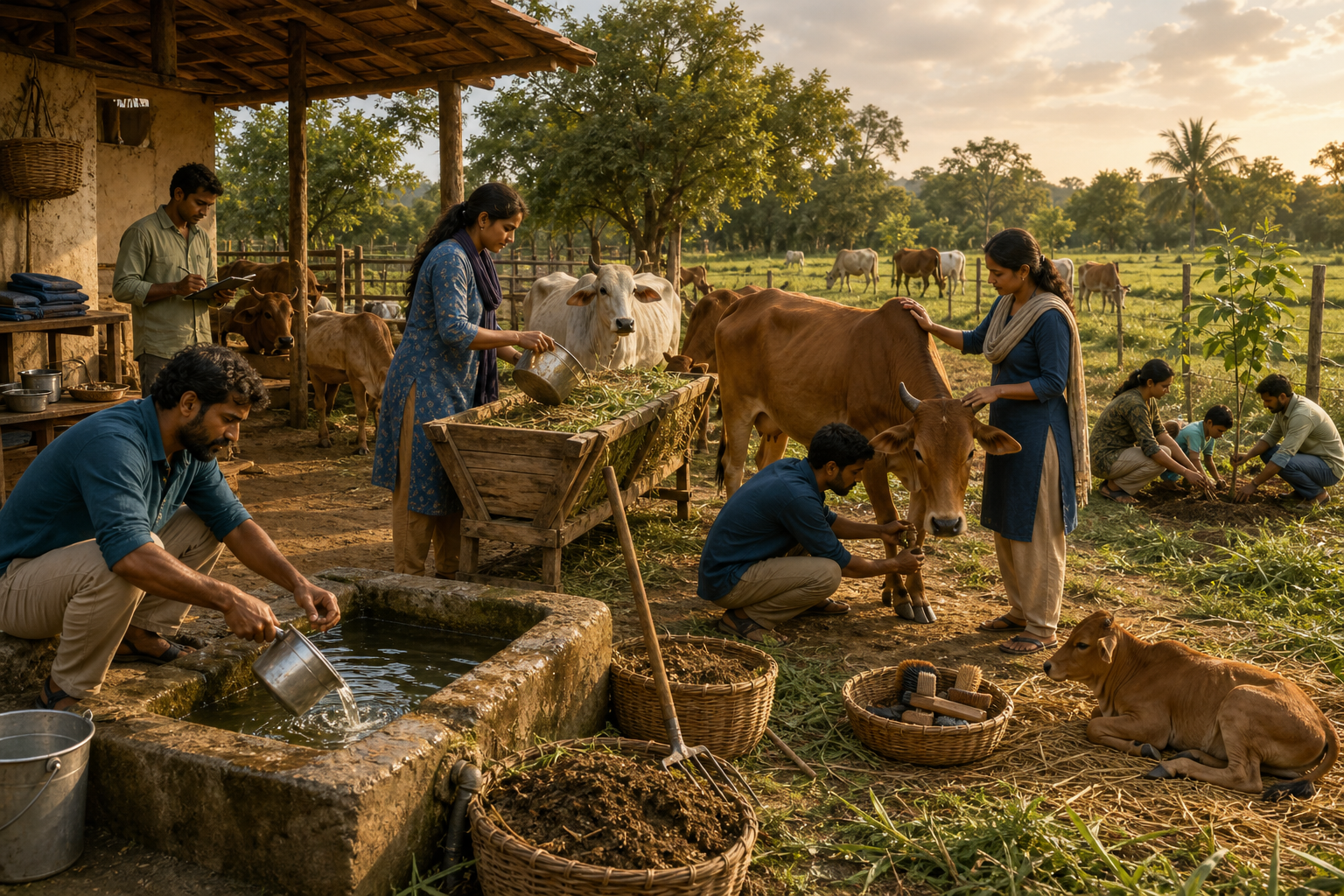
A visible act can feel complete before it has met a continuing need. A garland is immediate; fodder, water, cleaning, records, veterinary attention, and caregiver relief have to be provided again and again. Choose your seva by asking what you can continue, not what will look most devotional in a photograph.
If you have no direct access to cows
Distance does not make service impossible. Find a cow-care project willing to answer practical questions, then support a recurring need that fits your means. Ask whether your contribution is intended for fodder, shelter maintenance, veterinary care, land work, or caregiver support. A modest commitment that reaches the same need reliably can be more useful than a dramatic gift with no follow-through.
You can also offer a skill the caregivers genuinely need: bookkeeping, record organization, translation, scheduling, communications, or transparent fundraising. Ask first. Remote work is seva when it removes a real burden; unsolicited activity that creates more administration is not.
If dairy is part of your household, do not let a sacred label settle the ethical question for you. Ask how the cows and calves are treated, what happens when milk production declines, and whether care continues through illness and old age. If credible answers are unavailable, reduce your dependence or seek a source whose practices you can verify. This is not a contest in personal purity. It is a refusal to separate prayer from the consequences of consumption.
If you can serve in person
Begin under an experienced caregiver. Reverence is not a substitute for handling skill, and a large animal should not have to absorb a volunteer’s improvisation. Take the work assigned to you, even when it involves cleaning vessels, preparing feed, maintaining shelter, organizing supplies, or updating records rather than touching or decorating a cow.
Do not introduce unfamiliar food, attempt treatment, or change a routine on your own. If you notice an injury, unusual behavior, or another possible problem, report it promptly to the responsible caregiver. The useful volunteer makes daily care steadier and safer.
Before bringing a cow onto your own land
Pause before acquisition. Keeping a cow is continuing husbandry, not the purchase of a household emblem. Write down how you will provide dependable fodder and water, suitable shelter, manure management, qualified veterinary access, routine expenses, emergency expenses, and substitute care when you are absent. Include what happens as the animal ages or ceases to be productive.
If part of that plan is blank, support an established caregiver instead of making a promise you cannot yet keep. Waiting can be an act of protection. It guards the animal from an improvised arrangement and keeps your devotion from being built on an obligation beyond your present capacity.
Test daily care before giving trust or money
Words such as goshala, seva, protection, and ahimsa express an intention; they do not by themselves demonstrate the daily result. Because a donation carries both financial and moral trust, due diligence belongs inside devotional giving.
Ask the people responsible for the cows about the following:
- Continuity of protection. What is the policy for animals that are old, chronically ill, no longer productive, or in need of costly care?
- Daily necessities. How are suitable fodder, dependable water, clean shelter, safe space, and access to qualified veterinary care provided?
- Named responsibility. Who checks the animals every day? What training do handlers have, and who provides backup when a regular caregiver is unavailable?
- Financial clarity. Can the organization explain how contributions are allocated and show records appropriate to the scale of its work?
- Ecological capacity. Where does fodder come from, how is manure managed, how are soil and water protected, and can the available land and staff support the number of animals present?
- Honest reporting. Are illness, deaths, new arrivals, urgent needs, and setbacks recorded and communicated, or do supporters see only ceremonial occasions?
A single favorable visit cannot establish everything, but ordinary details tell you more than staged devotion. Look for accessible water, organized feed, maintained shelter, calm handling, clear routines, and a responsible person who can answer practical questions. Your observations cannot replace veterinary or agricultural expertise, but evasive answers are enough reason to delay a donation.
Do not confuse limited resources with bad faith. A small or struggling shelter may be honest about its constraints and clear about what a contribution will change. That honesty is valuable. The warning sign is not simplicity; it is the inability or unwillingness to explain who is responsible, what the animals need, and how entrusted resources reach them.
Treat the cow, the land, and the caregiver as one system
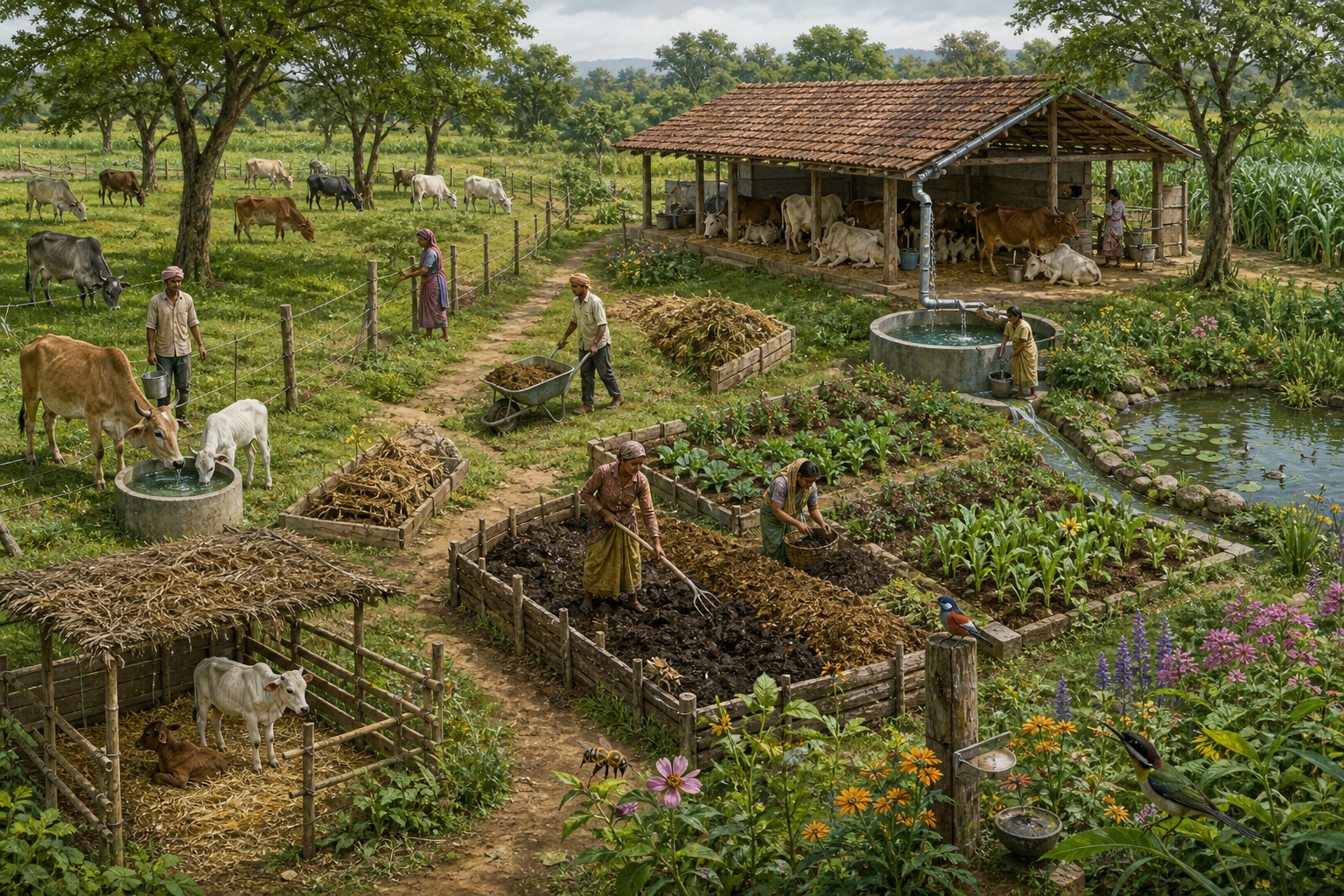
Sacred ecology is not a decorative phrase for admiring a pastoral scene. It names a web of obligations. A cow depends on fodder grown somewhere, water drawn from somewhere, shelter built and maintained by someone, and manure handled without burdening the surrounding land or community. Cow care fails when any part of that relationship is treated as somebody else’s problem.
- Care for the animal means placing welfare before display or short-term utility. Food, water, shelter, appropriate handling, and care through every stage of life are continuing duties.
- Care for the land means matching the number of animals to available fodder, water, space, labor, and waste-management capacity. Generosity should not overload the ground that must sustain it.
- Care for people means giving caregivers workable routines, adequate supplies, respect, training, relief, and clear responsibility. Exhausted or unsupported workers cannot indefinitely uphold an ideal on goodwill alone.
Taking in more cows may appear compassionate, but accepting animals without the fodder, water, shelter, labor, or medical support to care for them can turn rescue into neglect. Measure generosity by the quality and continuity of care that can be sustained, not merely by the number of animals gathered under a sacred name.
This is where ahimsa becomes practical. Non-harm is not passive admiration of innocence. It requires you to notice preventable harm, trace your own part in it, and change the routine that permits it. Go-seva gives that discipline an address and a schedule: someone must feed, clean, account, repair, observe, and return.
Compassion, stewardship, responsibility, and self-restraint also offer shared ethical ground among Hindu, Buddhist, Jain, and Sikh communities. Their philosophies should not be flattened into a single doctrine. Cooperation does not require that. It requires a clear task: protect vulnerable life, care for the land that sustains it, and keep promises made in the name of dharma.
A temple or community can put this principle into practice by connecting public devotion with continuing responsibility. Pair celebrations with a care budget that survives after the event. Give volunteers recurring duties instead of ceremonial access alone. Tell supporters what was difficult as well as what was beautiful. Teach children through suitable acts of service rather than asking them only to pose beside an animal.
At home, begin with the habits already within your control. Buy only what your household will use. Reduce food waste. Ask harder questions about animal-derived products. Direct a stable share of your time or giving toward verified care. If you garden or manage land, consider how soil, water, vegetation, animals, and waste affect one another before calling a practice ecological. No isolated purchase proves devotion; the direction and consistency of your habits matter more.
Key takeaways
- Krishna-centered cow care begins with the living animal’s continuing needs, not with the symbolic value of a ceremony.
- Choose seva you can repeat: dependable support, useful skilled work, supervised physical service, or carefully planned husbandry.
- Before donating, verify continuity of protection, daily welfare, named responsibility, financial clarity, and ecological capacity.
- Do not acquire cows until fodder, water, shelter, veterinary access, finances, backup care, and lifelong provision are settled.
- Practice ahimsa across the whole relationship among cows, caregivers, consumption, community, and land.
Choose a cow-care community you can visit or responsibly support. Ask how it handles ordinary feeding, illness, aging, caregiver absence, finances, and pressure on the land. Then make a commitment small enough to keep and concrete enough to verify.
Return to that commitment after the devotional mood of the moment has passed. The quiet act that is still protecting life then is where reverence has become seva.
References
- Dandavats – Krishna’s Cows in New Vrajamandala: Devotional Bonds of Care, Ahimsa, and Sacred Ecology
