
You encounter a Vaishnava account in which a revered teacher is born by divine grace, receives his name from an acharya, or becomes inseparable from a sacred place. How should you understand it? Treating every detail as ordinary biography misses its devotional purpose. Dismissing it as mere legend misses even more.
A better approach is to ask what relationships the account preserves and what duties those relationships create. The lives remembered around Parasara Bhattar and the sacred origins associated with Gayasura show how family, guru, deity, place, ritual, and community become parts of one living tradition.
A Vaishnava lineage carries more than ancestry
Begin with the word lineage. In ordinary usage, it can mean descent from one generation to another. Within a devotional tradition, that is only one layer. A lineage can also preserve instruction, spiritual authority, modes of worship, ethical expectations, and a remembered relationship with the Divine.
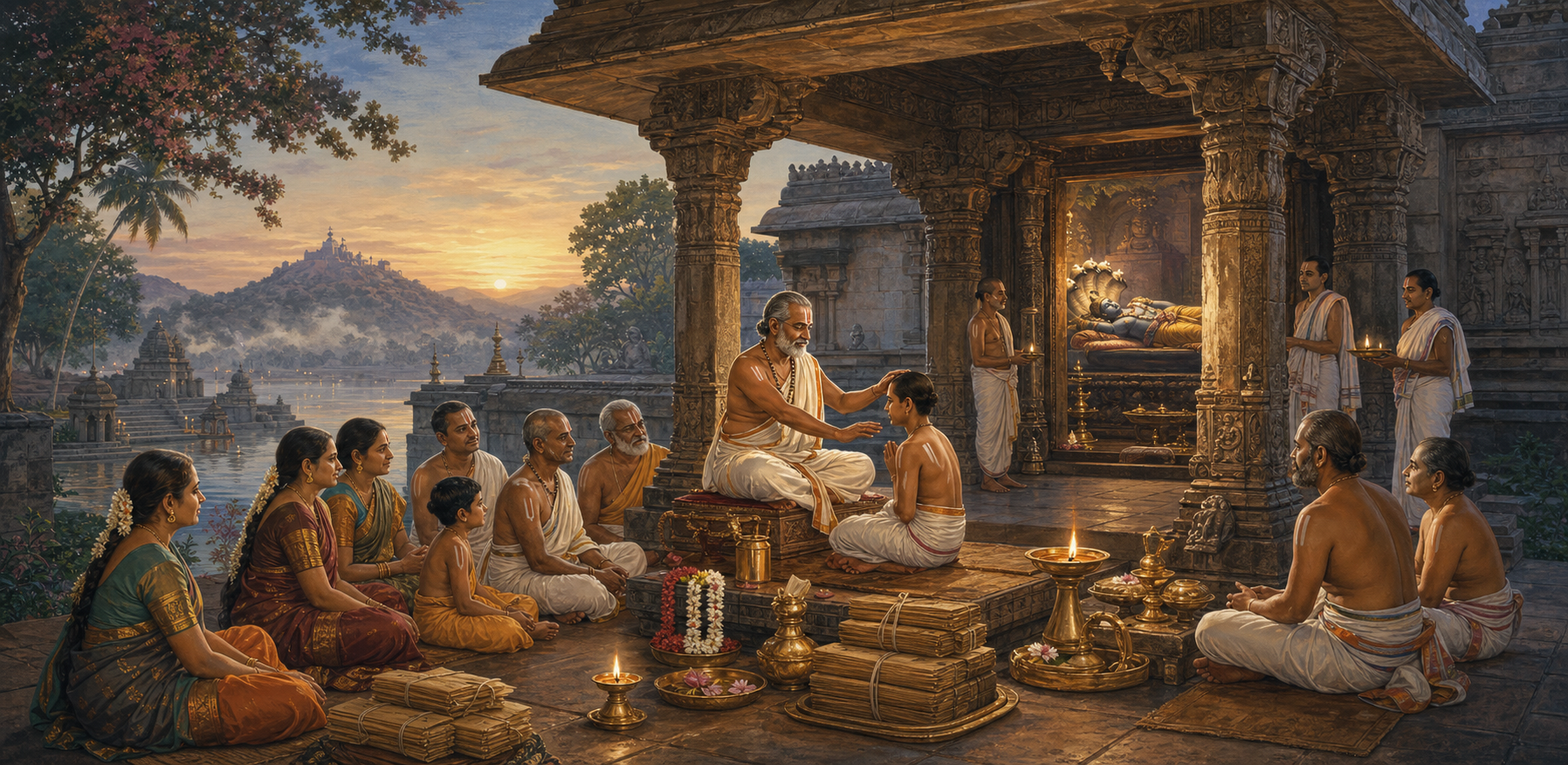
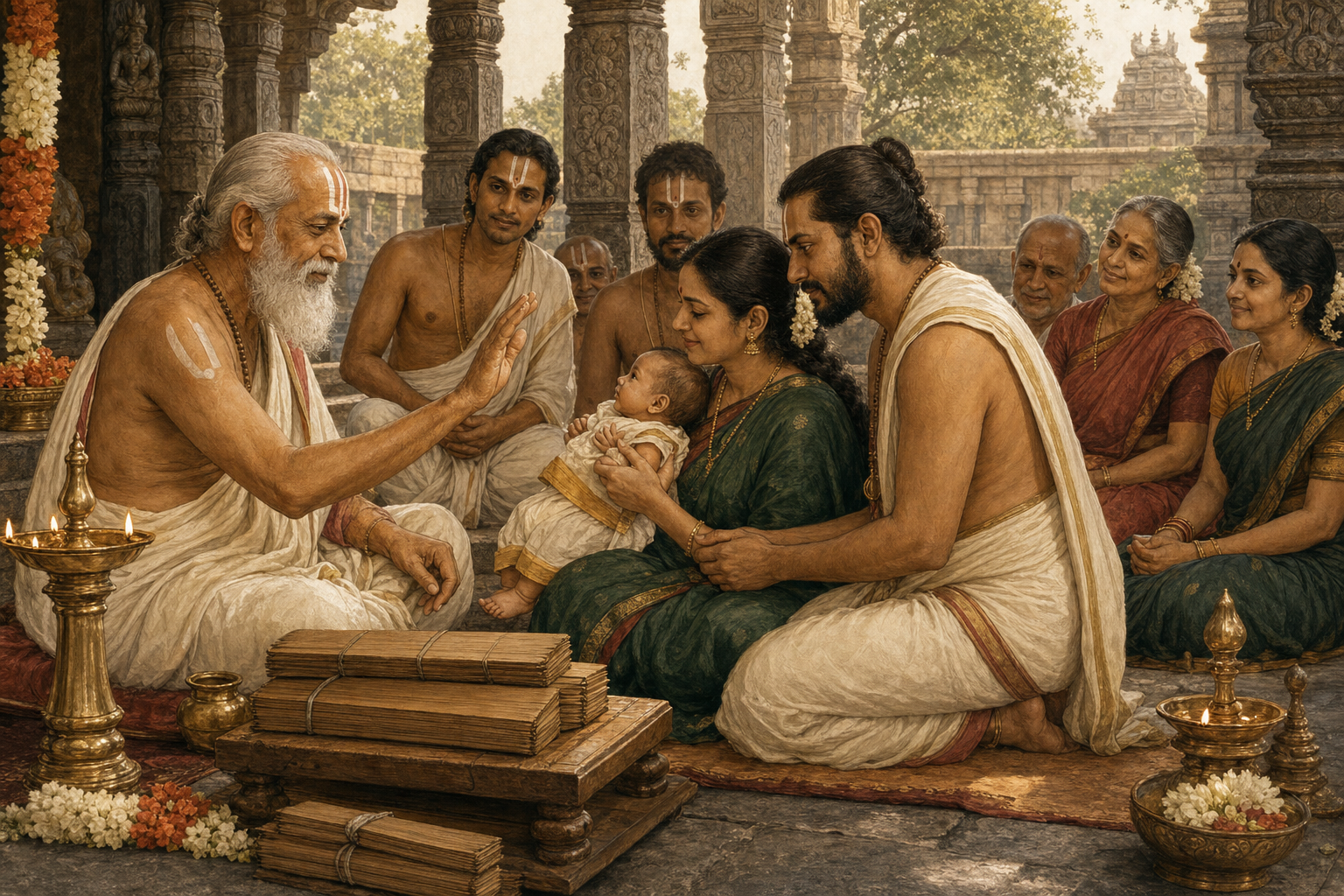
Parasara Bhattar illustrates this layered meaning. He is remembered as the son of Kurattazhwan and Andal, born through the grace of Sri Ranganatha, and named under the protective guidance of Sri Ramanuja. Family descent, divine grace, and the care of an acharya all meet in one identity.
Each relationship answers a different question. His parents locate him within a devotional household. Sri Ranganatha places his birth within a theology of grace. Sri Ramanuja connects him to an established stream of teaching and mentorship. Remembered qualities such as humility, intellectual clarity, and steadfast devotion show what that inheritance was expected to produce.
This is why you should not read a Vaishnava lineage as if it were only a family tree. Blood relationship can explain where a person belongs, but the devotional account also asks what was received, embodied, and passed onward.
When you encounter a lineage claim, write down four things:
- Relationships: Who is named as parent, guru, deity, disciple, or community?
- Transmission: What passes through those relationships: a name, teaching, responsibility, devotional discipline, or moral example?
- Qualities: Which virtues make the lineage visible in conduct rather than merely asserting status?
- Continuity: Which acts of worship, study, remembrance, or service keep the inheritance alive?
This simple map prevents two errors. You will not confuse spiritual lineage with biological prestige, and you will not reduce devotion to private emotion. In a living parampara, belonging brings obligations.
Sacred origins connect divine action to human duty
A sacred-origin tradition often explains why a place matters and why a particular practice belongs there. It does so by joining geography to a decisive act of devotion.
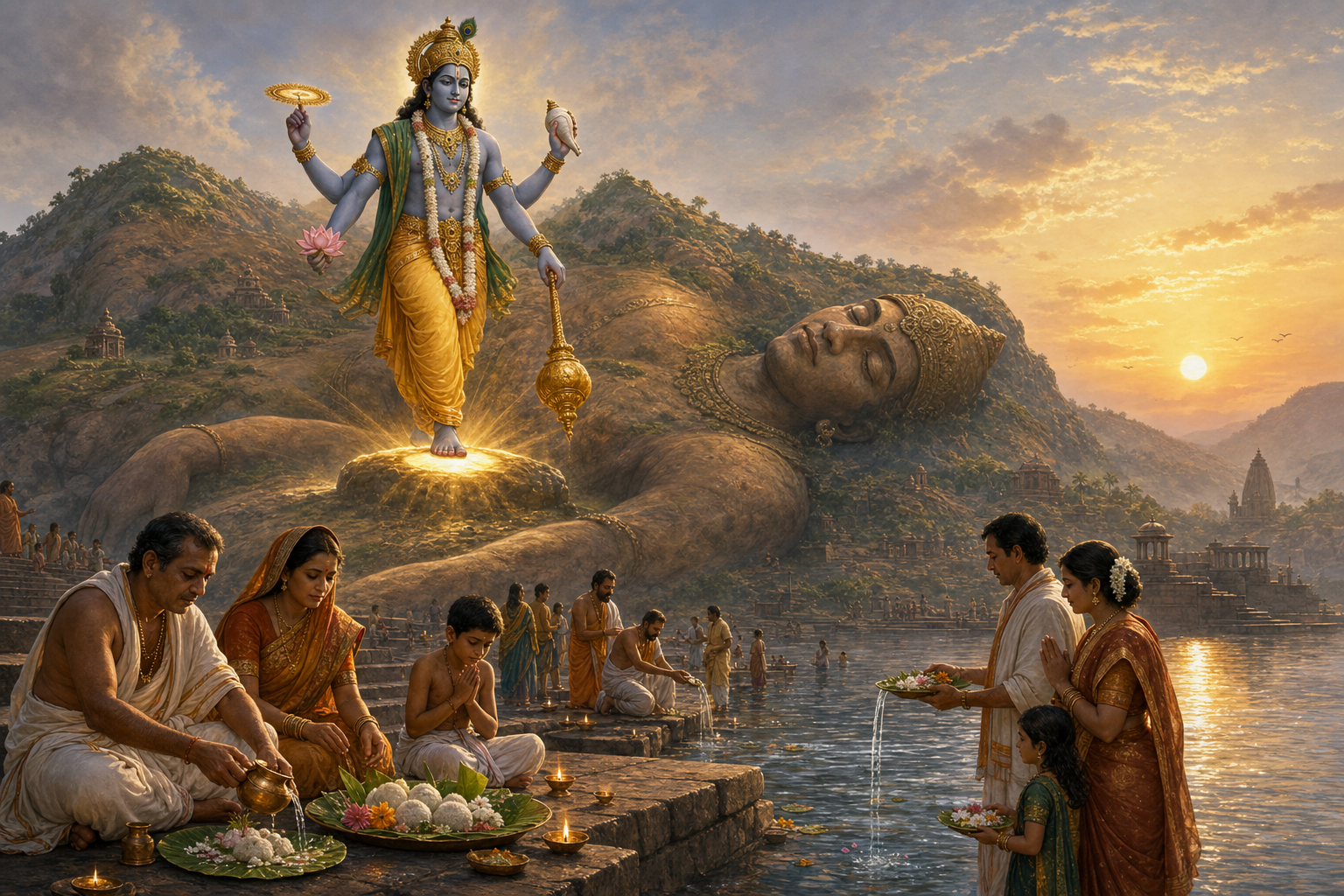
Gayasura’s katha follows that pattern. Tripurasura, described as his father, is remembered as a devotee of Lord Vishnu. Gayasura follows the same path of bhakti and undertakes severe tapas, receiving an extraordinary boon of freedom from death at anyone’s hands and at any time. His resulting sanctity becomes so powerful that merely seeing him is said to threaten the ordinary distinction between religious merit and liberation.
The devas turn to Vishnu. In regional and Puranic retellings, Vishnu asks Gayasura to offer his body as the ground for a great yajna. Gayasura consents. His strength therefore reaches its highest expression not through conquest but through self-offering.
Vishnu’s presence anchors Gayasura, while a reciprocal boon sanctifies Gaya as a place where rites for departed ancestors possess exceptional significance. The Vishnupad, the revered footprint of Vishnu, connects the Gayasura Katha with shraddha, pind-dan, and prayer for ancestral welfare at Gaya.
Notice the movement. Tapas begins as an individual’s discipline. Grace turns it into sacred power. Surrender redirects that power toward yajna. The resulting sacred geography supports the duties of generations of families. Personal attainment becomes collective benefit.
If you approach Gaya only as a place where a ritual transaction is supposed to produce a result, you miss this movement. The katha asks you to arrive with gratitude, remembrance, and responsibility. Before undertaking a rite there, prepare in four ways:
<!– wp:list {