
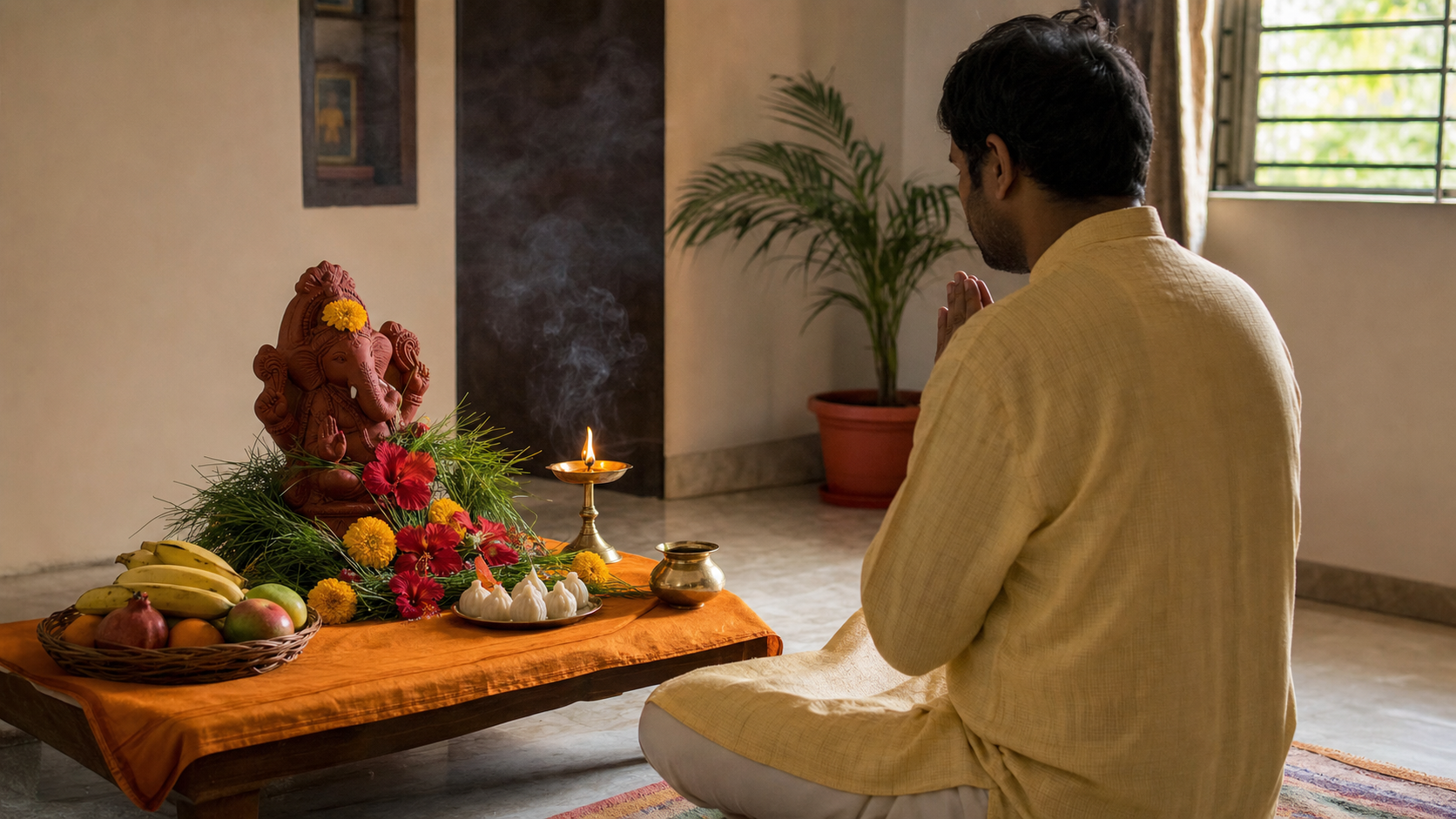
You want to observe Ganesh Jayanti properly, but the practical questions arrive quickly. Which Chaturthi should you follow? Is fasting compulsory? What belongs in the puja? And how do you keep the day devotional when work, health, or family responsibilities limit what you can do?
A meaningful vrat does not require the grand scale associated with the better-known Bhadrapada celebration. You need the correct local tithi, a form of discipline you can sustain, simple worship, attentive engagement with the vrat katha, and one ethical action that carries the prayer into ordinary life.
Begin with the correct Chaturthi, not a remembered date
Ganesh Jayanti, also called Maghi Ganesh Chauth, falls on Shukla Paksha Chaturthi in the Hindu month of Magh. This is the first distinction to get right. It is not simply another name for the widely celebrated Ganesh Chaturthi of Bhadrapada.
Use a panchang calculated for your location, or confirm the date and puja window with a trusted nearby temple. Do not assume that a calendar entry prepared for another place gives you the right local timing. If your family follows a particular sampradaya, temple, or regional almanac, remain consistent with that tradition rather than switching between several calculations.
The character of the observance is also different. Bhadrapada Ganesh Chaturthi is widely associated with large festivities, while Maghi Ganesh Chauth often has a quieter, more reflective rhythm. In Maharashtra and the Konkan, devotees may visit temples or participate in collective worship and katha readings. At home, however, simplicity is entirely suited to the day. You do not need to reproduce a public festival inside your household.
A simple Ganesh Jayanti observance you can follow at home

Local and family customs differ, so treat the following as a dependable structure rather than a rigid universal rule. Where your inherited practice gives more specific instructions, follow it.
- Confirm the tithi and puja window. Check the local panchang before planning your fast, temple visit, or household worship.
- Choose a clear intention. Name the quality you want to cultivate, such as patience, discernment, steadiness, humility, or courage in completing a neglected duty. This keeps the vrata connected to conduct instead of reducing it to a ritual transaction.
- Decide how you will observe the fast. Follow your family tradition if it is suitable for you. If food restriction is not possible, choose a non-food form of disciplined participation rather than abandoning the observance.
- Prepare a clean worship place. Traditional offerings may include durva grass, red flowers, jaggery, sesame or til, and modak. These are customary options, not a shopping test of devotion. Use what is respectfully available to you.
- Begin with early-morning purification according to your household custom. Offer your prayer to Ganesha as the remover of obstacles and the patron of wisdom. If aarti or the recitation of familiar names and prayers belongs to your practice, include it without rushing.
- Read or listen to the vrat katha attentively. Pause afterward and identify one decision in your own life that requires clearer judgement or more compassionate action.
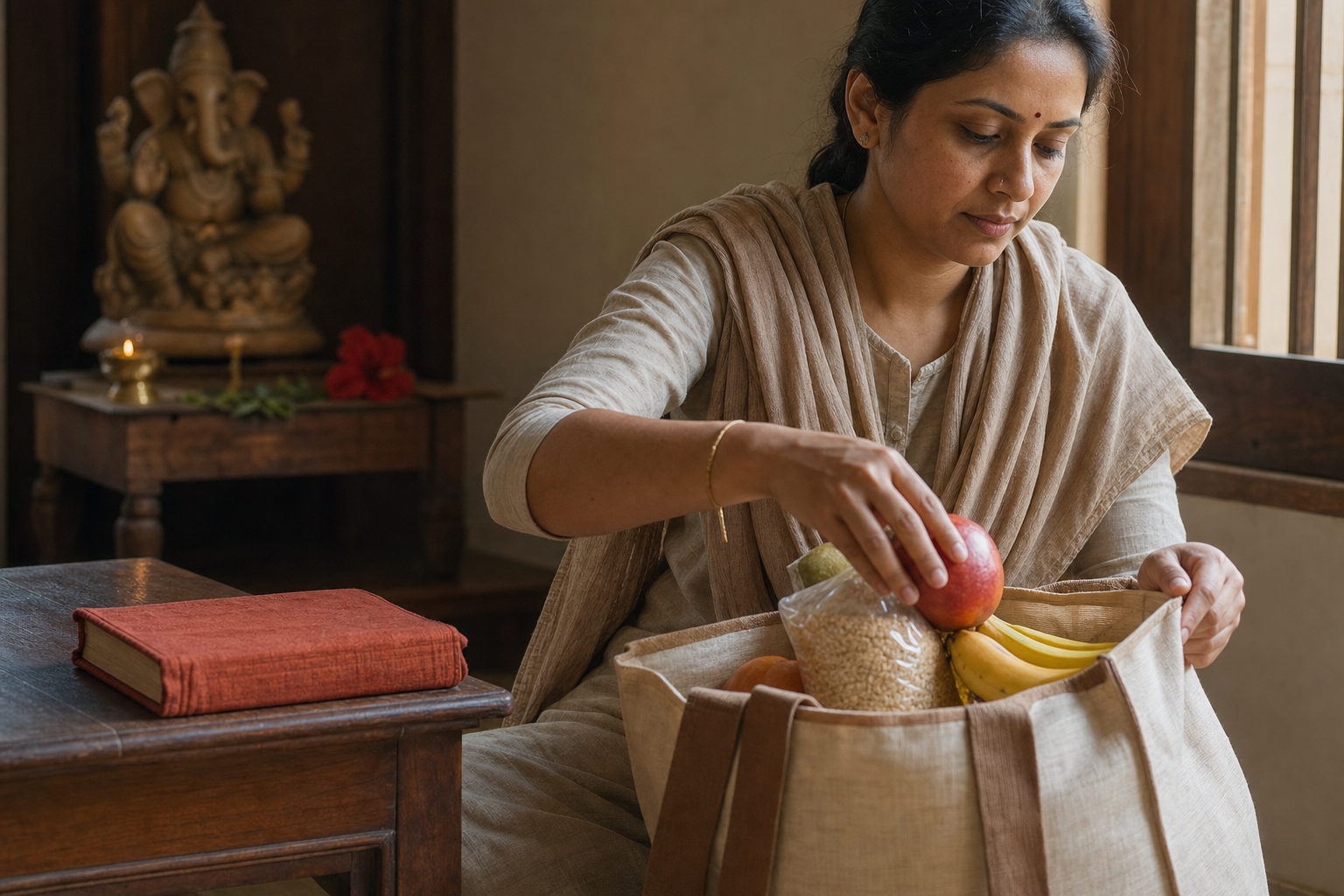
- Complete the observance with dana or seva. Decide in advance what this will mean: a useful gift, help offered to someone who needs it, support for a community responsibility, or another sincere act of service within your means.
Do not let one missing puja item become a reason to skip the day. The working pattern is worship, self-discipline, reflection, and ethical action. An elaborate arrangement that leaves you hurried or irritable defeats the contemplative purpose of the observance.
Choose a vrat that strengthens attention rather than pride
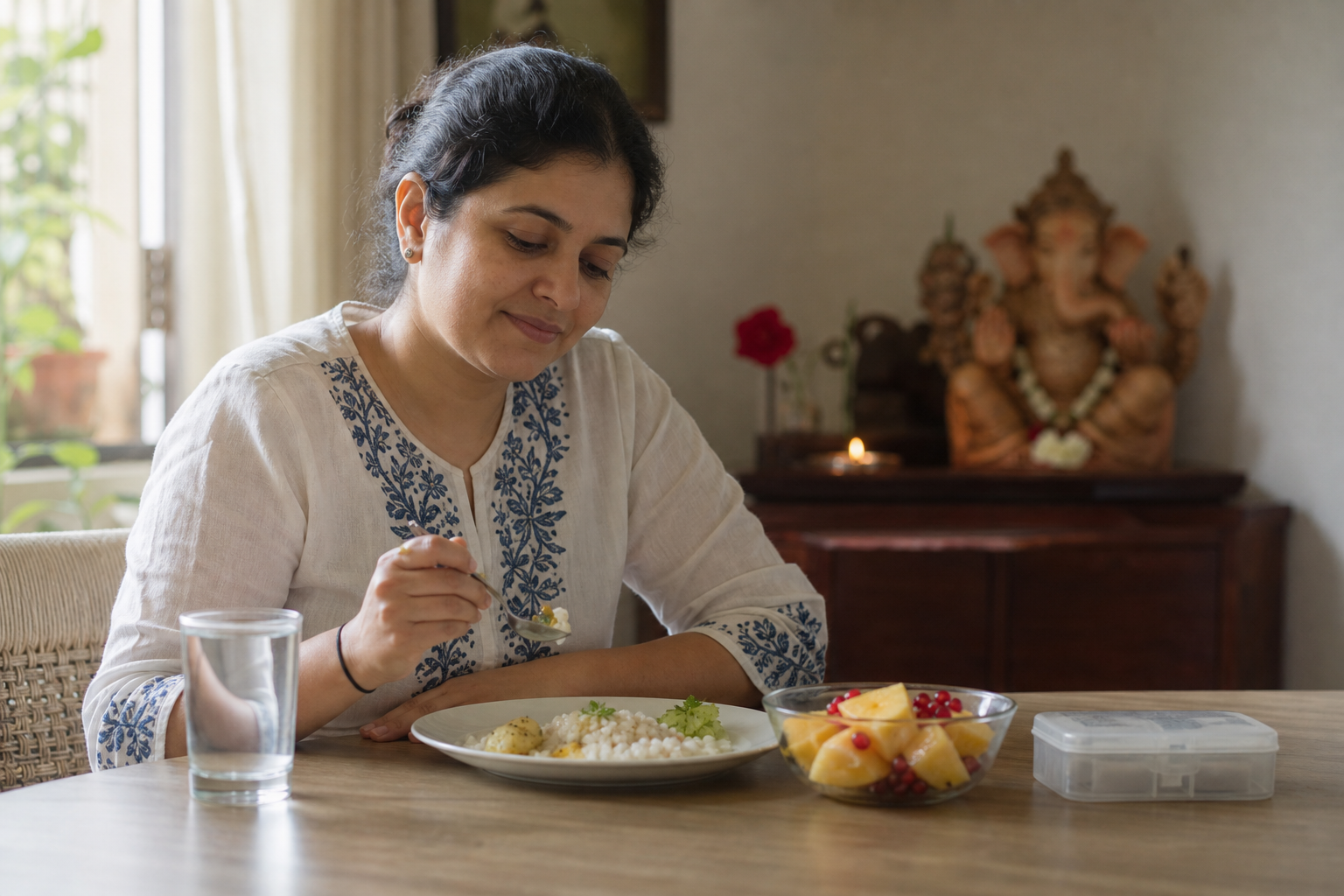
Fasting is a common part of Ganesh Jayanti, but vrata is larger than food restriction. It is a chosen discipline that holds your intention steady through the day. If you can follow the customary fast, do so in accordance with your family or temple tradition. If you cannot fast, prayer, scriptural reading, mindful reflection, dana, and community service remain meaningful ways to participate.
Do not turn an inability to restrict food into a spiritual failure. Keep necessary food and health routines intact, then place the discipline elsewhere. You might reserve time for uninterrupted prayer, reduce avoidable distractions, restrain impatient speech, finish a duty you have postponed, or perform a concrete act of seva. These choices are not claims about a single mandatory ritual rule; they are practical ways to make your conduct answer the intention of the vrat.
A useful test comes at the end of the day: did the observance make you more attentive, truthful, compassionate, or dependable? Hunger by itself does not remove an obstacle. Disciplined awareness can reveal how distraction, impatience, ego, or avoidance helped create it.
Read the vrat katha as guidance for your next decision
A commonly associated Ganesh Jayanti vrat katha centers on a righteous king and the wise Queen Ratnavali. Its moral movement joins devotion to Ganesha with judicious leadership, compassionate conduct, and responsibility for social well-being. The obstacle is not overcome through sentiment alone. Dharma, discernment, prayer, and action must align.
That makes the katha useful well beyond its ceremonial recitation. Listen for the choices being made, not merely for the expected blessing at the end. Then bring the teaching into your own situation with three questions:
- What is the actual obstacle? Separate the visible problem from an inner contribution such as haste, distraction, pride, indecision, or impatience.
- What does dharma require here? Identify the responsibility, promise, relationship, or common good that should guide your response.
- What action will make the prayer visible? Choose one step you can complete, whether it is correcting an unfair decision, apologizing, fulfilling a delayed duty, giving support, or serving without seeking recognition.
The katha also places śraddhā, dayā, dana, and ahimsa within a wider Dharmic moral world. Faith, compassion, generosity, and non-violence have important places in Hindu, Buddhist, Jain, and Sikh life, even though their doctrines and disciplines are not identical. Recognizing that ethical kinship need not erase difference. It can help a family or community turn worship into respectful cooperation.
If you are reading the katha with children, relatives, or a community group, do not end with a generic request for reactions. Ask each person to name one obstacle that wisdom could prevent and one act of compassion that could improve the household or community. That turns the reading from passive listening into a shared practice of dharma.
Key takeaways
- Ganesh Jayanti is Magh Shukla Paksha Chaturthi, distinct from the Bhadrapada festival; confirm the date and puja window through a local panchang or trusted temple.
- Keep the home observance focused: purification, Ganesha worship, customary offerings, prayer or aarti, katha, and dana or seva.
- Use durva, red flowers, jaggery, til, or modak where available, but do not mistake a list of materials for the substance of devotion.
- If fasting is unavailable to you, retain the vrata through prayer, reading, disciplined attention, generosity, or service.
- Read the king and Ratnavali narrative as a guide to ethical judgement: identify the obstacle, discern your duty, and take one concrete action.
- Measure the day by the clarity and compassion it produces, not by ritual display or the severity of self-denial.
Before arranging offerings, make two decisions: verify the local tithi and choose the act of dana or seva with which you will complete the vrat. Once those are settled, select a sustainable discipline and prepare a simple puja. That order keeps Ganesh Jayanti anchored in dharma from the beginning.
References
