
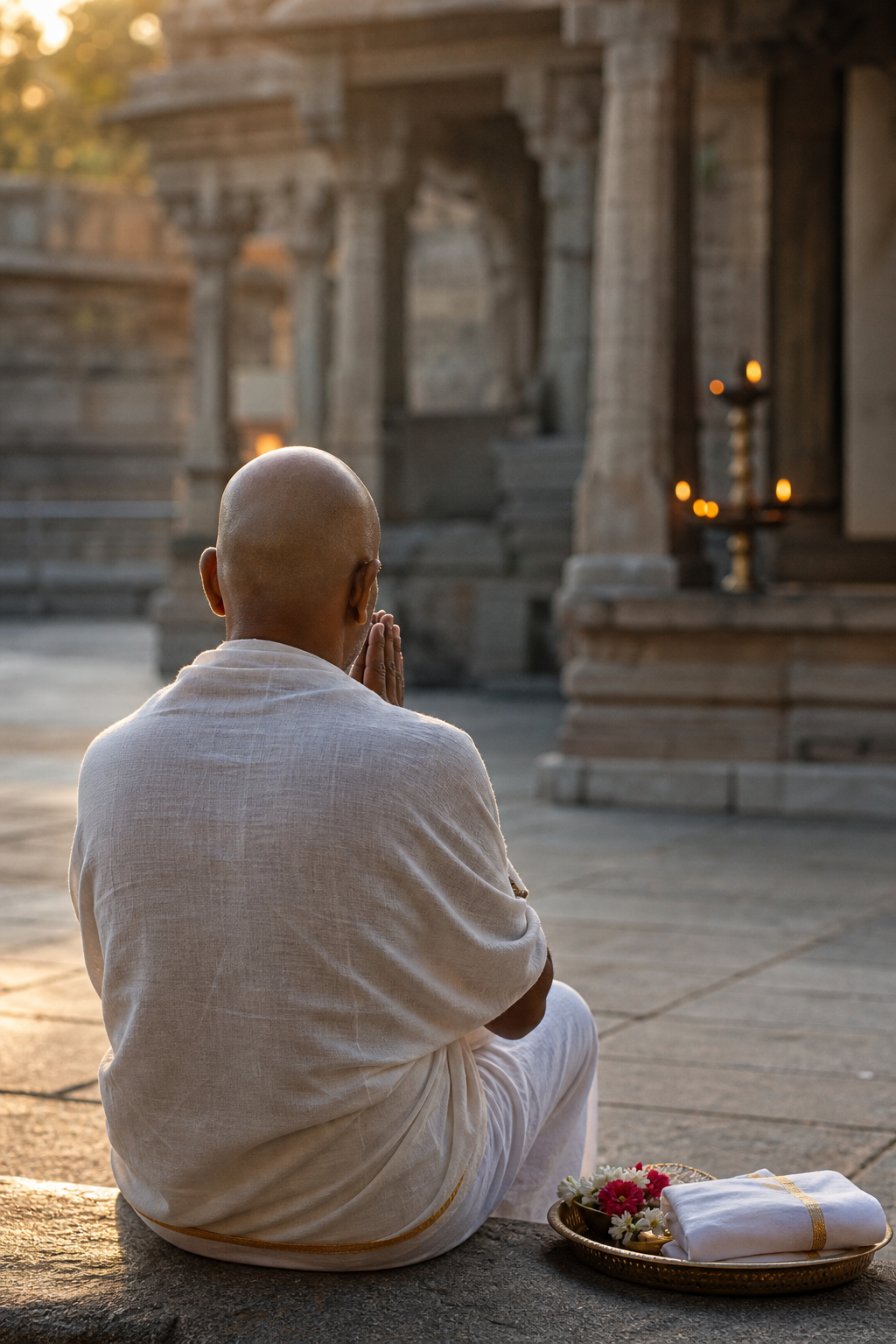
You may be facing a deceptively simple question: a vow was made, a first-hair rite is due, or a death has brought family expectations. Should you shave your head, and what would the act actually mean?
There is no single rule that covers all three situations. Temple tonsure, Chudakarana, and mourning tonsure can look alike, but they belong to different ritual settings. Before the razor touches your head, identify the setting, the intention, and the family or temple tradition guiding you.
First identify which kind of tonsure you are considering
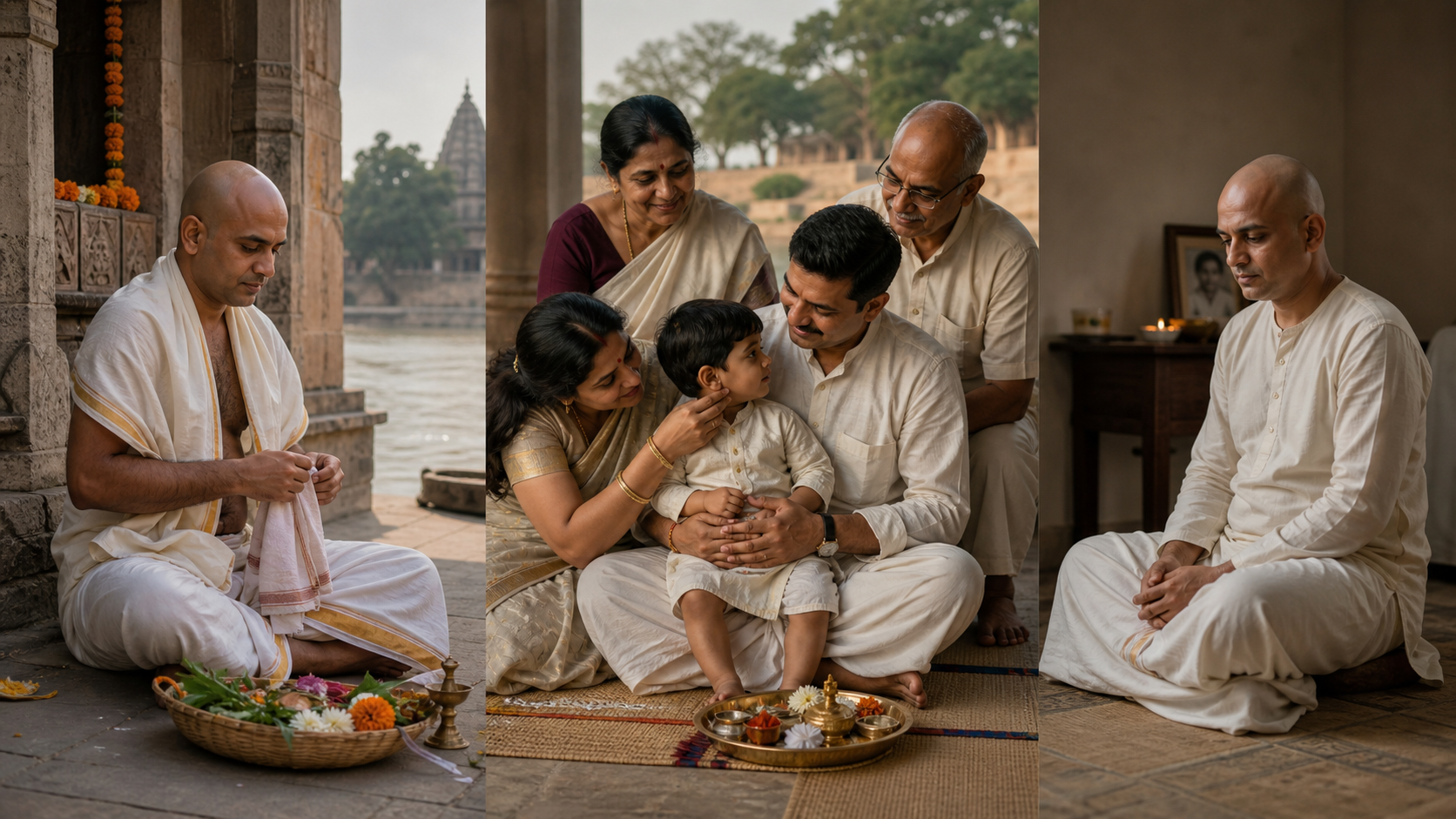
A shaved head does not carry one fixed meaning throughout Hindu life. The same outward act may mark a samskara, fulfil a personal vow, or express bereavement. Confusion begins when a rule from one setting is imported into another.
| Ritual setting | Primary meaning | What you should establish |
|---|---|---|
| Chudakarana or Chaula | A samskara associated with transition, renewal, and a fresh beginning | Whether this is the family’s first-hair rite, who guides it, and which customary form the family follows |
| Temple vow or mokku | A voluntary offering made in gratitude, supplication, penance, or fulfilment of a promise | Who made the vow, what was promised, whose hair is being offered, and how the chosen temple conducts tonsure |
| Mourning tonsure | A sign of impermanence, humility, and solidarity with the departed within the antyeshti and shraddha cycle | Whether the family’s regional or lineage custom requires it, who observes it, and which ritual authority is guiding the rites |
Chudakarana, also called Chaula, places hair removal within the framework of samskara: a rite that marks passage and reorientation. That does not make every later temple shave another Chudakarana. A tonsure performed to complete a personal vow has a different immediate purpose, even when both acts use the language of renewal.
At Tirumala, for example, many devotees undertake tonsure in fulfilment of a mokku. The hair becomes a tangible offering before the deity. The devotee is not merely adopting a look; the body is participating in a promise already made through the mind and will.
Mourning tonsure belongs to yet another context. It is usually connected with obligations surrounding death rather than with a petition made at a temple. Treating it as interchangeable with vow fulfilment can obscure both the grief of the family and the ritual order being observed.
Hair is surrendered as a symbol, not a magical payment
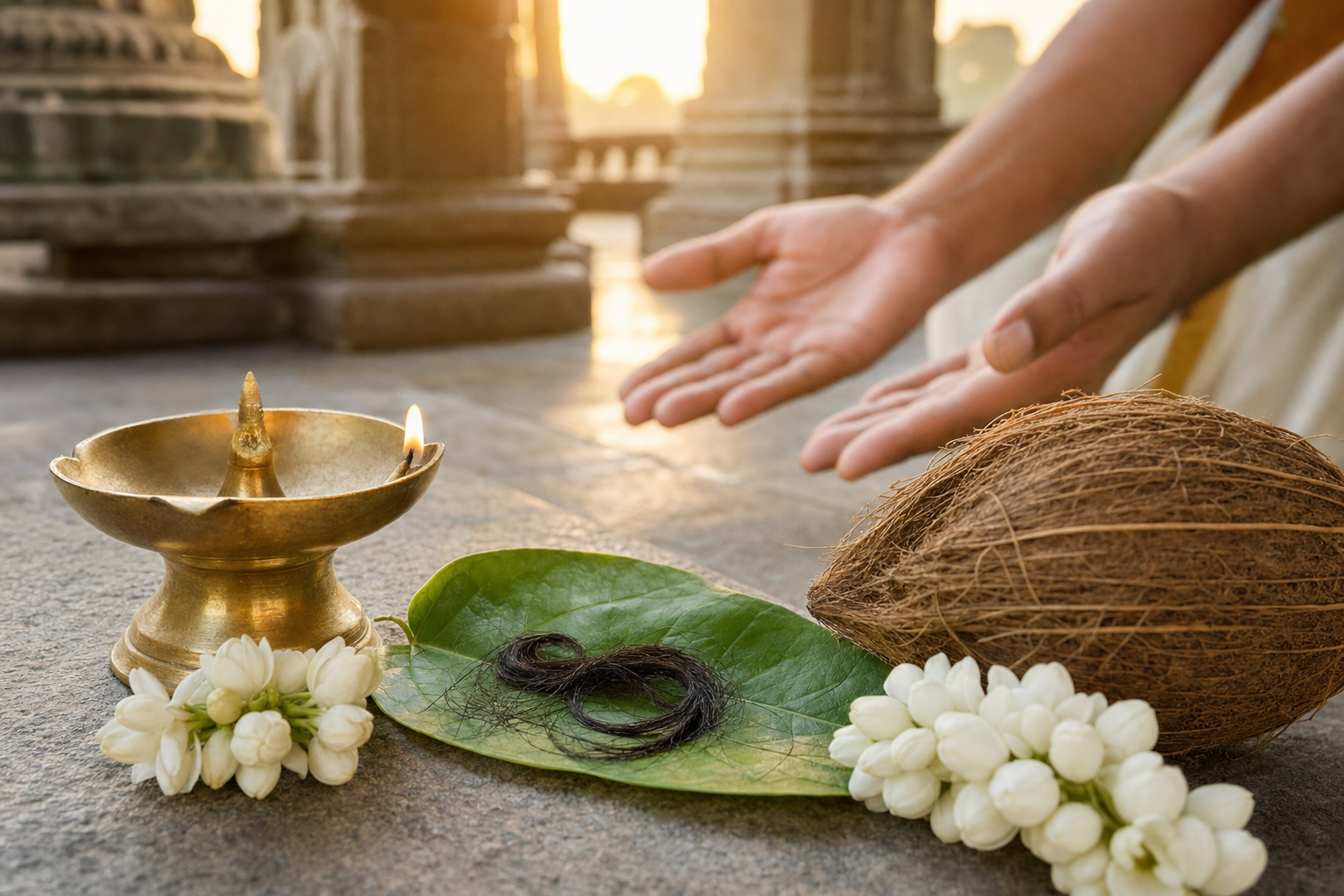
Hair is visible, personal, and closely tied to grooming and social identity. Relinquishing it can therefore express humility more forcefully than an intention kept entirely inside the mind. The temporary bareness makes surrender public to the self, even when nobody else knows why the vow was made.
The symbolism is often described as setting aside vanity, ahankara, and accumulated impressions. In the language of samskara, this can carry a productive double sense: a sacred rite helps you confront the habits and impressions that have shaped you. The physical removal of hair does not literally remove memory, karma, grief, or wrongdoing. It gives bodily form to a resolve that must still be lived.
This distinction matters when you are completing a vow. If you offered your hair while asking for help, the act should not be reduced to a transaction in which a desired result purchases a required payment. Gratitude, restraint, penance, or renewed dharmic conduct gives the promise its moral substance. Tonsure without that inward movement risks becoming an empty settlement of accounts.
Practical benefits do not cancel the sacred meaning. Long pilgrimages, humid conditions, crowded congregations, and demanding vratas can make a bare head easier to keep clean and simplify daily maintenance. Those considerations may support the practice, but they do not adequately explain why a devotee approaches the act as an offering.
The wider Dharmic family also warns us against assigning one universal meaning to hair. Buddhist renunciants shave as a discipline of detachment. Jain ascetics practise kesha-lunchana as a more radical renunciation of bodily attachment. Sikhs honour uncut kesh as a sacred commitment and a form of continuous remembrance. The outward disciplines differ, sometimes sharply. What they share is the conviction that the body can be trained to serve a spiritual and ethical commitment.
You should therefore follow the discipline of the tradition and ritual setting actually before you. A Buddhist monastic custom cannot establish a Hindu household obligation, and Hindu tonsure cannot be used to question Sikh fidelity to kesh. Civilizational kinship is strengthened by understanding these distinctions, not by erasing them.
Prepare for temple tonsure by clarifying the vow first
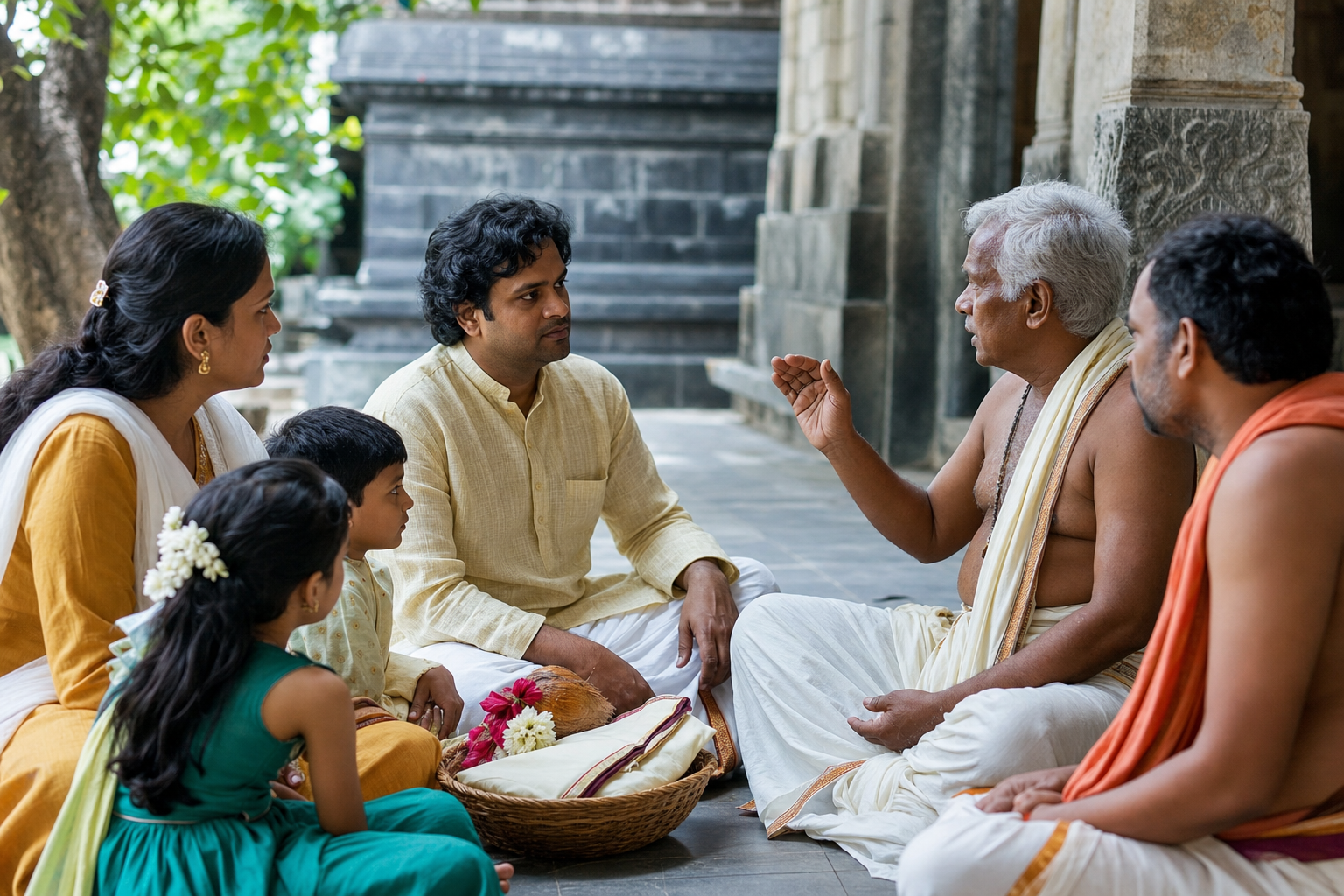
The most important preparation happens before you enter the tonsure area. A large pilgrimage centre may manage hair offerings through an organized system, but no institutional process can decide what the act means for you. Settle the intention and consent first; then confirm the local procedure.
- Name the intention in one sentence. Are you giving thanks, completing a promise, undertaking penance, marking a new beginning, or participating in Chudakarana? If several explanations are circulating in the family, resolve the difference before proceeding.
- Establish who made the vow. A promise made by one person does not automatically authorize shaving another competent person’s head. Family participation can deepen a rite, but participation should remain voluntary.
- Separate a samskara from a personal offering. If this is a first-hair rite, ask the elders responsible for the family tradition how it is normally conducted. If it is a mokku, recover the terms and intention of the actual vow instead of retrofitting a samskara explanation.
- Confirm the chosen temple’s procedure. Ask temple personnel where authorized tonsure occurs and what sequence the temple expects. Do not assume that a process remembered from another pilgrimage centre applies unchanged.
- Protect the dignity of the participant. Decide in advance whether photography, public commentary, or joking would distract from the rite. A devotee offering hair should not be turned into a spectacle.
- Plan simple aftercare. Keep the scalp clean, carry a modest clean covering where appropriate, and allow time for rest. These ordinary measures preserve the composure of the pilgrimage after the emotionally charged moment has passed.
- Carry the vow into conduct. Let the offering be followed by the quality it was meant to awaken: gratitude, compassion, restraint, service, or renewed attention to dharma.
If the wording of an old family vow is unclear, do not invent stricter terms to appear more devout. Speak with the person who made it, consult a trusted elder, and ask the temple’s ritual representatives about the practice within that sacred site. Clarity is not a lack of faith. It prevents family pressure from being mistaken for divine obligation.
Consent deserves special care when the expected participant did not make the vow. An adult relative may freely join another person’s offering, but devotion cannot be produced by embarrassment or coercion. In a child’s samskara, guardians necessarily make ritual decisions and carry responsibility for the child’s comfort, dignity, and care. That is different from overruling an adult who can decide for himself or herself.
Mourning customs should be followed without making them universal
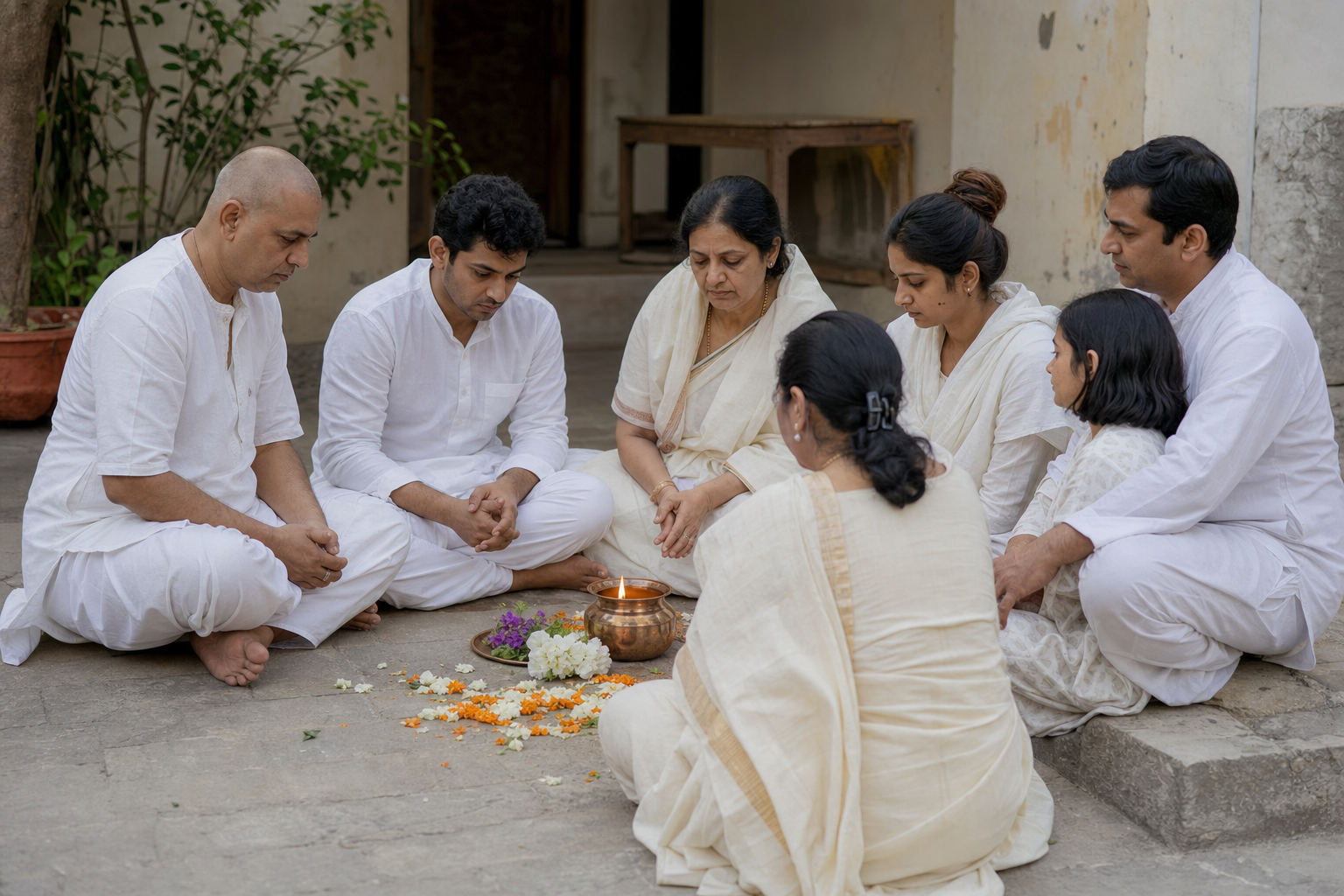
Bereavement often brings several kinds of authority into one room: elders, relatives, regional expectations, and the ritual specialist conducting the final rites. This is precisely when careless statements such as “all Hindus must shave” create avoidable conflict.
In many Hindu communities, close male relatives undertake tonsure during the antyeshti and shraddha cycle. In some regions, women may also observe it. The act can acknowledge anitya, the impermanence of embodied life, while expressing humility and solidarity with the departed. None of those meanings establishes one uniform rule for every region, sampradaya, lineage, caste community, or household.
Before accepting or rejecting a mourning tonsure, ask questions that identify the family’s actual custom:
- Is tonsure part of our family’s established practice, or is someone importing a custom observed elsewhere?
- Which relatives traditionally undertake it, and is the rule based on relationship to the departed or simply on gender?
- At what point in the antyeshti or shraddha sequence is it observed?
- Who is guiding the rites, and does that person understand the family’s regional and lineage background?
- If close relatives come from different traditions, which custom has the grieving household chosen to follow?
Use precise language when explaining the decision. Say, “Our family observes this custom,” rather than, “Every Hindu has to do this.” The first statement preserves a living inheritance. The second converts a diverse ritual landscape into a false universal and invites people to judge grief by the appearance of a scalp.
A person who does not shave cannot be assumed to love the departed less. Conversely, someone who does shave should not be dismissed as obeying an empty superstition. The visible act acquires meaning through the ritual world in which it is performed and the intention with which it is accepted.
If relatives disagree during mourning, first distinguish three separate claims: what the family has historically done, what the officiating tradition calls for, and what an individual is willing to undertake. Do not settle the disagreement by humiliating the bereaved person. Identify the lineage or household custom being followed, make the decision calmly, and let the rites return their attention to the departed.
Key takeaways for making the decision with integrity
- Identify the ritual setting. Chudakarana, a temple mokku, and mourning tonsure may share an outward form, but they do not have the same immediate purpose.
- Make the intention explicit. Gratitude, penance, transition, and mourning call for different conversations before the act.
- Do not treat symbolism as magic. Removing hair can embody surrender, but it does not replace ethical repair, changed conduct, or the work of grief.
- Consent remains essential. A family vow or expectation does not provide unlimited authority over another adult’s body.
- Consult the right tradition-holder. For a household rite, begin with knowledgeable family elders and the person guiding the ritual. For a temple offering, also confirm that temple’s authorized procedure.
- Respect Dharmic difference. Shaved hair, plucked hair, and uncut hair can each serve disciplined sacred commitments in different traditions.
Before fixing a date or joining a tonsure queue, write down three answers: which rite this is, why it is being undertaken, and who confirmed the relevant custom. If any answer is missing, pause long enough to obtain it.
Once those answers are clear, keep the act simple. Approach it voluntarily, follow the family’s or temple’s discipline, care for the newly bare head, and let the surrender continue through compassion and service after the hair is gone.
References
