
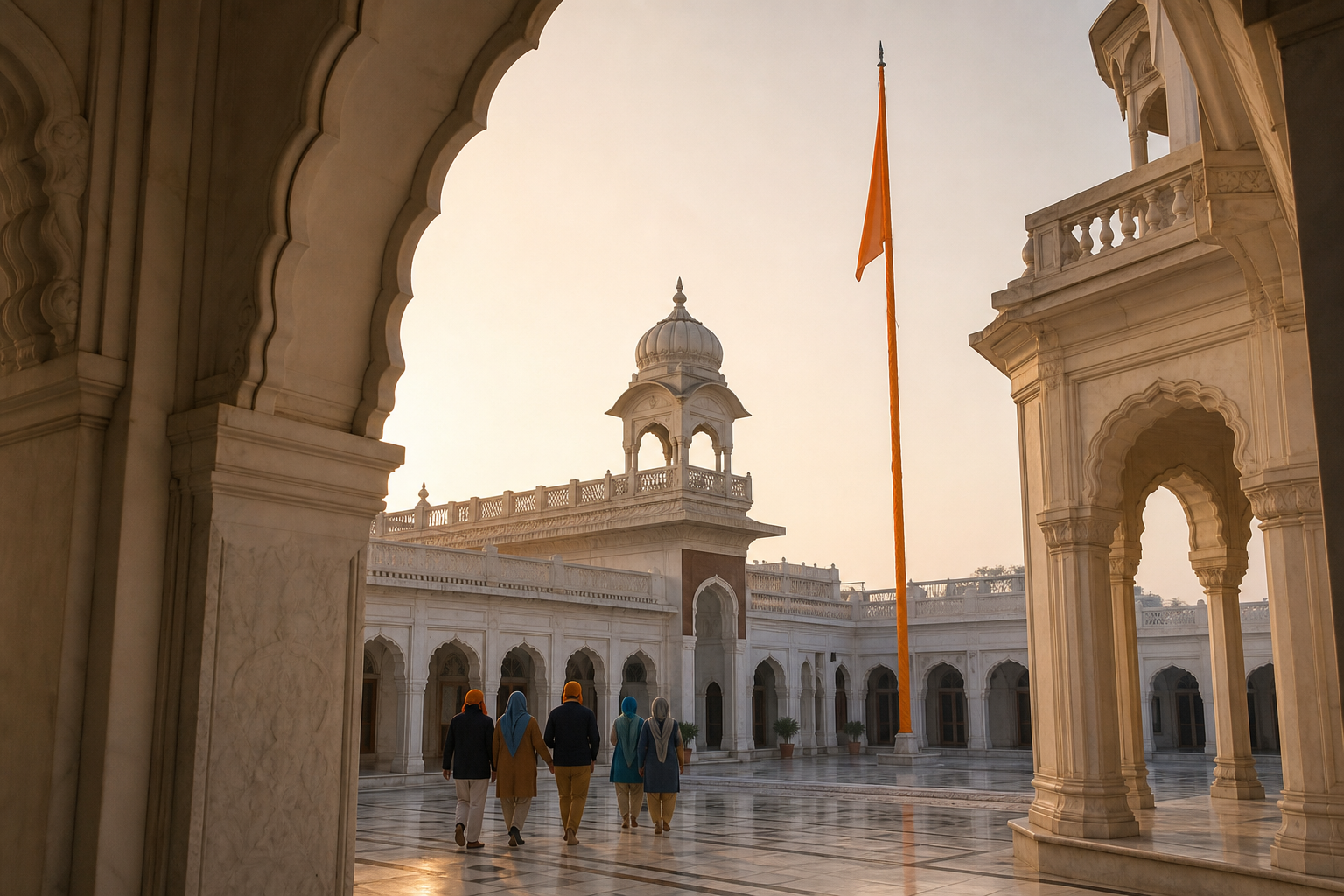
If you are planning to visit Baba Banda Singh Bahadur’s Shaheedi Asthan, or helping a family or class understand it, begin with one distinction: this memorial does not ask you to remember only how a Sikh leader died. It asks you to connect his martyrdom with the justice he pursued while he lived.
That connection changes the visit. You are no longer looking at courage as an isolated battlefield virtue. You are tracing a life from Guru-guided leadership and resistance to unjust authority through agrarian justice, captivity, and shaheedi. The question waiting at the end is personal: what do dignity, service, and courage require from you?
Begin with the life, not the manner of death
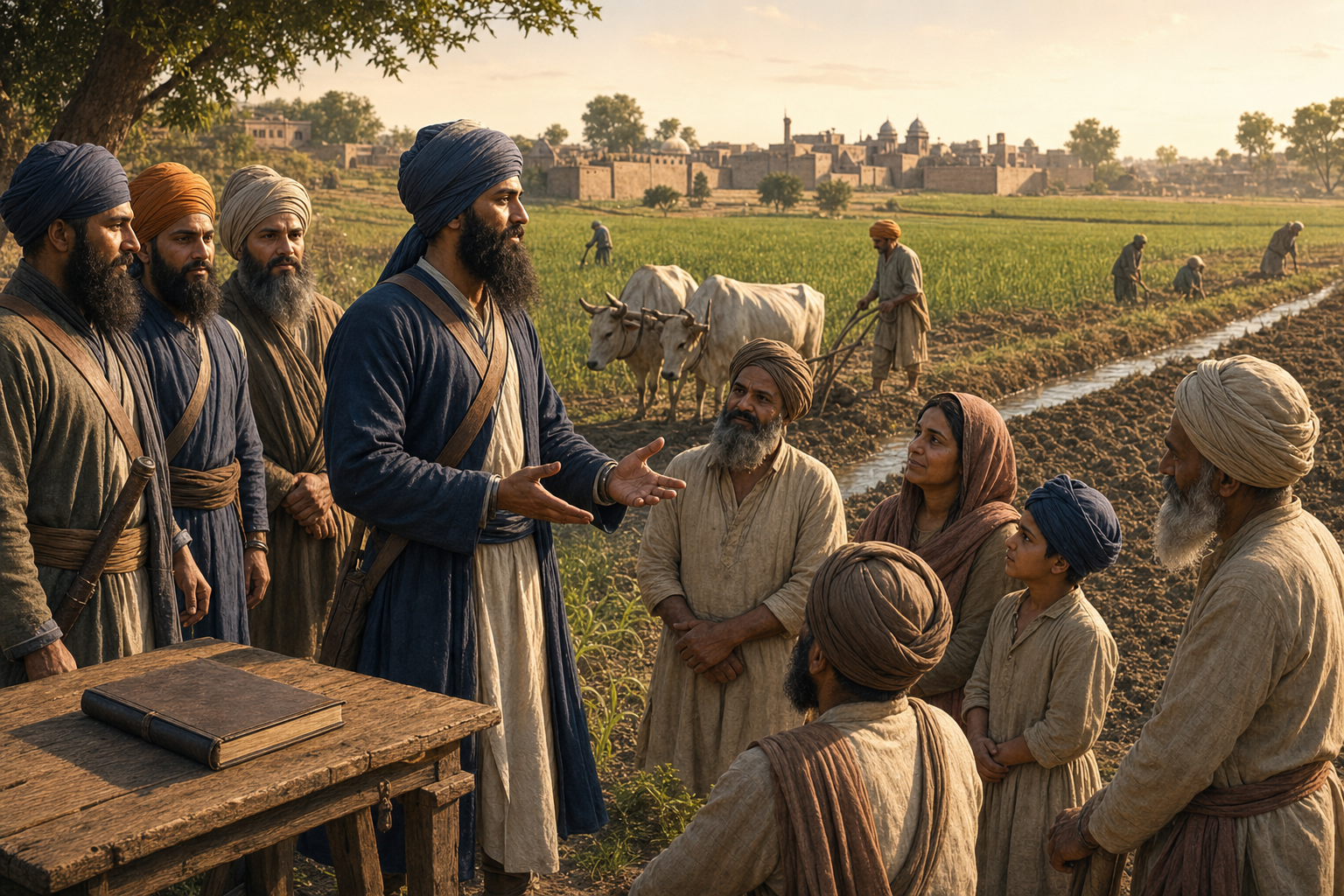
Baba Banda Singh Bahadur lived from 1670 to 1716 and emerged as a pivotal leader after receiving the guidance of Guru Gobind Singh. He led the Khalsa in a principled challenge to the authority of the Mughal Empire. These facts place his story inside a specifically Sikh moral and historical framework: the Guru, the Khalsa, disciplined action, and responsibility toward people exposed to injustice.
His importance was not confined to armed resistance. In the parts of Punjab where he exercised authority, his governance emphasized agrarian justice and the dignity of the peasantry. That is the interpretive key many visitors miss. Power was not valuable merely because it had changed hands. It had to be judged by the treatment of people with little protection or status.
Hold that point before you turn to martyrdom. Otherwise, the story can shrink into a sequence of conflict, capture, and death. When you first recognize the moral purpose expressed through governance, shaheedi becomes the culmination of public duty. The sacrifice belongs to a life already directed toward justice.
After the siege of Gurdas Nangal, Banda Singh Bahadur was captured, taken to Delhi, and martyred in 1716. You do not need sensational detail to understand the meaning of that ending. The essential movement is from principled action to captivity and from coercive power to an enduring community memory that coercion could not erase.
What shaheedi means at this memorial

Shaheedi is commonly rendered in English as martyrdom, but translation alone can make it sound passive. Here it names a sacrifice inseparable from fidelity, service, and the ethical defense of the vulnerable. The honor does not lie in suffering for its own sake. It lies in refusing to detach spiritual commitment from responsibility in the world.
Three distinctions will keep your understanding clear.
- Sacrifice is not a fascination with pain. The memorial directs attention toward courage, dharma, justice, and selfless service. Graphic retellings that make suffering the main attraction obscure those purposes.
- Defeat by force does not settle the moral meaning of a life. Capture ended Banda Singh Bahadur’s exercise of political and military leadership, but it did not extinguish the principles for which the Sikh community remembers him.
- Historical memory is not permission for generalized hatred. The conflict should be named accurately as a Khalsa challenge to Mughal imperial authority. Replacing specific historical actors and institutions with suspicion toward entire present-day communities is neither precise history nor disciplined remembrance.
This is how you can approach Sikh martyrdom firmly without turning it into a slogan. Name injustice plainly. Honor resistance without romanticizing violence. Refuse to let reverence become an excuse for careless historical claims.
Shaheedi also places a demand on the living. Praise for Banda Singh Bahadur is hollow if it remains detached from the peasant dignity, protection of the vulnerable, and moral accountability associated with his leadership. The memorial therefore gives you a standard for examining power, including power exercised by people with whom you identify.
How to encounter the Shaheedi Asthan attentively
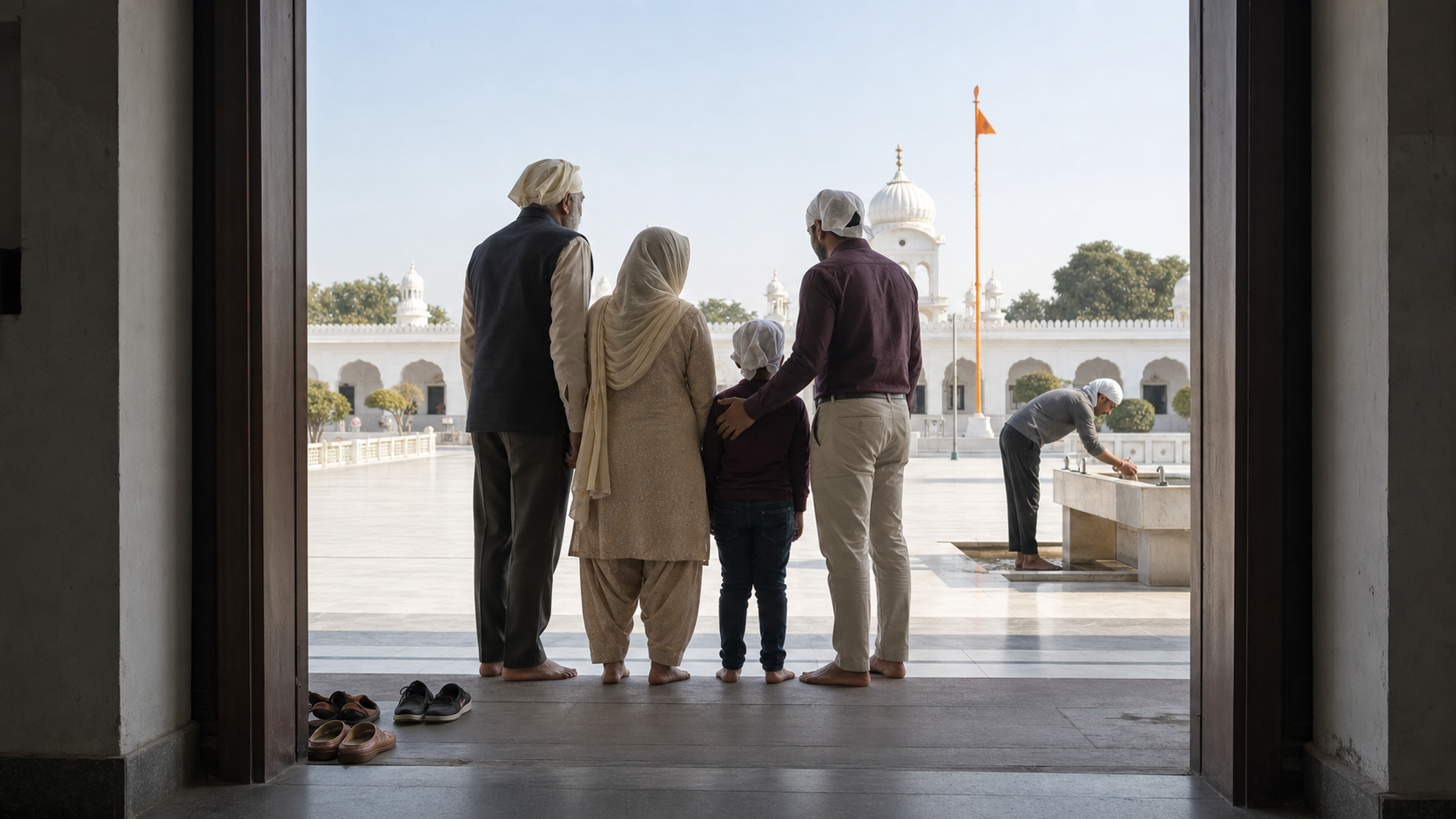
The Shaheedi Asthan communicates through more than written history. Its architecture, Nishan Sahib, inscriptions, portraits, shabad kirtan, ardas, and gathering of the sangat bring tangible and living heritage together. Treating it only as a monument means missing half of what the place is saying.
Use four passes rather than trying to absorb everything at once.
- Orient yourself to the living Sikh setting. Notice the Nishan Sahib before concentrating on dates or displays. It tells you that you have entered a space sustained by Sikh religious memory, not a museum isolated from the community that keeps the memory alive.
- Establish the chronology. As you read inscriptions and view portraits, keep the sequence clear: the guidance of Guru Gobind Singh, leadership of the Khalsa, resistance to Mughal authority, governance in parts of Punjab, the siege of Gurdas Nangal, captivity, Delhi, and martyrdom in 1716. Chronology protects the story from being reduced to disconnected heroic images.
- Listen as well as read. When shabad kirtan or ardas is taking place, pause. Devotional recitation is not background sound for the historical exhibits. It is one of the ways memory passes from event to prayer, from prayer to community, and from community to conduct.
- Ask an ethical question before moving on. What injustice was resisted? What alternative did Banda Singh Bahadur attempt to embody through governance? Who paid the cost of fidelity? Which vulnerable person or community now tests your own commitment to dignity?
Your conduct should reflect the character of the place. Cover your head, keep your voice low, silence your phone, minimize unnecessary conversation, and follow instructions at the site. Do not interrupt prayer or devotional recitation to obtain a photograph. If photography rules are not clear, ask before taking pictures.
If you are bringing children, give them a short purpose before entering: “This place remembers a Sikh leader who resisted unjust authority and defended the dignity of ordinary people. We will listen quietly and look for how his community keeps that memory alive.” A precise explanation gives them something to notice and makes decorum easier to understand.
If you are not Sikh, respectful attention is enough. You do not need to pretend familiarity with every practice. Observe the sangat, allow worshippers their space, and ask sincere questions at an appropriate moment. Humility is a better form of solidarity than borrowed certainty.
Find shared dharmic meaning without erasing Sikh identity
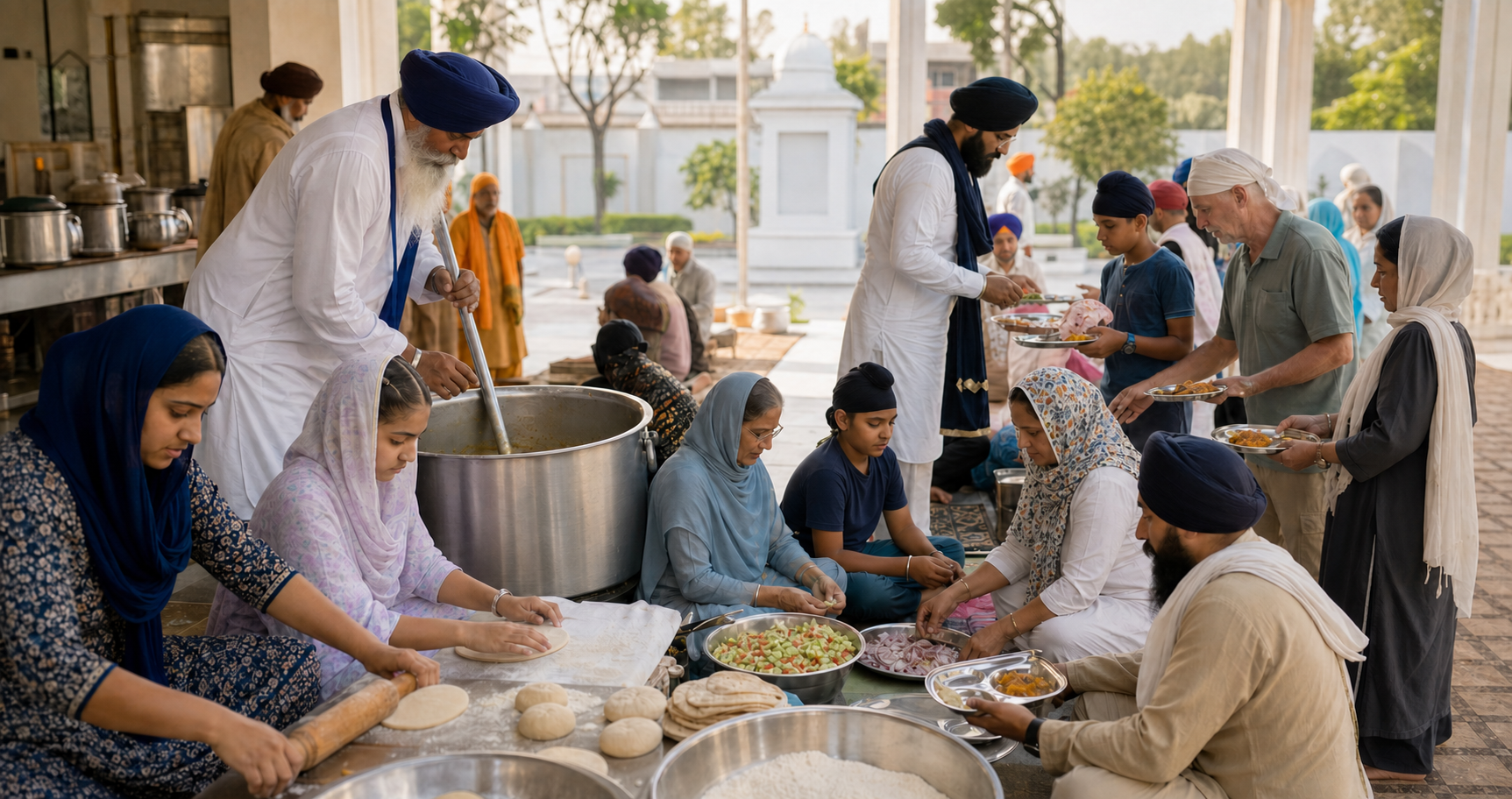
The Shaheedi Asthan can speak to Hindus, Buddhists, Jains, Sikhs, and visitors from outside the dharmic traditions because it raises recognizable questions about righteous conduct, compassion, restraint, selfless service, and the defense of those exposed to injustice. But shared ethical resonance should not be confused with doctrinal sameness.
Begin with the Sikh particular. Name Guru Gobind Singh, the Khalsa, the Nishan Sahib, shabad kirtan, ardas, sangat, seva, and the aspiration of Sarbat da Bhala. Do not translate all of these into vague phrases such as “Indian spirituality.” Their Sikh form is not an obstacle to wider understanding; it is what gives the memorial its integrity.
Then identify moral kinships. Dharma can provide a shared language for asking whether authority serves justice. Compassion can direct attention toward those who bear the cost of political disorder. Restraint can keep remembrance from becoming vengeance. Seva can convert admiration into useful work. These are points of ethical meeting, not proof that every dharmic tradition teaches the same doctrine in the same way.
This sequence matters: Sikh specificity first, shared resonance second, practical duty third. Reversing it produces a generic message that could belong to any monument. Following it allows Unity in Diversity to mean fellowship without erasure.
For a class, family, or interfaith group, use a simple exercise after the visit. Ask every participant to write down one historical fact, one distinctly Sikh element they observed, and one obligation the memorial placed before them. The three answers reveal whether they encountered the whole site or merely admired its surface.
Key takeaways for remembrance that changes conduct
- Read the life before the death. Banda Singh Bahadur’s martyrdom becomes intelligible through his Guru-guided Khalsa leadership and concern for justice.
- Keep the historical sequence intact. His resistance to Mughal authority, governance in Punjab, capture after Gurdas Nangal, removal to Delhi, and martyrdom in 1716 belong to one moral arc.
- Treat the memorial as a living Sikh place. The Nishan Sahib, shabad kirtan, ardas, and sangat are not decorative additions to a historical display.
- Seek interfaith kinship through accuracy. Shared dharmic virtues become more meaningful when Sikh identity and vocabulary are preserved rather than flattened.
- Leave with one concrete response. Retell the chronology without sensationalism, support responsible preservation of heritage, or undertake a form of seva that protects someone’s dignity.
Before you leave the Shaheedi Asthan, or finish studying it from afar, complete one sentence: “Banda Singh Bahadur’s memory now requires me to…” Give the sentence a real object, person, or task. Then choose a date for the smallest honest action you can take. A memorial remains living when remembrance becomes conduct.
References
- SikhNet – News – Shaheedi Asthan of Baba Banda Singh Bahadur: A Moving Tribute to Courage and Dharma
