
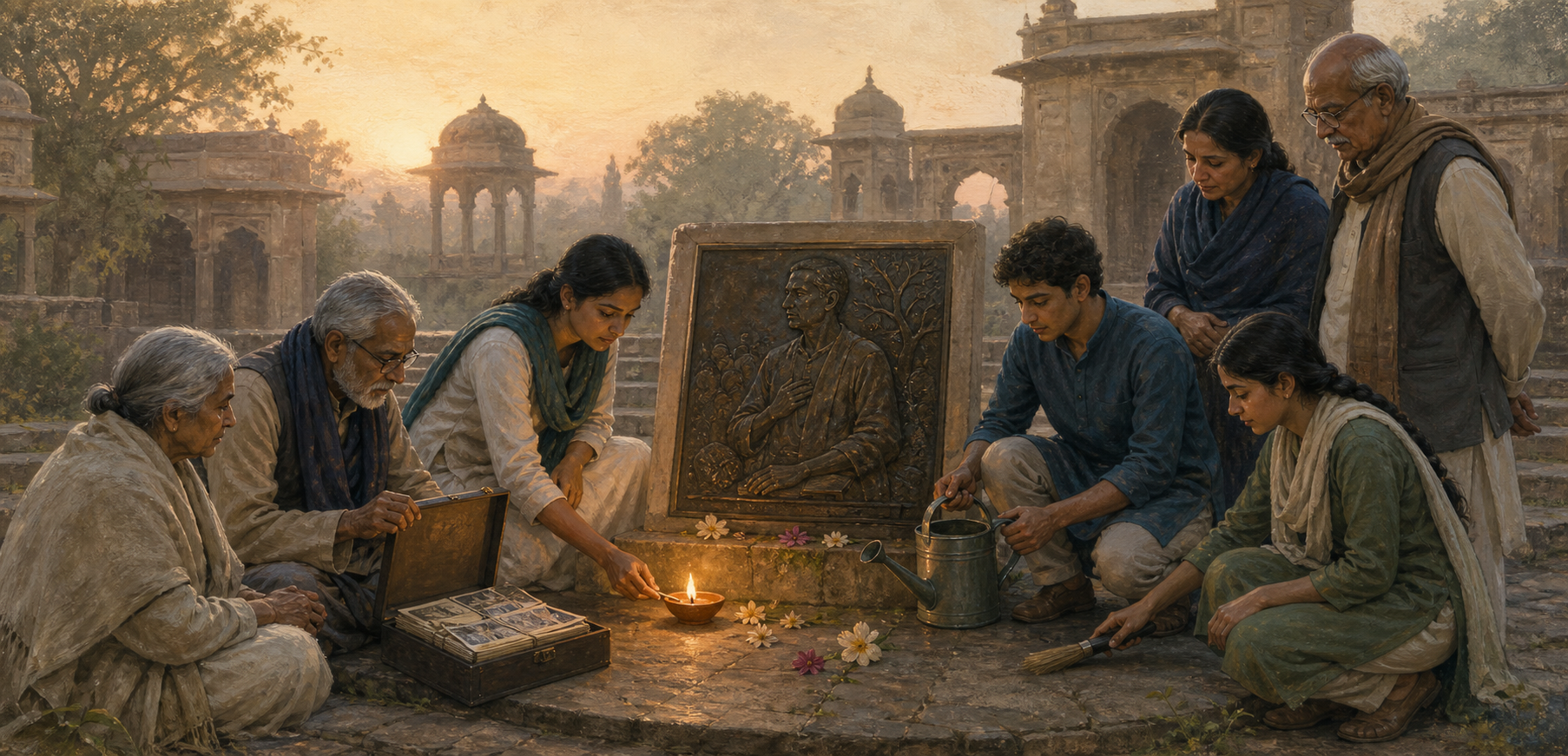
You may be preparing a punyatithi, a school program, or a family discussion and wondering what belongs beyond the garland and the speech. How do you honour an anti-colonial leader without reducing a human life to slogans, partisan anger, or ceremonial repetition?
A dharmic observance can meet a higher standard. It begins with satya, preserves smriti, examines duty, and culminates in seva. In practical terms, you tell the history accurately, ask what moral responsibility it places on you, and leave a person, institution, or heritage site better supported than before.
Remember the person before manufacturing the symbol
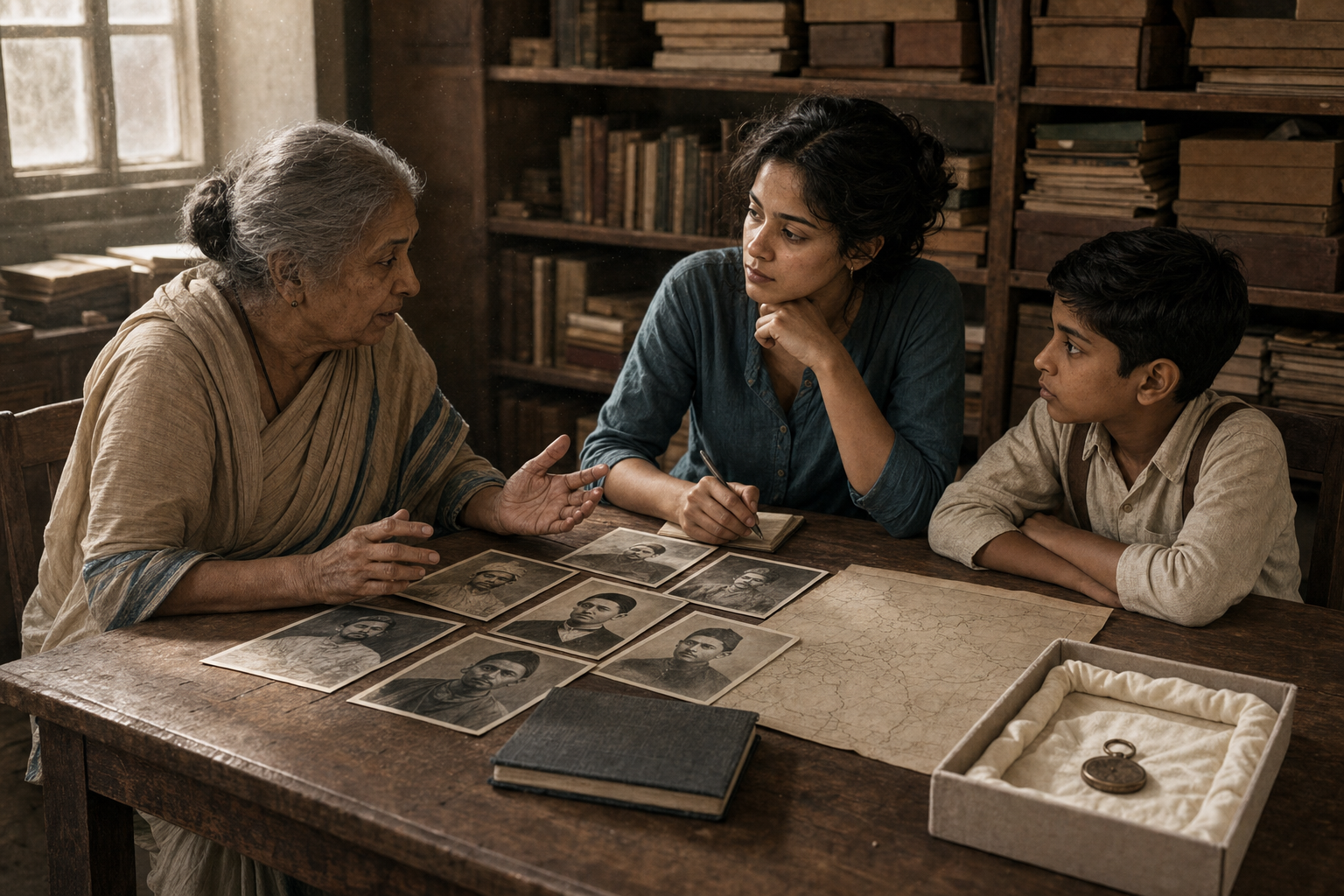
Begin with chronology. If your account of resistance to British power starts in 1857, it misses Kittur Chennamma. The queen of Kittur in present-day Karnataka led her stand against the British East India Company in 1824. That was more than three decades before the event commonly called the 1857 War of Independence.
This correction is not a contest over who resisted first. It restores the actual breadth of Bharat’s resistance. It also prevents a familiar distortion: national history can become so concentrated around a few dates and regions that earlier, local, and female leadership disappears from view.
Before preparing any tribute, make a short verification card with four entries:
- Identity and place: record the person’s name, public role, polity, and region. For Chennamma, that means queen, Kittur, and present-day Karnataka.
- Adversary and action: name the power being resisted and the leader’s documented choice. Do not substitute a string of heroic adjectives for an event.
- Chronology: place the event on a timeline beside better-known milestones. Chennamma’s 1824 resistance belongs before 1857, not as an appendix to it.
- Limits of knowledge: leave unsupported details out. Folklore can be honoured as inherited memory, but it should not be silently relabelled as established history.
This method may look modest, but modest accuracy protects a leader from being turned into a convenient mascot. Satya sets the boundary within which reverence remains trustworthy. If a dramatic claim cannot be supported, excluding it does not diminish the leader. It strengthens the rest of the remembrance.
Let dharma discipline admiration rather than decorate it
Dharma is not a praise word to attach automatically to anyone who opposed a foreign power. It asks harder questions: What was being protected? Which responsibilities did the leader accept? How should that example change our conduct?
Kittur Chennamma’s memory carries force because her defence of sovereignty can be read alongside justice, responsibility to the community, courage in the face of injustice, and concern for the people. These themes resonate across Hindu, Buddhist, Jain, and Sikh traditions. That shared ethical ground does not make their theologies interchangeable. It gives communities a language in which to discuss public courage without erasing real differences among their paths.
Use four questions to move a gathering from praise to reflection:
- What concrete injustice or threat did this person confront?
- For whom did the person accept responsibility?
- Which virtue was tested: fearlessness, restraint, perseverance, compassion, truthfulness, or fidelity to duty?
- What obligation follows for us now: study, service, heritage care, civic integrity, or the correction of a neglected history?
The fourth question is decisive. If remembrance produces only admiration, the leader remains safely in the past. If it produces a defined obligation, memory enters the present.
A related commemorative tradition makes the distinction clearer. Maharana Pratap belongs to a different historical setting, so his struggle should not be carelessly placed inside the British anti-colonial timeline. Yet his Smrutidin joins historical learning with self-discipline, worship, service, and reflection on responsibility for the common good. That form can inform anti-colonial remembrance even when the historical categories remain distinct.
Moral clarity also requires you to distinguish colonial domination from inherited hostility toward people living now. Name the institution, policy, or act of domination as precisely as the record allows. Do not transfer collective guilt across generations. Dharma calls for discrimination between justice and vengeance, not a refusal to speak plainly about either power or wrongdoing.
Build the observance around calendar, knowledge, and service
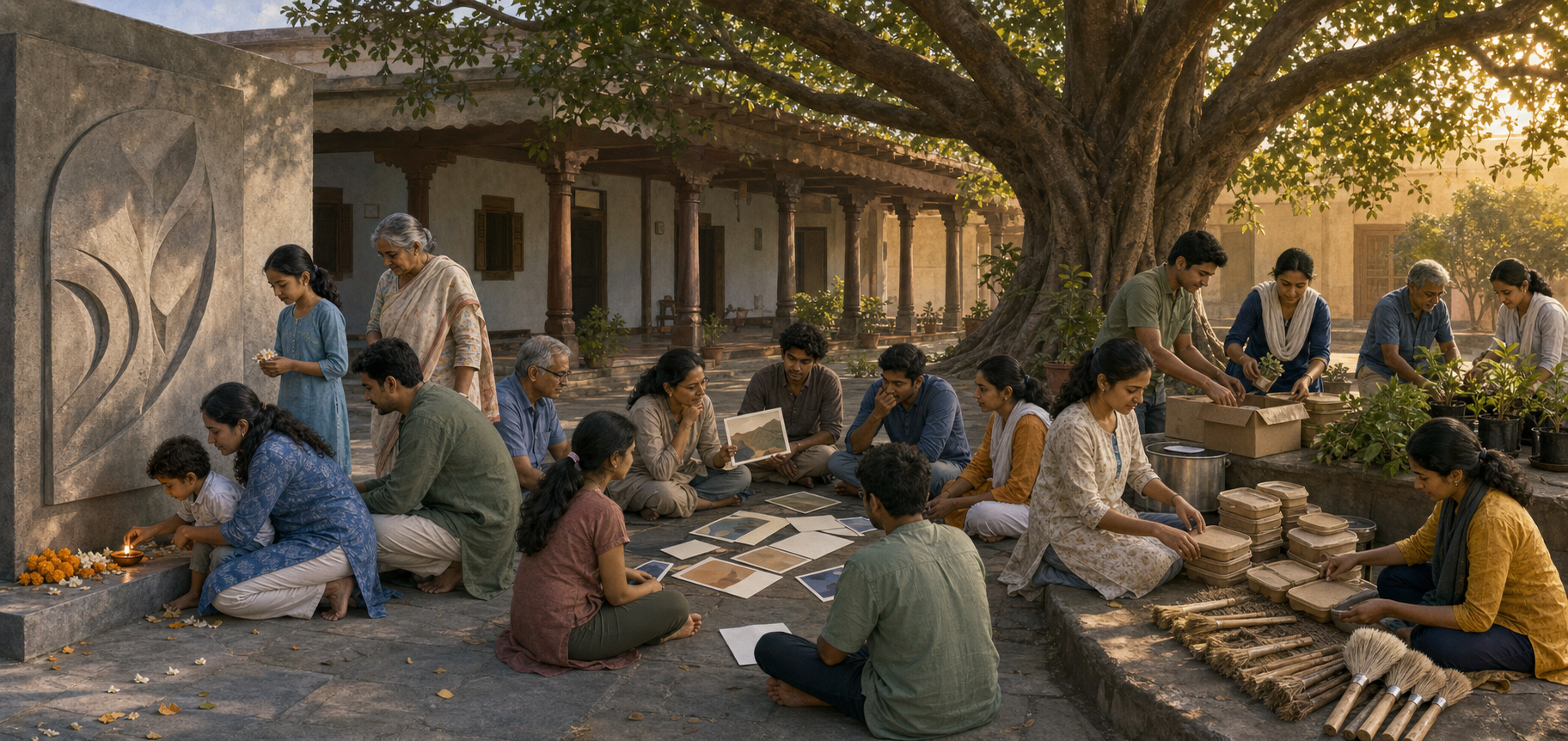
An annual date gives memory a recurring place in community life. Kittur Chennamma’s punyatithi falls on 21 February in 2026. In another commemorative model, Maharana Pratap Smrutidin follows Magh Shukla Ekadashi; in 2026, that tithi aligns with Thursday, 29 January, and Jaya Ekadashi. A public notice should therefore state not only a civil date but also what is being observed and why the chosen date carries meaning.
A one-hour community format
You do not need a grand stage. A disciplined hour can accomplish more than a long sequence of speeches:
- Five minutes for presence: begin with silence, a floral tribute, or a brief prayer appropriate to the community. State the leader’s name and place clearly.
- Ten minutes for chronology: present five or six verified events. Keep dates, actions, later interpretations, and inherited stories visibly separate.
- Fifteen minutes for historical orientation: use a map, a compact timeline, and a short biography. Mark where the region sits in present-day India and where the event belongs in the wider sequence of resistance.
- Fifteen minutes for dharmic inquiry: discuss the injustice confronted, the duty accepted, and the virtue tested. Invite disagreement about interpretation while keeping factual claims accountable.
- Ten minutes for seva: select one action that the people present can actually complete, such as a reading session, a heritage inquiry, a school resource, or support offered through an authorised local channel.
- Five minutes for sankalpa: record the chosen action, the responsible person, and a completion date. A promise without an owner and a date is only another ceremonial sentence.
If you have only twenty minutes at home, retain three elements: one verified episode, one ethical question, and one small action. Do not preserve the speeches while cutting the history and the commitment.
A four-part lesson for younger readers
A child should be able to leave with more than the claim that Chennamma was brave. Give the child four boxes to complete:
- Where: Kittur, in present-day Karnataka.
- When: 1824, before the 1857 War of Independence.
- What: a principled stand against the British East India Company.
- Why it matters now: sovereignty, public responsibility, women’s leadership, and the duty to preserve historical memory.
Then ask the child to retell the account without using the words great, glorious, legendary, or heroic. This forces attention onto choices and consequences. Afterwards, allow one adjective, but require an event to justify it. That small exercise teaches the difference between evidence and applause.
Maps, contextual timelines, age-appropriate biographies, readings, exhibitions, and regional cultural traditions can all connect younger generations with the freedom struggle. Keep the regional identity visible. Kittur’s place in Karnataka is not an obstacle to national memory; it is the concrete ground from which national memory becomes real.
Let the memorial site set the standard for your tribute
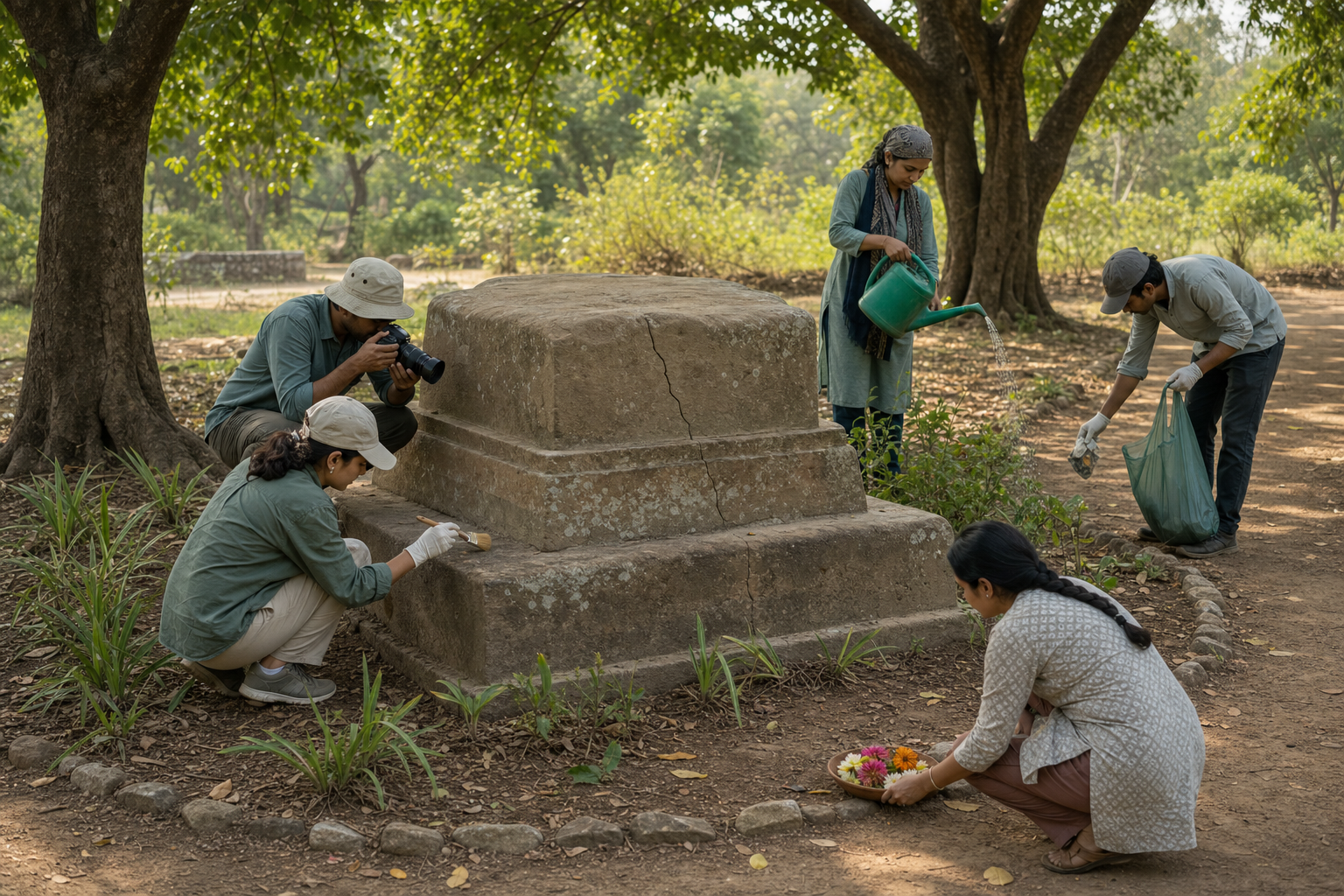
Material heritage exposes the distance between verbal reverence and sustained care. Kittur Chennamma’s samadhi is in Bailhongal taluk of Belagavi district, where limited maintenance and a small adjoining park have been reported. A dignified remembrance cannot treat the physical resting place as somebody else’s concern while celebrating the name everywhere else.
If you visit, approach the samadhi as a place of contemplation rather than a backdrop. Confirm local access and site rules. Keep noise and litter away. Photograph only where permitted. If you notice a maintenance problem, describe the exact condition, note the date, identify the responsible public or local body, and ask which authorised form of assistance is useful.
Do not paint, repair, attach signs, move stones, cut vegetation, or apply cleaning products without explicit authorisation. A well-meant intervention can damage historic material or disrupt an existing preservation process. The safe action is to document the visible concern and work through the recognised custodian.
Give every heritage request a follow-up date. If your group sends a letter, offers support, or receives a promise, assign one person to check the outcome after thirty days. Record the response. If nothing changes, decide on the next lawful and proportionate step instead of allowing the matter to disappear after the commemorative date.
A community that cannot travel can still contribute. It can prepare a verified timeline, preserve recordings of local cultural programs, hold a reading circle, develop a map-based lesson, or direct support through a recognised institution. The important distinction is between recurring stewardship and a one-day display. Flowers mark the occasion; stewardship protects the memory’s future.
Key takeaways
- Verify identity, place, adversary, action, and chronology before writing the tribute.
- Use dharma as a test of justice and responsibility, not as a decorative label for political admiration.
- Preserve the differences among historical periods and Dharmic traditions even while drawing out shared ethical values.
- Combine ritual homage with historical learning, one serious question, and one achievable act of seva.
- Support heritage through authorised care, a named person responsible for follow-through, and a definite completion date.
For your next observance, choose one leader and prepare a single page containing a verified timeline, a map, one dharmic question, and one service commitment. Put the commitment on the calendar before the gathering ends. That is the point at which remembrance stops being a performance and becomes a duty carried forward.
References
- DharmaRenaissance Blog — Rani Chennamma Punyatithi 2026: Honouring Kittur’s Brave Queen and Safeguarding Her Samadhi
- DharmaRenaissance Blog — Maharana Pratap Smrutidin 2026: Honoring an Inspiring Rajput Legacy on Magh Shukla Ekadashi, Jan 29
