
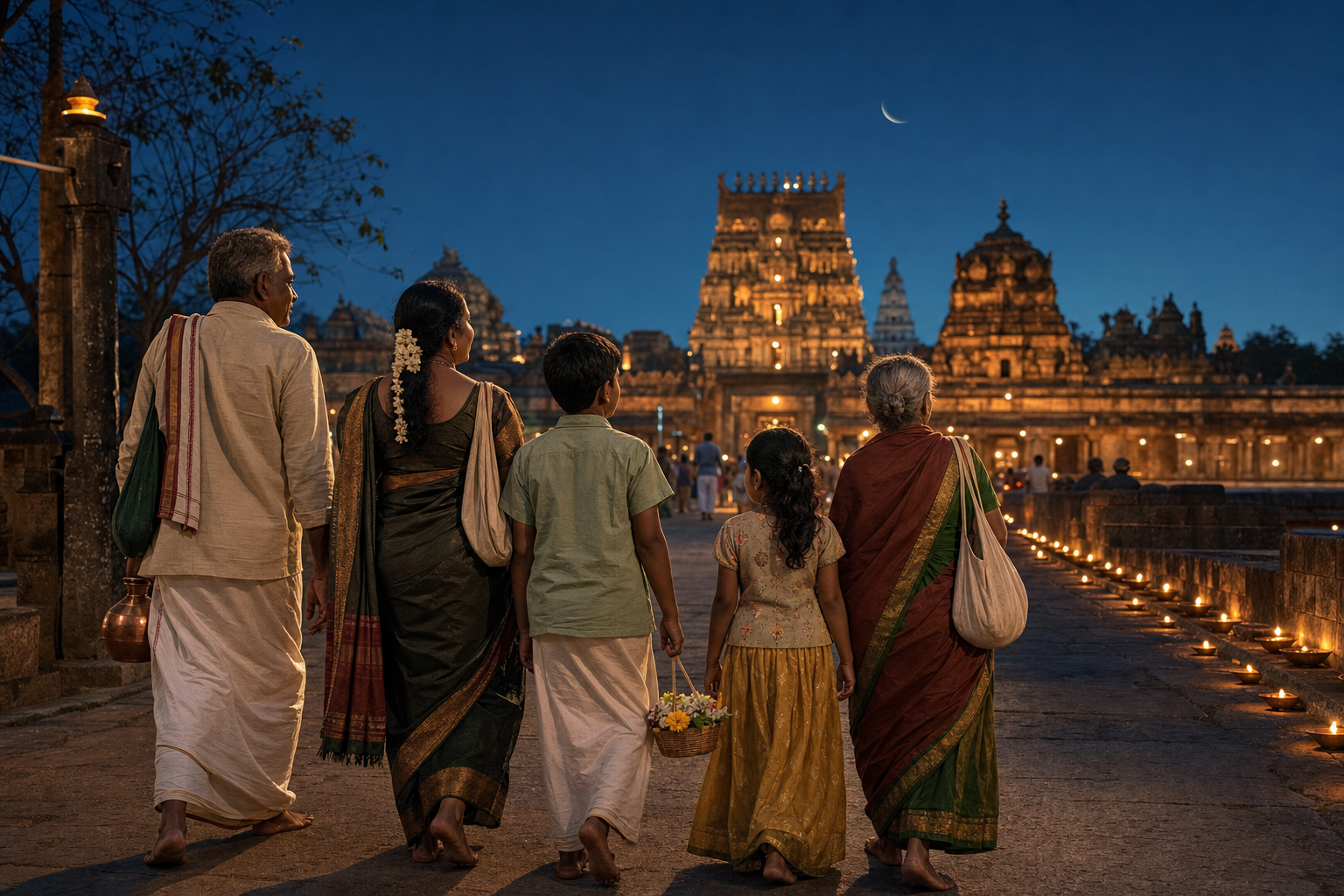
Perhaps you can make one journey, and two names keep returning: Vemulawada or Srisailam. Or your family observes Herath, and you are trying to preserve it far from Kashmir. The wrong question is which celebration is more important. The useful question is which sacred form you can honor without reducing Maha Shivaratri to a queue, a photograph, or an exhausted journey home.
Your decision turns on four practical matters: whose calendar governs the observance, whether your worship belongs in a temple or the home, which vow you intend to keep, and whether you and your family can sustain an overnight vigil. Settle those matters first. Travel, accommodation, offerings, and darshan planning become much clearer afterward.
Choose the form of worship before choosing the destination
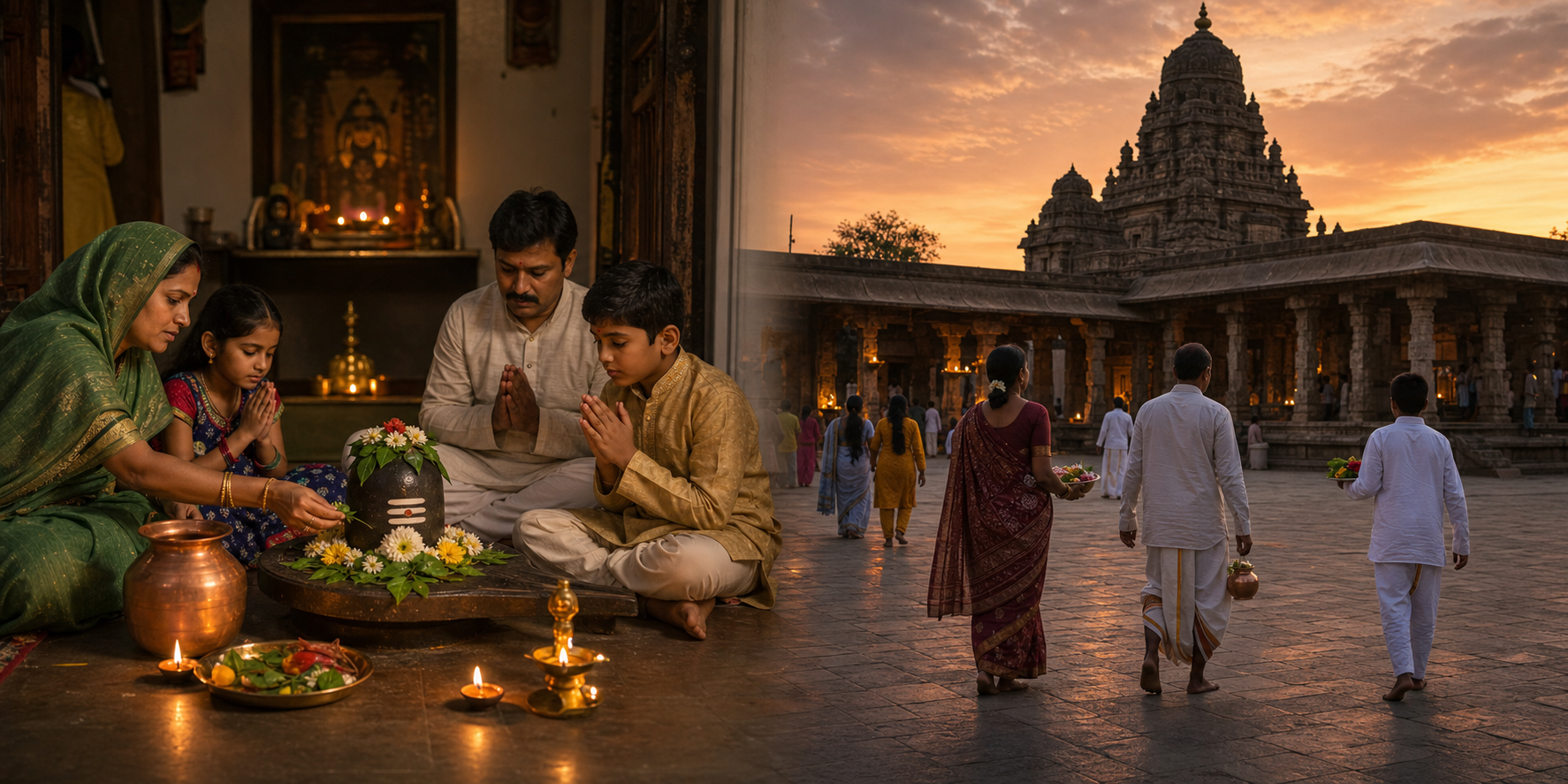
Vemulawada, Srisailam, and Herath do not represent competing versions of Maha Shivaratri. Each gives a regional body to the same inward movement: restraint, wakefulness, mantra, abhishekam, remembrance of Shiva, and attention to the midnight mystery of Lingodbhava. Their differences tell you how and where that movement is practiced.
| Tradition or place | Distinctive sacred form | It suits you when |
|---|---|---|
| Vemulawada, Telangana | A large temple jatara at Sri Rajarajeshwara Swamy, with the Kode-Mokku vow connected with Nandi, Dharma Gundam snana, and night-long worship | You have a vow to fulfill, want the energy of a community fair, or are building a Telangana Shaiva pilgrimage |
| Srisailam, Andhra Pradesh | A pilgrimage to a kshetra revered as both Mallikarjuna Jyotirlinga and Bhramaramba Shakti Peetha, framed by the Nallamala hills and Patalaganga | You want Shiva-Shakti worship at the center of the journey and can allow time for the ghat approach, river preparation, and a full-night observance |
| Herath | A Kashmiri Pandit household observance centered on Vatuk Bhairava vessels, the Divine Mother, soaked walnuts, vigil, prasad, and Salaam | You belong to the tradition, are helping your family continue it in the diaspora, or have been invited to participate under the family’s guidance |
If you are free to choose between the two pilgrimage centers, choose by sankalpa rather than prestige. Vemulawada is especially meaningful when the journey concerns a personal vow, Nandi, or participation in a Deccan jatara. Srisailam is the clearer choice when your sadhana centers on the inseparability of Shiva and Shakti or when Patalaganga and the Nallamala setting are integral to the pilgrimage you seek.
Herath requires a different kind of decision. It is not merely a temple festival transplanted into a Kashmiri home. Its vessels, walnuts, family sequence, blessings, food, and social observances carry inherited memory. If you are a guest rather than a custodian of that tradition, receive it from the family keeping it. A living regional practice is better honored through relationship than reconstructed from a checklist.
The regional calendar is not a disagreement to be corrected
Maha Shivaratri is generally associated with Krishna Paksha Chaturdashi, but a tithi is not a civil date running from one midnight to the next. It marks each 12-degree change in the longitudinal separation of the Sun and Moon. A tithi can therefore begin or end at an inconvenient clock time, while the prescribed worship depends on the tithi present during Nishita Kaal around local midnight.
This is why regional labels and dates can look inconsistent when they are not. Much of southern India uses the Amanta month reckoning, while the Purnimanta system is common in parts of northern India. The same festival may consequently be named within Magha in one calendar and Phalguna in another. Kashmiri Pandits observe Herath on Phalguna Krishna Trayodashi under their Jantrie tradition, with the tithi at Nishita governing the principal worship.
The 2026 observance offered a useful illustration: Herath and the wider Maha Shivaratri observance both fell on 15 February, although the Kashmiri rite was identified with Trayodashi and the general observance with Chaturdashi. The shared Gregorian date did not erase the distinct calendrical reasoning. You should not assume that such an alignment will occur every year.
- Choose the city or household in which you will actually worship. Nishita must be calculated for that location, not copied from another time zone.
- For Herath, begin with your family’s Jantrie, community calendar, or the guidance of the priest serving that community. For a temple pilgrimage, begin with the temple’s annual observance schedule and the panchang followed there.
- Write down four separate items: the vrata date, local Nishita Kaal, the principal temple or household puja time, and the permitted parana period for breaking the fast.
- If a procession, public darshan window, or seva schedule differs from your personal vrata rhythm, decide in advance which observance you will attend and when you will keep quiet japa. Otherwise, crowd movement will decide the night for you.
This location-first rule matters most in the diaspora. Keeping an Indian clock time while worshipping in Toronto, London, or Singapore misses the local midnight principle. Confirm the lunar span where you are, then preserve the inherited ritual form within that local sacred time.
Build the pilgrimage around the vrata, not only darshan
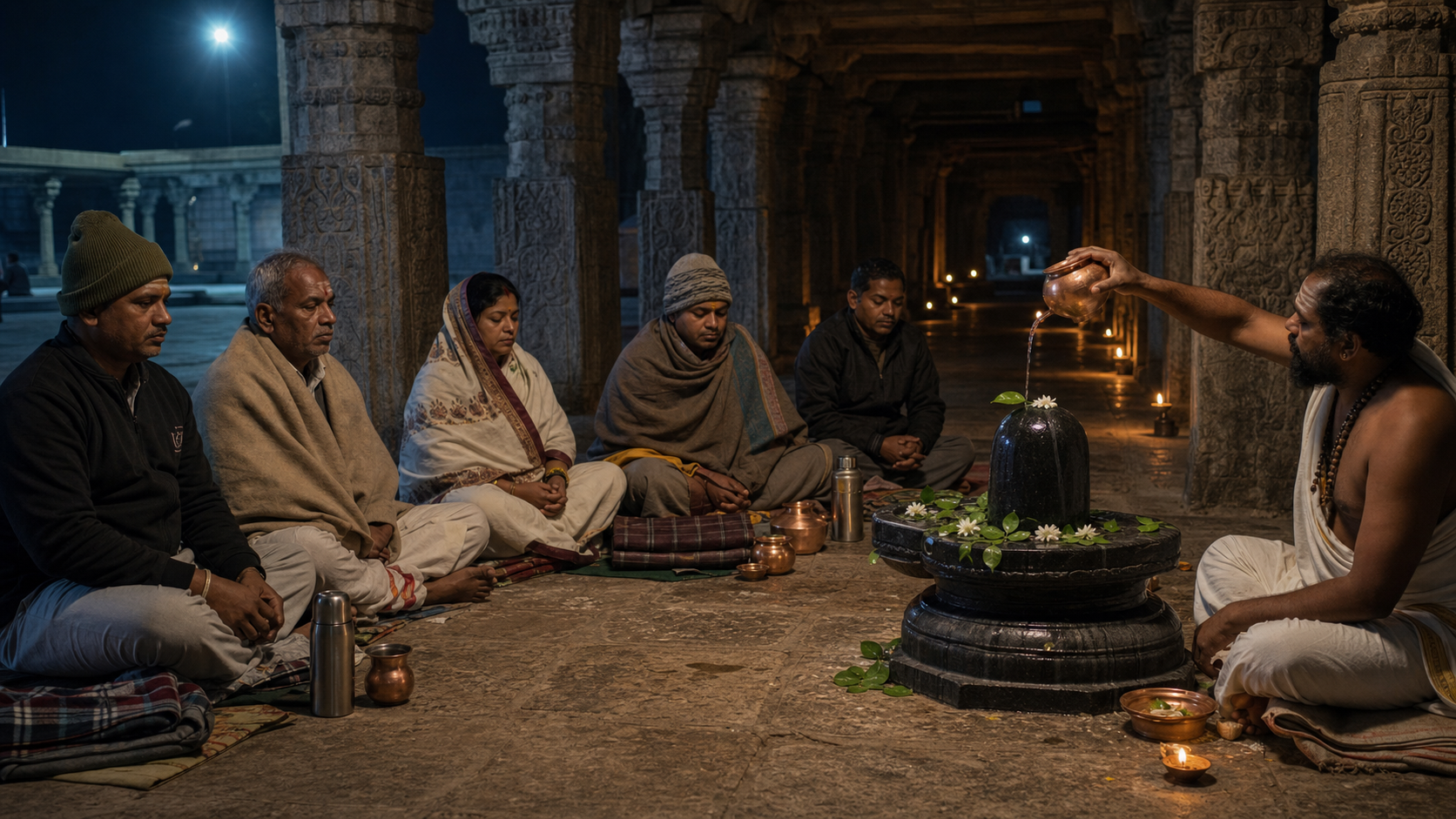
A successful Maha Shivaratri journey is not measured by how many shrines you can add. The night asks you to remain attentive through four prahars, especially near Nishita. Long queues, an ambitious road circuit, insufficient rest, and a severe fast can leave you physically present but unable to pray. Give the vrata the first claim on your energy.
- Arrive before the main-night surge if your schedule allows. Check in, leave unnecessary bags behind, and learn the actual queue and seva arrangements before beginning the vigil.
- State your sankalpa plainly. Decide whether you are undertaking a particular vow, four-prahar worship, Nishita meditation, a night of Panchakshari japa, or a combination that you can keep steadily.
- Choose the fast according to health and family practice. The accepted range includes nirjala fasting, fruit-based phalahara, and lighter satvik observance; severity is not the same as sincerity.
- Complete any preparatory snana without rushing, and obey local restrictions at the sacred tank or river. A ritual bath does not justify unsafe movement in a crowd.
- Give each prahar a devotional task. Abhishekam, Sri Rudram or stotra recitation, Om Namah Shivaya japa, and silent dhyana can alternate so that wakefulness does not become aimless waiting.
- Plan the morning before the night begins. Know when you will perform parana, where you will rest, and who is fit to drive after the vigil.
At Vemulawada, use the three-day jatara rhythm
Vemulawada’s observance is larger than a single midnight queue. The jatara ordinarily unfolds across a preparatory day, the principal Maha Shivaratri night, and a concluding day of thanksgiving, prasada, and related rites. That rhythm gives families a practical advantage: elders and young children can seek daylight darshan on the first or concluding day, while family members capable of maintaining jagarana stay for the night worship.
The temple is honored as Dakshina Kasi and as a Hari-Hara Kshetram. Its local identity is especially visible in Kode-Mokku, a vow involving ritual attention to Nandi. Undertake it because it belongs to your sankalpa or family practice, not merely because it is the most recognizable local activity. The Dharma Gundam is customarily used for a pre-darshan bath; follow crowd controls and keep detergent and plastic away from the water.
For route planning, Vemulawada is roughly 150 to 180 kilometers by road from Hyderabad. Karimnagar is the nearest major urban hub, and Peddapalli Junction offers another rail-to-road approach. During the jatara, staying in Vemulawada places you closest to the rites, but Karimnagar or Sircilla may be useful accommodation bases when local rooms are full. Allow for festival traffic rather than calculating the journey from an ordinary-day road time.
At Srisailam, leave space for both Shiva and Shakti
Srisailam is not only a Jyotirlinga visit. Mallikarjuna and Bhramaramba make the kshetra a ritual meeting of Shiva and Shakti, so a pilgrimage plan that treats the Devi shrine as an optional add-on misses the site’s defining form. Allow time for both rather than spending all your available energy in one queue.
The approach through the Nallamala hills and the descent toward Patalaganga create a natural transition into the vrata. If conditions, access, and your mobility allow, undertake the river preparation before the main darshan rather than squeezing it into the final hour before Nishita. The steps or ropeway can form part of the Patalaganga visit, but neither option should be assumed available without checking local arrangements.
A workable pattern is an afternoon arrival, preparatory snana, an initial darshan, two early prahar observances, concentrated stillness around Nishita, and quieter japa after midnight. If you also want special Rudrabhishekam or Mahanyasa Rudrabhishekam, verify the seva arrangement before travel; high-demand worship and general darshan may run on different queues and timings.
Srisailam lies in an ecologically sensitive forest region. Keep food waste controlled, avoid single-use plastic, respect wildlife restrictions, and do not treat the ghat road as a race to reach an auspicious minute. Ahimsa on this pilgrimage includes the river, forest, animals, other pilgrims, and the person who must drive you home.
For Herath, make the household the kshetra
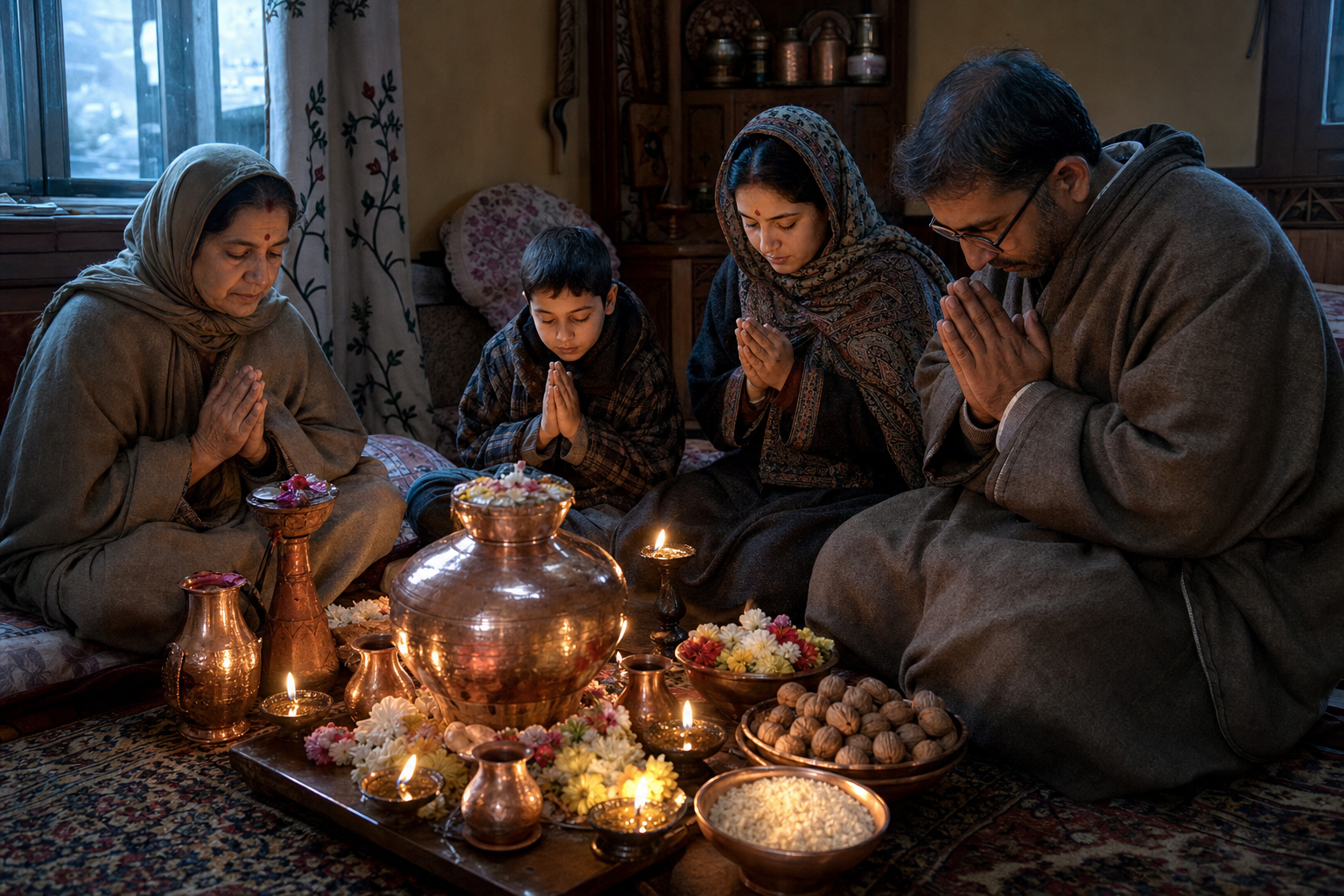
Herath is kept through the sanctification of Vatuk vessels representing Vatuk Bhairava, with companion vessels associated with the Divine Mother. Walnuts are placed in water and later shared as prasad. Their use reflects Kashmir’s ecology while preserving the underlying movement of consecration, offering, vigil, and grace. The practice is not deficient because bilva fruit or a large temple procession is absent.
If your family is restoring the observance after a gap, first recover its sequence from an elder, family Jantrie, or community priest. Then assign simple responsibilities: who cleans and arranges the vessels, who prepares the walnuts and offerings, who leads the recitations, and who distributes prasad. This keeps one person from carrying the entire ritual burden while everyone else becomes an observer.
The vigil may include Shiva Mahimna Stotra, Shiva Sahasranama, Lingashtakam, Mahamrityunjaya mantra, meditation, and kirtan. After the principal worship and fast, soaked walnut prasad, Herath kharch from elders to children, and the greetings of Salaam extend the rite from altar to family and neighborhood. Do not rush that social day as if the midnight puja were the only sacred part; blessing, hospitality, and goodwill complete the inherited form.
Travel lightly enough to remain present through the night
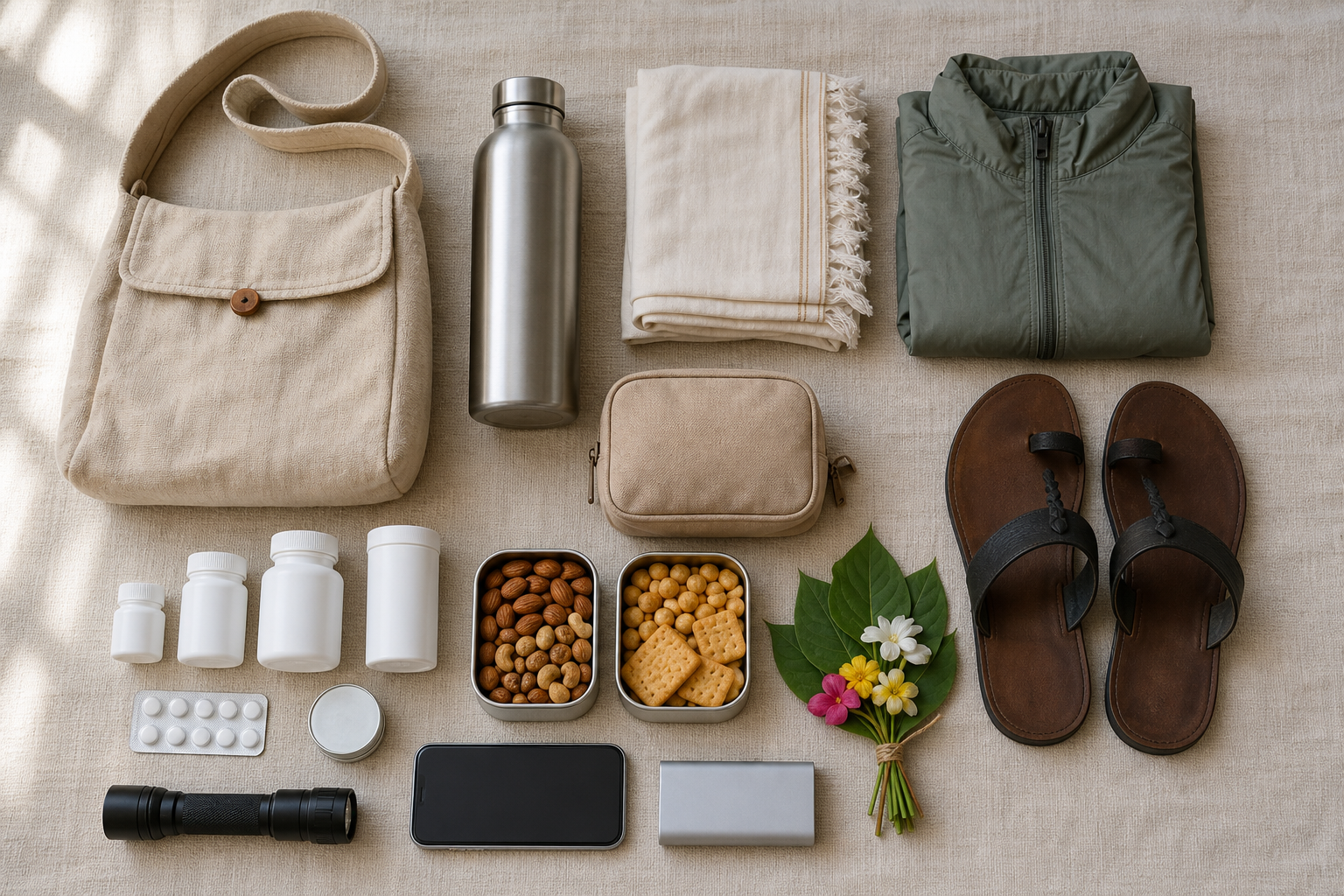
Festival crowds turn every extra object into something you must carry, protect, deposit, or retrieve. Pack for worship rather than for an ordinary holiday. The aim is to move through security and queues with your attention intact.
Carry what supports the observance
- Comfortable walking footwear for the approach, with awareness that it must be left outside designated worship areas.
- A compact shawl or layered clothing for a cool night and a warmer daytime return.
- A refillable water bottle where local rules permit it, especially if your vrata allows water.
- A small cloth bag for prasada and any permitted biodegradable offerings.
- A compact prayer book or offline text containing the mantras and stotras you actually intend to recite.
- Only the money, documents, and personal necessities required for the journey.
Remove predictable sources of distraction
- Do not bring large bags into peak queues unless unavoidable.
- Keep phones silent near sanctums, and do not obstruct movement for photographs.
- Do not use detergent in Dharma Gundam, Patalaganga, or another sacred water body.
- Avoid single-use plastic and dispose of flowers, food, and packaging only through the arrangements provided.
- Make donations and seva payments through regulated counters or authorized channels.
- Follow the directions of archakas, temple staff, police, and crowd marshals at congested points.
Families should divide the observance by capacity. A daylight darshan for an elder or child is not a lesser pilgrimage. Nor should anyone attempt a waterless fast or full night without sleep merely to match another person’s vrata. If fasting could conflict with a health condition or medication, ask your clinician and choose a safer form; do not improvise a nirjala fast under festival conditions.
During the vigil, use a simple personal cadence. In one prahar, attend abhishekam or perform it at home. In another, listen to or recite Sri Rudram and Chamakam. Near Nishita, reduce movement and hold to Panchakshari japa or silence. After midnight, choose steady meditation over adding another distant shrine. This is not a replacement for the temple’s liturgy or your family’s paddhati; it is a way to prevent your attention from dissolving between scheduled rites.
Annadanam, responsible dana, assistance to a family member, and care for the pilgrimage environment belong to the vrata’s outer expression. They also connect Shaiva devotion to the wider dharmic disciplines of self-restraint, remembrance, seva, and ahimsa. The inward night should leave the people and place around you better treated, not burdened by your observance.
Key takeaways
- Choose Vemulawada for its vow-centered jatara and Telangana sacred geography; choose Srisailam for a Shiva-Shakti pilgrimage centered on Mallikarjuna, Bhramaramba, and Patalaganga.
- Treat Herath as a Kashmiri Pandit household tradition, not as a decorative regional variation to be copied without family or community guidance.
- Fix your worship location before checking Nishita Kaal. A diaspora observance follows local sacred time, not an Indian clock time carried overseas.
- Record the vrata date, Nishita window, principal puja or seva, and parana period separately; they are related but not interchangeable.
- Plan darshan, fasting, sleep, family care, and the return journey together. A schedule that reaches the sanctum but destroys your capacity for japa has not served the vrata.
- Carry little, respect sacred water and forest rules, and let dana, seva, and ahimsa continue the worship beyond the sanctum.
Before you book, write one sentence naming the sadhana you intend to keep. Then choose the calendar, destination, accommodation, and travel companions that protect that intention. Maha Shivaratri pilgrimage begins to take shape when the journey serves the vigil, rather than asking the vigil to survive the journey.
References
- DharmaRenaissance Blog – Shivaratri Jatara 2026 at Vemulawada: Dates, Rituals, Travel and a Devotional Deep Dive
- DharmaRenaissance Blog – Herath 2026: Kashmiri Pandits’ Shivaratri on Trayodashi – Date, Ritual Science, and Living Heritage
- DharmaRenaissance Blog – Mahashivaratri 2026 at Srisailam Mallikarjuna: Jyotirlinga-Shakti Peetha Rituals, Nishita Kaal, and Pilgrim Guide
